

Your gym manager pings you Tuesday night. “Hey, I need your current cert on file by Friday.” That’s it. No detail on what kind. You go to book something online and now you’re staring at two options: a CPR course and a First Aid course. Same website, different price, different length, and honestly, you’re not sure which one your boss actually meant.
Sound familiar? It happens more than you’d think, especially for personal trainers, swim instructors, and anyone working casual shifts across a few different employers. You’ve got maybe five minutes between clients to sort this out, and the last thing you want is to book the wrong course, sit through it, and then get told it’s not what your gym or association actually needed.
It’s a strange spot to be in. First aid and CPR are related, everyone kind of knows that, but the actual difference between the two courses is rarely explained anywhere useful. Most course pages just list a code and a price and expect you to already know which one applies to you.
Here’s the short version. If your role is specifically about responding to a cardiac or breathing emergency, like a client collapsing mid-session, you probably just need CPR (HLTAID009). If your job covers a wider range of situations, cuts, burns, fractures, allergic reactions, you’re looking at full First Aid (HLTAID011), which includes CPR anyway. That’s the whole distinction in one sentence, but the reasoning behind it is worth understanding properly so you’re not just guessing next time either.
Quick Answer: CPR or First Aid?
CPR only (HLTAID009) is the right choice if your role is narrowly focused on responding to cardiac arrest or a breathing emergency, think fitness instructors, swim teachers, or anyone whose employer specifically asks for CPR. It’s a shorter, more focused course and it doesn’t cover things like wound care or fractures. If your job is about keeping someone’s heart going and their airway clear until help arrives, this is built for exactly that.
Full First Aid (HLTAID011) is the better fit if your role could involve a wider range of incidents, cuts, burns, sprains, allergic reactions, or you’re the only person on site who’d need to respond. It includes the CPR component too, so you’re not missing anything by choosing the broader course. Think of it less as “CPR plus extras” and more as the full toolkit for anything that could go wrong on a normal working day.
Still not sure? Run through this quick check:
- Does your employer or association specifically say "CPR" or "HLTAID009" in writing? → CPR is probably enough
- Do you already hold a current First Aid cert and just need the CPR component renewed? → Book CPR only
- Is your role fairly narrow, PT, aquatics, supervision only? → CPR usually covers it
If none of those quite fit, keep reading. We’ll get you a clear answer, and we’ll walk through exactly why each course exists the way it does, not just what to book.
📋 Key difference: First Aid includes everything in CPR, plus wound care, burns, fractures, and anaphylaxis response. It's not a separate skill set, it's CPR plus a lot more.
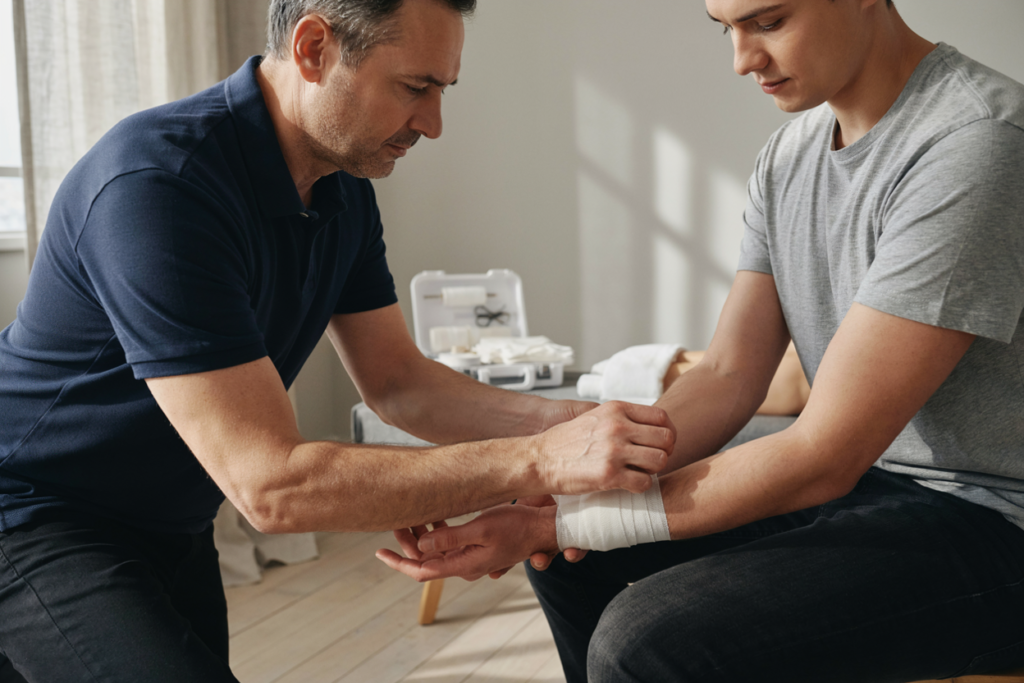
CPR vs First Aid: What Each Course Actually Covers
This is where a lot of the confusion starts, because “CPR” and “First Aid” sound like they might overlap completely. They do overlap, First Aid includes CPR, but they’re not the same course, and they’re not the same commitment. Understanding what’s actually taught in each one makes the decision a lot easier, because you stop thinking about it as “which one is better” and start thinking about it as “which one matches what I’ll actually be doing.”
What’s in a CPR-Only Course (HLTAID009)
This one’s narrow on purpose. You’re covering:
- Chest compressions
- Rescue breathing
- Using an AED (defibrillator)
- Choking response
It’s a single session, and the certificate is valid for 12 months. That shorter validity period trips a lot of people up, you renew this one every year, not every three years, which is a real difference from how most other certifications work. It catches people out because most professional tickets renew every couple of years, so the annual cycle on CPR feels unusually frequent the first time you hit it.
The course itself is deliberately stripped back. There’s no wound management, no splinting, none of the broader first aid content. It’s built for one purpose, giving you the skills and confidence to respond if someone’s heart stops or they stop breathing, and to keep them going until paramedics take over.
What’s in a Full First Aid Course (HLTAID011)
Everything above, plus a lot more:
- Wound care and bleeding
- Burns
- Fractures and sprains
- Anaphylaxis and allergic reactions
- Shock
It runs longer than the CPR-only session, and it’s valid for 3 years. One thing worth knowing: even though the certificate lasts 3 years, the CPR component inside it still needs renewing annually if you want to stay current on that specific skill. So you’re not entirely off the hook for a full three years, but the bulk of the course content, the wound care, the burns, the fracture management, doesn’t need repeating anywhere near as often.
This is the course built for people who could be facing pretty much anything on a given day. A client who trips and cuts themselves open on gym equipment. Someone having a severe allergic reaction to something they ate before class. A burn from a piece of faulty equipment. None of that is covered under CPR alone, and if your role puts you in a position where any of it is plausible, First Aid is the more sensible starting point.
Here’s the side by side:
CPR Only (HLTAID009) | Full First Aid (HLTAID011) | |
Validity | 12 months | 3 years (CPR component renewed annually) |
Coverage | Compressions, rescue breathing, AED, choking | All of CPR plus wounds, burns, fractures, anaphylaxis, shock |
Best for | Narrow, role-specific requirements | Broader incident response, solo or remote roles |
If you want the detail on national guidelines behind resuscitation training, ANZCOR (the Australian Resuscitation Council) publishes the standards both courses are built around.
The 3-Question Self-Check: Which One Do You Need?
This is the part that actually answers your question. Three questions, honest answers, and you’ll know. Most people can answer all three in under two minutes, which is really the whole point of this section, getting you from “not sure” to “booked” without overthinking it.
Question 1: What does your employer or association actually require?
Go back and read the wording literally. Did they say “CPR,” “HLTAID009,” “First Aid,” or just “current certification”? That last one is annoyingly common and it’s the one that causes the most mix ups. Employers and sporting associations aren’t always precise with their language, partly because a lot of the people writing these policies aren’t aware of the difference between the two courses themselves.
If it’s genuinely unclear, don’t guess. A quick message asking “do you need CPR specifically or full First Aid?” takes two minutes and saves you booking the wrong course.
Question 2: What’s the risk profile of your role?
Think about what could actually go wrong on a normal day at work. This is less about worst case scenarios and more about what’s genuinely likely given what you do.
- PT, group fitness, aquatics, allied health (massage, beauty, dental assisting) → CPR is often enough, since the main risk is a cardiac or breathing event, and you're usually working alongside other staff who can help with anything else
- Solo instructor, remote location, WHS officer, or anyone who's the only responder on site → First Aid is usually the safer and often required choice, because you could be dealing with anything from a burn to a fall, and there's nobody else around to fill the gap in your training
If you’re not sure which bucket you fall into, ask yourself who else is around when you’re working. If there’s always another trained staff member nearby, CPR alone carries less risk. If you’re regularly the only person there, the broader course starts to make a lot more sense.
Question 3: Do you already hold a current First Aid certificate?
- Yes, and just the CPR part has lapsed → Book the CPR-only renewal, no need to redo the whole First Aid course, since the rest of your certification is still valid
- No prior certificate at all → Full First Aid (HLTAID011) is usually the better first purchase, since it covers CPR plus everything else in one go, and it only needs full renewing every 3 years instead of every 12 months
This third question ends up being the deciding factor for a lot of people, particularly anyone booking a certificate for the first time.
Run through those three and you should have your answer. Still torn between the two? The next section might settle it.
💡 Worth knowing: CPR renews every 12 months, First Aid every 3 years. If you're on the fence, the broader course often works out to less hassle over time, not more.
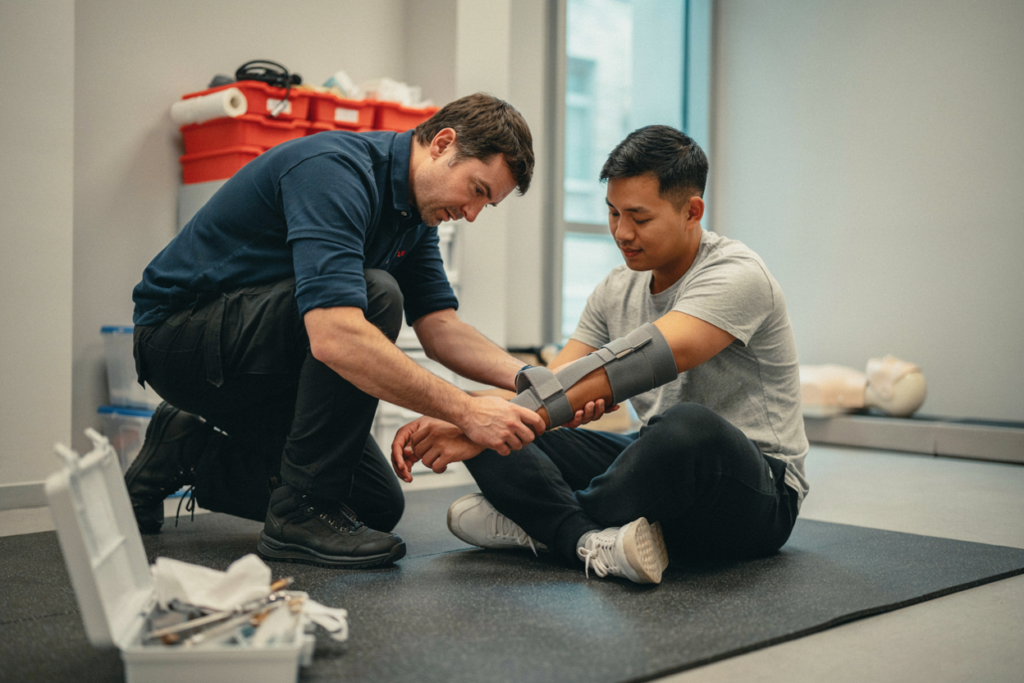
Still Not Sure? Why Full First Aid Might Be Worth It Anyway
If you’re genuinely on the fence, it’s worth doing the maths on what each option costs you over time, not just up front. This is one of those decisions where the cheaper-looking option on the day isn’t necessarily the cheaper option over a few years.
CPR-only means you’re booking a course every 12 months. First Aid means you’re booking every 3 years, with the CPR component renewed annually inside that. Add it up over a few years and the small amount of extra time you spend in a First Aid course starts to look pretty small next to how much more it covers. You’re trading a bit more time now for two fewer years of having to think about this decision again.
This is especially worth thinking about if you’re a sole PT or solo instructor. You’re the only person there if something goes wrong, and it might not be cardiac. A sprained ankle, a burn from equipment, a client having an allergic reaction, none of that is covered by CPR alone. If you’ve ever had a client twist an ankle mid-session or had someone mention a food allergy right before a class, you’ll know these situations come up more often than the rare cardiac event that CPR is built around.
There’s also a confidence element that doesn’t get talked about enough. Knowing you’re covered for a wider range of situations tends to change how you carry yourself on the floor. You’re not mentally triaging what you can and can’t respond to, you just respond.
Bill Hunter, our principal trainer, has spent years training people across exactly these kinds of roles and sees this exact fork in the road regularly, people who booked CPR thinking it was enough, then realised a few months in that their role actually called for broader coverage. It’s a common pattern, and it’s part of why this self-check exists, to help you make that call once rather than working it out the hard way after the fact.
Want to see what’s actually included before you decide?
How to Book the Right Course Without Wasting Time
Once you know which one you need, don’t let a bad booking process undo all that. A couple of things to check before you hit confirm, because the booking page itself is where a lot of the mix ups actually happen, not in the decision making beforehand.
What to check before you book
- Confirm the exact unit code at checkout. HLTAID009 for CPR only, HLTAID011 for full First Aid. If the code on the booking page doesn't match what you decided you need, stop and check before paying. Providers sometimes list courses under slightly different names, so the unit code is the one thing that won't lie to you.
- Confirm the session length matches what you expect. If you've picked CPR only and the listing looks like it's for the longer course, that's a sign you've landed on the wrong one, or it's been bundled with something you don't need. Don't get talked into a longer, pricier session when you only need the short one.
It sounds like a small thing to double check, but it’s the single most common way people end up in the wrong course.
Final Thoughts: Making the Right Call
Going back to that Tuesday night message from your gym manager, the good news is you don’t actually need to overthink this one. Most people land on the right answer within the first two questions of the self-check, and the wording your employer or association used usually does most of the work for you.
If your role is narrow and cardiac-specific, a PT running solo sessions, a swim instructor, someone whose job is genuinely about responding to one kind of emergency, CPR only (HLTAID009) does the job. It’s shorter, it’s cheaper, and it gets you back to work fast.
If your role carries a bit more weight, you’re the only responder on site, you’re dealing with a wider range of possible incidents, or you don’t hold any current certificate at all, full First Aid (HLTAID011) is worth the extra time. You end up covered for a lot more than just chest compressions and an AED, and you’re not back here shopping again in 12 months.
Either way, don’t let a vague booking page make the decision for you. Check the unit code before you pay. Check the session length matches what you expected. Those two things alone stop most of the mix ups people run into, and they take about thirty seconds once you know to look for them.
If you’re still torn between the two even after running through the self-check, that’s usually a sign First Aid is the safer pick, since it covers everything CPR does plus the situations you weren’t sure about. You’re not paying for scenarios you’ll never face, you’re just not leaving gaps in what you can actually respond to. That gap is usually the thing people regret later, not the extra time spent in training.
It’s also worth remembering this isn’t a decision you’re locked into forever. If you book CPR only now and find your role changes down the track, moving up to full First Aid later is straightforward.
Whichever one you land on, book it somewhere that makes the unit code and session length obvious up front, offers evening or weekend times that actually fit shift work, and gets your certificate to you the same day. That’s really all this decision comes down to, matching the course to the job, and making sure the booking process doesn’t get in the way of that.
Book Your First Aid Training Now
Fast, affordable, and nationally accredited training delivered by professionals who care
Frequently Asked Questions
Q.Do I need CPR or First Aid?
If your role is narrowly focused on responding to a cardiac or breathing emergency, CPR only (HLTAID009) is usually enough. If your role could involve a wider range of incidents like cuts, burns, or allergic reactions, or you're the only responder on site, full First Aid (HLTAID011) is the better choice, since it includes CPR as part of the course.
Q.What's the difference between HLTAID009 and HLTAID011?
HLTAID009 covers chest compressions, rescue breathing, AED use, and choking response only. HLTAID011 includes all of that plus wound care, burns, fractures, sprains, anaphylaxis, and shock. HLTAID011 is the broader, more complete course.
Q.How often do I need to renew my CPR certificate?
CPR-only (HLTAID009) needs renewing every 12 months. Full First Aid (HLTAID011) is valid for 3 years, though the CPR component inside it still needs renewing annually to stay current on that specific skill.
Q.Can I upgrade from CPR only to full First Aid later?
Yes. If your role changes or you decide you need broader coverage down the track, moving from CPR only to full First Aid is straightforward, you're not locked into whichever course you book first.
Q.Will my employer accept a CPR-only certificate instead of First Aid?
It depends entirely on what your employer or association actually requires, so check their wording literally. If they specifically say "CPR" or reference HLTAID009, a CPR-only certificate is fine. If they say "First Aid" or the wording is vague, it's worth confirming with them directly before booking.
Making first aid training more affordable for
every classroom
We believe every student deserves access to life-saving first aid knowledge. That’s why we offer specially reduced pricing for schools and educational groups. Whether you’re booking for a single class, a year group, or your entire school, our flexible packages make training more accessible and cost-effective — without compromising quality.
