

You’ve booked your Provide First Aid course, HLTAID011, and now you’re standing in front of the wardrobe wondering what on earth you’re meant to pack for it. Fair question, and one that comes up more than you’d think. There’s no kit list, no textbook to lug in, no gear to source beforehand. Knowing exactly what to bring to first aid course sessions takes about two minutes to sort out, and most people are relieved to find the list is shorter than they expected.
It’s a strange feeling, booking something for work reasons and realising you genuinely don’t know what’s expected of you on the day. You’ve probably sat through inductions, filled out forms, maybe even had to buy specific gear for other compliance requirements. First aid training isn’t like that, and once you know it isn’t, a fair bit of pre-course stress just disappears.
This guide runs through everything you need on the day, from photo ID through to what you can leave at home. There’s one small detail around ID that trips people up more often than anything else on this list, so we’ll cover that properly rather than glossing over it. By the end you’ll know precisely what’s going in your bag and what’s already waiting for you at the venue.
Here’s what to bring to first aid course day, laid out simply so you can pack and stop thinking about it.
The Essential Checklist: What to Bring
Packing for your first aid course really comes down to four things. This is the whole first aid course checklist, nothing hidden, nothing extra:
- Photo ID: driver's licence, passport, or proof of age card, with the name matching your booking exactly
- Comfortable clothing: something you can kneel, bend, and move around in without a second thought
- Closed-toe shoes: you'll be on your feet and on the floor doing practical work, so flip flops and heels aren't going to cut it
- A water bottle: there's a lot of talking, listening, and hands-on practice ahead, and you'll want to stay hydrated through it
Four items. That’s genuinely the whole list, and if you’ve already got those four things sorted, you can stop reading here and get on with your day. For everyone else who wants the reasoning behind each one, or who’s wondering about the finer details like what happens if your ID doesn’t quite match, keep going.
It helps to think of the list less as a set of rules and more as a set of small comforts for yourself on the day. Comfortable clothes mean you’re not fighting your own outfit while you’re trying to concentrate. Closed shoes mean you’re not worrying about stubbing a toe during a practical exercise. A water bottle means you’re not distracted by thirst two hours in. None of these items exist because the course demands them, they exist because they make the day easier for you.
One more thing worth mentioning while you’re packing: if you have any medical conditions, allergies, or physical limitations that might affect how you take part in the practical components, let your trainer know at the start of the session. It’s not compulsory, but it helps them support you properly through the day. Nobody needs a medical history on paper, just a quick heads up so nothing catches you or your trainer off guard mid-exercise.
ID Must Match Your Booking Name
This one catches people out more than anything else on this list, usually because of a maiden name, a middle name left off a booking form, or a recent name change that hasn’t made it onto their licence yet. It sounds like a small thing, and most of the time it is, but it can genuinely hold up how quickly your certificate gets issued afterwards, since the name on your Statement of Attainment needs to line up with the name on your ID.
Sort this before you arrive rather than at the front desk. If you booked under a work email using a shortened version of your name, or if your surname has changed since you last used that particular ID, it’s worth a quick check of your booking confirmation against whatever card you’re planning to bring. Takes thirty seconds, and it means one less thing to think about on the day itself.
👕 Don't get caught out: Showing up in office wear or open shoes means either sitting out the practical work or scrambling for a change of clothes.

What to Wear on the Day
There’s no uniform for a first aid course, and no dress code beyond common sense. The first aid course dress code, if you can call it that, is really just about being able to move freely and get down on the floor without wrecking your good clothes.
- Trousers over skirts or dresses: you'll be kneeling a fair bit
- Closed-toe shoes: again, no exceptions here
- Layers: if you tend to run hot or cold, training rooms are unpredictable that way
- Nothing precious: some of the practical work gets physical
None of this is about looking a particular way, it’s purely practical. You’ll be on the floor doing chest compressions, kneeling beside a manikin, moving in and out of positions repeatedly through the practical components. Clothing that restricts your movement just makes that part of the day harder than it needs to be, and clothing you actually care about tends to pick up marks from the floor and the training gear.
Think about how you’d dress for a session at the gym, minus the activewear branding, and you’re pretty much there. It’s less about a specific look and more about not having to think twice before you drop to your knees or reach across a manikin. The people who find the practical sessions most comfortable are almost always the ones who dressed for movement rather than appearance.
Coming Straight From Work
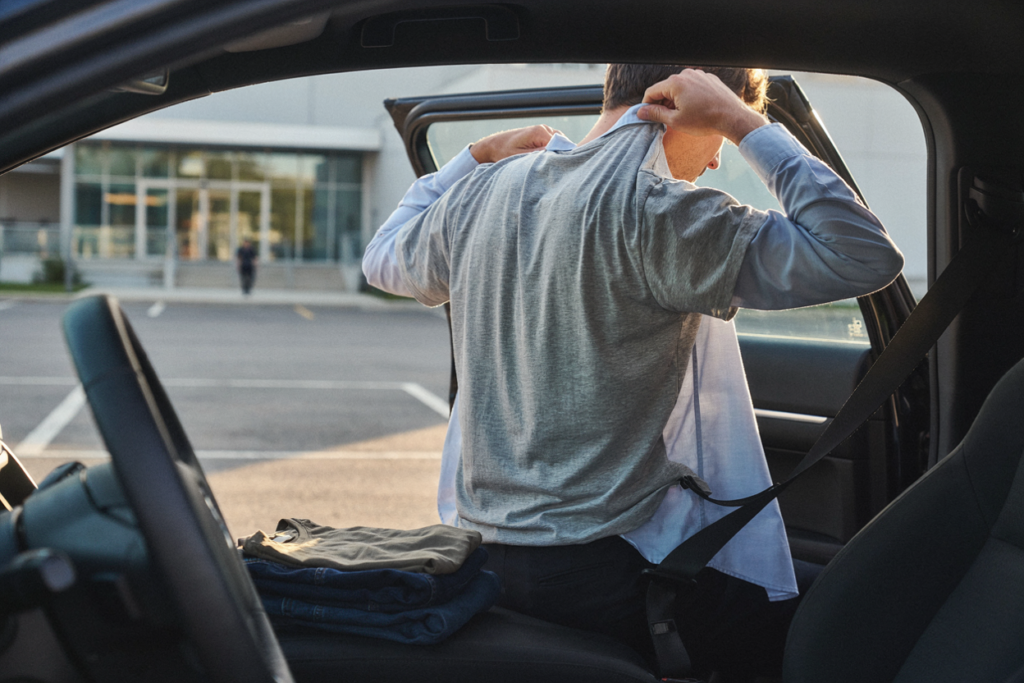
Plenty of people book a session around their work day, and that’s fine. If you’re in a uniform or work attire that doesn’t allow for kneeling and movement, it’s worth packing a change of clothes and swapping before the practical sessions start. Trying to do CPR practice in a pencil skirt or steel caps isn’t impossible, but it’s a lot more awkward than it needs to be, and you’ll get more out of the day if you’re comfortable.
If you’re not sure whether your usual work outfit will hold up, err on the side of packing a spare set. A plain t-shirt and a pair of trackpants folded into your bag takes up almost no room, and it means you’re not stuck improvising halfway through a practical exercise. It’s a small bit of planning that saves a genuinely awkward moment later.
What’s Already Provided
Here’s the part that surprises most people. You don’t need your own first aid kit, and you don’t need to bring one. Everything used in the practical components is supplied:
- Training manikins for CPR and resuscitation practice
- AED trainers
- Bandages, slings, and other first aid materials
- All assessment materials and paperwork
You also don’t need a textbook, a workbook, or a copy of your previous certificate, even if this is a renewal. There’s nothing to source, nothing to print, and nothing to study beforehand.
This trips people up more than you’d expect, particularly anyone who’s done other kinds of compliance training before and got used to buying their own materials or printing a stack of pre-reading. First aid training doesn’t work that way. Every piece of equipment used in the practical sessions belongs to the training provider, gets set up before you arrive, and gets packed away after you leave. You show up, you learn, you leave with a certificate. That’s the whole shape of the day.
You bring | We provide |
Photo ID matching your booking | Training manikins for CPR practice |
Comfortable clothing | AED trainers |
Closed-toe shoes | Bandages, slings, first aid materials |
A water bottle | All assessment materials and paperwork |
What NOT to Bring
A short list this time, because most of it is common sense once you think about it:
- Your own first aid kit or medical supplies, it's not required and won't be used
- Heavy bags or large luggage
- Any prior first aid certificates, they're not needed for the course itself
If you’re renewing, it might feel natural to bring your old certificate along as some kind of proof or reference. You genuinely don’t need it. The new one stands on its own, and your trainer isn’t checking your history against a previous document, they’re judging your skills fresh on the day, the same way they would for someone sitting the course for the first time.
There’s a bit of comfort in that, if you think about it. It means you’re not carrying baggage from years ago into the room with you. Whatever you learned last time, or however long ago your last certificate was issued, the day ahead is a clean slate. Nobody’s comparing you to a previous version of yourself.
The same goes for any personal medical equipment you might use day to day. Unless it’s directly relevant to something you’ve flagged with your trainer beforehand, leave it at home. The course uses its own supplied equipment throughout, and bringing along extra gear just adds weight to your bag for no real benefit.
🍽️ Good to know: It's worth confirming whether lunch is provided beforehand rather than turning up hungry and hoping.
Commonly Forgotten Things That Cause Delays
Most sessions run smoothly, but there’s a handful of things that slow the day down when they get missed:
- Missing or mismatched ID: the single most common hiccup, and the easiest to avoid by checking it before you leave home
- Unconfirmed booking details: double check your session time and location the night before, not on the drive there
- Wrong clothing: showing up in office wear or open shoes means either sitting out the practical work or scrambling for a change of clothes
- Assuming lunch is provided: worth confirming beforehand rather than turning up hungry and hoping
Individually, none of these are disasters. Collectively, they’re the handful of small things that turn an otherwise straightforward day into one with an awkward start. A missing ID means extra admin before you can even settle into your seat. Turning up in the wrong clothes means either sitting out part of the practical work or scrambling to fix it on the spot. None of it stops the day from happening, but all of it is avoidable with about two minutes of checking the night before.
Most of these slip-ups happen for the same reason, people simply don’t think about the day itself until they’re already on their way there. A booking confirmation gets skimmed rather than read properly, or a bag gets packed in a rush the same morning. Running through this list once, the night before, is really all it takes to avoid every item on it.
If You Forget Something
Nobody’s turned away over a forgotten water bottle. Clothing and footwear issues can usually be worked around on the day, though it’s not ideal. ID is the one area where it genuinely matters, since it ties directly to the certificate being issued in the right name. If you’re not sure about anything on this list, a quick call before your session sorts it out faster than guessing.
It’s also worth saying that trainers who run these sessions regularly have seen every version of “I forgot X” there is. You’re not the first person to turn up in the wrong shoes or without a water bottle, and you won’t be the last. The list exists to save you the minor hassle, not because any single item on it is make or break for the day going ahead.
Once you’ve got your ID, your clothes, your shoes, and your water bottle sorted, there’s honestly nothing left to prepare. HLTAID011 is a nationally recognised Statement of Attainment, so you can walk in knowing the certificate you walk out with is the one your workplace needs.
Prefer to talk it through first? Call 0434 778 243.
Packing for a first aid course turns out to be one of the simplest parts of the whole process. A bit of ID that matches your booking, clothes you can move in, shoes with a closed toe, and something to drink, that’s the full extent of what to bring to first aid course day. There’s no gear list to chase down, no forms to print at the last minute, and nothing sitting in the back of your mind that you might have forgotten.
It’s easy to overthink this kind of thing before you’ve done it, especially if it’s been years since your last certificate or this is your first one altogether. People picture some sort of medical kit they’re meant to assemble, or a stack of paperwork to fill out in advance. None of that applies here. The whole point of the day is that the training gear, the assessment materials, everything hands-on, is already set up and waiting for you.
The one part worth double checking before you leave the house is your ID, simply because it’s the piece most likely to cause a hold-up if it doesn’t match your booking name. Everything else on the list is forgiving. Turn up in the wrong shoes and you can usually work around it, though you’ll be more comfortable if you don’t have to. Forget your water bottle and someone will point you toward a tap. ID is really the only item where getting it right matters as much as remembering it at all.
Once that’s sorted, the rest of the day looks after itself. You’ll spend it learning practical skills, working through scenarios with a trainer who’s run this exact session more times than either of you could count, and walking out the door with a certificate that does what it needs to do for your workplace. None of that depends on anything fancy in your bag.
So if you’ve been putting off booking because the logistics felt like one more thing to figure out, that part’s done now. There’s no separate checklist to hunt down, no gear to buy, and no reason to let the small stuff hold up something this straightforward.
None of this needs to be a project. You’re not assembling a kit, you’re not studying beforehand, and you’re not tracking down anything unusual. The whole list fits in a small bag, and most people already own everything on it without needing to buy a single new thing.
If there’s one thing worth taking from all of this, it’s that the preparation side of a first aid course is genuinely the easiest part. The learning itself takes focus and a bit of energy on the day, but getting ready for it takes almost none. Comfortable clothes, closed shoes, a water bottle, and ID that matches your name exactly, that’s genuinely what to bring to first aid course day, and it’s about as low-effort as preparing for anything gets.
Book Your First Aid Training Now
Fast, affordable, and nationally accredited training delivered by professionals who care
Frequently Asked Questions
Q.Does my ID need to match my booking name exactly?
Yes, the name on your photo ID needs to line up with the name on your booking. Mismatches usually come from maiden names, shortened first names, or a recent name change, and they can slow down how quickly your certificate gets issued. Check this the night before rather than at the door.
Q.Do I need to bring my own first aid kit?
No. Every piece of equipment used in the practical sessions, including manikins, AED trainers, and bandages, is supplied. You don't need to source or bring anything medical yourself.
Q.What should I wear if I'm coming straight from work?
Pack a spare set of comfortable clothes if your usual work attire doesn't allow for kneeling and movement. Swapping before the practical sessions start makes the day far more comfortable than trying to work around restrictive clothing.
Q.Do I need to bring my old certificate if I'm renewing?
No. Your new Statement of Attainment stands on its own, and you're assessed fresh on the day regardless of when your last certificate was issued.
Q.Is lunch provided during the course?
This is worth confirming with your specific session beforehand rather than assuming either way, so you're not caught out on the day.
Q.What happens if I forget something on the day?
Most items on this list are forgiving, clothing and footwear issues can usually be worked around. ID is the one exception, since it's tied directly to how your certificate gets issued, so that's the item most worth double checking before you leave home.
Making first aid training more affordable for
every classroom
We believe every student deserves access to life-saving first aid knowledge. That’s why we offer specially reduced pricing for schools and educational groups. Whether you’re booking for a single class, a year group, or your entire school, our flexible packages make training more accessible and cost-effective — without compromising quality.
