
The offer for your paramedicine degree has finally landed. You read the welcome bit twice, maybe three times. Then you scroll down and there’s the placement checklist sitting underneath. Blue Card. Immunisations. Police check. A current first aid certificate. And that’s usually the moment people start searching for basic emergency life support for paramedics, wondering if the certificate they already have is going to cover it.
Maybe you did BELS for your support work job. Or someone told you it’s the place to start. Either way it’s a fair question, and honestly the course codes don’t make it any easier. HLTAID009, HLTAID010, HLTAID011. They all blur together when you’re half excited and half nervous about starting something new.
So here’s the plain English version. HLTAID010 teaches you to recognise and respond to an emergency, do CPR on adults and infants, use a defibrillator and manage those first few minutes before the ambulance gets there. It’s a genuine foundation for paramedic study. Not a box you tick and forget about.
The catch is that Queensland paramedicine programs commonly ask for a first aid certificate like HLTAID011 before your first placement. And HLTAID011 already has everything from HLTAID010 built right into it. So for a lot of students, the honest answer is the bigger course is the one that gets you placement ready.
Below you’ll find what BELS covers, how it stacks up against HLTAID009 and HLTAID011, what Queensland unis typically ask for and how to pick the course that keeps your placement on track. All of it taught face to face in Brisbane by First Aid Alive.
What First Aid Certificate Do Paramedic Students Need?
Most paramedic students in Australia need a current HLTAID011 Provide First Aid certificate before their first clinical placement, plus a CPR certificate kept current every 12 months. HLTAID011 builds on the skills from HLTAID010 basic emergency life support and HLTAID009 CPR, so it’s the course most placement checklists point to.
- HLTAID011 Provide First Aid: the unit most uni placement checklists name, usually renewed every three years
- HLTAID009 Provide CPR: refreshed every 12 months while you study
- Nationally recognised, face-to-face training: online-only and non-accredited certificates are commonly rejected
- University extras: some programs also want Mental Health First Aid
- HLTAID010 on its own: a solid foundation, but rarely enough for placement by itself
Always check your university’s placement checklist before booking.
🩺 Good to know: BELS is all about the first few minutes of an emergency, before paramedics take over.
What Basic Emergency Life Support (HLTAID010) Covers
For HLTAID010 paramedic students, the easiest way to think about it is this: BELS is the stuff you do in the first few minutes, before help arrives. It’s hands-on, it’s practical, and it’s the same core response a paramedic builds on later. If you want the full back-to-basics explainer, have a read of our guide on what basic emergency life support is.
The skills you are assessed on
This is what you’ll actually practise and get assessed on during the course:
- DRSABCD: the step-by-step action plan for any emergency
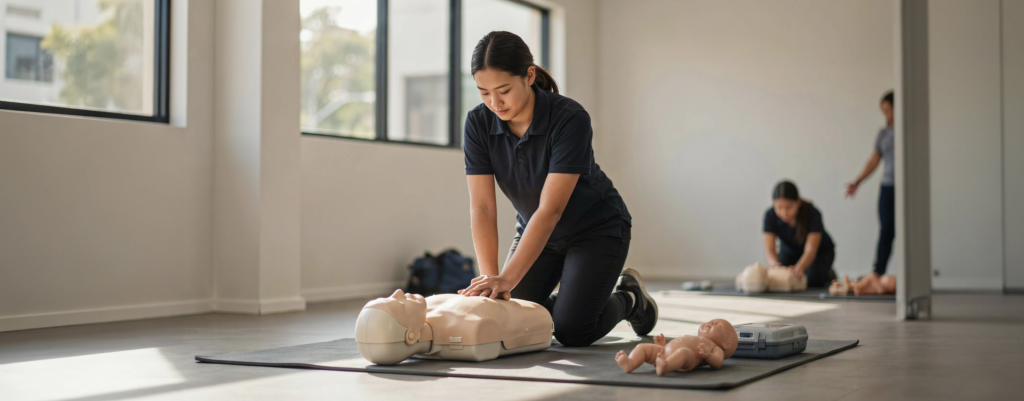
- Adult and infant CPR on the floor: real compressions on manikins, kneeling like you would at a real scene
- AED use: attaching pads and following the defibrillator's prompts
- Recovery position: keeping an unconscious, breathing person's airway clear
- Simulated response: working through a realistic emergency scenario
- Handover: passing clear information to paramedics when they arrive
What HLTAID010 does not cover
You might’ve read somewhere that BELS covers airway equipment. It doesn’t. That’s a pretty common mix-up, and it’s an easy one to make when the course names sound so similar.
Unit | What it includes |
HLTAID010 Basic Emergency Life Support | DRSABCD, CPR, defibrillator use, recovery position, handover |
HLTAID015 Provide Advanced Resuscitation and Oxygen Therapy | Oxygen, airway adjuncts, bag-valve-mask, suction |
So if the airway kit is what you’re after, that’s HLTAID015 territory. Not BELS.
How long it lasts
Once you’ve got it, the usual expectation is first aid every three years and CPR every 12 months, in line with the Australian Resuscitation Council and Safe Work Australia’s model Code of Practice for first aid in the workplace. For paramedic students that yearly CPR refresh matters a lot, because your placement checklist will want it current the whole way through your degree.
Knowing what BELS covers makes the next question easier: how it compares with the other two units you’ll see on placement checklists.
HLTAID009 vs HLTAID010 vs HLTAID011 for Paramedic Students
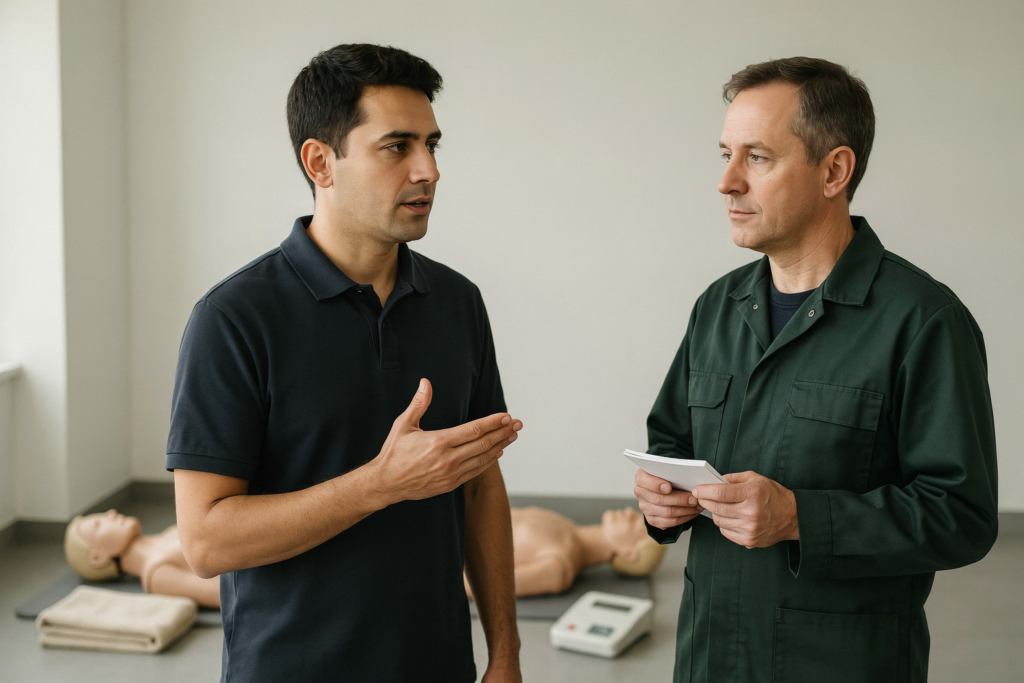
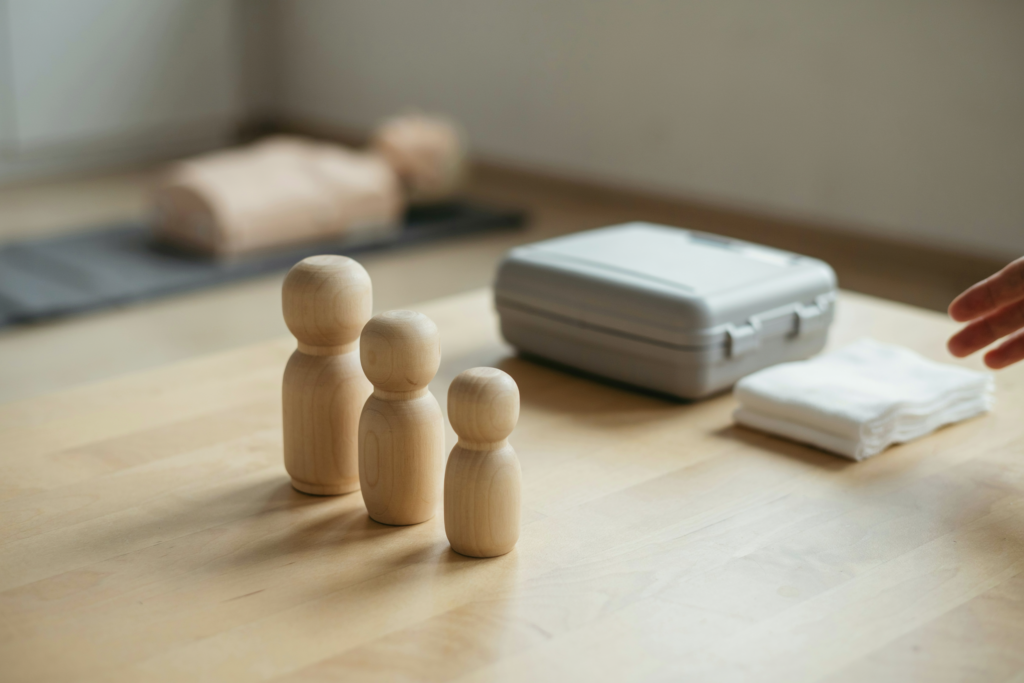
This is where most people get tangled up. Three codes, one digit apart, and a placement checklist that just says “first aid.” The good news is they fit inside each other, a bit like those nesting dolls. Once you see that, the whole thing gets a lot simpler.
Unit | Covers | Placement-ready? | Refresh | Best for |
HLTAID009 Provide CPR | CPR and defibrillator use | No, not on its own | Every 12 months | Your yearly CPR update |
HLTAID010 Basic Emergency Life Support | Everything in HLTAID009, plus DRSABCD, recovery position and handover | Rarely, on its own | CPR every 12 months, rest every 3 years | Care and support work jobs that name BELS |
HLTAID011 Provide First Aid | Contains HLTAID009 and HLTAID010, plus broader first aid | Yes, usually | CPR every 12 months, rest every 3 years | Paramedic students heading to placement |
So if you do HLTAID011, you’re not doubling up or missing anything from BELS. It’s already there. And if you’ve got BELS now for work, it’s not wasted either. It’s the foundation the bigger course sits on.
I’ve kept this bit short on purpose, because we’ve already written a full HLTAID010 or HLTAID011 comparison that goes through the differences one by one. Worth a read if you’re still sitting on the fence.
With the units sorted, here is what Queensland universities actually ask for.
🎓 Before you book: Your uni's official placement page always has the final say.
Paramedic Placement Requirements in Queensland
Every uni does it a little differently, which is half the reason this gets confusing. Paramedic placement requirements in Queensland share the same backbone, a current first aid certificate and current CPR, but the wording and the extras change from one program to the next.
What Queensland universities ask for
Here’s what each university’s official placement page lists. Check your own uni’s page before you book anything, because these get updated.
Provider | First aid requirement | Extras |
UniSQ | Current first aid and CPR certificates | Blue Card, immunisations, criminal history check |
UniSC | Apply (Senior) First Aid and CPR by Week 12, Trimester 1 | Mental Health First Aid |
QUT (grad entry) | Senior First Aid listed as assumed knowledge | Blue Card, vaccinations |
JCU | HLTAID011 plus yearly HLTAID009, attended in person | Online-only rejected |
CQU (HLT51020) | Current approved first aid, CPR every 12 months | WWCC, AFP check |
See the pattern? Nobody’s asking for BELS by name. It’s first aid plus CPR, and in most cases that points straight to HLTAID011 with a yearly HLTAID009 on top.
Why American “BLS certification” articles do not apply to you
Australian unis want a nationally recognised unit from a registered training organisation, following Australian Resuscitation Council (ANZCOR) guidelines. A US BLS card isn’t one of those. So if an article is talking about “BLS certification” and doesn’t mention a HLTAID code, it’s probably not written for you. Skip it and save yourself the stress.
When to book
Book soon after you accept your offer. Honestly, don’t leave it till the week before placement paperwork is due, because weekend dates fill up and you’ll want your Statement of Attainment uploaded with plenty of breathing room.
Then set a yearly reminder for your CPR. It’s the one that sneaks up on people mid-degree. When it comes around, a quick CPR refresher course keeps you current.
Find an HLTAID011 date near me Placement-ready first aid, taught face to face in Brisbane.
So where does basic emergency life support fit if you are still working in care while you prepare?
Where BELS Fits on Your Paramedic Pathway
A lot of people heading into paramedicine aren’t coming straight from school. They’re doing disability support, aged care or community work, pulling shifts while they get their uni offer sorted. If that’s you, BELS probably already has a spot on your pathway. It just isn’t the last stop.
Working in care while you prepare
Your employer might need HLTAID010 for the job you’re doing today. That’s fine, book it and keep your shifts. Just know that before placement you’ll most likely need HLTAID011 as well.
Think of it like getting your learners before your provisional licence. One doesn’t cancel out the other. It gets you moving.
During your degree
Once you’re in, the job is keeping everything current. Your first aid certificate will usually be fine for three years, but CPR needs renewing every 12 months, and placement coordinators do check. A CPR refresher course each year is the easy way to stay on top of it. Put it in your phone the day you get your certificate. In the future you will be grateful.
After you graduate
When you finish your degree, you register through the Paramedicine Board of Australia and Ahpra. “Paramedic” is a protected title, so registration is what lets you use it. That’s a whole separate process from first aid certificates.
If you’re heading into industry roles outside ambulance work, like mine sites, events or remote health, you’ll probably come across advanced resuscitation and oxygen therapy, which is HLTAID015. That’s the unit with the oxygen and airway equipment we talked about earlier. It’s a step up from where BELS started you.
Once you know which course you need, the next step is choosing a provider your university will accept.
✅ Look for this: Nationally recognized, face to face, with the RTO number on your certificate.
Choosing a First Aid Course in Brisbane Your University Will Accept
Here’s the bit nobody wants to get wrong. You’ve worked out you need HLTAID011. Now you’re scrolling through a dozen providers that all look about the same. A few simple checks will tell you if your uni’s going to accept the certificate at the end of it.
Nationally recognised, with the RTO number on the certificate
Your Statement of Attainment should show the exact unit code, the unit title and the provider’s registered training organisation number. First Aid Alive is RTO 31106, and you can look us up on training.gov.au anytime.
🔍 Check any provider quickly: Go to training.gov.au, type in their RTO number, and look for the unit code on their scope. If it's not there, keep scrolling.
Face-to-face practical assessment
Placement checklists commonly reject online-only certificates, and for good reason. You can’t learn CPR on the floor from a screen. Course content follows current Australian Resuscitation Council (ANZCOR) guidelines, so what you practise is what’s expected in Australia.
Certificate turnaround and tax invoice
Your placement coordinator wants the certificate uploaded, not “coming soon.” You’ll also get a tax invoice with your booking, which is handy if you’re claiming it back or popping it in your tax return.
Parking and weekend dates
If you’re studying, working shifts or both, a course that’s hard to get to isn’t much help. Look for easy parking and weekend dates that fit around everything else.
Your Next Step
Basic emergency life support for paramedics is a real foundation. If you’ve already got it through your support work job, you’re a step ahead of plenty of people starting their degree, and those skills don’t go anywhere.
For placement, though, most Queensland unis want HLTAID011 plus CPR kept current every 12 months. Get that sorted early and your placement paperwork stops being one more thing hanging over your head.
Start by pulling up your university’s placement checklist. Read exactly what it asks for, including any extras like Mental Health First Aid, so you know what you’re booking before you book it.
Then book HLTAID011, or HLTAID010 now if your employer needs it for work. Find an HLTAID011 date near me for placement-ready first aid, taught face to face in Brisbane.
Once your Statement of Attainment lands, upload it to your uni’s placement system straight away. Don’t let it sit in your inbox under a pile of enrolment emails.
After that, set a yearly CPR reminder in your phone, or let us text you when it’s due. It’s the one renewal that sneaks up on students mid-degree, and a quick refresher keeps you on track.
Book Your First Aid Training Now
Fast, affordable, and nationally accredited training delivered by professionals who care
Frequently Asked Questions
Q.Is HLTAID010 enough for paramedic placement?
Usually not by itself. Most Queensland paramedicine programs ask for a first aid certificate like HLTAID011, plus CPR kept current every 12 months. BELS is a great foundation, but it rarely ticks the placement box on its own, so check your uni's checklist first.
Q.Does HLTAID011 include HLTAID010?
Yes. HLTAID011 Provide First Aid contains everything in HLTAID010 Basic Emergency Life Support and HLTAID009 Provide CPR, so you don't need to do BELS separately for placement.
Q.How often do paramedic students renew CPR?
Every 12 months. That's the common expectation from the Australian Resuscitation Council and Safe Work Australia, and most placement checklists ask for it too, so set a yearly reminder the day you get your certificate.
Q.Can I do my placement first aid course online?
Not fully online. Placement checklists commonly reject online-only and non-accredited certificates, because CPR and first aid need a hands-on practical assessment done face to face with a trainer.
Q.Will my university accept an American BLS certificate?
Very unlikely. Australian universities ask for a nationally recognised unit from a registered training organisation, like HLTAID011 and HLTAID009, and a US BLS card belongs to a different system. If in doubt, ask your placement coordinator.
Q.I already have HLTAID010 from my support work job. Do I need to start again?
Not from scratch, but you'll most likely still need HLTAID011 before placement because that's what most universities ask for. Your BELS isn't wasted, and a quick call will help you work out the simplest way to get placement ready.
Making first aid training more affordable for
every classroom
We believe every student deserves access to life-saving first aid knowledge. That’s why we offer specially reduced pricing for schools and educational groups. Whether you’re booking for a single class, a year group, or your entire school, our flexible packages make training more accessible and cost-effective — without compromising quality.
Contact Us
Have questions or ready to enrol in a course? Reach out to our friendly team for bookings, group sessions, or general enquiries. We’re here to help you choose the right first aid training for your needs.
