
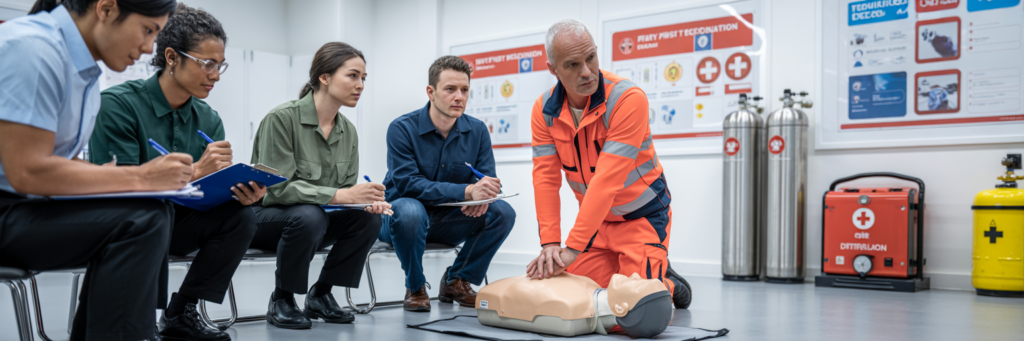
You’re 200 kilometres from the nearest hospital when a workmate collapses with chest pain. Your basic first aid training feels woefully inadequate. The ambulance response time? At least 90 minutes. In this moment, you are it.
This scenario keeps remote site workers, outdoor guides, and workplace first aid officers awake at night. While basic first aid covers minor injuries, advanced first aid step by step training equips you to manage life-threatening emergencies until professional help arrives.
Advanced first aid (HLTAID014) goes far beyond applying bandages. You’ll learn to manage severe bleeding, airway obstructions, cardiac emergencies, and trauma scenarios that require extended care. These are the skills that transform you from a nervous bystander into a confident first responder.
In this comprehensive guide, we’ll walk through the essential advanced first aid procedures step by step, explain the difference between basic and advanced techniques, and show you exactly what professional HLTAID014 training covers. Whether you work in mining, construction, outdoor recreation, or any remote environment, this guide will clarify what advanced first aid really means—and why it might save a life.
What Is Advanced First Aid?
Advanced first aid (HLTAID014) is comprehensive medical training that equips you to manage life-threatening emergencies and provide extended care until professional help arrives. Unlike basic first aid, which covers minor injuries and short-term care until the ambos show up, advanced first aid step by step training prepares you for complex medical situations that require clinical judgment and advanced interventions.
Advanced first aid includes:
- Managing severe bleeding and traumatic injuries that basic pressure dressings can’t handle
- Advanced airway management and oxygen therapy when someone’s struggling to breathe
- Cardiac emergency response beyond basic CPR—including defib use and extended resuscitation
- Treatment of shock, spinal injuries, and fractures that need proper immobilisation
- Multi-casualty incident triage and coordination when more than one person’s injured
- Extended patient care for hours until evacuation arrives
- Use of advanced medical equipment and supplies you won’t find in a basic first aid kit
This nationally recognised qualification is genuinely needed for remote site workers, workplace first aid officers, outdoor recreation professionals, and anyone responsible for emergency response in isolated environments where ambulance response times exceed 30 minutes.
📋 QUICK COMPARISON: Basic vs Advanced First Aid
| Feature | Basic First Aid (HLTAID011) | Advanced First Aid (HLTAID014) |
|---|---|---|
| Care Duration | Until help arrives (10-20 mins) | Extended care (2+ hours) |
| Injury Complexity | Minor cuts, sprains, burns | Life-threatening trauma, cardiac events |
| Equipment Used | Basic bandages, ice packs | Oxygen, tourniquets, advanced airways |
| Decision Making | Follow simple protocols | Clinical judgment required |
| Typical Environment | Urban workplaces | Remote sites, FIFO operations |
| Skill Level | Foundational | Advanced clinical techniques |
Understanding Advanced First Aid vs Basic First Aid
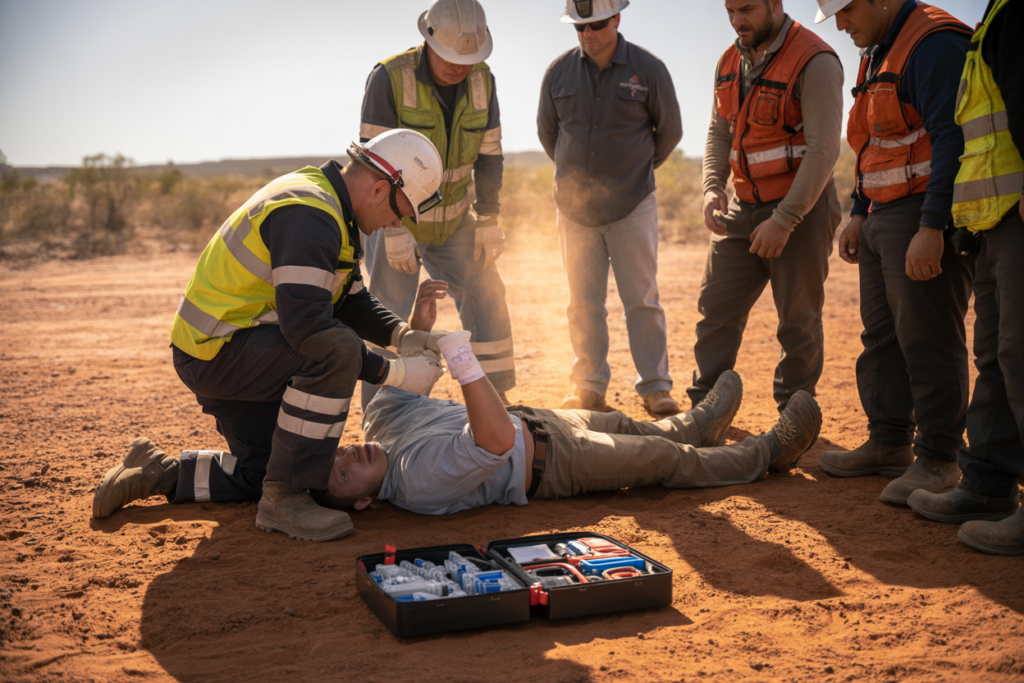
Basic first aid—officially called Provide First Aid (HLTAID011)—covers the essentials you’d need in everyday situations where help’s arriving relatively quickly. The training assumes you’ll have paramedics on scene within 10-20 minutes max. It’s suitable for urban workplaces where emergency response is quick.
Advanced first aid (HLTAID014) picks up where basic training stops. The key difference isn’t just learning more techniques—it’s learning to provide extended care when professional help is delayed. Sometimes significantly delayed.
You’ll learn clinical decision-making skills that basic first aid doesn’t touch. Things like assessing whether someone’s bleeding is life-threatening or just looks scary. How to manage an airway when someone’s unconscious for an extended period. When to use oxygen therapy and how to administer it properly.
The training includes advanced equipment usage: oxygen cylinders, advanced airways, proper spinal immobilisation gear, serious trauma management supplies. You’ll practice multi-casualty scenarios where you need to make triage decisions—who needs help first when three people are injured.
You need HLTAID014 if you work in:
- Remote mining operations or construction projects
- Outdoor recreation leadership roles
- Workplace first aid officer positions in isolated locations
- Any environment where ambulance response exceeds 30 minutes
Most employers in mining and construction now require advanced first aid for supervisors and designated first aid officers. If you’re responsible for a crew’s safety, basic first aid isn’t sufficient coverage anymore.
The Advanced First Aid Step by Step Response System (DRSABCD)
Every emergency response follows DRSABCD. Advanced first aid step by step procedures take each letter further—preparing you for complex scenarios where help is hours away.
D – Danger Assessment: Scan for multiple hazards. In remote worksites, you’ve got machinery, electrical risks, unstable ground, chemical exposure. Identify everything that could injure you before approaching. Use proper PPE—gloves minimum, hard hat and safety glasses if required. You can’t help anyone if you become casualty number two.
R – Response Evaluation: Check consciousness using the AVPU scale: Alert, responding to Voice, responding to Pain, or Unresponsive. Document this because when paramedics arrive an hour later, they need to know if the person’s deteriorating. This is when you’re deciding if aerial evacuation is needed.
S – Send for Help: In remote areas, you’re dealing with satellite phones or patchy coverage. Provide exact GPS coordinates, not just “we’re at the northern site.” Describe injuries in detail so they dispatch appropriate resources.
A, B, C, D – Clinical Assessment: Airway management, breathing assessment (rate and quality), circulation checks, and defibrillation protocols. You’re counting respiratory rate, checking pulse points, assessing skin colour—all signs of whether their system’s coping or they’re heading into shock.
This systematic approach keeps you focused when everything feels chaotic. Advanced training gives you the clinical skills to actually do something effective at each stage.
💡 PRO TIP: Modern tourniquets can stay on safely for up to 2 hours. Don't hesitate to use one when direct pressure fails—"lose the limb vs lose the life" is outdated thinking. Properly applied tourniquets save lives without limb loss.
Managing Severe Bleeding Step by Step
Severe bleeding separates basic from advanced first aid real quick. When direct pressure isn’t stopping the bleeding and you’re 90 minutes from help, advanced techniques become the difference between life and death.
Identifying Life-Threatening Bleeding: Blood spurting from the wound (arterial), flowing steadily and heavily (major venous), or pooling rapidly. The person might show signs of shock: pale, clammy skin, rapid weak pulse, confusion. Your immediate priority: stop the bleeding. Everything else is secondary.
Pressure Point Technique: When direct pressure isn’t enough, compress arteries against bone to reduce blood flow. The brachial artery (inside upper arm) controls flow to the lower arm. The femoral artery (groin) controls flow to the leg. You’re adding pressure point control while maintaining pressure on the wound—requires two hands or two people.
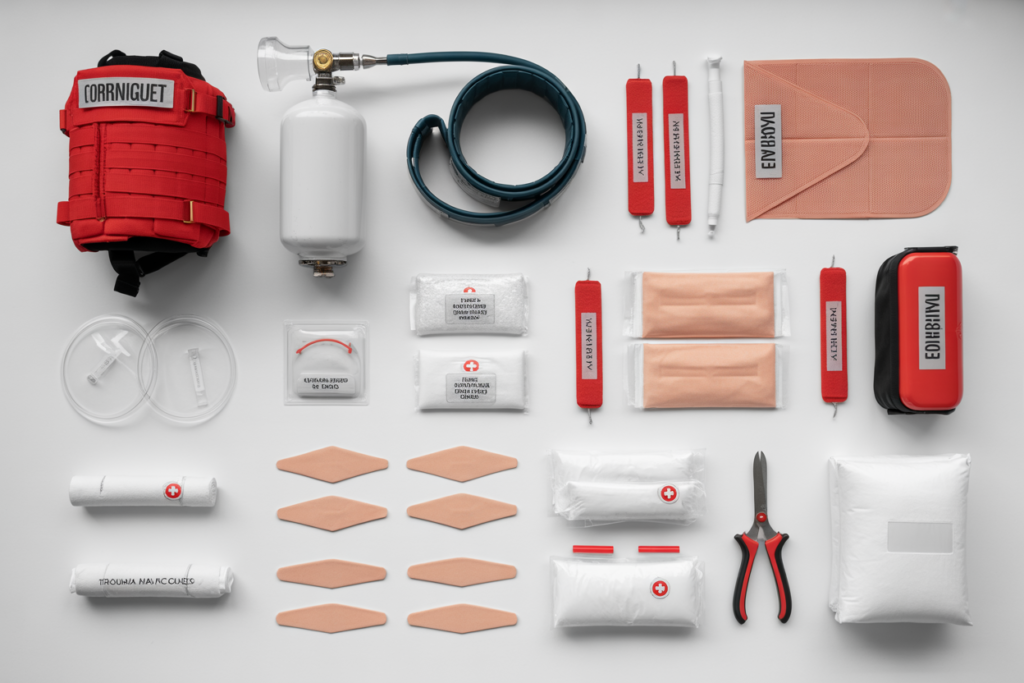
Tourniquet Application: Modern combat medicine proved tourniquets save lives when applied correctly. Use them for severe limb bleeding that direct pressure can’t control. Position 5-7cm above the wound, tighten until bleeding stops completely, note the time, don’t loosen it. That’s for hospital staff. Commercial tourniquets are about $40 and worth having when someone’s bleeding out.
Extended Care Monitoring: Check consciousness every 5-10 minutes. Monitor pulse and breathing, write it down with timestamps. Keep them warm—blood loss causes hypothermia fast. Position them flat with legs slightly raised if conscious and not vomiting. This is what advanced training prepares you for—managing that person for the next hour or two until help arrives.
Advanced Airway Management Techniques
When someone’s unconscious and can’t protect their airway, you’ve got minutes before brain damage starts. Advanced training takes you beyond basic recovery position.
Recognising Obstruction: Partial obstruction sounds like noisy breathing—gurgling, snoring sounds. Complete obstruction is silent—no air movement. In unconscious casualties, their tongue falling back is the most common obstruction.
Manual Techniques: Head-tilt chin-lift for most situations. Jaw thrust when you suspect spinal injury—lifting the jaw forward without moving the neck. If you’re managing someone’s airway for 45 minutes, position yourself to maintain these without exhausting yourself.
Airway Adjuncts: Oropharyngeal airways (OPA) sit behind the tongue in unconscious people with no gag reflex. Nasopharyngeal airways (NPA) are safer for semi-conscious people. You’ll practice measuring and inserting these on mannequins until it’s muscle memory.
Suctioning: Manual suction devices let you clear vomit or blood from the airway. Position carefully, don’t shove it down their throat, suction while withdrawing. No more than 15 seconds at a time.
Oxygen Therapy: Remote site kits often include oxygen cylinders. You’ll learn when oxygen’s indicated (cardiac issues, severe trauma, shock), how to set flow rates, apply masks, and monitor cylinder pressure so you don’t run out mid-treatment.
Cardiac Emergency Response Beyond Basic CPR
Cardiac emergencies test whether your training’s adequate. Basic CPR is straightforward, but what happens when help isn’t arriving for 90 minutes?
Before Arrest: Classic signs include chest pain or pressure, pain radiating to arm or jaw, shortness of breath, sweating. Some people present differently—nausea, back pain, overwhelming fatigue. Sit them down, keep them calm, give aspirin if available and they’re not allergic. Call for help immediately.
Extended CPR: You might be doing CPR for 45 minutes or longer in remote locations. High-quality compressions mean 100-120 per minute, 5-6cm depth, full chest recoil, minimal interruptions. Two-person CPR with rotation every two minutes prevents fatigue destroying compression quality.
AED Use: The AED analyzes rhythm and shocks only if it’s shockable. Proper pad placement, drying wet skin, managing multiple shocks over extended periods. When the AED says “no shock advised,” keep doing CPR—the rhythm’s not currently shockable but compressions still matter.
Post-Arrest Care: If they come back—recovery position if breathing adequately, constant monitoring because they can arrest again, oxygen therapy if available. Check pulse and breathing every few minutes, ready to restart CPR immediately.
Shock Recognition and Management
Medical shock means the body’s not getting enough blood flow to vital organs. You’ve got maybe 20-30 minutes to stabilize before things get really bad.
Types of Shock: Hypovolemic (blood/fluid loss), cardiogenic (heart can’t pump), anaphylactic (severe allergic reaction), neurogenic (spinal injury). Knowing which type changes your management approach.
Early Signs: Rapid weak pulse, pale cold clammy skin, rapid shallow breathing, anxiety or confusion, nausea. Catching shock early makes treatment more effective.
Treatment Steps: Lay them flat and raise legs 20-30cm (except for spinal injury, head injury, or difficulty breathing). Control any bleeding. Cover with blankets for warmth but don’t apply direct heat. Oxygen therapy if available. Reassure and calm them. Monitor vitals every 5 minutes and document changes.
You’re buying time until proper medical care arrives, keeping vital organs perfused with whatever blood flow you can maintain.
🌡️ ENVIRONMENTAL FACTOR: Queensland's extreme climate adds another layer of complexity to remote first aid. Heat stroke in summer can develop within 30 minutes. Winter hypothermia is real at altitude or during overnight shifts. Always factor environmental conditions into your assessment and treatment.
Environmental Emergencies in Remote Worksites
Remote work means dealing with environmental hazards—extreme heat, hypothermia, and Australian wildlife that actually wants to hurt you.
Heat Illness: Heat exhaustion shows heavy sweating, weakness, nausea, hot clammy skin. Treatment: remove from heat, cool down with wet cloths, give water. Heat stroke is the body’s cooling system failed—they’ve stopped sweating, hot dry skin, possibly unconscious. This kills people. Aggressive cooling needed: soak with water, fan them, ice packs on neck and groin. Call urgent evacuation immediately.
Hypothermia: Mild hypothermia means uncontrollable shivering, confusion, clumsy movements. Severe hypothermia below 32 degrees—shivering stops (bad sign), barely conscious, weak pulse, shallow breathing. Remove wet clothing, insulate from cold ground, warm gradually not rapidly. Warm sweet drinks if conscious. Handle gently because severe hypothermia makes the heart irritable.
Snake Bite Management: Australian snake bite protocol uses pressure immobilisation. Apply broad pressure bandage over entire limb firmly (not tourniquet tight), immobilise with splint, mark bite location, don’t wash bite site. Keep person completely still—movement spreads venom. Get to hospital urgently for antivenom. Funnel-web spiders use same protocol. Redback spiders: ice pack, no pressure bandage.
Spinal Injury Assessment and Immobilisation
When to Suspect: High-energy mechanisms (falls from height, vehicle accidents, heavy machinery strikes), neck or back pain, numbness or weakness in limbs, loss of bowel control, found unconscious. If unsure, treat it as spinal injury.
Manual Stabilisation: Position at their head, hands on either side stabilizing in neutral position. Once you’ve got hold, you’re committed—could be 40 minutes before proper immobilisation. Don’t let go.
Log Roll: Minimum three people. Person at head controls and calls commands, others at shoulders and hips. Roll as one unit keeping spine aligned. Practice makes this smooth when someone’s vomiting with suspected neck fracture.
Cervical Collars: Measure properly, apply while maintaining manual stabilisation. Collar alone isn’t full immobilisation—you need body straps and head blocks too. Modern protocols avoid over-immobilising when clinical assessment suggests low risk.
Fracture Management and Immobilisation
Broken bones happen in remote worksites. Someone’s hit by falling equipment, twists wrong stepping off machinery, gets caught in a vehicle rollover. You’re assessing severity, providing pain relief through immobilisation, and making sure you don’t cause additional damage.
Identifying Fractures: Strong indicators include hearing a crack when it happened, obvious deformity, inability to bear weight, severe localized pain over bone, grinding sensation when palpating, rapid swelling. Treat suspected fractures as actual fractures—consequences of under-treating are worse than over-treating a sprain.
RICE Protocol Extended: Rest the injured part for potentially hours. Ice for 20 minutes on, 20 off to prevent cold injury. Compression with elastic bandage—check circulation below injury regularly. Elevation above heart level if possible. You’re monitoring and adjusting over time as swelling increases.
Splinting Techniques: Immobilise the joint above and below the fracture. Use SAM splints, vacuum splints, or improvise with rolled newspapers, sticks, or cardboard. Pad where it contacts bone, secure firmly but not cutting off circulation. Check fingers or toes every 15-20 minutes because swelling can make splints too tight. Splint in the position found—don’t try straightening deformities.
Open Fractures: Bone’s broken through skin—infection risk is massive. Don’t push bone back under skin. Control bleeding around the bone, cover with sterile dressing, immobilise carefully, monitor for shock. These need surgery urgently.
Managing Burns and Soft Tissue Injuries
Burns in remote worksites come from hot machinery, welding sparks, chemical exposure, friction from equipment. Understanding severity determines whether you’re managing on site or calling urgent evacuation.
Burn Classification: First-degree affects outer skin—red, painful, heals without scarring. Second-degree goes deeper—blistering, severe pain, red and splotchy. Third-degree destroys all layers—white or charred appearance, might not hurt because nerves are destroyed. Chemical burns need 20+ minutes irrigation. Electrical burns are deceptive—small wounds but massive internal damage.
Rule of Nines: Adult body divides roughly: head 9%, each arm 9%, front torso 18%, back 18%, each leg 18%, groin 1%. Burns over 15-20% body surface area are life-threatening. Burns to face, hands, feet, or major joints are serious regardless of size.
Treatment: Cool with running water for 20 minutes minimum. Cover with non-stick dressings or cling film. For large burns, fluid loss causes shock—keep them warm, monitor constantly. Pain management in the field is limited—cool water helps, proper dressing protects nerve endings.
Crush Injuries: Compartment syndrome is your concern—swelling trapped inside muscle compartments compresses blood vessels. Signs include severe pain that increases over time, numbness, tense swollen limb, loss of pulse. Elevate slightly, remove constrictive items before swelling worsens. If something’s been crushing a limb for 15+ minutes, don’t remove it without medical guidance—release can flood circulation with toxins causing cardiac arrest.

Multi-Casualty Incident Triage
When you’ve got three, four, five people injured, you can’t help everyone at once. Triage determines who gets help first.
START System: Simple Triage And Rapid Treatment. Spend 60 seconds per person assessing, not treating. Check Respiration, Pulse/Perfusion, Mental status (RPM).
Triage Categories:
- Red tag – IMMEDIATE: Life-threatening, need urgent treatment to survive
- Yellow tag – DELAYED: Serious but stable, can wait 30-60 minutes
- Green tag – MINOR: Walking wounded, can wait hours
- Black tag – DECEASED/EXPECTANT: Not survivable with available resources
🎯 THE DECISION POINT: You've read this entire guide. You know you need this training. You've probably known for months that basic first aid isn't adequate for your work environment. The only thing stopping you now is actually booking the course. Don't wait for an incident to force your hand.