

You’ve booked your Low Voltage Rescue course for Saturday. Certificate needed by Monday. But there’s one question keeping you up at night: What if I don’t pass the assessment?
Here’s the reality—most electricians feel anxious about their Low Voltage Rescue assessment. Not because it’s impossibly difficult, but because they don’t know what’s actually tested. You’ve probably heard horror stories about sparkies failing practical assessments or freezing under pressure during rescue scenarios.
This guide breaks down exactly what happens during your Low Voltage Rescue assessment in Queensland. You’ll learn what practical skills are tested, how the assessment is structured, what assessors are looking for, and most importantly—how to walk in genuinely prepared, not just hoping you’ll wing it.
Let’s eliminate the anxiety and replace it with confidence.
⚡ QUICK TIP: Most assessment anxiety comes from not knowing what to expect. Once you understand the structure and practice adequately during training, the assessment becomes a straightforward demonstration of skills you already have.
What Is Tested in a Low Voltage Rescue Assessment?
A Low Voltage Rescue assessment in Queensland tests two core components: theoretical knowledge and practical rescue skills.
The assessment includes:
Theory Assessment (Written/Verbal)
- Electrical hazards and voltage levels
- Legal responsibilities under WorkSafe Queensland regulations
- Emergency response procedures
- Rescue equipment identification
Practical Rescue Scenarios
- Identifying an electrical emergency
- Isolating power sources safely
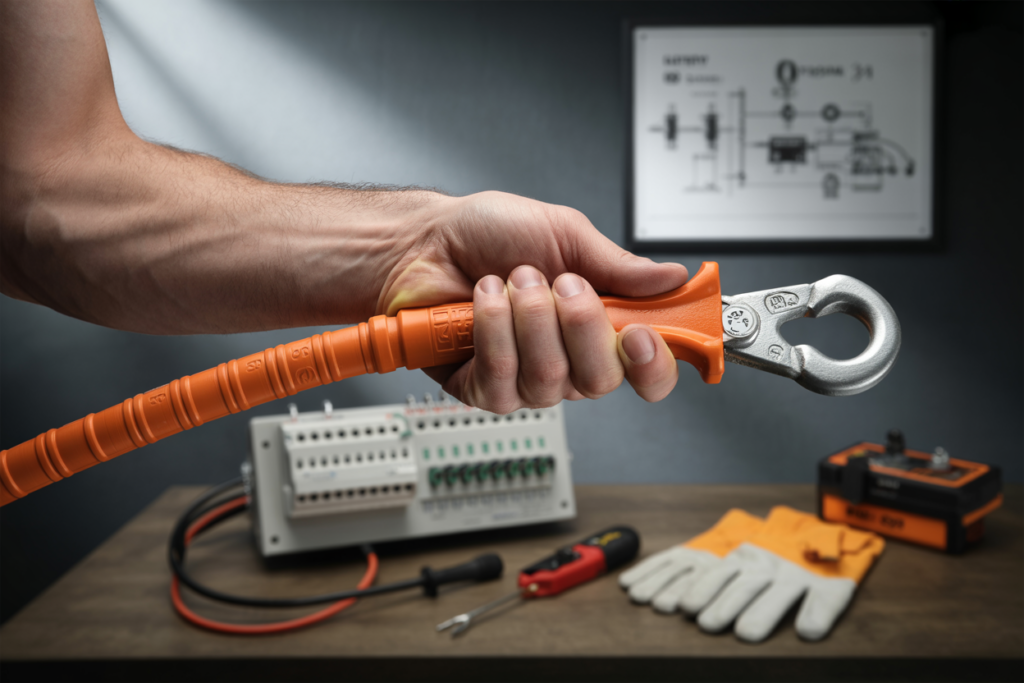
- Using insulated rescue hooks correctly
- Separating victim from live electrical equipment
- Performing CPR on electrical shock victims
- Calling emergency services (000)
Equipment Demonstration
- Correct use of insulated rescue poles
- Personal protective equipment (PPE) application
- Voltage testing procedures
Assessors evaluate your decision-making under pressure, technique accuracy, and ability to perform rescue procedures without hesitation.
Understanding the Low Voltage Rescue Assessment Structure
Before you walk into your Low Voltage Rescue course, knowing how the assessment works reduces half the anxiety.
Two-Part Assessment Overview
Your Low Voltage Rescue assessment has two distinct parts, and you need to pass both to get your certificate.
Part 1: Theory Component Format: Written or verbal (depends on your RTO) Pass mark: Typically 80% or higher
Part 2: Practical Component Format: Hands-on scenario-based testing Pass mark: Demonstrate competency in all required tasks
Here’s what most sparkies don’t realize—you can’t just nail the theory and scrape through the practical. Both components need to be passed independently. If you ace the theory but fail the practical, you’re not getting your certificate that day.
About 95% of participants pass the theory assessment on their first attempt. The practical component has a slightly lower pass rate (around 88-92%), but that’s usually down to nerves rather than actual incompetence.
ASQA (Australian Skills Quality Authority) sets the assessment standards, and WorkSafe Queensland enforces them. Your RTO can’t just hand out certificates—they need to properly assess that you can actually perform a rescue.
Theory Assessment Components
The theory portion isn’t trying to trick you. It’s checking you understand the basics before they let you loose on the practical scenarios.
What’s actually covered:
Electrical hazard recognition – Identify voltage levels, recognize live parts, understand what makes something dangerous. Basic stuff like knowing the difference between extra low voltage (ELV), low voltage (LV), and high voltage.
WorkSafe Queensland legal obligations – Your responsibilities under the Electrical Safety Act 2002. What you’re required to do if someone’s being electrocuted. When you need to call 000.
Emergency response protocols – The DRSABCD sequence (Danger, Response, Send for help, Airway, Breathing, CPR, Defibrillation). You’ll need to know this inside out.
Rescue equipment safety requirements – What insulated rescue equipment is, when you use it, how it’s rated. PPE requirements.
CPR procedure overview – Compression depth, rate, ratio. When to start CPR.
Most RTOs use a written format—typically multiple choice or short answer questions. You need 80% or higher to pass.
Common topics that trip people up:
- Specific voltage level thresholds
- Legal notification requirements to WorkSafe
- Exact CPR compression rates and depths
- Equipment testing intervals
Practical Assessment Components
This is where the real assessment happens. Theory proves you know the concepts—practical proves you can actually perform a rescue when someone’s life depends on it.
You’ll be assessed on realistic electrical emergency scenarios using electrical panel mockups. Good training providers set up actual switchboards and panels to simulate real job site conditions.
You need to demonstrate the complete rescue sequence:
- Assess the scene for danger
- Identify the electrical hazard
- Isolate the power source (if accessible)
- Use insulated rescue equipment to separate victim from electrical source
- Check victim response
- Call for help (demonstrate calling 000)
- Begin CPR if required
- Continue until help arrives
The assessor isn’t looking for perfection. They’re looking for safe, effective decision-making under pressure. If you can isolate power, separate the victim safely using proper equipment, and begin CPR, you’ll pass.
🎯 KEY POINT: Assessors evaluate competency, not perfection. You don't need to be the world's best at low voltage rescue—you just need to demonstrate you can do it safely when required.
What Practical Skills Are Actually Tested
Power Isolation Assessment
This is usually the first thing you’ll be tested on, and it’s where a lot of sparkies overthink things.
Your ability to identify the power source and isolate it safely. But here’s where people fail—they either rush in without assessing the scene, or they freeze because they’re trying to remember textbook procedures.
The correct sequence:
First, you assess for danger. Don’t just charge in. Look around. Is the person still in contact with the electrical source? Are there multiple power sources? Is there water on the floor?
Second, you identify where the power’s coming from. You need to verbalize this to the assessor—they want to know you’re thinking through the problem.
Third, you isolate the power if it’s safe and accessible. If you can’t safely access the isolator, you say so and move to Plan B (using insulated rescue equipment).
Victim Separation Using Rescue Equipment
Power can’t always be isolated quickly or safely. You need to separate the victim from the electrical source using insulated rescue equipment.
Your ability to use insulated rescue equipment correctly and safely. This isn’t something most electricians do regularly, which is why this component has a higher failure rate.
The correct technique:
You select the appropriate insulated rescue hook rated for low voltage work. You position yourself safely—not standing in water, not in direct contact with any conductive surfaces, maintaining a safe distance from the electrical source.
You use the rescue hook to push or pull the victim away from the electrical source. You’re not trying to lift them—you’re trying to break the electrical contact.
Here’s what trips people up:
They don’t maintain proper distance. They lean in too close, putting themselves at risk.
They try to lift the victim with the hook. That’s not what it’s for.
They panic and grab metal parts of the hook or touch the victim directly. That’s an automatic fail. Your hands stay on the insulated portion only.
CPR Performance on Electrical Shock Victims
Once you’ve isolated power and separated the victim, you move into CPR assessment. This is the HLTAID011 component of your Low Voltage Rescue certification.
The correct procedure:
Check for response. Tap and talk. “Can you hear me? Are you okay?” If no response, you proceed.
Send for help. Call 000 or direct someone else to call. You need to verbalize this to the assessor.
Check airway and breathing. If they’re not breathing normally, start CPR.
Begin chest compressions:
- Position: Center of chest, lower half of sternum
- Depth: 5-6cm (adult)
- Rate: 100-120 compressions per minute
- Ratio: 30 compressions, 2 breaths
Common Mistakes That Cause Assessment Failures
Let’s talk about why sparkies fail Low Voltage Rescue assessments. It’s rarely because they’re incompetent. It’s usually because they make one or two specific mistakes that could’ve been easily avoided.
| Mistake | Why It Fails You | The Fix |
|---|---|---|
| Rushing in without scene assessment | Assessor sees you'd become victim #2 in real emergency | Practice stopping. Count to 3 before approaching. Scan scene first. |
| Improper rescue equipment use | Getting too close, wrong grip, trying to lift instead of separate | Demand 10+ practice attempts during training. Build muscle memory. |
| Inadequate CPR technique | Compressions too shallow, wrong rate, poor hand position | Push harder than feels comfortable. Count out loud during practice. |
| Poor communication | Assessor can't evaluate decision-making if you're silent | Talk through entire rescue. Verbalize every action and observation. |
How to Prepare for Your Assessment
The Night Before: What Actually Helps
Most electricians overthink this. You don’t need to cram like it’s a university exam.
What to review:
Spend 15-20 minutes reviewing basic theory concepts:
- Voltage level definitions (ELV vs LV vs HV thresholds)
- DRSABCD sequence
- CPR compression rate and depth (100-120/min, 5-6cm)
- CPR ratio (30 compressions, 2 breaths)
- Legal responsibilities under WorkSafe Queensland
Don’t do these things:
Don’t try to study complex electrical theory. Don’t watch YouTube videos of rescue scenarios all night. Don’t stay up late cramming. Sleep matters more than last-minute study.
What to Bring to Your Assessment
Required items:
- Photo ID (driver’s license)
- Pen (for written components)
- Covered work boots (steel cap or composite toe)
- Comfortable clothing (you’ll be kneeling, bending, moving)
Recommended items:
- Water bottle
- Small snack for lunch break
Mental Preparation Strategies
Reframe how you think about assessment:
Instead of: “I’m being tested and might fail” Think: “I’m demonstrating skills I’ve practiced”
Instead of: “The assessor is trying to catch me making mistakes” Think: “The assessor wants to see me perform competently”
Visualization technique:
Night before, spend 5 minutes visualizing yourself performing the rescue successfully. Picture yourself arriving at the scene, stopping to assess, verbalizing what you see, isolating power, using the rescue hook correctly, performing CPR with proper technique.

Assessment Day Tips: What Actually Makes a Difference
Verbalize Everything You’re Thinking
This is the single biggest tip that electricians overlook. The assessor can’t read your mind.
Talk through your entire thought process out loud. “I can see a victim in contact with this electrical panel. First, I’m checking for other hazards. No water visible on the floor. The power source appears to be coming from this main switchboard over here.”
Don’t Rush—Slow and Correct Beats Fast and Wrong
Some electricians think assessment is a speed test. That’s not what assessors are looking for.
Deliberate and methodical. Take your time at each step. Demonstrate that you’re thinking through the problem, not just trying to get it over with.
If You Make a Small Mistake, Keep Going
Sometimes what you think is a mistake isn’t actually a failure point. By stopping and drawing attention to it, you’re highlighting something that might not have mattered.
If you realize you made a small mistake—wrong hand position, forgot to verbalize something—just correct it smoothly and continue.
CPR Technique: The Three Things That Actually Matter
- Compression depth (5-6cm) – Push harder than feels comfortable. On a training mannequin, you need to hear/feel the click that indicates proper depth.
- Compression rate (100-120 per minute) – Roughly the beat of “Stayin’ Alive” by the Bee Gees.
- Proper hand position – Center of the chest, lower half of the sternum. Heel of one hand on the sternum, other hand on top, fingers interlaced.
Get these three things right and you’ll pass CPR.
Ready to Get Your Low Voltage Rescue Certification?
You’ve made it through this complete guide. You now know more about Low Voltage Rescue assessment than 90% of electricians knew before their training day.
What You’ve Learned
The assessment structure isn’t mysterious. Two components—theory and practical. Pass both to get your certificate.
Most electricians pass first time. 88-92% pass practical assessment on first attempt. You’re statistically likely to pass if you take the training seriously.
Common failures are preventable. Don’t rush in without scene assessment. Use rescue equipment properly. Push hard enough during CPR. Verbalize your decision-making. These four things prevent most failures.
Why Saturday Training Makes Sense
You can’t afford to lose weekday income. Every Monday-Friday you’re off tools is money you’re not earning.
Saturday training means Monday compliance. Book Saturday morning, get certified by afternoon, send your cert to the project manager Saturday night, start the job Monday morning.
What Happens Next
You need to book your Low Voltage Rescue training. The certificate is a legal requirement for your electrical license. You can’t work without it. Project managers won’t engage you without current certification. WorkSafe can suspend your license if you’re not compliant.
Check when your current Low Voltage Rescue certificate expires. If it’s within 90 days, book training now. If your cert already expired, book this Saturday or next Saturday.
The License Protection Perspective
Your Restricted Electrical License is worth your entire annual income. That’s what your license enables you to earn.
Low Voltage Rescue certification protects that income. That’s the best investment you’ll make all year.
Think about what happens if your license gets suspended for compliance gaps. Minimum suspension. Lost income. Reputation damage. Stress on your family. Mortgage and business expense pressure.
All preventable with a Saturday morning course every three years.
Final Thoughts
Low Voltage Rescue assessment isn’t designed to fail you. It’s designed to confirm you can safely perform an electrical rescue if required.
Most electricians pass. The ones who don’t pass first time almost always pass reassessment. Outright failure is extremely rare.
The anxiety you feel before assessment is normal. Almost everyone feels it. The anxiety reduces once you understand what’s actually tested and you’ve practiced adequately.
You’re a licensed electrician. You’ve passed tougher assessments than this. You can handle Low Voltage Rescue certification.
Now stop overthinking it and book your training.
Book Your First Aid Training Now
Fast, affordable, and nationally accredited training delivered by professionals who care
Frequently Asked Questions
Q.How long does the Low Voltage Rescue assessment take?
The course runs for approximately 2 hours, split between 1 hour of theory and 1 hour of practical training. This streamlined format delivers all required content efficiently, ensuring minimal downtime from work while maintaining full compliance.
Q.What happens if I fail the assessment?
If you fail, the assessor provides specific feedback on what didn't meet the competency standard. Most RTOs offer same-day reassessment if the failure was minor and correctable with additional practice. You only reassess the component you failed, not the entire assessment. Reassessment pass rates are 96-98%.
Q.Do I need to bring my own rescue equipment?
No. The training provider supplies all rescue equipment including insulated rescue hooks, CPR mannequins, electrical panel mockups, PPE, and other necessary gear. You just need to bring photo ID, a pen, covered work boots, and comfortable clothing suitable for physical activity.
Q.How long is my Low Voltage Rescue certificate valid?
Low Voltage Rescue certification (PERFORM RESCUE FROM A LIVE LOW VOLTAGE PANEL) is valid for three years from the date of issue. The CPR component (HLTAID011) included in the course is typically valid for three years as well. You'll need to renew before expiry to maintain compliance with WorkSafe Queensland and electrical licensing requirements.
Q.Can I take Low Voltage Rescue training online?
No. Low Voltage Rescue requires hands-on practical assessment that can't be completed online. You must attend in-person training to practice with actual rescue equipment, electrical panel mockups, and CPR mannequins. Some RTOs offer online theory components, but practical training and assessment must be done face-to-face to meet ASQA and WorkSafe Queensland requirements.
Q.When should I renew my Low Voltage Rescue certification?
Book renewal training 90 days before your certificate expires. This gives you buffer time if you need reassessment or if courses are booked out. Don't wait until expiry—working with an expired certificate puts your electrical license at risk and violates WorkSafe Queensland requirements. Many RTOs send automatic renewal reminders.
Q.What if I'm too nervous and freeze during assessment?
Performance anxiety is common and assessors understand this. If you freeze, take a breath, verbalize what you're thinking, and proceed methodically. Assessors often provide prompts if you're stuck: "What would you check first?" The second attempt is usually easier because the mystery is gone. Practice during training helps build confidence and reduces assessment anxiety.
Making first aid training more affordable for
every classroom
We believe every student deserves access to life-saving first aid knowledge. That’s why we offer specially reduced pricing for schools and educational groups. Whether you’re booking for a single class, a year group, or your entire school, our flexible packages make training more accessible and cost-effective — without compromising quality.
