
Are you lying awake at 2am wondering exactly what your HLTAID010 assessor will be watching for during your practical demonstration? You’re not alone. The fear of “freezing up” during assessment causes more anxiety than the actual emergency skills themselves. Here’s the truth: 99.2% of students pass their HLTAID010 assessment on the first attempt—not because the assessment is easy, but because they know exactly what assessors are looking for.
I’ve watched this scenario play out hundreds of times. A registered nurse with eight years experience walks into the training room, hands shaking slightly, absolutely terrified she’ll forget the compression rate or place the AED pads wrong. Ninety minutes later, she’s walking out with her certificate, wondering why she spent three nights worrying about something that turned out to be way more straightforward than she’d imagined.
This comprehensive HLTAID010 assessment checklist breaks down every single competency assessors evaluate during your Basic Emergency Life Support course. Whether you’re renewing your certification or meeting compliance requirements, you’ll discover the exact assessment criteria, common mistakes that cost people marks, and practical strategies to demonstrate competency confidently.
What Is Checked in HLTAID010 Assessment?
HLTAID010 assessment evaluates your competency across two components: written knowledge and practical demonstration. Assessors use standardized checklists to verify you can perform basic emergency life support skills safely and effectively.
Assessment components include:
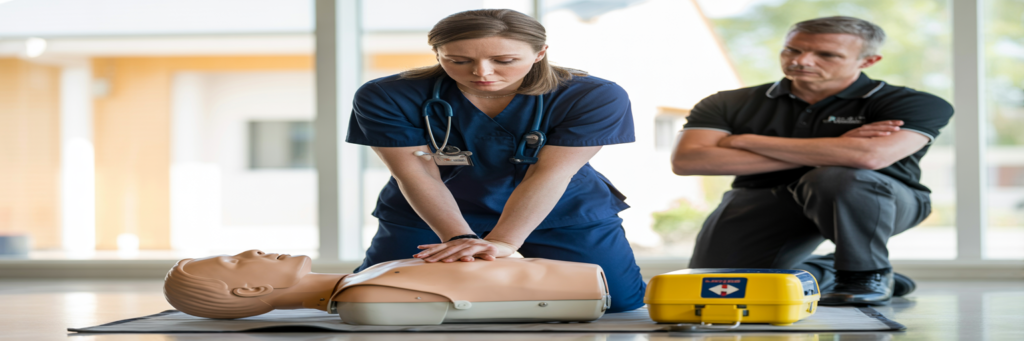
- CPR performance: Compression depth (5-6cm), rate (100-120/min), hand placement, airway management
- DRSABCD action plan: Correct sequence and decision-making under pressure
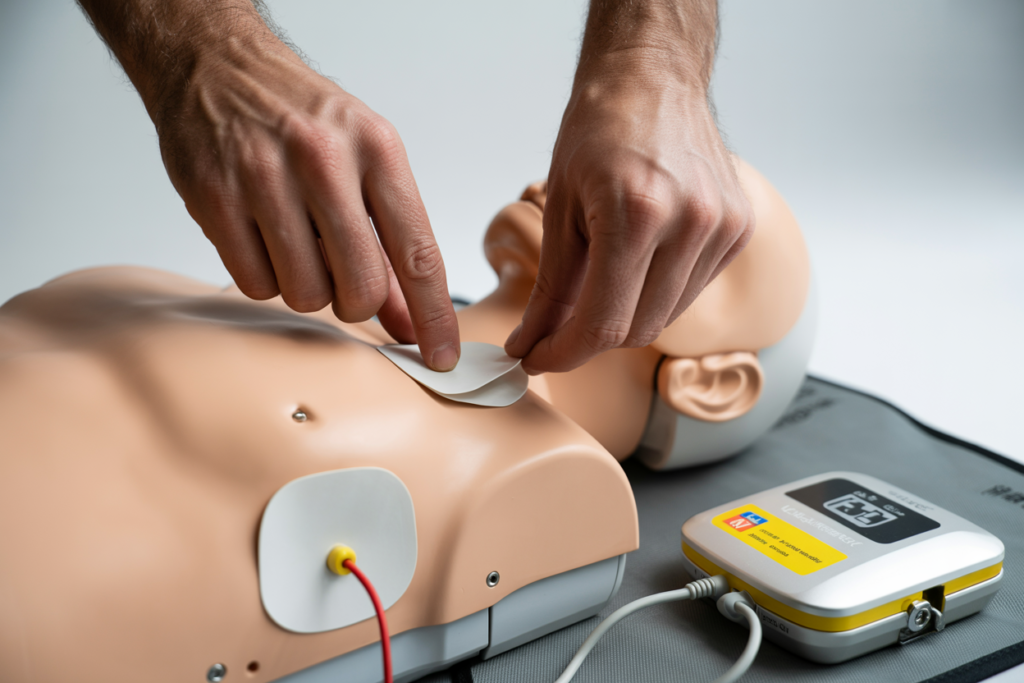
- AED operation: Pad placement, safety protocols, device operation
- Casualty assessment: Vital signs monitoring, conscious state evaluation
- Communication skills: Calling emergency services, handover information, team coordination
- Infection control: PPE usage, cross-contamination prevention, safe disposal
- Legal requirements: Consent procedures, documentation, duty of care understanding
- Written questions: Multiple choice covering emergency response scenarios
✅ Pass Requirement: Demonstrate competency in ALL practical skills + 80% written assessment.

Understanding HLTAID010 Assessment Format
Here’s what most people don’t realize about HLTAID010 assessment: it’s not a test you can fail by getting one question wrong. It’s a competency-based assessment, which means you’re either demonstrating the skills correctly, or you’re not quite there yet. There’s no percentage grade, no ranking against other students. You either walk out certified, or you get specific feedback on what to practice and try again.
The assessment happens in two parts throughout your training day—not just at the end when you’re exhausted and overthinking everything.
The written component usually comes first. You’ll answer multiple choice questions covering emergency response scenarios, legal requirements, and infection control procedures. You need 80% to pass, which means you can miss a few questions and still be fine. The questions aren’t designed to trick you—they’re checking you understand when to call an ambulance, how to protect yourself from infection, and what your legal obligations are as a first aider.
The practical component is where most people’s anxiety lives, but here’s the thing: your assessor watches you practice these skills multiple times during the day before the formal assessment even starts. By the time they pull out the official checklist and say “okay, I’m assessing you now,” you’ve already done CPR on the manikin four or five times. The assessment isn’t a surprise performance—it’s a confirmation that you can do what you’ve been practicing all day.
What “Competency-Based” Really Means
If you’re marked “not yet competent” on a skill, that’s not a failure—it’s feedback. Your assessor tells you exactly what needs to change. Maybe your compressions are slightly too shallow, or you forgot to check for danger before approaching the casualty. You practice that specific element again, and when you’re ready, you demonstrate it again.
The Australian Skills Quality Authority (ASQA) requires assessors to observe specific performance criteria for each skill. They’re checking boxes on an official checklist: Did you check for danger? Did you achieve 5-6cm compression depth? Did you maintain 100-120 compressions per minute? It’s objective, measurable, and consistent across every student.
Your assessor wants you to succeed. They’ll provide coaching and feedback during the practice portions of the day. Then during formal assessment, they step back and observe without coaching—but by that point, you already know you can do it.
Complete HLTAID010 Practical Assessment Checklist
This is the exact checklist your assessor uses during practical demonstration. Every box needs to be ticked for competency—but here’s what that actually looks like in practice.
CPR Performance Assessment Criteria
CPR is the skill that causes the most anxiety, but it’s also the one you’ll practice most during your training day.
What assessors are checking:
| Criterion | Requirement | Common Mistake | How to Fix It |
|---|---|---|---|
| Compression Depth | 5-6 centimeters | Too shallow (3-4cm) | Use body weight, listen for manikin click |
| Compression Rate | 100-120 per minute | Slowing down when tired | Practice to "Stayin' Alive" tempo |
| Hand Placement | Center of chest, lower sternum | Too high or too low | Between nipples, lower half of sternum |
| Chest Recoil | Full recoil between compressions | Leaning on chest | Lift hands slightly between compressions |
| Interruptions | Maximum 10 seconds | Pausing too long to think | Practice smooth transitions |
DRSABCD Action Plan Assessment
DRSABCD is the systematic approach to any emergency situation. Assessors need to see you work through this sequence correctly, making appropriate decisions at each stage.
D – Danger: Check for danger to yourself, bystanders, and the casualty before approaching. Assessors need to see you physically stop, look around, and verbally identify that the scene is safe before you approach.
R – Response: Check if the casualty is responsive. This means talking to them loudly and clearly (“Hello, can you hear me? Open your eyes!”) while squeezing their shoulders firmly.
S – Send for help: Call 000 (or direct someone else to call) before you do anything else. If there are bystanders, you point at a specific person and say “You in the blue shirt—call 000 and come back to tell me you’ve done it.” Generic “someone call an ambulance” doesn’t cut it.
A – Airway: Open and check the airway using head tilt-chin lift. Place one hand on their forehead, two fingers under their chin, gently tilt the head back.
B – Breathing: Check for normal breathing for no more than 10 seconds. Look for chest rise, listen for breath sounds, feel for air movement. Count out loud: “One, two, three…” up to ten.
C – CPR: If not breathing normally, start CPR immediately. Assessors watch your transition from assessment to action—do you hesitate or smoothly move into position and start compressions?
D – Defibrillation: Apply an AED as soon as available. Even if you’re mid-compression cycle, when someone arrives with an AED, you stop and attach it immediately.
AED (Automated External Defibrillator) Operation
AED assessment is usually the part where students relax, because the device literally talks you through every step. But assessors are still checking specific safety protocols.
What assessors observe:
Pad placement: One pad upper right chest (below collarbone), one pad lower left chest (below and to the left of the nipple). The pads have pictures showing exactly where they go.
Clearing the casualty: Before the AED analyzes the heart rhythm, everyone needs to stop touching the casualty. You should loudly state: “Everyone stand clear, analyzing now.” Same thing before delivering a shock: “Stand clear, shocking now.”
Following device prompts: The AED will tell you exactly what to do. Your assessor wants to see you actually listen and follow instructions.
Resuming CPR immediately: After the shock is delivered (or if no shock is advised), you go straight back to compressions without checking for a pulse or signs of life.
Most Common Reasons Students Don’t Pass First Attempt
Let’s talk about the 0.8% who don’t pass on their first try, because understanding what goes wrong helps you avoid those same mistakes.
Practical Assessment Failures
Insufficient compression depth: This is the number one reason for practical assessment failure. People are afraid of hurting the manikin (you can’t) or they’re worried they’re pushing too hard (you’re probably not). The manikin clicker is your friend—if you’re not hearing it click with every compression, you’re not deep enough.
During practice, one student kept getting marked “not yet competent” on compressions. She was convinced she physically couldn’t compress deeply enough. The instructor adjusted her arm position so she was directly over the manikin, and told her to “really commit to the compression—pretend you’re trying to push through the manikin to the floor.” She tried again, immediately heard the clicker with every compression, and passed. It’s technique and commitment, not strength.
Inconsistent compression rate: You start strong at 100-120 per minute, but after 60 seconds you’re tired and slowing down. Assessors notice because they’re watching the clock. The solution? Practice to music. “Stayin’ Alive” isn’t just a meme—it’s genuinely the right tempo.
Skipping or rushing DRSABCD steps: Students who are nervous often rush: check for response, immediately start compressions, forget to call 000 until later. The sequence exists for a reason. Even if it feels slow when you’re panicked about assessment, work through every step in order.
Not verbalizing safety checks: Your assessor can’t read your mind. They need to hear you say “I’m checking for danger” or “The scene is safe” or “Everyone stand clear.” You might be thinking about safety in your head, but if you don’t speak it out loud, the assessor can’t tick that box on their checklist.
Written Assessment Failures
Overthinking the questions: Healthcare workers, especially nurses, tend to read way too much into multiple choice questions. These questions aren’t testing your advanced clinical judgment. They’re testing whether you know the basic first aid response taught in the course.
Confusing HLTAID010 scope with your professional role: A common wrong answer happens when nurses apply their RN scope of practice to first aid scenarios. Question: “A person is showing signs of a heart attack. What should you do?” Wrong answer for HLTAID010: “Administer aspirin.” Correct answer: “Call 000, keep them calm and still, monitor their condition.”
📋 Remember: HLTAID010 tests basic first aid response, not clinical judgment. If you're a healthcare worker, mentally separate your professional role from your community first aider role during assessment.
How to Prepare Before Your HLTAID010 Course
Most people show up thinking “I’ll just learn everything on the day.” That works fine—you’ll probably pass. But if you want to walk in confident instead of anxious, a little preparation goes a long way.
Pre-Course Learning Requirements
Many training providers send you online pre-learning modules before your course. These aren’t optional homework you can skip. They’re part of the required course content.
Do them the night before your course when the information is fresh, not days earlier when you’ll have forgotten half of it by course day. Take notes on anything you don’t understand so you can ask your instructor for clarification.
Physical and Mental Preparation
Practical tips for the day:
Wear comfortable clothes you can move in—activewear or loose casual clothes work best. You’ll be on your knees a lot, so long pants are better than a dress or skirt. Bring a water bottle. Dehydration makes you tired faster, and tired people make more mistakes during assessment. Eat a proper breakfast, even if you’re nervous.
If you have any physical limitations—knee problems, shoulder injuries, back issues—email your training provider before the course. They can provide alternative techniques or accommodations.
Reframe how you think about assessment:
Stop thinking of it as a “test” where you pass or fail. Think of it as a demonstration of skills you’ve just learned and practiced multiple times. Your assessor has already watched you do successful CPR during practice. The formal assessment is just confirming what both of you already know: you can do this.
Remember the 99.2% pass rate. That’s not because HLTAID010 is easy—it’s because the assessment is designed to be achievable for anyone who pays attention and practices.
Conclusion: You’re More Prepared Than You Think
If you’ve read this entire HLTAID010 assessment checklist, you already know more about what to expect than 90% of students who walk into their course. You understand what assessors are checking, what the common mistakes are, and how to demonstrate competency confidently.
Here’s the reality: HLTAID010 assessment is designed to be achievable. The 99.2% pass rate isn’t because the assessment is too easy—it’s because the course effectively teaches you the skills, gives you ample practice time, and assesses you fairly on clearly defined criteria.
Your anxiety about freezing up or forgetting everything is understandable but almost certainly won’t happen. You’ll practice these skills multiple times before formal assessment. Your muscle memory will be stronger than you think. And even if you pause or stumble during assessment, your instructor will provide feedback and give you another chance.
The students who pass most confidently aren’t the ones with medical backgrounds or natural talent. They’re the ones who show up prepared, pay attention during theory, practice with full commitment, and trust that the process works.
Book your course. Show up. Do the work. You’ve got this.
Ready to get certified? Browse available HLTAID010 course dates and book your spot today.
Book Your First Aid Training Now
Fast, affordable, and nationally accredited training delivered by professionals who care
Frequently Asked Questions
Q.Can you actually fail HLTAID010?
Yes, you can fail—but only 0.8% of students do on their first attempt, and most of those pass on immediate reassessment the same day. Failing means you didn't demonstrate competency in one or more required skills, usually due to insufficient compression depth, skipping DRSABCD steps, or scoring below 80% on the written component. If you don't demonstrate competency on your first attempt, your assessor tells you exactly what needs to change, you practice that specific skill again, and you're reassessed within 15-30 minutes at no extra cost.
Q.What happens if I don't pass on the first attempt?
Your instructor provides specific feedback about exactly what needs to change—for example, "Your compressions were at the right rate but not deep enough" or "You forgot to check for danger before approaching the casualty." You then practice the skill again with coaching and feedback until you're performing it correctly, which might take five to twenty minutes. Then you demonstrate the skill again for formal assessment, and reassessment is included in your course fee with no additional charges or need to reschedule for another day.
Q.Do I need to memorize the whole training manual?
No, you need to understand the key concepts and be able to perform the practical skills—the written assessment covers fundamental knowledge explained during the theory session like DRSABCD sequence, when to call 000, compression depth and rate, infection control basics, and legal requirements. If you paid attention during theory and completed your pre-learning, you already know enough to pass the written component without memorizing pages of content, and the practical assessment tests physical skills your hands need to demonstrate, not statistics your brain needs to recite.
Q.What if I freeze up during assessment and forget everything?
This is the most common fear, and it almost never happens the way people imagine—you might have a moment of "what comes after checking for breathing?" but you won't completely blank on the entire DRSABCD sequence you've practiced four times that day. If you pause during assessment trying to remember what's next, your muscle memory usually kicks in because you've placed your hands on the chest for compressions five times during practice, and your body remembers how to do it even when your anxious brain is overthinking. If you genuinely forget, tell your assessor "I'm sorry, I've blanked on what comes next in the sequence," and they'll stop the assessment, remind you of the framework (DRSABCD), give you a minute to collect yourself, and let you start again.
Q.Will my employer accept my HLTAID010 certificate?
If your employer requires "basic life support," "emergency life support," or "CPR certification," then HLTAID010 satisfies that requirement because HLTAID010 includes HLTAID011 (CPR), so you don't need separate certifications. Confirm with your HR department before booking if you're unsure by emailing them: "I need to renew my first aid certification—will HLTAID010 - Provide Basic Emergency Life Support satisfy our workplace requirements?" Most HR departments respond within a day, and some employers have very specific requirements like "HLTAID010 plus anaphylaxis management," so make sure your training provider offers those combined courses if needed.
Making first aid training more affordable for
every classroom
We believe every student deserves access to life-saving first aid knowledge. That’s why we offer specially reduced pricing for schools and educational groups. Whether you’re booking for a single class, a year group, or your entire school, our flexible packages make training more accessible and cost-effective — without compromising quality.
