
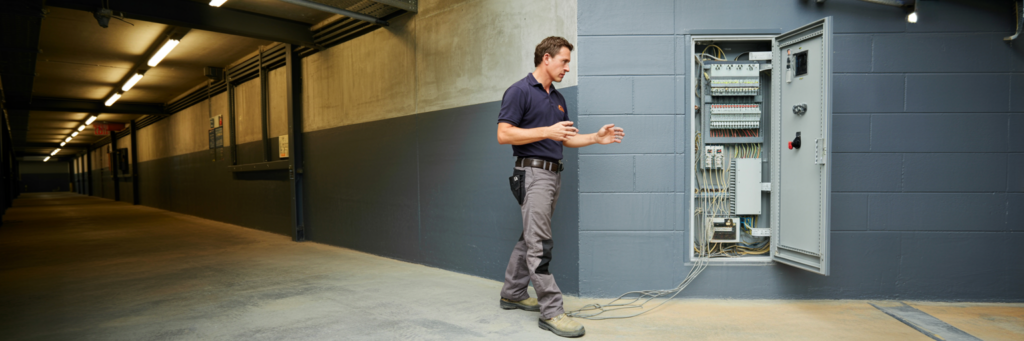
More and more Queensland workers are getting knocked back at site inductions not because they’re unqualified for the job, but because they can’t show a current LVR training certificate. It’s not just happening to sparkies. It’s happening to site supervisors, maintenance workers, EWP operators, and facilities staff who had no idea they were even in the frame for a Low Voltage Rescue obligation.
If you’re not a licensed electrician, you’ve probably asked yourself: “Is this actually something I need, or is it just for the tradies?” It’s a fair question, and the confusion is everywhere. A lot of workers in Queensland assume Low Voltage Rescue is an electrician-only thing so they don’t look into it, don’t book it, and then get stopped at the gate on a Monday morning wondering what went wrong.
Here’s the short answer: LVR is role-based, not trade-based. Whether or not you need an LVR certificate in Queensland depends on what your job actually puts you near not what trade you came through. If your role puts you close to live low voltage equipment, or makes you responsible for people who work around it, the law may already require you to hold a current ticket.
This article breaks down exactly what Low Voltage Rescue training covers, which roles are legally required to hold a certificate, what the course looks like for workers without an electrical background, and how to get certified fast if you’re based in Brisbane or South East Queensland.
Do Non-Electricians Need LVR Training?
Yes in many cases. Under Queensland’s Electrical Safety Act 2002 and Electrical Safety Regulation 2013, LVR training is not limited to licensed electricians. Any worker who may be required to perform a rescue from a low voltage electrical incident on a worksite may need to hold a current certificate. The obligation comes down to your role and what you’re exposed to on site, not what’s printed on your trade licence.
The following roles are commonly required to hold a current LVR certificate in Queensland:
- Electrical apprentices working under supervision near live equipment
- Construction site supervisors responsible for worker safety on sites with live electrical work
- Maintenance workers operating in facilities with exposed low voltage systems
- EWP and crane operators working near overhead powerlines
- Facilities managers overseeing electrical maintenance contractors
If your role puts you in proximity to live low voltage equipment or makes you responsible for others who are LVR certification may be a legal requirement, not optional.
What Is Low Voltage Rescue Training?
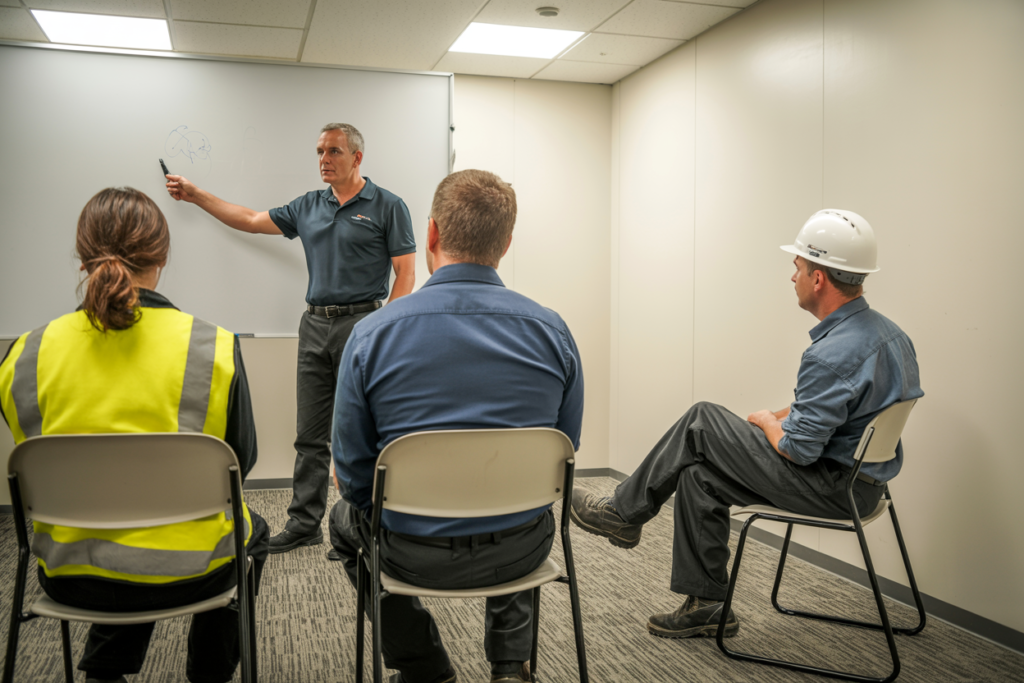
Low Voltage Rescue training delivered under the unit code UEECD0007 teaches workers how to respond to an electrical incident involving that equipment. Not just how to call 000. How to actually get someone out of a live electrical situation without becoming a second casualty yourself.
It’s a nationally recognized qualification, and it’s the certificate a principal contractor will ask to see before they let you anywhere near an active worksite.
💡 Low Voltage Doesn't Mean Low Risk: In electrical terms, "low voltage" covers anything up to 1,000 volts AC or 1,500 volts DC which includes the standard power systems found on virtually every commercial, industrial, and construction site in Queensland. Contact with low voltage equipment is one of the most common causes of serious electrical injury and death in the Australian workplace.
What Does the Course Involve?
The course is hands-on and practically focused. You won’t be sitting through hours of electrical theory. What you will be doing:
- Identifying a low voltage electrical incident on a worksite
- Isolating the power source safely before attempting a rescue
- Performing a rescue from a live electrical situation without becoming a second victim
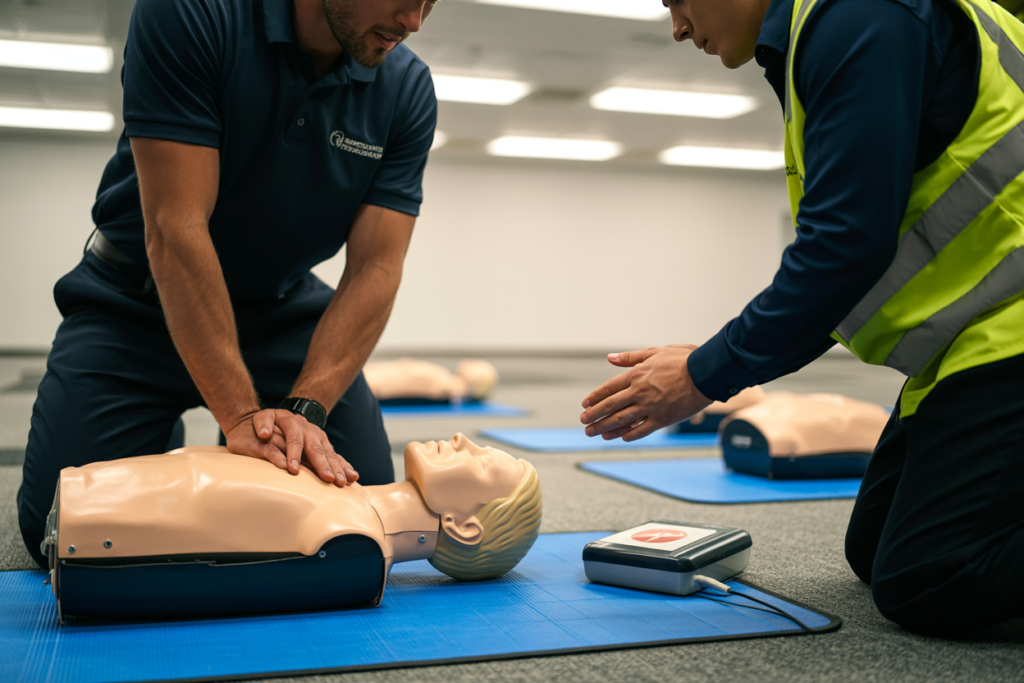
- CPR and emergency response HLTAID009 is typically co-delivered in the same session
- Practical assessment you’re assessed on what you can actually do, not just what you can write down
Now that you know what LVR training involves, the bigger question is whether you’re actually required to have it and the answer depends on your role, not your trade.
Who Is Legally Required to Hold an LVR Certificate in Queensland?
The roles that carry that obligation aren’t limited to electricians. They cover a broader range of workers than most people on site realise. Whether you’re required to hold a certificate comes down to what your job actually involves if your role requires you to work near live low voltage systems, or if you’re the person responsible for the safety of others who do, you’re likely in scope.
Roles That Typically Require LVR Certification
| Role | Typical Requirement | Notes | |||| | Licensed electricians | Mandatory | Baseline obligation under Queensland legislation | | Electrical apprentices | Required | Working near live equipment under supervision | | Construction site supervisors | Site-dependent | Tier 1 builders increasingly require it across the board | | Facilities/maintenance staff | Site-dependent | Exposed low voltage systems in commercial and industrial settings | | EWP/crane operators | Site-dependent | Working near overhead powerlines | | Industrial maintenance workers | Site-dependent | Manufacturing and processing plant environments |
The Electrical Safety Office Queensland publishes workplace electrical incident data that consistently shows electrical injuries occurring across a wide range of industries, not just the electrical trade. If you work in construction, facilities management, manufacturing, or infrastructure, the risk is real and the obligation may already apply to you. Check current incident data at esafe.com.au.
When a Principal Contractor Can Require It From Anyone
Here’s something that catches a lot of non-electricians off guard. Even if the legislation doesn’t specifically capture your role, a principal contractor can set their own site-specific WHS requirements that go beyond the legislative minimum and many of them do.
- Principal contractors on commercial, infrastructure, and government sites can require LVR for all workers on site, regardless of trade
- Site induction refusal isn’t a legal violation on your part but the outcome is identical to non-compliance: no site access, no work, no pay
Getting turned away at induction because you’re missing a certificate that most other workers on site carry isn’t a technicality, it’s a practical problem that can cost you a contract if the relationship with that principal contractor sours.
If your role is on the list above, the next question most non-electricians ask is: will I be out of my depth in a course designed for sparkies?
LVR Training for Non-Electricians What’s Different About Your Pathway?
The course is built around practical rescue skills and emergency response. It is not a crash course in electrical theory. You’re not being trained to work on electrical systems you’re being trained to get someone out of one safely, and to keep them alive until the ambos arrive.
Do You Need an Electrical Background to Pass?
No and that’s not a disclaimer, that’s how the course is designed.
- The practical rescue procedure and CPR skills are the assessment focus not electrical knowledge
- Non-electricians are not assessed on electrical theory or trade-specific content
- Course content is adjusted for non-electrician context where it’s relevant
- Most non-electricians complete the course without any prior electrical knowledge and pass without issue
If you can follow a clear set of steps under pressure, isolate, rescue, respond you can pass this course. The trainer isn’t there to trip you up. They’re there to make sure you can actually do the job if it ever matters.
Is CPR Included in LVR Training?
This is one of the most common questions we get from non-electricians, and the confusion is understandable as different providers handle it differently.
- CPR (HLTAID009) is typically co-delivered with LVR in a single session, but this varies by provider
- Always confirm exactly what’s bundled before you book don’t assume
- Booking both together in a single session saves you time
That renewal gap matters. A lot of workers complete LVR and CPR together, then forget that CPR is on a shorter renewal cycle. If your provider offers a renewal reminder service, use it.
🔗 Need CPR Renewal Only? Check out the CPR renewal course HLTAID009 delivered as a standalone session.
How to Get Your LVR Certificate Fast
The fastest path to a current LVR certificate is a Saturday course with a registered RTO that delivers LVR and CPR together in a single session and emails your digital certificate the same day you complete it.
That’s the benchmark. If a provider can’t meet all of those, keep looking.
What to Look for in a Queensland LVR Provider
Not every training provider is equal and on a compliance ticket that principal contractors will actually check, it pays to get this right.
- ☐ Registered RTO verify at training.gov.au before you book
- ☐ UEECD0007 listed on their scope of registration the unit code should appear on their ASQA registration
- ☐ Saturday courses available weekday-only providers won’t work for most site workers
- ☐ Same-day digital certificate on completion you need something you can email to the site super that afternoon
- ☐ Combined LVR + CPR delivery in a single session saves time and gets both obligations sorted at once
How Quickly Can You Get Certified?
With the right provider, the turnaround is genuinely fast.
- Complete your training on Saturday, receive your digital certificate by email the same day
- Back on site Monday morning with full documentation ready to hand to the site super or WHS officer
That’s the whole process. No waiting on posted certificates. No chasing up admin the following week. You walk out with what you need.
Here’s What to Do Next
The first thing worth doing is checking your current LVR expiry date. A lot of workers don’t know off the top of their head when their ticket runs out, and some have never held one at all. Either way, you need to know where you stand before anything else. Dig out the card, check the email confirmation from your last course, or log into the training register. If you can’t find it, assume it’s expired and act accordingly.
Once you’ve got that sorted, cross-reference your role against what’s actually required on the sites you work. This article has laid out the roles that typically carry an LVR obligation, but your specific situation matters too. If you’re regularly on commercial, government, or infrastructure projects, the chances are high that the principal contractor expects everyone on site to hold a current ticket regardless of trade. Don’t wait to find that out at a site induction.
From there, the path is straightforward. Find a registered RTO that has UEECD0007 on their scope of registration, offers Saturday sessions, and delivers LVR and CPR together in the one session. Verify them on the national register at training.gov.au before you hand over any money. A legitimate provider will have no problem showing you their registration details, and their course listing will clearly display the unit code.
Book the next available Saturday and go and do the course. It’s a practical session, not an exam room. You don’t need an electrical background, you don’t need to have done it before, and you won’t be the only non-electrician in the room. Follow the steps, do the practical assessment, and you’ll walk out with a digital certificate emailed to you the same day.
The workers who get caught out by an expired LVR ticket aren’t the ones who didn’t care. They’re the ones who kept meaning to get around to it. Getting turned away from a job site because of a lapsed certificate is one of those things that only needs to happen once before you treat the renewal seriously. Sort it this Saturday, and you won’t be thinking about it again for years.
Book Your First Aid Training Now
Fast, affordable, and nationally accredited training delivered by professionals who care
Frequently Asked Questions About LVR Training for Non-Electricians
Q. Do non-electricians need LVR training in Queensland?
Yes, in many cases. Under Queensland's Electrical Safety Act 2002 and Electrical Safety Regulation 2013, the obligation is role-based, not trade-based. If your work puts you near live low voltage equipment, or makes you responsible for others who do, you may be legally required to hold a current LVR certificate regardless of whether you're a licensed electrician or not.
Q. How long does an LVR certificate last in Queensland?
An LVR certificate (UEECD0007) is valid for three years in Queensland. CPR (HLTAID009), which is typically co-delivered with LVR in the same session, runs on a shorter renewal cycle and needs to be renewed annually. Check both expiry dates, not just one, because your LVR ticket can still be current while your CPR has already lapsed.
Q. Is CPR included in LVR training?
CPR (HLTAID009) is typically co-delivered with LVR in a single session, but this varies between providers. Always confirm exactly what's included before you book. Completing both together in one session is the most practical option, it gets both obligations sorted at once without needing to book and attend two separate courses.
Q. Do I need an electrical background to pass LVR training?
No. LVR training for non-electricians is focused on practical rescue procedure and CPR, not electrical theory. You won't be assessed on your knowledge of electrical systems or trade-specific content. Most non-electricians complete the course without any prior electrical knowledge and pass without issue.
Q. What happens if my LVR ticket expires?
There's no grace period. An expired LVR ticket means no site access, and a principal contractor or WHS officer won't make exceptions. If your ticket has lapsed, the fix is straightforward: find a registered RTO, book the next available Saturday session, complete LVR and CPR in a single session, and have your digital certificate emailed to you the same day. Don't wait until you're turned away at the gate to deal with it.
Making first aid training more affordable for
every classroom
We believe every student deserves access to life-saving first aid knowledge. That’s why we offer specially reduced pricing for schools and educational groups. Whether you’re booking for a single class, a year group, or your entire school, our flexible packages make training more accessible and cost-effective — without compromising quality.
