

You’ve just been told by your supervisor, or maybe it was the head contractor’s WHS bloke walking the site, that you can’t touch that switchboard again until you’ve got your isolation ticket sorted. Maybe it happened in front of the crew. Maybe it was a text at 6am before you even got your boots on. Either way, you’re here now trying to figure out what electrical isolation training actually is, whether it’s the same thing as that low voltage rescue course your mate did last year, and how fast you can get this sorted so you can get back on the tools.
Here’s the plain English version. Electrical isolation training teaches you how to safely disconnect equipment or circuits from their power source before you start work on them, so nobody gets a shock, an arc flash, or worse. In Queensland it sits under WHS Regulation 2011 and it’s delivered as the nationally recognised unit UETDRRF018. It is not the same as a general electrical safety induction you might do walking onto a new site, and it’s not the same as Low Voltage Rescue either, even though the two get mixed up constantly and even though a lot of blokes end up needing both.
Part of the confusion comes down to how these tickets get talked about on site. Someone tells you that you need “the electrical ticket” or “the isolation thing” and leaves it at that, no unit code, no explanation of what it actually covers. You’re left guessing whether it’s the same course your apprentice mate did, whether it overlaps with something you’ve already got, or whether you’re about to pay for and sit through training you don’t actually need. That guesswork is exactly what this page is here to clear up.
Below we’ll run through exactly what this course covers, who actually needs it, how it’s different to LVR, and how quick you can get certified and back on site.
Electrical Isolation Training vs. Low Voltage Rescue: What’s the Difference?
This is the bit that trips up almost everyone, so let’s sort it out first before anything else, because if you get this wrong you could book the wrong course and be right back where you started, just with less time up your sleeve.
UETDRRF018 (Isolation): What It Actually Covers
Electrical isolation training is about isolating and proving that circuits or equipment are de-energised before anyone starts work on them. That’s it, that’s the job. It’s a standalone unit that teaches you the actual procedure for making sure something is dead before you put your hands anywhere near it. Important bit here: it’s a co-requisite for Low Voltage Rescue, not a substitute for it. Doing one doesn’t tick the box for the other.
UETDRRF004 (Low Voltage Rescue): What It Actually Covers
Low Voltage Rescue is a different animal entirely. This one is about what you do if someone actually does contact a live low voltage source, how you get them off it, how you respond in that first minute when everything’s going wrong. It’s hands-on, and it’s built around real rescue technique, not just procedure on paper.
Do You Need Both?
Depends on what you’re doing and who’s asking. Here’s how it breaks down:
Scenario | Which Unit(s) Required |
Working near switchboards, no rescue duty | UETDRRF018 only |
Site supervisor mandates both tickets | UETDRRF018 + UETDRRF004 |
Entering the LVR pathway | UETDRRF018 co-requisite + UETDRRF004 |
If you’re not sure which box you fall into, that’s completely normal, most blokes aren’t. Best move is to check exactly what your site supervisor or head contractor actually wrote down as required, because “electrical ticket” isn’t a real thing, it’s shorthand for one of these two units, or both.
A lot of electricians end up doing both anyway, even when only one was strictly asked for. If you’re working around switchboards regularly, the isolation unit gets used almost every day. The rescue unit gets used a lot less often, hopefully never, but when it’s needed, it’s needed immediately, no time to go find someone else who’s ticketed. That’s part of why so many head contractors bundle the two together as a blanket requirement rather than working out exactly which one applies to which role on site. It’s simpler for them to ask everyone for both than to manage two different compliance lists.
🛠️ Quick take: If you're on the Cert III pathway or a supervisor has told you this training is required, it's mandatory—there's no way around it.
Who Needs Electrical Isolation Training in Queensland?
Mandatory for These Roles
This ticket isn’t optional padding for your compliance folder, it’s a genuine requirement for a specific group of people:
- Licensed electricians and apprentices completing the Cert III Electrotechnology pathway
- Anyone instructed by a site supervisor, head contractor, or QBCC-linked audit to complete the training before returning to site
- Anyone entering the Low Voltage Rescue pathway, as UETDRRF018 is the commonly required co-requisite
If you’re already ticketed in one of these areas and just haven’t done isolation yet, you’re not behind, you’re just at the point everyone else has already been through. It’s one of those tickets that tends to catch people at different stages of their career, some apprentices pick it up early as part of their structured training, while others don’t need it until years later when a new site or a new head contractor brings in a stricter requirement than what they’ve worked under before.
“I Already Have a White Card / EWP Ticket, Do I Still Need This?”
Yes. Straight answer, no dressing it up. A white card gets you onto a construction site. An EWP ticket lets you operate an elevated work platform. Neither of those covers the specific competency of safely isolating and proving equipment de-energized. It’s its own skill, assessed on its own, and no amount of other tickets in your wallet substitutes for it. Think of it like this: your white card says you’re allowed on the field, but isolation training is what actually teaches you how to play your position safely.
The ticket stack looks something like this:
- White Card → Gets you on site
- EWP → Lets you operate the platform
- Isolation (UETDRRF018) → Lets you safely de-energise before work
- LVR (UETDRRF004) → Covers you if something goes wrong
Each one does a different job. None of them overlap enough to cover for another.
Why This Procedure Actually Matters
It’s easy to file isolation training under “another box to tick” and move on with your day, but there’s a reason this specific competency gets singled out on its own instead of being folded into a general induction. Most electrical incidents on site don’t happen because someone was doing something reckless, they happen because someone assumed a circuit was dead when it wasn’t. A breaker looked like it was off. A switchboard was labelled wrong. Someone downstream didn’t know work was happening and flicked something back on. Any one of those small gaps is enough to turn a routine job into a serious incident.
The isolation procedure exists to close that gap every single time, not just when it feels necessary. That’s the mindset the training is actually trying to build, treating the proving step as non-negotiable rather than something you skip when you’re confident or in a hurry. Most experienced tradies have a story, or know someone who has one, about a close call that came down to exactly this kind of assumption. The training is there so your name doesn’t end up attached to one of those stories.
📋 Quick take: The course has three key parts: finding the isolation point, proving the circuit is de-energised, and completing paperwork that stands up to site and audit requirements.
What Electrical Isolation Training Covers (Course Breakdown)
Isolation and Lockout/Tagout (LOTO) Procedure
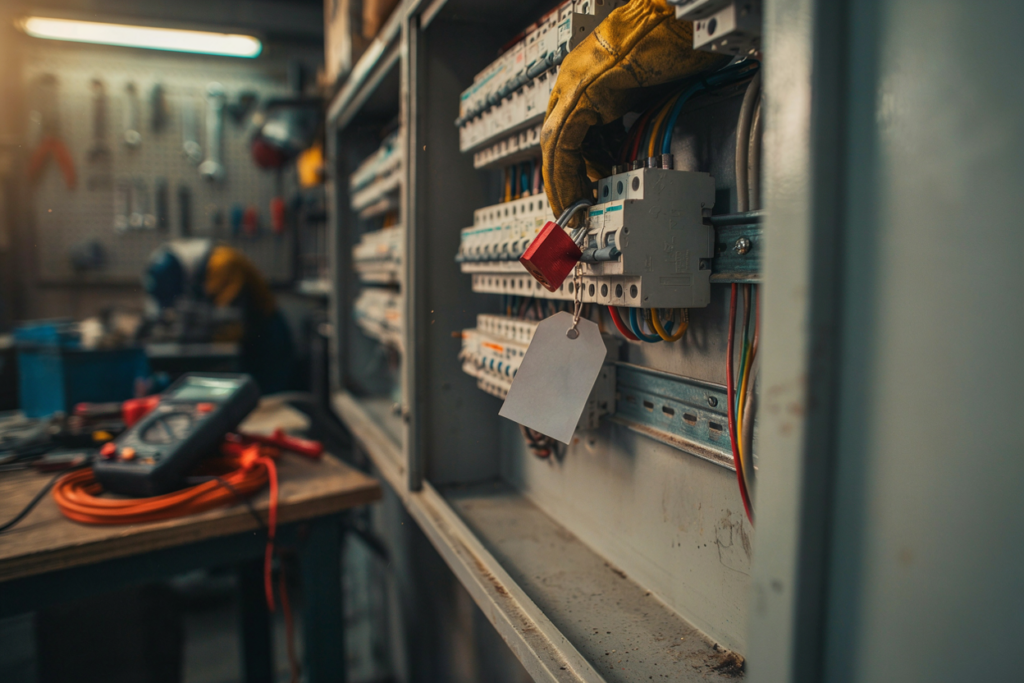
The core of the course is learning how to identify isolation points on switchboards, circuits, and equipment, then applying the correct locks and tags so nobody re-energises what you’re working on while you’re still elbow deep in it. This is the procedure that keeps you from being the guy who gets zapped because someone flicked a switch three rooms away not knowing you were on the other end of that circuit. You’ll work through real scenarios where identifying the correct isolation point isn’t obvious at first glance, because on a genuinely messy switchboard, it rarely is.
Testing Before Touch
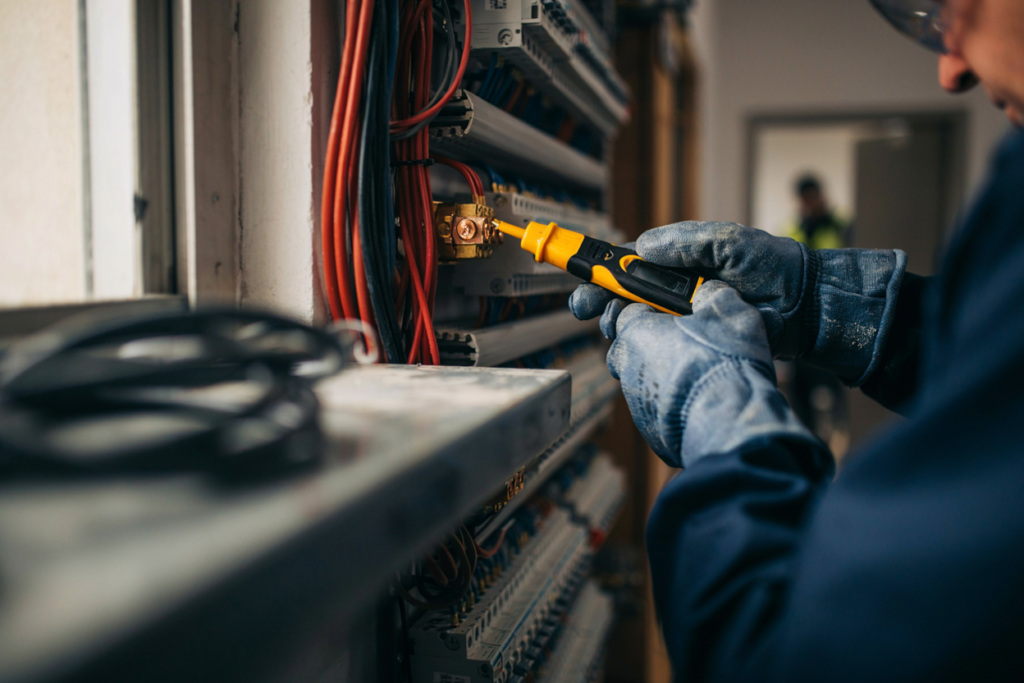
Isolating something isn’t enough on its own, you’ve got to prove it. That means correctly using test equipment to confirm the circuit is actually de-energised before any work starts, not just assuming it’s dead because you flipped the right breaker. This step is where a lot of near misses in the trade actually happen, so it gets proper hands-on time. You’ll also cover how to check your test equipment itself is working correctly before you rely on it, because a faulty tester giving you a false reading is its own kind of trap.
Documentation and Sign-Off
Once you’ve done the training, you’ll walk away with paperwork that shows exactly what you’re certified in, and this is what needs to hold up when a site supervisor or head contractor’s induction check comes asking. Keep a copy somewhere you can actually get to quickly, on your phone, in the glovebox, wherever works, because being asked to prove your ticket on the spot and not being able to find it causes exactly the kind of hold up this training is meant to prevent.
For the deeper regulatory side of things, hierarchy of controls, specific WHS Regulation clauses and all that, we’ve covered that in more depth on our WHS codes page, worth a read if you want the full framework behind why this training looks the way it does
Choosing a Provider You Can Trust On-Site
Why Trainer Background Matters
This one matters more than people expect going in. There’s a real difference between a trainer who’s actually worked around live low voltage panels and switchboards in the field, and a generic compliance trainer reading off a slide deck who’s never been anywhere near a construction site. You want the first one. If something ever does go sideways on site, you want to know the person who trained you actually understood what they were teaching, not just delivering content.
A trainer who’s spent real time in the trade brings something a script can’t, the ability to answer the odd question that comes up mid-course, the one about a specific switchboard setup or an edge case you’ve actually run into on a job. That kind of answer only comes from someone who’s genuinely been there, not someone working through a fixed slide deck word for word.
Conclusion
Getting told you need a ticket you didn’t know existed is never a fun way to start your week, especially when it lands in front of your crew or right before a job you’ve already committed to. But once you strip away the confusion, electrical isolation training is a fairly straightforward thing. It’s the skill of proving something is safely dead before you put your hands on it, nothing more mysterious than that, and it exists because the alternative is someone getting hurt on a job that should have been routine.
The mix up between isolation and rescue trips up almost everyone at some point, and that’s not a knock on anyone’s intelligence, it’s just that the trade throws a lot of overlapping tickets at people without ever explaining clearly where one stops and the next one starts. Once you know isolation is about proving equipment is de-energised and rescue is about what happens if that process fails, the rest of the decision making gets a lot easier.
What matters most when you’re standing there deciding where to book is whether the training actually reflects real site conditions, not a watered down version delivered by someone who’s never stood in front of a live switchboard themselves. Time spent with someone who genuinely knows the trade is worth more than a course taught by someone reading off a script.
Time pressure is real in this industry, and nobody’s pretending otherwise. Every hour off the tools costs something, whether that’s a missed shift, a scheduling headache, or a subcontractor simply not getting paid for the day. That’s exactly why turnaround on the actual paperwork matters as much as the training itself, because a certificate that takes too long to land in your inbox doesn’t help you when someone’s waiting at the gate to check it tomorrow morning.
There’s also a quieter reason a lot of tradies end up valuing this training beyond just the compliance side of things. Most people in this line of work know someone, or know of someone, who’s had a close call around live equipment. Knowing you’ve actually got the skill to isolate something properly isn’t just a box ticked for an audit, it’s something that sits with you the next time you’re working solo on a job with nobody else around to catch a mistake.
None of this needs to be complicated once it’s laid out properly. Know which ticket you actually need, find someone credible to train you, and get it sorted with enough time to spare that you’re not scrambling the morning of a site induction. That’s really all this comes down to, getting back to the work you’re there to do, with one less thing standing in the way.
If you’re still not entirely sure which ticket applies to your situation, that’s a completely reasonable position to be in, and it’s better to ask before you book than to sit through the wrong course and find yourself back at square one under even more time pressure than you started with. A quick conversation upfront usually sorts it out faster than trying to figure it out alone from a job description or a text message from your supervisor.
Book Your First Aid Training Now
Fast, affordable, and nationally accredited training delivered by professionals who care
Frequently Asked Questions
Q.What is electrical isolation training?
Electrical isolation training teaches workers how to safely disconnect electrical equipment or circuits from their power source before starting work, preventing electric shock, arc flash, and fire risks. In Queensland, it's delivered as the nationally recognized unit UETDRRF018 and sits under the WHS Regulation 2011.
Q.Is electrical isolation training the same as Low Voltage Rescue?
No. Isolation training covers proving equipment is safely de-energized before work starts, while Low Voltage Rescue covers what to do if someone actually comes into contact with a live electrical source. They're separate units, and one doesn't replace the other.
Q.Do I need electrical isolation training if I already have a White Card?
Yes. A White Card allows you to work on a construction site, but it doesn't assess the competency of safely isolating electrical equipment and proving it's de-energized. Electrical isolation is a separate skill with its own assessment requirements.
Q.Who actually needs to do this course?
The course is intended for licensed electricians and apprentices on the Cert III Electrotechnology pathway, anyone instructed by a site supervisor or head contractor to complete it, and anyone entering the Low Voltage Rescue pathway, where electrical isolation is commonly required as a co-requisite.
Q.Can I do isolation training without also doing Low Voltage Rescue?
Yes. If your role doesn't involve rescue duties and your employer or worksite only requires the isolation qualification, UETDRRF018 can be completed as a standalone unit.
Q.What paperwork do I get at the end of the course?
You'll receive certification documentation showing the unit you've successfully completed. This documentation should meet the requirements of site supervisors, principal contractors, and induction checks where proof of competency is required.
Q.Why does trainer background matter for this course?
Trainers with real-world experience working around live low voltage panels can provide practical insights that go beyond compliance. That experience helps participants better understand how electrical isolation procedures apply in genuine on-site situations.
Making first aid training more affordable for
every classroom
We believe every student deserves access to life-saving first aid knowledge. That’s why we offer specially reduced pricing for schools and educational groups. Whether you’re booking for a single class, a year group, or your entire school, our flexible packages make training more accessible and cost-effective — without compromising quality.
