
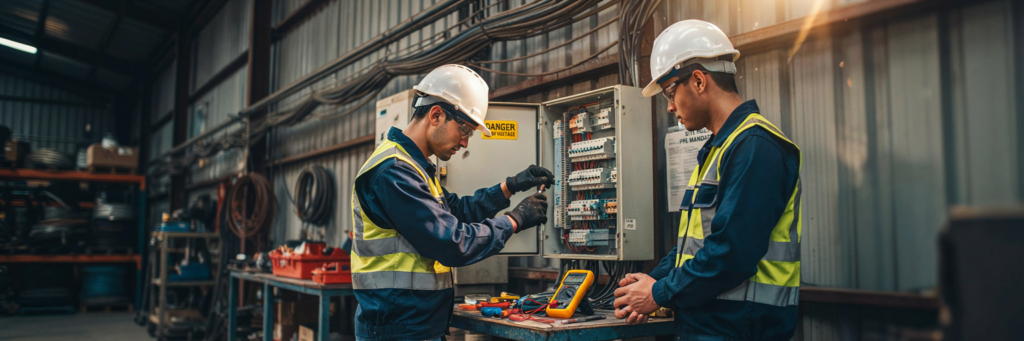
Someone’s about to jump on a live low voltage panel on your site. The regs say a safety observer needs to be standing there watching, but who’s actually allowed to fill that spot? Does it have to be another qualified sparky? Can a supervisor do it? An outsider? And what happens if the bloke standing there watching doesn’t actually know what to do the second something goes wrong?
This is where a lot of crews get caught out, and it happens more than you’d think. Everyone puts the focus on the rescuer’s ticket. That’s the one people talk about, the one that gets sorted first, the one that shows up on the paperwork everyone checks. The safety observer’s requirements just get assumed, guessed at, or skipped altogether, right up until a principal contractor pulls your paperwork on a site audit, or worse, something actually happens on a panel and there’s no proper observer there to catch it.
It’s a strange gap when you think about it. Businesses will spend real time and effort making sure the person doing the live work is trained, ticketed, and current, and then they’ll put almost no thought into who’s standing next to them watching. Two people are meant to be part of the same safety system, but only one of them tends to get planned for properly.
This safety observer LVR course guide sorts that out. We’ll cover what the role actually involves, who’s eligible to fill it, what the training covers, and how it fits alongside your existing LV rescue cert, so you’re not left guessing on the day it matters. Whether you’re the one who might get asked to stand there and watch, or you’re the one rostering a crew and trying to work out who can fill that spot, this is written for you.
What Does a Safety Observer Do in Low Voltage Rescue?
A safety observer is the second person who has to be present any time an electrician is doing live low voltage work in Queensland, and a lot of blokes on site just call it the “Rule of Two.” Their job is to:
- Watch the work closely enough to spot danger before it actually happens
- Warn the worker straight away if the risk increases
- Stop the work at any point if it becomes unsafe
- Hold no other task or responsibility while they're observing
- Be trained and currently assessed in LV rescue and CPR
Under the Electrical Safety Regulation, a safety observer has to have been assessed as competent in rescue and resuscitation within the previous 12 months. They’re not just standing there for the sake of it. They’re the last line of defence if something goes wrong on a live panel.
🎯 Quick take: The "Rule of Two" means live LV work simply doesn't happen without a dedicated second person watching for danger the entire time, with no other task pulling their focus.
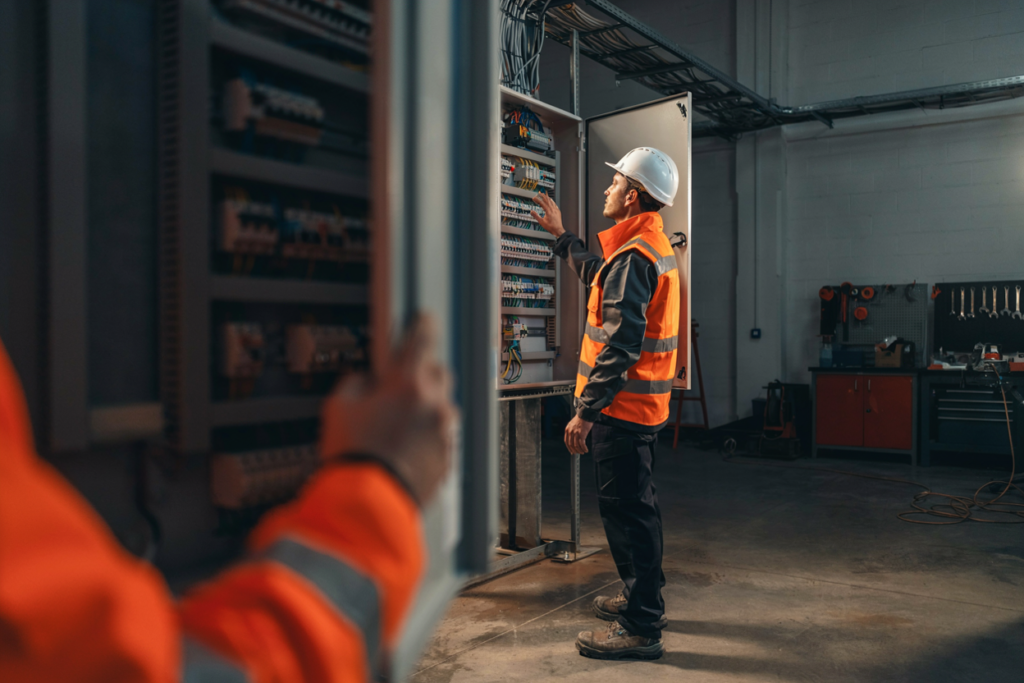
What Is a Safety Observer’s Job on a Live LV Panel?
The “Rule of Two” Explained
Tradies on site have been calling it the “Rule of Two” for years, and it’s a fair way to think about it. The Electrical Safety Regulation sets out that whenever someone’s doing live low voltage work, there has to be a second person there whose only job is watching. No second person, no live work. That’s the short version.
Why does it exist? Because live panel work goes wrong fast. A shock, an arc, a bloke going down, and there’s no time to run and grab help once it’s happening. The observer is already there, already watching, already able to act. That’s the whole point of the rule.
Think about how quickly things actually happen on a live panel. There’s no gap between “something’s wrong” and “something’s really wrong.” That’s exactly why the rule doesn’t allow for a stand-in who’s half paying attention or splitting their focus between watching the work and doing something else on the side. The observer’s only job, for the entire time that live work is happening, is watching. Nothing else counts as covering the requirement, no matter how experienced the person filling the role happens to be.
What the Safety Observer Is Watching For
A good safety observer isn’t just standing around looking bored. They’re watching for:
- Danger signs building up before anything actually happens
- Proximity breaches, meaning someone or something getting too close to the live parts
- Equipment failure or anything that looks off
- Signs of worker distress, including hesitation, fatigue, or anything that suggests the worker's not fully switched on
That’s the bit people miss. This isn’t a “rescue-readiness” role where the observer just sits there waiting for a disaster so they can jump in. It’s an active control measure. Their whole job is stopping the disaster from happening in the first place. The rescue skills are the backup, not the main event.
WorkSafe Queensland has been clear on this point too. Safety observers aren’t optional extras tacked onto live electrical work, they’re treated as part of how that work is done safely.
Knowing what the role involves is one thing. Knowing who’s actually allowed to do it is where most sites get tripped up.
Does the Safety Observer Have to Be an Electrician?
Who Actually Qualifies
This is probably the most common question we get on this one, and the short answer is no. It doesn’t have to be another qualified electrician standing there. Electricians and apprentices can do it, sure, but in a lot of cases a non-electrical worker can fill the role too, as long as they’ve got the right prerequisite unit and they’re currently assessed in LV rescue and CPR. What matters isn’t the trade ticket in their back pocket. It’s whether they’re trained, current, and capable of watching properly and acting if things go sideways.
| Role | Need an Electrical License? | Core Requirement |
|---|---|---|
| Rescuer performing the live work | Yes | Licensed electrician, competent and current in the actual task being performed |
| Safety observer | No | Prerequisite unit plus current LV rescue and CPR competency, reassessed every 12 months |
Why Business Owners Get This Wrong
Here’s where a lot of businesses end up making things harder for themselves than they need to be. A lot of business owners and compliance officers assume the only person who can fill the observer role is a second sparky, so they roster two qualified electricians onto every live job, even when one of them is only there to watch. Once you know a non-electrical worker with the right training can do the job, you’ve got a lot more flexibility in how you roster your crew, and you’re not tying up a second tradesman just to fill this role.
It’s an easy assumption to make, to be fair. The rescuer and the observer are both standing at the same panel, both part of the same safety setup, so it feels natural to assume they need the same trade background. But the regulation is about competency and currency in rescue and resuscitation, not about holding an electrical licence. Once that distinction is clear, business owners usually find they’ve got a lot more people on the books who could legitimately fill the observer role than they first thought.
If you haven’t sorted your rescuer training yet, that’s a separate cert to this one. Worth checking out our UETDRRF018 rescuer course page so you don’t end up mixing the two roles up.
Is a Safety Observer Legally Required on Every Job?
When It’s Mandatory
If there’s live low voltage work happening and there’s no reasonable alternative to doing it live, a safety observer is mandatory. That’s the default position and it applies to almost every live panel job you’ll come across.
The Narrow Exception
There’s a narrow exception for testing-only work, where a proper risk assessment shows there’s no serious risk involved. That’s it though. It’s a narrow exception, not a loophole, and it needs an actual documented risk assessment behind it, not just someone’s gut feel on the day.
| Scenario | Safety Observer Required? |
|---|---|
| Live LV panel work, no alternative to working live | Yes |
| Testing-only work, risk assessment shows no serious risk | No (narrow exception) |
| Live work where de-energizing was a reasonable option but wasn't taken | Yes |
| Any live work where the observer would also be doing another task | Yes, and the observer can't be doing that other task |
The table above is a quick-scan guide, not a substitute for doing your own risk assessment on the actual job in front of you. What looks like a straightforward testing-only task on paper can turn into something that needs an observer once you factor in the actual panel condition, the environment, or anything unusual about that particular site. When in doubt, the safer call is almost always to have the observer there anyway.
For the full legislative detail, the Electrical Safety Regulation 2013 (Qld) is on legislation.qld.gov.au if you want to read the clause yourself.
If you’ve confirmed you need one, the next question is what the training actually involves.
🎓 Quick take: Training covers LV rescue skills, CPR, hazard identification, and WHS responsibilities, with a hands-on assessment built to mirror a real live panel scenario.
What Does Safety Observer Training Actually Cover?
Course Structure
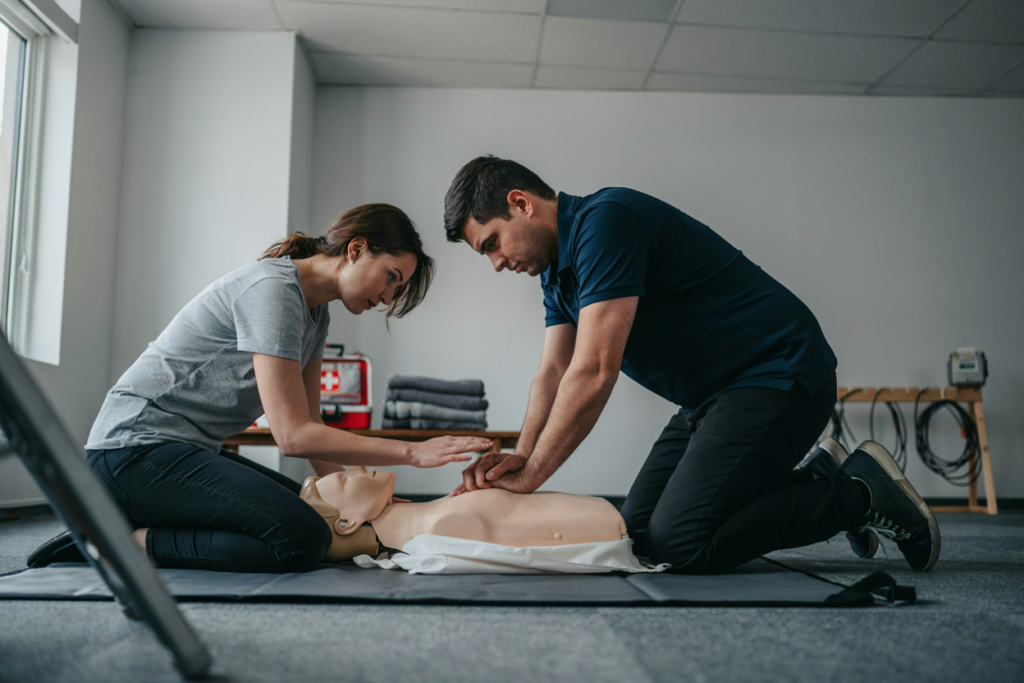
The training itself covers the practical side of what we’ve already talked about: LV rescue skills, CPR, hazard identification, and the WHS responsibilities that come with standing in that role. It’s built around the same competency framework as the rescue unit, so you’re not learning a watered-down version of anything. You’re learning to actually do the job properly, not just tick a box that says you turned up.
Practical Assessment
We know the practical component is the bit that gets in a lot of heads, and that’s fair enough. This isn’t roleplay to someone who could genuinely end up standing next to a live panel on a real job. The hands-on assessment is built to reflect that. You’re not just answering questions on a worksheet, you’re demonstrating you can actually watch, warn, stop work, and step in if it’s needed. It’s meant to leave you walking out the door actually confident, not just certified.
The course is structured so you’re taught the theory, then you work through it practically, then you’re assessed on it. Nothing about the structure is designed to catch you out. It’s designed to make sure you can genuinely do the job if you’re ever standing next to a live panel and something starts to go wrong.
If you’re ready to get booked in, you can lock in your training through our booking page.
Getting certified is only half the job. Staying current is where compliance officers lose track.
The 12-Month Currency Requirement: What Business Owners Need to Track
Why 12 Months, Not 2 or 3 Years
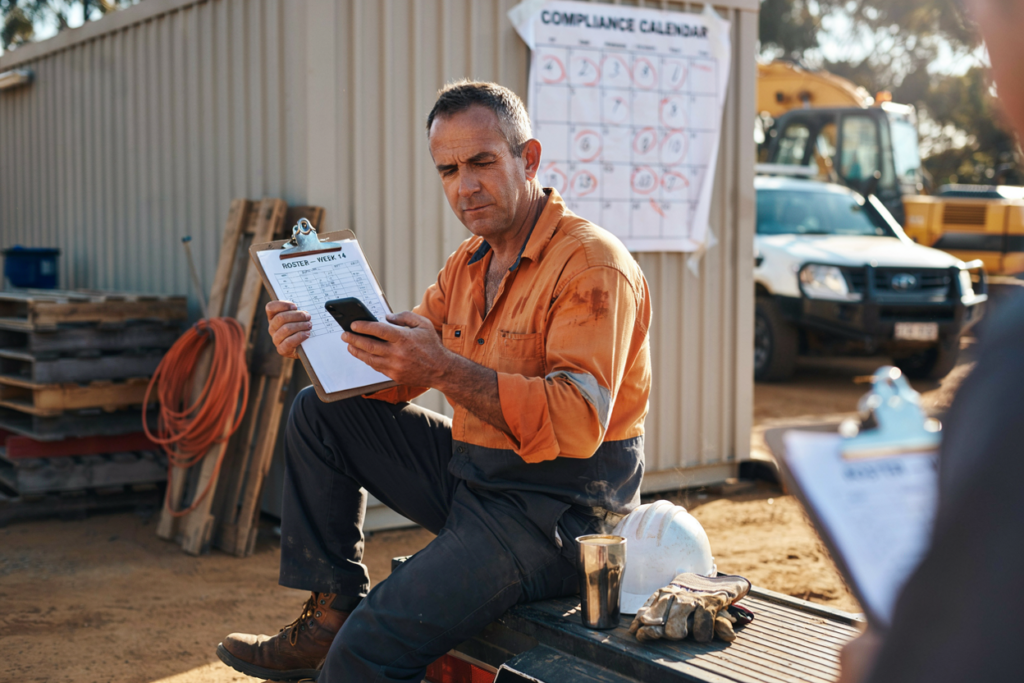
This one trips a lot of people up, especially business owners running more than one type of training across their crew. The safety observer’s currency requirement sits at 12 months. That’s what the assessment currency clause in the Electrical Safety Regulation calls for. It’s not the same as other renewal periods you might be tracking elsewhere in your LV rescue training. Don’t mix this figure up with anything else on your compliance calendar, because if you do, you’ll end up with someone on site who thinks they’re covered when they’re not.
Tracking Currency Across a Crew
For compliance officers juggling multiple guys with multiple certs, this is where it gets messy fast if you’re not on top of it. A few things worth doing:
- Keep a single, dedicated record just for safety observer currency dates, separate to your other LVR tracking
- Set reminders well before the 12-month mark, not on the day it lapses
- Cross-check currency against who's actually rostered onto live panel jobs, not just who's certified in general
Live electrical work carries real risk when the controls around it aren’t followed properly, and the safety observer requirement exists because of that risk, not despite it. Treating the 12-month mark as a hard deadline rather than a rough guide is the difference between a crew that’s genuinely covered and one that only looks covered on paper.
Build this into whatever system you already use to track licences, tickets, and inductions, rather than treating it as a separate thing to remember. Businesses that manage this well fold safety observer currency into the same process they already use for everything else, so nobody’s relying on memory alone to catch it before it lapses.
Getting Your Safety Observer Cert Sorted Without Losing a Day
Individual Booking Path
If you’re booking for yourself, the path is built to be fast and mobile-friendly. You can sort it from the ute between jobs or on a smoko break without mucking around with a clunky form.
Group Booking for Crews
If you’re booking for a crew, there’s a group path built specifically for that. One point of contact, one invoice, and one compliance record for the whole business, so you’re not chasing separate bookings and separate bits of paperwork for every guy on the team.
Wrapping It Up
At the end of the day, the safety observer role isn’t paperwork for the sake of paperwork. Someone standing next to a live panel, watching properly and ready to act, is the difference between a close call and a bloke going home that night. That’s the whole reason the Rule of Two exists, and it’s worth treating it that way instead of just another box to tick before the job starts.
The good news is most of the confusion around this role comes down to a handful of things people just haven’t had explained properly. Who can actually do it, whether it’s mandatory on your job, what the training covers, how the currency requirement works. None of that is complicated once someone walks you through it. The hard part has never been the rule itself, it’s been finding a straight answer.
For business owners and compliance officers, the bigger win here is getting the rostering right. Once you know a second qualified electrician isn’t always needed just to fill the observer role, you can plan your crew properly instead of tying up an extra tradesman on a role that didn’t need a trade ticket in the first place. That frees up your team to actually get the job done, not just look compliant on paper.
For the tradie standing on site, it comes back to something simpler. If it’s your mate on that panel, you want to be the person who actually knows what to do the second something changes, not someone hoping they’ll remember on the day. Training that’s current and properly assessed is what closes that gap between hoping and knowing.
None of this needs to be complicated or drag your crew off the job for longer than it has to. Get clear on whether you need an observer, get the training booked, and get the currency dates tracked properly, and it’s one less thing sitting at the back of your mind next time you’re standing near a live panel.
Book Your First Aid Training Now
Fast, affordable, and nationally accredited training delivered by professionals who care
Frequently Asked Questions
Q.What does a safety observer do in low voltage rescue?
A safety observer is the second person required to be present whenever an electrician performs live low voltage work in Queensland, often called the "Rule of Two." Their job is to watch the work closely enough to spot danger before it happens, warn the worker immediately if risk increases, stop the work at any point if it becomes unsafe, hold no other task while observing, and stay trained and currently assessed in LV rescue and CPR. They're not just a spectator, they're the last line of defense if something goes wrong on a live panel.
Q.Is a safety observer required for testing only work?
In most cases, yes, but there's a narrow exception. If a proper risk assessment shows the testing-only work carries no serious risk, an observer may not be required. That exception only applies when there's an actual documented risk assessment behind it, not just a judgement call made on the day, so it pays to treat this as the exception rather than the rule.
Q.How long does safety observer training take?
The course is structured around theory, practical work, and assessment, covering LV rescue skills, CPR, hazard identification, and WHS responsibilities. Get in touch directly for current course scheduling and to find a time that works around your job commitments.
Q.Do I need to renew my safety observer certification every year?
Yes. Under the Electrical Safety Regulation, a safety observer has to be reassessed as competent in rescue and resuscitation within the previous 12 months. That's a shorter cycle than some of the other renewal periods across the broader LV rescue training suite, so it's worth tracking separately rather than assuming it lines up with your other certificates.
Q.Can an apprentice be a safety observer?
Yes, an apprentice can fill the role as long as they hold the right prerequisite unit and are currently assessed in LV rescue and CPR. What qualifies someone for the role is their training and currency, not their stage of trade progression.
Making first aid training more affordable for
every classroom
We believe every student deserves access to life-saving first aid knowledge. That’s why we offer specially reduced pricing for schools and educational groups. Whether you’re booking for a single class, a year group, or your entire school, our flexible packages make training more accessible and cost-effective — without compromising quality.
