
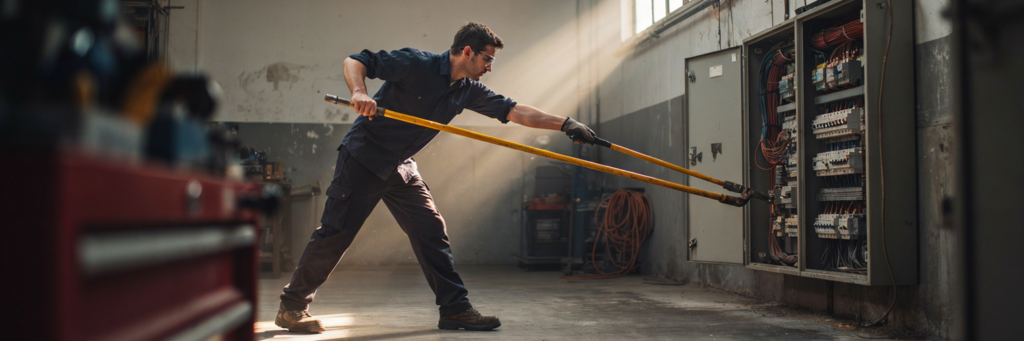
If it’s your mate on that panel and not you, you want to know exactly what to reach for. Not guess. Not hesitate. Not fumble around with gear you’ve never actually used under pressure.
That’s the gap most low voltage rescue courses don’t close. They’ll tell you insulated rescue equipment is part of your UETDRRF018 training, sure. But not what it actually is, how it’s rated, or how it behaves in your hands when someone’s still in contact with a live panel.
This guide breaks down the insulated rescue equipment training component specifically. The rescue hooks, poles, insulated gloves and mats you’ll train with, what each one’s rated for, and how they’re actually used to get a casualty off live contact safely. No generic safety course filler, no marketing spin. Just what the equipment does and what you’ll be expected to do with it on the day.
Whether you’re booking your own renewal or sorting training for the crew, you’ll walk away knowing exactly what “insulated rescue equipment” means in practice. Not just a line item sitting on a course outline somewhere, and not something you half remember from a course you did years back. Actual working knowledge of what’s in the kit, how it’s rated, and what your hands are meant to do with it the moment things go wrong.
Most electricians have handled a lot of gear in their career. Multimeters, testers, isolation locks, the usual. Insulated rescue equipment sits in a different category, because it’s the one set of tools where not knowing how to use it properly can cost someone their life.
What Insulated Rescue Equipment Is Used in Low Voltage Rescue?
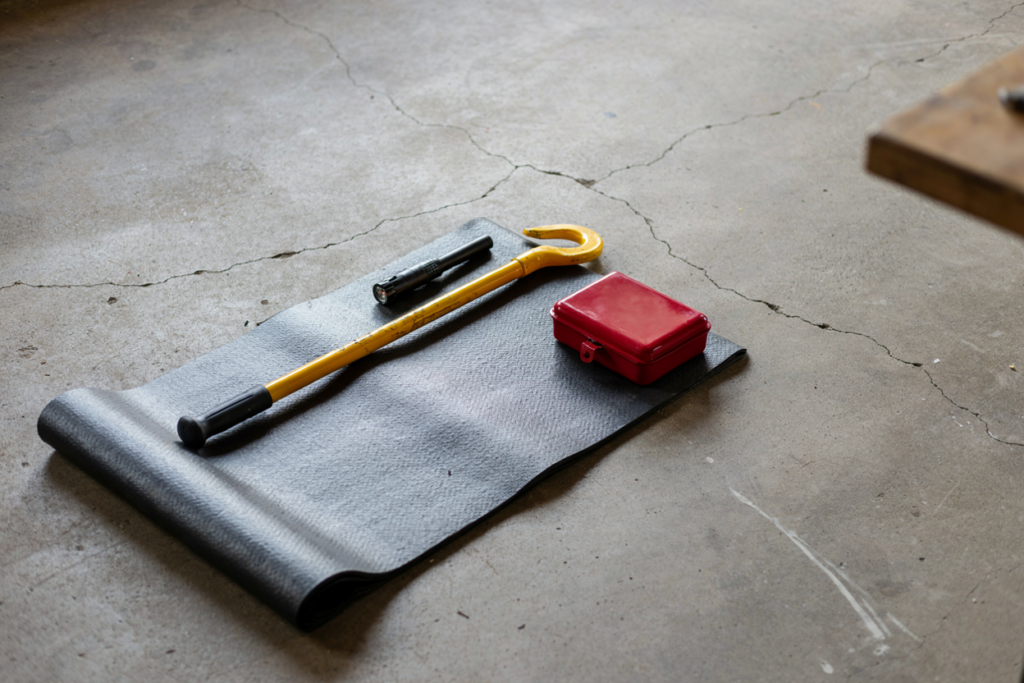
Insulated rescue equipment used in low voltage rescue is designed to protect the rescuer from electric shock while removing a casualty from contact with a live panel. Under UETDRRF018 training, the core equipment includes:
1. Insulated rescue hook or crook, used to physically separate the casualty from the live source without direct contact.
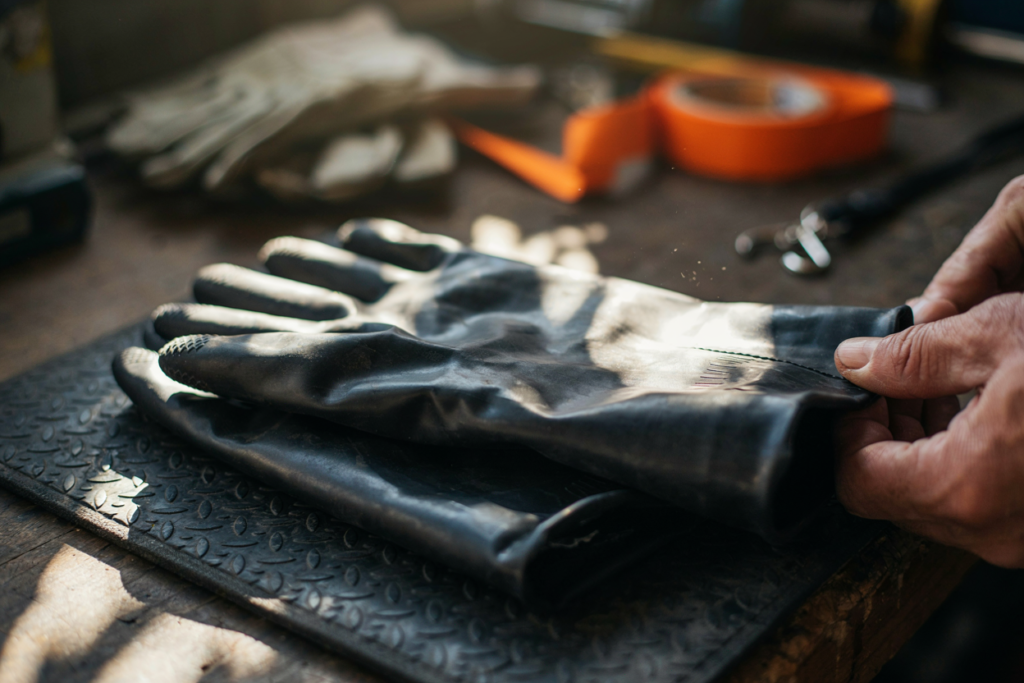
2. Insulated gloves (Class 0, rated to 1000V), marked "Rescue Use Only", worn before any contact with the casualty or panel.
3. Insulated mat, provides an insulated standing surface for the rescuer during the rescue.
4. Fire blanket, used if arcing or fire is present at the panel.
5. Non-conductive torch and signage, supports safe visibility and isolation marking during the incident.
Each item is rated and tested separately. None of it works as protection unless it’s used correctly, and in the right order.
That’s the snippet-sized answer. Below is what actually matters once you’re standing in front of the gear yourself, and what training actually looks like when you’re the one holding it.
🔧 Worth remembering: A hook, gloves and a mat sitting in a bag doesn't make anyone safer. Trained hands do.
The Core Insulated Rescue Equipment Used in a UETDRRF018 Rescue
This is the actual low voltage rescue kit you’ll be handling on the day. Not a marketing photo of gear. The real thing, rated and tested for one job: getting a body off a live panel without you becoming the second casualty.
None of this equipment looks complicated sitting in a bag on a shelf. A hook, a pair of gloves, a rubber mat. That simplicity is exactly why so many people underestimate it, and exactly why the training around it matters more than the gear itself.
The insulated rescue hook (or crook)
This is the tool you reach for first, and it’s the one piece of kit most people picture when they hear “rescue equipment.” It’s a long insulated pole with a hook or crook shape on the end, and its whole job is distance. You use it to physically separate the casualty from the live source without ever putting your hands, or any part of you, near that panel.
Here’s a number that surprises people: these hooks are commonly tested to 15kV. That’s well above what you’d expect for a low voltage panel. There’s a reason for that safety margin, the equipment’s built to handle far more than the job actually throws at it, so there’s a buffer for real-world conditions, wear, and the fact that nobody’s reading a rating plate mid-emergency.
The training component here isn’t just about knowing the hook exists. It’s about actually holding it, feeling the weight and length of it, and practising the motion of hooking a casualty away from a source without lunging in close. Under pressure, the instinct for most people is to get near, to grab, to help with your hands. The whole point of the hook is to override that instinct with a trained, deliberate action instead.
Insulated gloves: Class 0, rated to 1000V
These aren’t your everyday work gloves, and that’s the point. They’re marked “rescue use only” for a reason. Every time you pull them on for something other than a genuine rescue, you’re putting wear on the one piece of PPE that’s meant to save your life on the worst day of the job.
“Class 0” comes from AS/NZS IEC 60903, and in plain English it just means the glove’s rated up to 1000V, which covers you for LV panel work. But the rating only means something if the glove’s actually intact. Before use, you’re checking for cracking, perishing, any sign the insulation’s degraded. A glove that looks fine from across the room can still be compromised. That’s part of what the training actually drills into you. Not just “wear the gloves,” but how to inspect them properly, and how to store them so they’re not sitting in a hot ute cabin degrading between jobs.
Treat these gloves the way you’d treat a harness or a fall arrest kit. Something you check every single time, not something you assume is fine because it was fine last time.
The insulated mat
This one gets overlooked constantly, and it’s one of the pieces that trips people up most in a real scenario. It’s not just about insulating your hands, it’s about insulating where you’re standing. A rescuer with perfect gloves and a hook, standing on a bare concrete floor or a wet surface, still has a path to ground through their boots.
The mat gives you an insulated standing position for the whole rescue. This is exactly the piece that gets skipped when people improvise on-site with whatever’s lying around instead of using a kit they’ve actually trained on. It’s the one people forget exists until someone points out that standing position matters just as much as what’s in your hands.
Fire blanket and non-conductive torch
These are secondary to the hook, gloves and mat, but they’ve got their place. The fire blanket comes into play if there’s arcing or fire at the panel, which does happen with live electrical faults. The non-conductive torch matters more than people think too, particularly for visibility and safe isolation marking if the incident’s happening in low light or a switchroom with poor lighting.
They’re not the tools you reach for first. But knowing they’re there, and what they’re for, is part of being properly across the kit rather than just the headline items. A rescue that goes sideways because of an unexpected arc, with no fire blanket in reach, is a genuinely different situation to one where the gear’s been thought through in advance.
Knowing what’s in the kit is step one. Knowing the order you use it in is what actually keeps you and the casualty safe.
🚨 Worth remembering: Skipping a step in the sequence doesn't save time. It just changes who the casualty is.
How the Equipment Is Actually Used in Sequence
Here’s the thing nobody tells you when they hand you a kit list: having every piece of insulated rescue equipment sitting in a bag doesn’t mean anything if you don’t know the order to use it in. Under pressure, with someone’s mate down on a panel, sequence is what separates a rescue from a second casualty.
This is the part of the training that separates people who’ve actually done the course from people who’ve just seen the equipment. Knowing what a rescue hook looks like isn’t the same as knowing when to reach for it, in what order, and what happens if you skip a step because you’re panicking.
Step-by-step sequence
1. Assess and isolate where possible. Before you touch anything, you're working out what you're actually dealing with and isolating the source if it can be done safely and quickly.
2. Insulate yourself before you touch anything. Gloves on, mat down, before any contact with the casualty or the panel.
3. Use the hook to break contact, not your hands. This is the step people get wrong when they panic. The hook exists so you never need to touch the casualty directly while they're still in contact with the live source.
4. Move to CPR and first aid once contact is broken. Only once the casualty is clear of the live source does this become a standard first aid response.
Step | What You Do | Why It Matters |
1. Assess and isolate | Work out what you’re dealing with, isolate the source if possible | Prevents rushing in blind |
2. Insulate yourself | Gloves on, mat down, before any contact | You can’t help anyone if you become a casualty too |
3. Break contact with the hook | Use the hook, not your hands, to move the casualty away | Removes the instinct to grab with bare hands |
4. Move to first aid | Begin CPR/first aid only once contact is fully broken | Casualty care starts safely, not urgently and unsafely |
That order matters more than most people realise the first time they walk through it. Step one and two feel slow when someone’s in genuine danger, and the instinct is to skip straight to physically helping. But a rescuer who becomes a second casualty doesn’t help anyone. The training exists to build the discipline to work through the sequence properly even when every instinct says move faster.
This is also where a lot of training providers fall down, and it’s worth saying plainly: this isn’t a generic first-aid-brand course bolted onto an electrical topic. The sequence-driven, technical nature of this content is exactly what separates a serious LV rescue competency from a box-ticking exercise dressed up as one. A course that spends five minutes on the equipment and moves straight to a generic CPR module hasn’t actually taught you the part that matters most, which is the decision-making under pressure that ties the gear together.
None of this equipment does its job on its own. That’s exactly where a lot of workplaces get caught out.
Why “Having the Kit” Isn’t the Same as Being Trained on It
What most workplaces get wrong: kit present, no current competency
This happens more than you’d think. A site or a workshop’s got the insulated rescue kit sitting in a cabinet somewhere, ticked off on an equipment register, and everyone assumes that’s the job done. But a hook, a set of gloves and a mat sitting untouched in a bag isn’t protection. It’s potential. The gap between “we’ve got the gear” and “someone here actually knows how to use it, in the right sequence, under pressure” is exactly the gap that gets people hurt.
It’s an easy gap to fall into as well, because on paper it looks fine. An audit checklist ticks the box for “insulated rescue equipment present on site,” and that satisfies whoever’s reviewing compliance paperwork. What it doesn’t capture is whether the person standing nearest that panel on any given day actually knows what to do with it. That’s the difference between paperwork compliance and genuine readiness, and it’s a difference that only shows up in the moment it actually matters.
What UETDRRF018 training actually certifies you can do with this equipment
This is really the whole point of the competency. It’s not a certificate that says you’ve seen the gear. It’s one that says you’ve handled it, practised the sequence, and can be trusted to use it correctly if it’s your mate on that panel and not a training dummy.
That’s the distrust a lot of licensed electricians carry into this kind of training, and it’s a fair one. Nobody wants to sit through another generic safety course wrapped in first-aid-brand packaging that treats a live panel rescue the same as a workplace slip-and-trip module. The equipment’s specific, the risk is specific, and the training needs to match that or it’s not worth the day off the tools.
The value of proper training also shows up in the small details that never make it onto a kit list. How to inspect a glove properly before you trust your life to it. How to position yourself on the mat without wasting time. How to keep your voice steady while you’re calling for help and working through the sequence at the same time. None of that comes from reading a spec sheet. It comes from actually running the scenario, more than once, until the sequence stops feeling like a list and starts feeling like something you’d do automatically.
Conclusion
At the end of the day, insulated rescue equipment training comes down to one simple test. If it’s your mate on that panel, do you know exactly what to grab, and in what order, without a second of hesitation? That’s not a rhetorical question. It’s the entire reason this equipment exists, and the entire reason a certificate on paper means nothing if the person holding it hasn’t actually handled the gear under pressure.
The hook, the gloves, the mat, they’re not props. Each one’s rated, tested, and built for a specific job in a specific sequence, and none of them do much good sitting in a cabinet unused. A workplace can tick a box saying the kit’s on-site, but that box means nothing without someone trained to reach for it correctly when it counts.
That’s the gap this kind of training closes. Not knowing that insulated rescue equipment exists, but knowing how it behaves in your hands, how it’s inspected before use, and how quickly you can move through the sequence when someone’s still in contact with a live source. There’s no substitute for having actually practised it.
It’s also worth remembering this isn’t a generic safety module dressed up with electrical terminology. The risk is specific, the equipment is specific, and the training needs to reflect that. Anyone who’s sat through a box-ticking course knows the difference the moment they’re handed gear they’ve never actually used before.
Whether you’re due for your own renewal or you’re the one responsible for keeping a crew compliant, the same principle holds. Having the kit isn’t the finish line. Knowing exactly what to do with it, without guessing, without fumbling, is the actual competency this training is built around.
If nothing else, take this away. A rescue hook doesn’t save anyone on its own. A pair of Class 0 gloves sitting in a bag doesn’t either. It’s the person who’s trained on the sequence, who’s inspected the gear, who’s insulated themselves before touching anything, that’s the one who actually makes a difference on the day it matters.
Book Your First Aid Training Now
Fast, affordable, and nationally accredited training delivered by professionals who care
Frequently Asked Questions
Q.What is insulated rescue equipment used for in a low voltage rescue?
Insulated rescue equipment is used to protect the rescuer from electric shock while removing a casualty from contact with a live panel. It includes an insulated rescue hook, insulated gloves, an insulated mat, a fire blanket, and a non-conductive torch, with each item serving a specific role during the rescue.
Q.What rating do insulated gloves need to be for LV rescue?
Insulated gloves used in low voltage rescue are Class 0 under AS/NZS IEC 60903 and rated to 1000V. They should be clearly marked "Rescue Use Only" and inspected before every use for cracks, splits, or signs of deterioration, as damaged gloves cannot provide effective protection.
Q.Why does the insulated mat matter as much as the gloves?
The insulated mat protects the rescuer's footing rather than their hands. Even when wearing correctly rated gloves and using a rescue hook, a rescuer can still create a path to earth through their boots if standing on a bare or wet surface without an insulated mat.
Q.What is the correct sequence for using insulated rescue equipment?
The correct sequence is to assess the situation and isolate the power source where possible, protect yourself by putting on insulated gloves and standing on an insulated mat, use the rescue hook to separate the casualty from the live source instead of using your hands, and only begin CPR or first aid after contact with the electrical source has been completely broken.
Q.Does having the kit on-site mean a workplace is compliant?
No. Simply having insulated rescue equipment on-site does not make a workplace compliant in any practical sense. The equipment only provides protection when the nearest worker has current UETDRRF018 training and knows how to use the rescue equipment correctly, rather than simply having it stored in a cabinet.
Making first aid training more affordable for
every classroom
We believe every student deserves access to life-saving first aid knowledge. That’s why we offer specially reduced pricing for schools and educational groups. Whether you’re booking for a single class, a year group, or your entire school, our flexible packages make training more accessible and cost-effective — without compromising quality.
