

If your mate goes down on a live panel, do you actually know what to do in the next ten seconds, or are you hoping you’d figure it out on the day?
Most electricians know low voltage rescue training is a box they need ticked. Fewer could actually list the LVR skills that training is meant to build in them. That’s a problem, because UETDRRF018 isn’t really a certificate you file away and forget about, it’s a specific, learnable set of skills you’re meant to be able to pull out under pressure, on a real site, with real consequences if you freeze. Under the Electrical Safety Act 2002 (Qld), that competency isn’t optional if you’re working on or near live panels.
This breakdown goes through exactly which LVR skills you’ll build in UETDRRF018 training, from isolating a live panel safely, right through to CPR under electrical-incident conditions, so you know what you’re actually walking into and why each one matters when you’re the closest bloke to the panel.
We’ll go through the core rescue skills covered in the course, how they map onto real on-site scenarios, and what actually separates genuine competence from a certificate you’re hoping you never have to use.
⚡ Quick answer: UETDRRF018 builds five core LVR skills, danger assessment, safe isolation, safe casualty removal, CPR under electrical-incident conditions, and incident reporting. Keep reading for what each one actually looks like on a real job.
What Skills Do You Learn in LVR Training?
UETDRRF018, Perform Rescue from a Live Low Voltage Panel, teaches electrical workers the practical LVR skills to safely respond to an electric shock incident on or near a live panel. The core skills covered are:
1. Danger assessment: recognising live electrical hazards and checking scene safety before you approach.
2. Safe isolation: de-energising or isolating the panel without turning yourself into a second casualty.
3. Safe removal: moving a casualty away from the electrical source using non-conductive methods.
4. CPR under electrical-incident conditions: resuscitation adapted for burns, cardiac arrest, and possible spinal precautions.
5. Incident reporting and handover: communicating clearly with emergency services and site supervisors.
Those five skills are the backbone of the whole course, and we’ll break each one down properly below.
LVR Skill | What It Actually Covers |
Danger assessment | Reading the scene fast, spotting live hazards before approaching |
Safe isolation | De-energising the panel using the correct method for that setup |
Safe casualty removal | Moving a casualty clear using non-conductive tools and technique |
CPR under electrical-incident conditions | Resuscitation adapted for burns, shock rhythm, and spinal risk |
Incident reporting and handover | Clear communication with emergency services and site supervisors |
🛠️ Trade tip: These five skills aren't taught as isolated tricks, they're taught as a sequence. Miss a step and the whole chain breaks down when it counts.
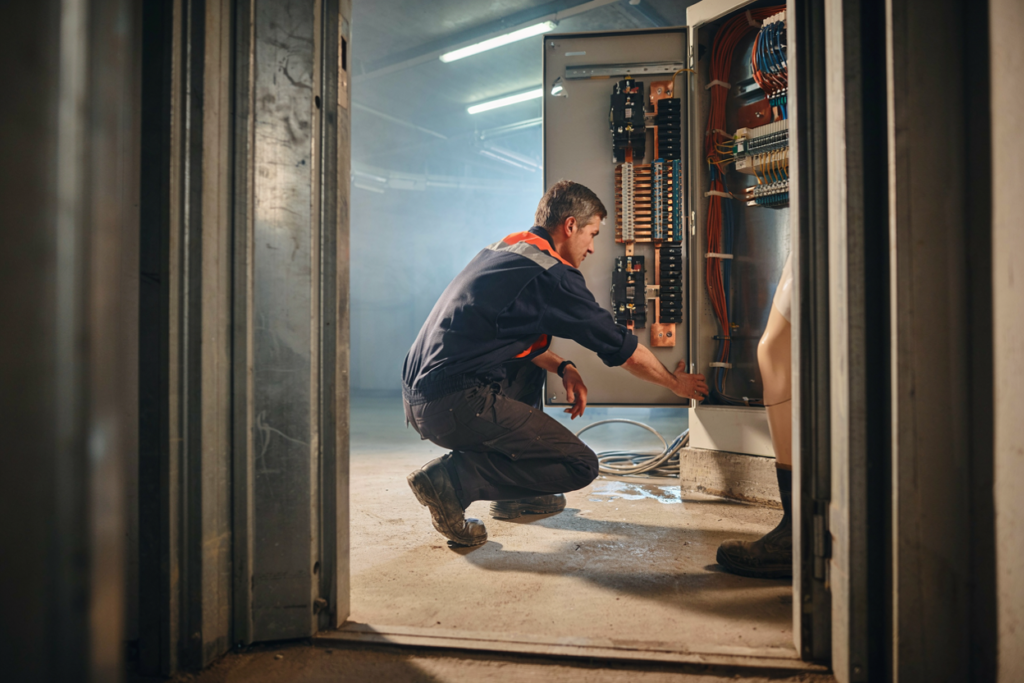
The Core LVR Skills Covered in UETDRRF018 Training
This is where it gets specific. Below is what each of those five skills actually looks like in practice, not just the textbook version.
Danger Assessment and Scene Safety
Before you touch anything, you’re trained to stop and read the scene. That means clocking whether the panel’s still live, whether there’s water or metal flooring involved, and whether approaching puts a second person at risk, because a lot of electrical rescue incidents turn into two casualties, not one, because someone rushed in without checking first.
In the course, this gets drilled as a deliberate pause-and-assess habit, not a box you tick mentally and move past. You’re taught to run through hazard indicators fast, in seconds, because that’s the reality of a live incident.
Safe Isolation of a Live Panel
This is the skill most people assume they already know, and it’s usually where the gaps show up. You’re taught how to isolate or de-energise a panel using the correct method for that specific setup, without becoming the second casualty yourself.
It covers things like identifying the right isolation point, using insulated equipment correctly, and knowing when isolation isn’t possible fast enough and you need to fall back on non-contact removal instead. Under the Electrical Safety Act 2002 (Qld), this is the exact competency gap the legislation is trying to close. Too many incidents have involved a second person getting injured trying to help.
Safe Casualty Removal Techniques
If you can’t isolate the panel fast enough, or isolation alone doesn’t get the casualty clear, you need a way to physically move them away from the source without conducting current through yourself. This is taught as a hands-on skill, using non-conductive tools and techniques, not just described on a slide.
You practice it. Repeatedly. Because in a real scenario, hesitating to work out how costs you seconds you don’t have.
CPR and Resuscitation Under Electrical-Incident Conditions
Standard CPR training assumes a fairly straightforward cardiac event. Electrical incident CPR is different, you might be dealing with burns, possible spinal injury from a fall, and a cardiac rhythm disrupted by shock rather than by natural causes. The course adapts resuscitation technique for exactly that combination.
This is genuinely one of the bits that separates this course from a generic first aid refresher. It’s not CPR with an electrical label stuck on it, it’s CPR adapted for what actually happens to a body after contact with a live low voltage panel.
Incident Reporting and Emergency Services Handover
The last skill, and the one that gets underrated, is what you do once the immediate danger’s managed. Clear, accurate handover to emergency services and site supervisors, what happened, what’s been done, what the casualty’s condition is, genuinely affects how fast and how well the next stage of care goes.
It’s a communication skill as much as a technical one, and it’s taught as a distinct part of the course rather than an afterthought.
Across all five, there’s a clear split between theory, understanding why each step matters, the regulatory backbone, the physiology, and the practical, hands-on assessment component where you’re actually running through these actions under simulated pressure.
🚧 Reality check: Site-access rules mean a lapsed or missing LVR certificate can turn you away at the gate on the day. Here's why that's the sharpest pain point in this whole course.
Why These Skills Matter On a Real Job Site (Not Just On Paper)
It’s easy to treat LVR skills as something you learn for the certificate and hope never to use. But there’s a harder, more immediate reason these skills matter, and it’s got nothing to do with hoping.
The Site-Access Reality: No Current Skills, No Start
A lot of principal contractors, utilities, and government infrastructure sites won’t let you through the gate without current LVR competency on file. No certificate, no start, and that’s not a hypothetical, it happens on real sites, on real mornings, to blokes who thought their paperwork was sorted.
That’s the most acute pain point going around this whole course, more than anything else. Losing a day’s labour or a contract milestone because your LVR skills weren’t documented and current is a genuinely avoidable mistake.
What Happens If You Freeze in the Moment
Here’s the harder truth. You can be the most technically skilled electrician on the site and still freeze the first time you see a mate down near a live panel, because seeing it happen is nothing like reading about it. That’s exactly the gap this training is built to close, not just knowledge of what to do, but the muscle memory and rehearsed calm to actually do it when it counts.
Peer Responsibility: Protecting Your Crew, Not Just Your Ticket
There’s a version of this that’s about your licence and your compliance record. And there’s a version that’s about the bloke next to you on the panel. Most electricians who take this seriously aren’t doing it for the paperwork, they’re doing it because they don’t want to be the one standing there not knowing what to do if it’s their mate down.
That’s the real weight behind these LVR skills. It’s not an abstract risk. It’s someone you work with every day.
📋 Before you book: A serious LVR course is built around scenario-based assessment, not a written test. Here's how the course structure actually breaks down.
How These Skills Are Taught, Inside the UETDRRF018 Course Structure
Knowing what skills you’re meant to walk away with is one thing. Knowing how the course actually gets you there is what decides whether you trust it enough to book.
Practical, Scenario-Based Assessment (Not Just a Written Test)
This isn’t a course where you sit a written test and get handed a certificate. The assessment is scenario-based, you’re actually running through danger assessment, isolation, casualty removal, and CPR under simulated conditions, with an assessor watching how you perform, not just what you can write down.
That matters because reading about isolating a panel and actually doing it under pressure are two completely different skills. The practical component is where you find out if you’ve genuinely absorbed it or just memorised it for the test.
What to Expect on the Day
You’ll move through the theory components first, the why behind each skill, the regulatory context, the physiology of what happens during an electrical incident, before moving into the hands-on, scenario-based practical work. Expect to be moving, not sitting in a chair. This is a physically active course, not a lecture.
🔍 Watch for this: Not every provider treats LVR as a standalone electrical safety competency. Here's how to tell a genuine specialist from a first-aid brand with an electrical label stuck on it.
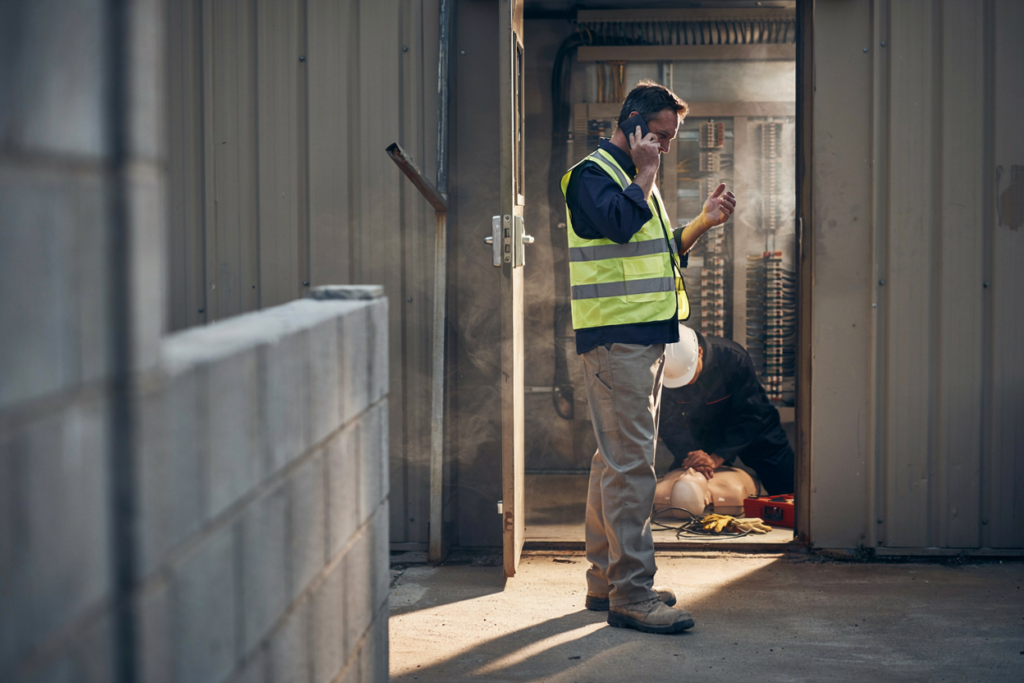
How to Tell a Serious LVR Provider From a Generic Safety Course
Not every provider running a low voltage rescue course is treating it as the serious electrical safety competency it actually is. Some of it feels bolted onto a first-aid brand’s course list rather than built for people who work on live panels for a living. Here’s how to spot the difference before you book.
Signal | Serious LVR Specialist | Generic Safety Course |
Course framing | Electrical safety training first | Repackaged first aid content with an electrical label |
Trainer background | Genuine electrical industry experience | Training-delivery qualification only |
Regulatory language | References Electrical Safety Act 2002 (Qld) specifically | Generic “workplace safety” wording |
Imagery | Real panel, switchboard, and site content | Stock photos of hi-vis and mannequins |
Assessment style | Scenario-based, hands-on | Mostly written |
Questions to Ask Before You Book
- What's the trainer's actual electrical industry background?
- Is the practical assessment scenario-based, or mostly written?
- Is the course time genuinely spent on the five core LVR skills, not padded out?
- How fast will the certificate actually be issued, and is that in writing anywhere?
Red Flags: When a Course Feels First-Aid-Brand-First
If the LVR course sits buried in a list next to childcare CPR refreshers and baby first aid workshops with barely any distinction in tone or imagery, that’s worth noticing. It doesn’t automatically mean the training’s bad, but it’s a sign the provider might not be treating this as the standalone, serious competency it needs to be for someone whose job actually puts them near live panels.
🔄 Common question: There's no single national renewal period for LVR skills, which is exactly why so many bookings happen last minute. Here's the plain-English version.
Staying Current, Do Your LVR Skills Need Renewing?
This is probably the single most confusing part of the whole LVR skills conversation, so let’s clear it up plainly.
Why There’s No Single National Renewal Period
Unlike CPR, which most people know runs on an annual cycle, or first aid, which sits on a three-year cycle, there’s no single hard national renewal period for LVR skills. That’s not an oversight, it’s just how the regulation’s structured. Which means the “how often do I actually need to redo this” question doesn’t have one clean universal answer, and that ambiguity is exactly what causes last-minute panic bookings before a site start date.
Certification | Typical Renewal Pattern |
CPR | Annual cycle |
First aid | Three-year cycle |
LVR skills (UETDRRF018) | No single national period, driven by employer or site requirements |
What Most Principal Contractors and Insurers Expect
In practice, currency expectations are usually driven by your employer’s policy or by whatever the principal contractor on a given site requires, rather than one blanket rule. Insurers and head contractors are increasingly asking for documented, current LVR competency as a condition of engagement, which is a big part of why this certificate functions as a site-access gatekeeper rather than just a personal qualification sitting in a drawer.
How to Check If Your Current Certificate Still Meets Site Requirements
The safest approach is to check directly with whoever’s requiring access, the principal contractor, the site compliance officer, or your own employer, rather than assuming your last certificate is still good enough. If you’re not sure, it’s worth confirming before you’re standing at the gate.
None of this is really about a piece of paper. It’s about whether you can actually do something useful in the ten seconds after a mate goes down near a live panel, instead of standing there working it out as it happens. That’s the whole point of building these LVR skills properly, not just sitting through a course to get a certificate filed away somewhere.
The five skills covered, reading the danger, isolating the panel, moving a casualty safely, adapting CPR for an electrical incident, and handing over clearly to emergency services, aren’t separate tricks you learn in isolation. They’re a sequence. Miss one, rush one, or freeze on one, and the whole chain breaks down at exactly the moment it matters most.
Site access is the pressure that gets most electricians through the door for this training in the first place, and that’s fair enough. Turning up to a job and getting knocked back at the gate because a certificate lapsed is a genuinely avoidable problem. But the deeper reason to actually absorb these skills, rather than just tick the box, is the one that doesn’t show up on a compliance spreadsheet. It’s the bloke next to you on the panel.
Not every provider treats this training with the seriousness it deserves. Some of it gets bundled in alongside consumer-facing first aid content with barely a shift in tone, and that’s worth noticing before you book. A course built around real electrical safety, with trainers who’ve actually worked in the industry and a practical assessment that puts you under genuine pressure, is a different thing entirely from a generic safety refresher with an electrical label on it.
The renewal question trips a lot of people up, and reasonably so, given there’s no single national period the way there is for CPR or first aid. The safest habit is checking directly with whoever’s controlling site access rather than assuming an old certificate still holds. A five-minute check beats a last-minute scramble every time.
If there’s one thing worth carrying off this page, it’s that LVR skills aren’t something you learn once and forget. They’re something you’d want fresh in your hands the one time you actually need them, because that’s not a moment where you get a second attempt.
Book Your First Aid Training Now
Fast, affordable, and nationally accredited training delivered by professionals who care
Frequently Asked Questions
Q.Do I need to redo LVR training every year, like CPR?
No. There's no single national renewal period for LVR skills the way there is for CPR or first aid. Currency expectations are usually set by your employer or by the principal contractor on a given site, so the honest answer is to check with whoever controls site access rather than assume a fixed timeframe applies.
Q.What happens if my LVR certificate lapses before a job starts?
You risk being turned away at the gate. A lot of principal contractors, utilities, and government infrastructure sites won't let you on site without current LVR competency on file, and that can cost a day's labour or a contract milestone if it's discovered on the morning of the job.
Q.Is LVR training just CPR with an electrical label on it?
No. While CPR is part of it, the resuscitation taught in UETDRRF018 is adapted for electrical-incident conditions, meaning burns, possible spinal injury, and a cardiac rhythm disrupted by shock rather than a standard cardiac event. It also covers danger assessment, safe isolation, and safe casualty removal, none of which feature in a standard CPR course.
Q.How is the practical assessment actually run?
It's scenario-based, not a written test. You're run through danger assessment, isolation, casualty removal, and CPR under simulated conditions, with an assessor watching how you actually perform under pressure, not just what you can write down on paper.
Q.How can I tell if a provider takes LVR seriously, rather than treating it as a generic add-on?
Look at how the course is framed. A genuine specialist presents it as electrical safety training first, uses trainers with real electrical industry background, references the Electrical Safety Act 2002 (Qld) specifically, and uses real panel and site imagery rather than stock photos. If it's buried in a list next to childcare CPR refreshers with no shift in tone, that's worth noticing.
Q.Does my LVR certificate get accepted on every site automatically?
Not necessarily. Because there's no single national renewal rule, acceptance often comes down to what that specific principal contractor or insurer requires. The safest habit is checking directly with the site rather than assuming an older certificate will be waved through.
Making first aid training more affordable for
every classroom
We believe every student deserves access to life-saving first aid knowledge. That’s why we offer specially reduced pricing for schools and educational groups. Whether you’re booking for a single class, a year group, or your entire school, our flexible packages make training more accessible and cost-effective — without compromising quality.
