
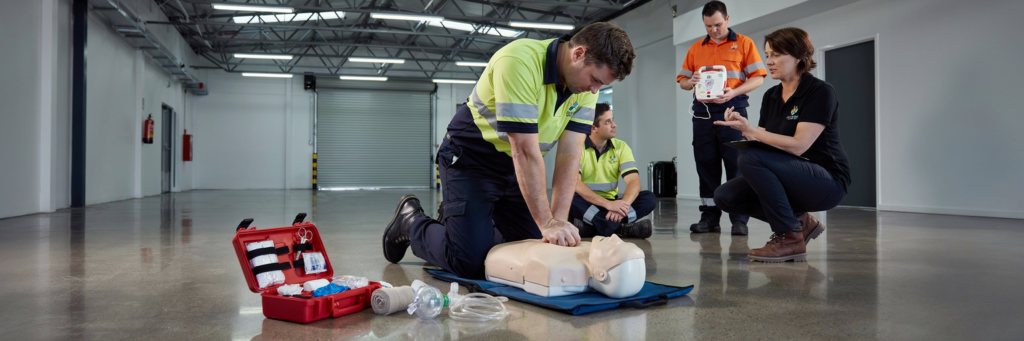
Your principal contractor just flagged it. The site needs HLTAID014, not just a standard first aid certificate, and the qualification register has to be sorted before the next audit or mobilisation date hits. So now you’re sitting in the ute trying to work out whether a quick Advanced First Aid course gets you a real, WorkSafe Queensland-recognised quali or some watered down version that falls apart the second an assessor asks a question about it.
Here’s the short answer. At First Aid Alive, the HLTAID014 Advanced First Aid course is nationally recognised, ASQA-aligned, and built around the kind of injuries you’re actually gonna see on a construction, civil, or industrial site, not some generic classroom script written for an office full of admin staff.
Below we break down exactly what’s included in the course, what you’ll walk away with, and how to get your Statement of Attainment fast enough to satisfy whatever contractor management platform deadline is breathing down your neck.
What’s Included in an Advanced First Aid (HLTAID014) Course?
An Advanced First Aid course builds on basic first aid and CPR to cover the higher-level emergency response skills that high-risk workplaces actually need. At First Aid Alive, the HLTAID014 course includes:
- CPR and AED response techniques for adults, children, and infants
- Advanced resuscitation techniques for complex or prolonged emergency situations
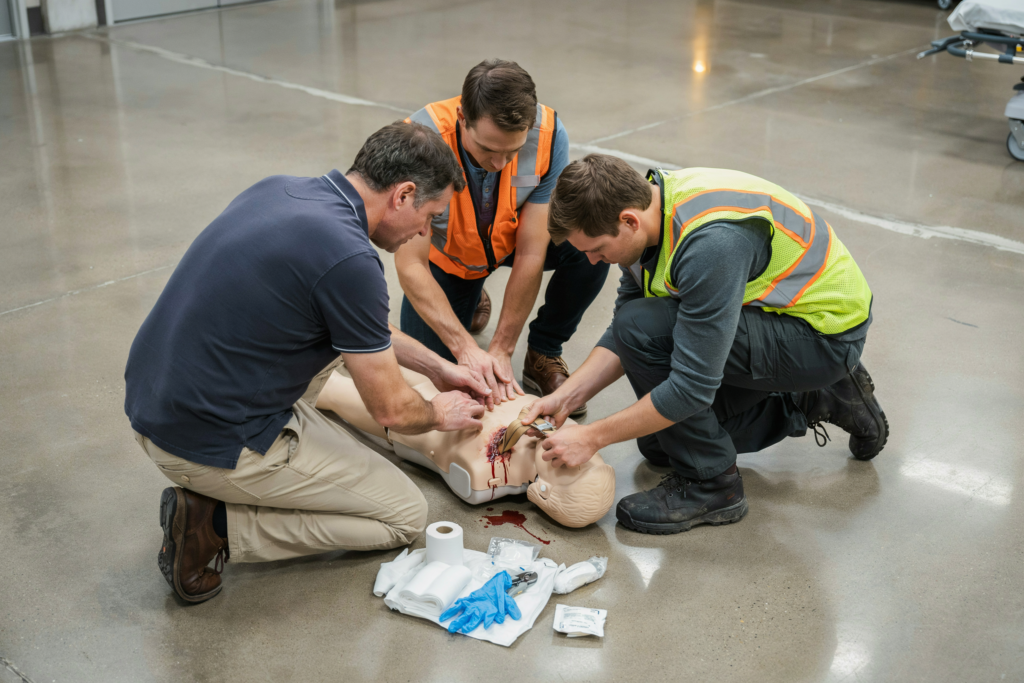
- Trauma management including severe bleeding, fractures, crush injuries, and shock
- Anaphylaxis and asthma emergency response procedures
- Spinal injury management and care for unconscious patients
- Nationally recognised Statement of Attainment (HLTAID014), valid for 3 years
The course meets WorkSafe Queensland and ASQA training standards for high-risk industries like construction and civil works.
What Does the Advanced First Aid Course Actually Cover?
This is the bit Marcus actually cares about. Not the marketing line, the actual content, because he’s the one who has to know it’ll hold up if a worker goes down hard on site and there’s no ambulance close by.
Core Skills Taught in HLTAID014
The HLTAID014 course doesn’t just repeat what a standard first aider already knows with a fancier name slapped on it. It goes further into the stuff that actually matters on a high-risk site:
- CPR and AED use across adults, children, and infants, including extended resuscitation scenarios beyond standard expectations
- Advanced resuscitation techniques for emergencies that do not resolve within the first critical minutes
- Severe trauma management including major bleeding, fractures, and crush injuries from high-risk incidents such as mobile plant accidents or falls from height
- Shock recognition and emergency management procedures
- Anaphylaxis and asthma emergency response techniques
- Spinal injury management and care for unconscious patients
It’s training packed with the stuff that’s actually relevant to a site, not a generic office-based course with a different sticker on it.
How It Differs From a Standard First Aid Certificate (HLTAID011)
This is the comparison Marcus is already running in his head, because his apprentices hold HLTAID011 and he’s been told that’s not enough for his role anymore.
HLTAID011 (Standard First Aid) | HLTAID014 (Advanced First Aid) | |
Who it’s for | General workplace first aiders | Supervisors, WHS officers, high-risk site leads |
Trauma coverage | Basic wound care, minor injuries | Severe bleeding, fractures, crush injuries, shock |
Resuscitation | Standard CPR/AED | CPR/AED plus advanced, prolonged-scenario resuscitation |
Typical site fit | Office, retail, low-risk workplace | Construction, civil, mining services, utilities |
Validity | 3 years | 3 years |
A standard certificate is built for the workplace where the worst case is a sprained ankle or a kitchen burn. HLTAID014 is built for the workplace where the worst case is someone trapped under plant or falling from height. If your site’s risk profile includes excavation, mobile plant, working at heights, or remote distance from emergency services, this is the gap a standard certificate leaves open.
Why It’s Built for Construction, Civil & Industrial Sites
This course isn’t theory written by someone who’s never set foot past a site office. The scenarios are built around what actually happens on a high-risk civil or industrial site:
- A worker caught by a piece of mobile plant requiring immediate emergency response
- A fall from height resulting in suspected spinal injury and complex patient management
- A crush injury caused by material handling incidents or excavation collapse
- A medical emergency occurring far from immediate ambulance support, reflecting the reality of many remote and high-risk worksites
That’s the whole point of “advanced.” It’s not a harder exam for the sake of it, it’s training that matches the actual risk sitting on your site right now.
Classroom, Practical, or Blended Format
It’s a mix of classroom instruction and hands-on practical work, not a stretch of sitting in a room watching slides. You’ll be working through real scenarios:
- CPR and AED practice using training manikins to build real-world response skills
- Trauma management and bleeding control practice using simulated injury scenarios
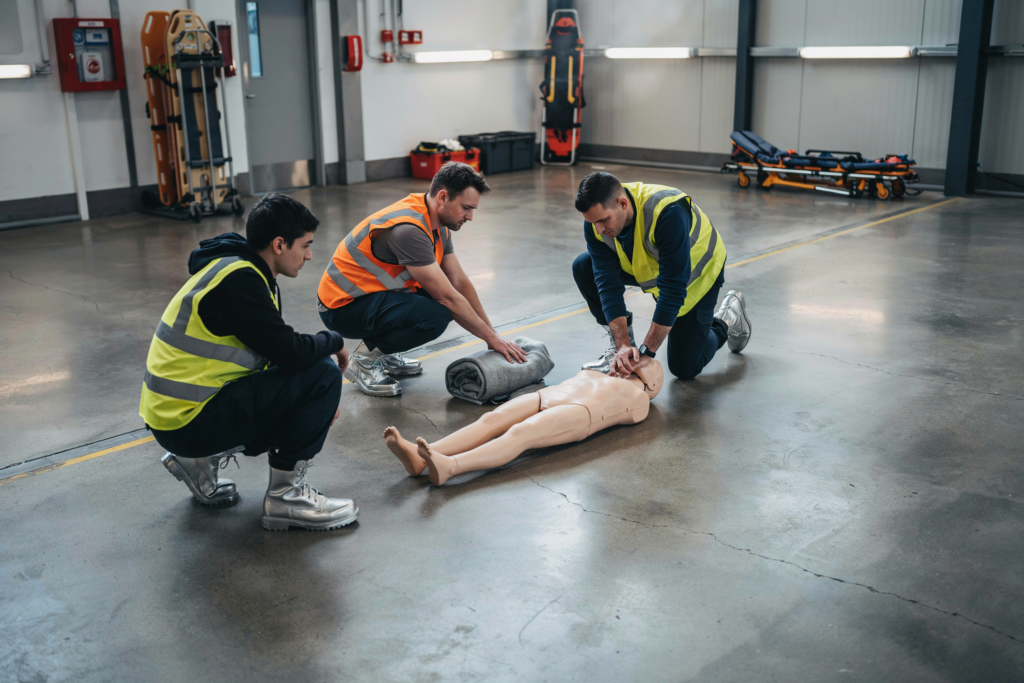
- Spinal management techniques and safe patient handling drills
- Group-based emergency response scenarios that reflect real workplace situations where emergencies are rarely managed alone
The classroom component covers the theory you need, but the bulk of the training is built around doing the skill, not just hearing about it. That’s deliberate. Knowing the steps in your head and being able to do them under pressure with someone’s life depending on it are two very different things.
How to Prepare
Nothing complicated here, but worth getting right before you show up:
- Comfortable clothing that allows you to move, kneel, and participate in practical activities
- Closed-toe shoes suitable for hands-on training sessions
- Any existing first aid certificates for renewals or upgrades so the trainer can confirm your prior learning
- Photo ID for course verification
- A water bottle, as you will be on your feet and actively participating throughout the session
No textbooks to buy beforehand, no pre-course online modules to slog through after work. You show up, you do the work, you leave with the qualification.
What’s Included in the Course (No Hidden Extras)
The course covers everything you need, start to finish. No surprise add-ons or stripped-back modules waiting to catch you out:
- Full training including classroom learning and hands-on practical activities
- All required training materials and equipment provided during the course
- Trainer-led practical assessment to confirm your emergency response skills
- Nationally recognised Statement of Attainment (HLTAID014) issued on successful completion
- Same-day digital certificate delivery after completing all course requirements
That’s it. There’s no “basic package” that leaves out trauma management, no extra fee to access the spinal injury module. The course is the whole thing, the one that actually meets the HLTAID014 unit requirements, not a stripped-back version dressed up to look the same on a search results page.
If you’re comparing options between providers, the question to ask isn’t just what’s on offer, it’s whether everything you actually need is genuinely included. A course that doesn’t include the certificate or charges extra for trauma modules isn’t really the deal it looks like on paper.
Marcus is rarely booking just himself. He’s booking for a crew, a leading hand, sometimes the whole site’s nominated first aid officers in one go. Group bookings keep things simple, managed as a single coordinated process rather than chasing individual enrolments across different dates. If you’ve got several workers who all need HLTAID014 before the same audit or mobilization date, get in touch for a group quote rather than booking everyone separately. It keeps your qualification register tidy, with everyone certified together instead of staggered.
Does This Course Meet WorkSafe Queensland & Tender Requirements?
This is the section that actually matters most if you’re the one whose name is on the qualification register when the audit lands. So let’s be direct about it.
ASQA & Nationally Recognized Training Explained
HLTAID014 is a nationally recognized unit of competency, regulated by ASQA, the Australian Skills Quality Authority. That means it’s not a course someone built in-house and called “advanced,” it’s a standardized unit delivered by registered training organizations across the country, assessed against the same national standard wherever you sit it.
That national recognition is exactly what a principal contractor or tender document is checking for when they specify HLTAID014 by name. It’s also why the Statement of Attainment you walk away with carries weight on a contractor management platform, it’s not a generic “certificate of completion,” it’s a formally recognized qualification tied to a national unit code.
What to Check Before You Book (RTO Number, Unit Codes)
Before you book with any provider, advanced or otherwise, run this quick check so you’re not caught out after the fact:
- Confirm the course is delivered under the official unit code HLTAID014, not a similarly named but different training course
- Verify the provider’s RTO number and check registration details through training.gov.au
- Confirm the Statement of Attainment clearly lists the HLTAID014 unit code, not only a generic course title
- Check the certificate validity period, with HLTAID014 recognised as valid for 3 years, consistent with standard first aid certification
First Aid Alive is RTO 31106. You can verify that against training.gov.au yourself before booking, and you should, because that two-minute check is the difference between a qualification that satisfies your audit and one that gets flagged and sent back.
📋 Quick gut-check: If a provider can't tell you their RTO number off the top of their head, or the certificate doesn't reference HLTAID014 directly, that's a red flag worth chasing up before you book, not after your crew's already sat the course.
How to Book Your Advanced First Aid Course Fast
You know what’s covered, and you know it actually satisfies the requirement sitting on your audit checklist. Now it’s just about getting it booked without losing another day chasing it.
First Aid Alive runs HLTAID014 Advanced First Aid courses on a regular schedule, not a situation that forces you to wait weeks for the next intake. That matters when you’re working against a tender close date or a mobilisation deadline that isn’t moving for anyone.
Once the course wraps and the assessment’s done, your Statement of Attainment is delivered digitally the same day. No waiting around for a certificate to turn up while your crew sits idle at the gate because the contractor management platform won’t grant site access without it being uploaded.
If it’s just you needing the qualification for a promotion or a personal compliance gap, booking solo is straightforward, pick a date, book in, show up. If you’re booking for a crew, and most site supervisors are, it’s worth getting in touch directly rather than booking separate spots one at a time. Group bookings get sorted together, same trainer, everyone certified together, and it keeps your qualification register clean instead of staggered across different completion dates that are harder to track.
Final Thoughts
There’s a particular kind of pressure that comes with being the person a crew looks to if something goes wrong, and it doesn’t sit the same as a normal item on a to-do list. It’s the kind of pressure that follows you home, that sits in the back of your mind on the drive to the next site, that surfaces again the moment a principal contractor mentions the word “audit.” A qualification gap on the register isn’t just paperwork sitting unfinished. It’s a question mark hanging over whether the crew is actually covered if the worst happens tomorrow.
The good news is that closing that gap doesn’t have to cost what people assume it costs, in time or hassle. The right unit code, and a Statement of Attainment that actually means something when it lands in a compliance officer’s inbox, that’s the whole equation. No drawn-out process, no certificate that needs explaining or chasing up after the fact.
What actually matters though isn’t the certificate itself, it’s what’s underneath it. It’s whether the person standing over a worker who’s gone down hard with a crush injury or a suspected spinal injury actually knows what to do in the first ninety seconds, before help arrives, while the clock is the only thing working against them. That’s the gap between a course that’s genuinely advanced and one that’s advanced in name only.
Construction, civil, and industrial sites carry risk that doesn’t exist in most other workplaces. Falls from height, mobile plant, excavation collapse, distance from the nearest ambulance, these aren’t hypothetical scenarios dreamed up for a textbook. They’re the reason the qualification exists in the first place, and they’re the reason a watered-down version of it isn’t worth the time it takes to sit through.
Getting this sorted before an audit lands, before a tender closes, before a mobilisation date arrives, isn’t about ticking a box to satisfy someone else’s checklist. It’s about being the person who can actually do something when everyone else on site is standing there not knowing what to do next. That’s the difference between holding a certificate and holding the competence the certificate is meant to represent.
If there’s a gap sitting on the qualification register right now, the smartest move is closing it before someone else flags it for you. Time spent getting this right pays for itself the moment it’s actually needed, and on a site like yours, it’s not a question of if that day comes, it’s a question of when.
Book Your First Aid Training Now
Fast, affordable, and nationally accredited training delivered by professionals who care
Frequently Asked Questions About HLTAID014 Advanced First Aid
Q.What's the difference between HLTAID011 and HLTAID014?
HLTAID011 is the standard first aid certificate most workers hold, covering basic wound care and minor injuries suited to general workplaces. HLTAID014 goes further, covering severe bleeding, fractures, crush injuries, shock, and advanced resuscitation, which is why it's the unit specified for supervisors and high-risk sites like construction, civil, and industrial work.
Q.Is HLTAID014 nationally recognized?
Yes. HLTAID014 is a nationally recognized unit of competency regulated by ASQA, delivered by registered training organizations against the same national standard wherever it's completed. That's exactly what a principal contractor or tender document is checking for when HLTAID014 is named as a requirement.
Q.How do I know a provider is legitimate before I book?
Confirm the course is listed under the unit code HLTAID014, check the provider's RTO number against training.gov.au, and make sure the Statement of Attainment will name the unit code directly rather than a generic course title. A legitimate provider can give you their RTO number without hesitation.
Making first aid training more affordable for
every classroom
We believe every student deserves access to life-saving first aid knowledge. That’s why we offer specially reduced pricing for schools and educational groups. Whether you’re booking for a single class, a year group, or your entire school, our flexible packages make training more accessible and cost-effective — without compromising quality.
