

You’re 200 kilometers from the nearest hospital. Someone on your crew just got seriously injured, and everyone’s looking at you because you’re the designated first aid officer. Your basic first aid certificate is sitting in your wallet, but right now—with blood everywhere and your mate screaming in pain—you’re not sure if what you learned three years ago is gonna cut it.
That’s the reality of working remote. Basic first aid teaches you how to handle cuts and do CPR until the ambulance shows up. But what happens when the ambulance is 90 minutes away?
Advanced first aid training—officially called HLTAID014—isn’t just “basic first aid with a few extra bits.” It’s a completely different level of preparation designed for situations where you’re it. Where there’s no backup. Where someone’s life depends on whether you actually know what you’re doing for hours until help arrives.
This guide breaks down what you’ll learn, how it differs from basic first aid, and whether HLTAID014 is the right qualification for your industry and career.
What Is Advanced First Aid Training?
Advanced first aid training (HLTAID014) is a nationally recognized qualification that teaches you how to manage serious injuries, complex medical emergencies, and extended care scenarios that go way beyond basic first aid. Unlike basic courses that focus on minor injuries, advanced first aid prepares you to respond to life-threatening situations in remote or high-risk environments where professional medical help might be hours away.
Here’s what advanced first aid training covers:
- Trauma management – Severe bleeding control, fracture management, crush injuries
- Advanced airway techniques – Oxygen therapy, advanced resuscitation methods
- Extended care protocols – Managing casualties for extended periods until evacuation
- Multi-casualty triage – Prioritizing treatment when multiple people are injured
- Complex medical emergencies – Cardiac events, respiratory failure, shock management
- Remote area considerations – Working with limited resources and delayed emergency response
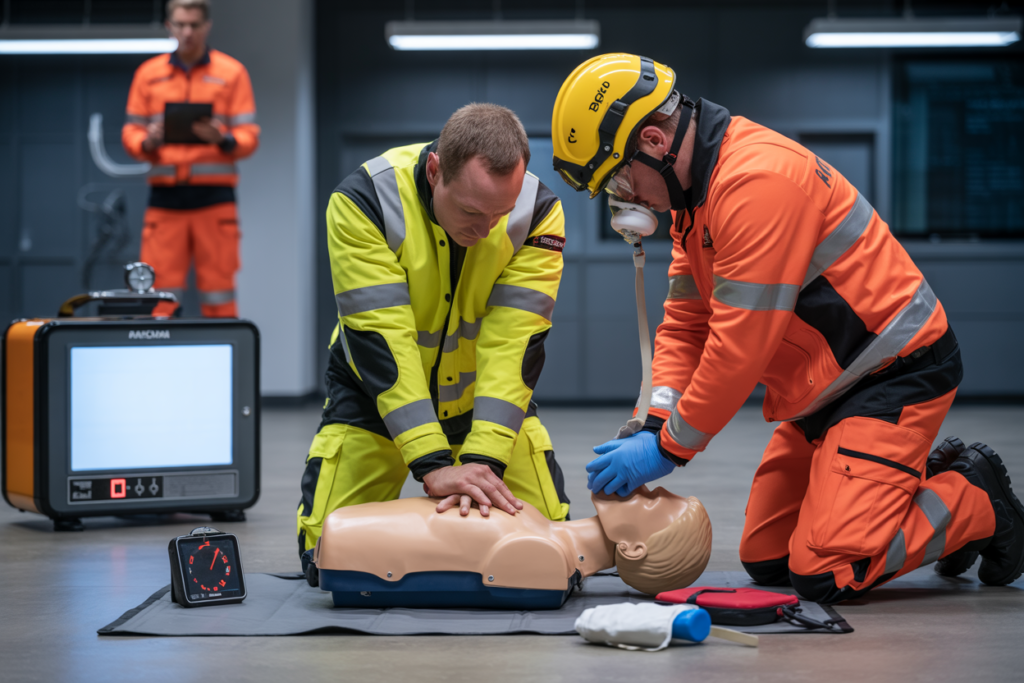
This intensive course combines classroom learning with hands-on scenario training. You’ll practice on manikins, work through realistic emergencies, and build the muscle memory so you can respond confidently when someone’s life depends on your skills.
Advanced First Aid vs Basic First Aid
What Basic First Aid Covers
Basic first aid (HLTAID011) is designed for everyday situations and short-term care until professional help arrives. It teaches you CPR and defibrillator use, managing minor injuries, basic wound care, choking response, and recognizing when someone needs medical help.
But it doesn’t prepare you for extended care scenarios, serious trauma management, or managing someone who’s critically injured for hours while waiting for rescue services. If you’re working remote, that’s a problem.
What Advanced First Aid Adds
Advanced first aid builds on basic skills and takes it five levels higher. It’s designed for people who might be the only medical response available for extended periods.
Extended clinical skills: Advanced bleeding control using tourniquets and hemostatic dressings, proper fracture and spinal injury management, burn management, crush injury protocols, and shock management.
Advanced resuscitation: CPR for extended periods, two-rescuer techniques, advanced airway management, oxygen therapy administration, and using defibrillators in complex scenarios.
Extended care protocols: Managing casualties for extended periods, continuous monitoring, managing multiple injuries, documentation for handover, and communication protocols with emergency services.
Complex emergencies: Multi-casualty triage, cardiac emergencies beyond basic CPR, respiratory emergencies, diabetic emergencies, seizures and strokes, and anaphylaxis management.
Remote area considerations: Working with limited equipment, environmental factors, improvisation techniques, evacuation coordination, and legal documentation requirements.
Which Course Does Your Employer Require?
Industries that typically require Basic First Aid: Office environments, retail and hospitality, light manufacturing, urban construction sites, and low-risk workplace settings.
Industries that typically require Advanced First Aid: Remote mining operations, offshore work, remote construction, outdoor recreation and adventure tourism, forestry and agriculture in remote areas, event management, high-risk workplace first aid officers, and security supervisors.
Some employers say “you need first aid” without specifying which level. If you’re working remote or in high-risk environments, don’t assume basic is enough. Getting advanced when you only needed basic isn’t a problem. But getting basic when you needed advanced means you’ll have to do the whole thing again.
⚠️BEFORE YOU START THE COURSE: Advanced first aid training is physically demanding. You'll be doing CPR practice for hours, kneeling on floors, moving training manikins, and working through active scenarios. It's not sitting in a classroom watching PowerPoints—it's hands-on, practical training that'll leave your knees and shoulders sore. Worth it, but come prepared for physical work.
What You’ll Actually Learn in Advanced First Aid Training
Clinical Skills and Procedures
Advanced bleeding control is probably the most critical skill you’ll learn. You’ll learn how to apply tourniquets correctly, use hemostatic dressings for severe arterial bleeding, pack wounds properly to control internal bleeding, recognize when direct pressure isn’t enough, and manage bleeding from areas where tourniquets won’t work.
Fracture and spinal management goes way beyond “don’t move them.” You’ll learn how to immobilize fractures when evacuation is hours away, splinting techniques with proper equipment and improvised materials, recognizing compound fractures and managing exposed bone, and spinal injury protocols.
Burns and crush injury protocols are huge in construction and industrial settings. You’ll learn to assess burn severity, proper cooling techniques, managing burns over large body areas, and recognizing crush injury complications like compartment syndrome.
Shock recognition and treatment can kill people even after you’ve managed their primary injury. You’ll learn different types of shock, early warning signs before someone crashes, position management and continuous monitoring, and keeping someone stable when they’re deteriorating.
Advanced Resuscitation Techniques
Everyone knows basic CPR—30 compressions, 2 breaths, repeat until help arrives. Advanced first aid takes resuscitation to a whole different level because “until help arrives” might mean 30, 40, even 60+ minutes in remote locations.
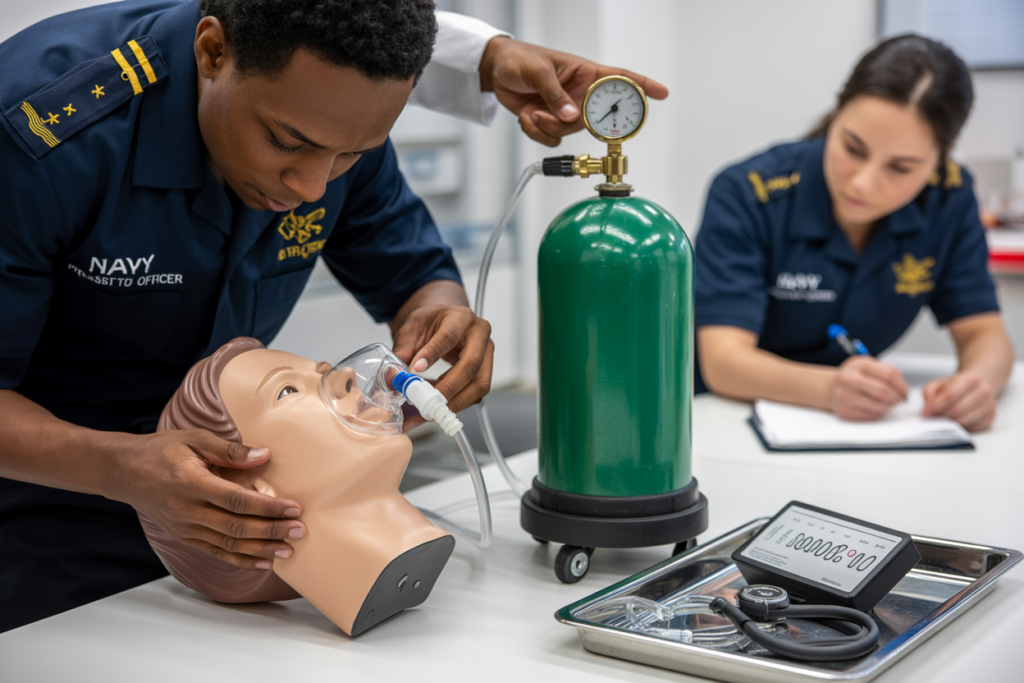
You’ll learn maintaining effective CPR for extended periods without exhausting yourself, two-rescuer CPR techniques so you can swap out and maintain quality compressions, advanced airway management including inserting airways for unconscious casualties, oxygen therapy administration, and using defibrillators in complex scenarios.
Medical Emergency Management
Cardiac emergencies include recognizing heart attacks vs cardiac arrest, managing someone having a heart attack while waiting for evacuation, administering aspirin and assisting with GTN spray, and monitoring deterioration.
Respiratory distress covers asthma attacks that aren’t responding to inhalers, COPD emergencies, hyperventilation vs actual respiratory failure, and positioning and oxygen therapy for breathing difficulties.
Diabetic emergencies teach you to recognize hypo vs hyperglycemia, manage unconscious diabetics safely, and know when to give sugar.
Allergic reactions and anaphylaxis include recognizing early signs, EpiPen administration, managing anaphylaxis when you’re hours from hospital, and continuing care protocols.
Seizures and neurological events cover managing active seizures safely, post-seizure care, recognizing strokes, and head injuries with altered consciousness.
Trauma and Incident Management
When multiple casualties, major incidents, and chaos hit—this is what separates someone who knows advanced first aid from someone who freezes up.
Multi-casualty triage teaches you START triage method, prioritizing who gets treatment first when you can’t help everyone, and making hard decisions about who needs immediate care vs who can wait.
Scene assessment and safety covers not becoming a casualty yourself, identifying ongoing hazards, securing scenes before providing treatment, and knowing when a scene is too dangerous.
Communication with emergency services includes what information to give 000 operators, using radio protocols on remote sites, GPS coordinates for helicopters, and handover structure using ISBAR method.
Remote and Extended Care Scenarios
This is where advanced first aid training really earns its name. Managing someone for 10 minutes is one thing. Managing them for hours in the middle of nowhere is completely different.
You’ll learn continuous reassessment protocols, recognizing deterioration early, managing pain when you can’t give medications, keeping someone warm or cool in extreme environments, improvising equipment when you don’t have proper medical gear, prioritizing limited supplies across multiple casualties, environmental considerations like heat stress or hypothermia, evacuation coordination, and working with helicopter rescue services.
All of this gets practiced through realistic scenarios. You’re actually doing it. Working through a scenario where someone’s got a compound fracture and severe bleeding, help is delayed, and you’ve got to keep them alive and stable. That’s how the skills stick.
Who Needs Advanced First Aid Training?
Not everyone needs advanced first aid training. If you’re working in an office where there’s a hospital nearby and paramedics can get to you quickly, basic first aid is probably fine.
But if you’re reading this, chances are you’re not that person.
Industries That Require HLTAID014
Mining and resources – is probably the biggest employer of people with advanced first aid training. When you’re working underground, on remote mine sites, or FIFO operations hundreds of kilometers from anywhere, basic first aid doesn’t cut it. Most mining companies now require supervisors and designated first aid officers to hold HLTAID014.
Remote construction and infrastructure – means you’re often working where ambulance response time is measured in hours, not minutes. Site supervisors and first aid officers need advanced training.
Outdoor recreation and adventure tourism – makes advanced first aid pretty much mandatory. If you’re running expedition tours, working as an outdoor education instructor, or leading multi-day hikes, you need to be prepared for serious medical emergencies.
Security and event management – requires managing potentially thousands of people. When something goes wrong in a crowd, you need to know how to manage multiple casualties and perform triage.
Workplace first aid officers in high-risk settings – benefit from advanced training. If you’re the designated first aid officer in manufacturing, warehousing, or any workplace with significant injury risks, advanced first aid gives you the skills to actually handle serious emergencies.
Choosing the Right Advanced First Aid Training Provider
Not all advanced first aid courses are created equal. Some providers give you genuine, practical skills. Others just tick boxes, issue certificates, and send you on your way with minimal actual learning.
What Makes a Quality Training Provider
Instructor qualifications and real-world experience – matter way more than fancy marketing. You want someone who’s actually used these skills in real emergencies.
Look for instructors who’ve worked as paramedics, military medics, remote area nurses, industrial medics on mine sites, or emergency department staff. Someone who’s managed actual trauma in remote locations brings a completely different level of teaching than someone who’s just qualified as a trainer.
Check the provider’s website for instructor bios. If they’re hiding who teaches the courses or the bios are vague, that’s a red flag.
Red Flags and Warning Signs
“Fastest advanced first aid course” – or similar marketing is a massive red flag. Advanced first aid training needs time for proper skill development. Courses that promise to get you through faster are probably cutting corners.
No visible instructor qualifications – means they’re either hiding something or they don’t think instructor experience matters. Not a good sign.
Overwhelmingly negative reviews – tell you something’s wrong. Check Google Reviews and look for patterns—if multiple people mention rushed training, inexperienced instructors, or poor equipment, believe them.
Pressure tactics and aggressive sales – aren’t normal for quality training providers. If they’re pushing you to book RIGHT NOW with high-pressure sales language, they’re more focused on getting your money than providing quality training.
Unclear certification outcomes – should worry you. The provider should clearly state you’ll receive nationally recognized HLTAID014 certification, and their RTO number should be prominently displayed.
After Your Certification: Maintaining Skills and Staying Current
You’ve done the course, passed your assessments, and you’re now holding your HLTAID014 certificate. But getting the certificate is just the start. Keeping those skills sharp and staying current requires ongoing effort.
How Long Your Certificate Lasts
Your advanced first aid certification (HLTAID014) is valid for three years from the date of issue.
But here’s where it gets complicated: CPR certification (HLTAID009) is only valid for 12 months. And since CPR is part of your advanced first aid qualification, you technically need to update your CPR annually even though your overall HLTAID014 doesn’t expire for three years.
A lot of workplaces require you to keep your CPR current annually because it’s such a fundamental skill. Check your employer’s policy—some are strict about the 12-month CPR requirement, others are more relaxed as long as your overall HLTAID014 is still valid.
Keeping Your Skills Sharp Between Renewals
Three years is a long time without practicing advanced first aid skills. If you’re lucky, you won’t be using them in real emergencies during that time. But that means your skills deteriorate.
Practice opportunities – help keep skills fresh—workplace training days, community first aid events, volunteering with SES or rural fire brigade, or practicing CPR at home.
Mental rehearsal – works. Occasionally run through scenarios in your head: “If someone collapsed right now, what would I do first?” That mental practice keeps the response pathways active.
Keep your manual accessible. Don’t chuck it in a drawer. Keep it somewhere you can reference if needed—your work locker, your vehicle, your home first aid kit.
Stay current with protocol changes. First aid protocols do change based on new research. Check Australian Resuscitation Council updates online for any major changes.
Conclusion
Advanced first aid training isn’t just another compliance box to tick. It meets workplace requirements and opens up career opportunities, but more than that, it’s the difference between being helpless when someone’s life is on the line and actually knowing what to do.
If you’re working FIFO, managing remote sites, supervising construction crews, or operating in any environment where serious injuries are possible and help might be hours away, advanced first aid training gives you skills that could genuinely save someone’s life.
The course is demanding. It’ll test you physically and mentally. But you’ll walk out confident that if something serious happens, you’re not just gonna stand there frozen—you’ll actually be able to help.
When you’re researching providers, look past the marketing and focus on what matters: experienced instructors who’ve actually used these skills in real emergencies, small class sizes that give you proper practice time, and realistic scenario-based training.
Don’t wait until your employer makes it urgent or your certificate’s about to expire. Get it done when you’ve got time to choose a quality provider and actually absorb the training properly.
Because when someone on your crew is seriously injured far from the nearest hospital and everyone’s looking at you for help, you want to know exactly what to do—and have the skills to actually do it.
That’s what advanced first aid training gives you. The certificate opens doors for your career, but the skills might save someone’s life. Both matter.
Book Your First Aid Training Now
Fast, affordable, and nationally accredited training delivered by professionals who care
Frequently Asked Questions About Advanced First Aid Training
Q.What's the difference between HLTAID011 and HLTAID014?
HLTAID011 is basic first aid covering CPR, minor injuries, and short-term care until paramedics arrive. HLTAID014 is advanced first aid that includes everything from basic plus advanced trauma management, extended care protocols, oxygen therapy, multi-casualty triage, and managing casualties for hours in remote environments. Basic is for low-risk workplaces, advanced is for remote sites and high-risk industries.
Q.How long does HLTAID014 certification last?
Your HLTAID014 certificate is valid for three years from the date of issue. However, the CPR component (HLTAID009) only lasts 12 months, so you technically need to update your CPR annually even though your overall advanced first aid doesn't expire for three years. Most workplaces require annual CPR refreshers, so check your employer's policy.
Q.Is advanced first aid training difficult?
It's challenging but not impossible. The difficulty isn't about memorizing complicated medical stuff—it's about learning hands-on skills under realistic pressure and making good decisions when scenarios get messy. If you can follow instructions, practice techniques until they feel natural, and think reasonably clearly under pressure, you'll be fine. Most people pass on first attempt.
Q.What happens if I fail the assessment?
Most people pass (85-90% on first attempt), and nearly everyone passes if they need a second go. If you struggle with a practical skill or scenario, the instructor will usually give you immediate feedback, let you practice more, then reassess you on the spot. If you need more practice, providers usually schedule you to come back for reassessment at no extra charge—you don't redo the whole course, just demonstrate the specific skill you struggled with.
Q.Can I use my HLTAID014 certificate interstate?
Yeah, HLTAID014 is nationally recognized across Australia. Your certificate is valid in all states and territories—the training standards are national, not state-based. This matters heaps for FIFO workers who might work sites in multiple states, or if you're thinking about relocating interstate for work. You don't need to redo your certification just because you're working a different state.
Q.Is online advanced first aid training legitimate?
Proper advanced first aid training can't be done entirely online. HLTAID014 requires hands-on practical assessment—you can't demonstrate CPR or bleeding control through a webcam. Some providers offer "blended" courses with online theory components and face-to-face practical sessions, which is legitimate as long as the practical component is substantial (usually one full day minimum) and includes proper hands-on assessment. Avoid anything promising "100% online" HLTAID014—it's not legit.
Making first aid training more affordable for
every classroom
We believe every student deserves access to life-saving first aid knowledge. That’s why we offer specially reduced pricing for schools and educational groups. Whether you’re booking for a single class, a year group, or your entire school, our flexible packages make training more accessible and cost-effective — without compromising quality.
