
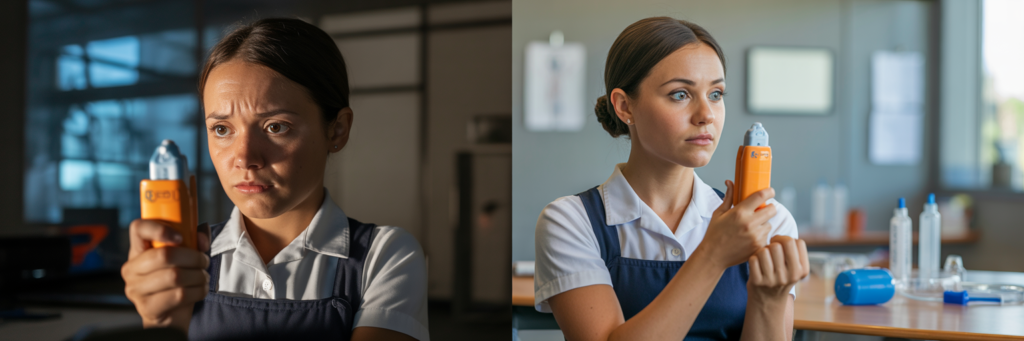
You need ACECQA-approved asthma and anaphylaxis training in Brisbane. You need it soon. You need same-day certificate delivery. And you need actual hands-on EpiPen practice—not another boring PowerPoint about histamine response. Here’s exactly what you’re looking for.
This guide breaks down the best asthma and allergy training options across Brisbane for early childhood educators. Whether your 22579VIC certificate expired weeks ago and you’re in panic mode, or you’re finally getting around to booking that renewal—we’ve mapped out everything you need to know.
You’ll find out which specific courses Brisbane childcare centers require, how to spot training providers who’ll actually prepare you for real emergencies, what happens during the hands-on assessment, and how to walk out with your digital certificate the same day.
⚡ Quick Answer: Most Brisbane childcare educators need BOTH certificates—22579VIC for anaphylaxis and 22578VIC for asthma. Combined courses cover both in one session instead of booking separately.
What Is the Difference Between 22579VIC and 22578VIC?
These are two separate ACECQA-approved qualifications that Queensland childcare centers require. Here’s what each one covers:
22579VIC – Course in Anaphylaxis Management
- Focuses on severe allergic reactions (anaphylaxis)
- Teaches EpiPen administration technique and confidence
- Covers recognition of early warning signs (itchy mouth, swelling, breathing difficulty)
- Required if you work with children who have documented food allergies or insect sting allergies
- Valid for 3 years from completion date
22578VIC – Course in Management of Asthma Risks and Emergencies in the Workplace
- Focuses on asthma attacks and respiratory emergencies
- Teaches inhaler and spacer technique for different age groups
- Covers asthma action plan interpretation and when to call 000
- Required if you work with children who have documented asthma
- Valid for 3 years from completion date
Most Brisbane early childhood educators need BOTH certificates. Many training providers offer combined 5.5-hour courses covering 22579VIC + 22578VIC, so you get both nationally recognized certificates in a single session instead of booking two separate training days.
Why Brisbane Early Childhood Educators Need Asthma and Allergy Training
ACECQA Compliance Requirements for Queensland Childcare
Under the National Quality Standard 2.1.2, every approved education and care service in Queensland must have at least one staff member with current anaphylaxis management training on-site whenever children with documented allergies are being educated and cared for. Same goes for asthma training when you’ve got kids with asthma action plans.
Your center’s nominated supervisor is responsible for making sure staff certificates are current and stored in compliance files. During ACECQA assessments, auditors check these files. If they find expired certificates or discover educators working in rooms with allergic children without proper training—your center’s rating can drop, or you could be hit with non-compliance notices.
For you personally? If your certificate’s expired and you’re working in ratios with children who have medical conditions, you can be removed from the floor immediately. Some directors will reassign you to admin work until you’re compliant. Others will send you home without pay.
Long day care centers, kindergartens, and OSHC programs all need staff trained in both anaphylaxis and asthma management. Family day care educators typically need both certificates as part of their registration requirements.
The Real Reason You Need This Training (Beyond Compliance)
Here’s what compliance documents don’t tell you: In 2024, Queensland childcare centers reported 127 anaphylaxis incidents that required EpiPen administration. Data from the Australasian Society of Clinical Immunology and Allergy shows that 1 in 10 children under five have food allergies. That’s probably 3-5 kids in your room right now.
Yet when surveyed, 68% of early childhood educators admit they feel “somewhat uncertain” about their emergency response skills. They’ve got the certificate on the wall, sure. But when a child’s face starts swelling—having a piece of paper doesn’t stop your hands from shaking.
You’ve got maybe 3-5 minutes to recognize anaphylaxis symptoms and administer that EpiPen before a child’s airway closes completely. Your body needs to know what to do when your brain freezes from adrenaline and panic.
The gap between “I have a certificate” and “I’m genuinely confident I could save a child’s life” is the difference between practicing EpiPen administration once versus doing it multiple times until your hands stop shaking. That’s what separates adequate training from the kind that builds actual muscle memory.
“Two months after the course, a child in my room had an allergic reaction. I didn’t even think—my hands just knew what to do. The EpiPen was administered in under 30 seconds. The training literally saved that child’s life.” That’s from Rachel T., a room leader at a Carindale center who went through proper hands-on training.
Understanding Brisbane Asthma and Allergy Training Options
Course Codes Explained: What You Actually Need
The alphabet soup of course codes is probably the most confusing part of booking training. You’ve got HLTAID012, 22579VIC, 22578VIC, and the older 22556VIC floating around—and half the provider websites don’t explain which one you actually need for childcare compliance.
HLTAID012 – Provide First Aid in an Education and Care Setting – is your general first aid certificate. It covers CPR, basic wound care, fractures, allergic reactions, and asthma management at a surface level. Some family day care educators can get away with just this one if they’re not caring for children with documented medical conditions. But if you work in a center with allergic or asthmatic kids—which is basically every center—HLTAID012 alone isn’t enough.
22579VIC (Course in Anaphylaxis Management) – is what you need when children in your care have documented food allergies, insect sting allergies, or medication allergies. This certificate teaches you proper EpiPen administration, how to recognize the difference between mild hives and life-threatening anaphylaxis, and what to document after an incident.
22578VIC (Course in Management of Asthma Risks and Emergencies in the Workplace) – is the asthma-specific qualification. You’re learning spacer technique for different age groups, how to interpret asthma action plans properly, when wheeze is normal post-exercise recovery versus when it’s dangerous deterioration, and exactly when to call 000 versus when to try another round of reliever medication first.
22556VIC – is the older anaphylaxis code that got replaced by 22579VIC back in 2020. If your current certificate shows 22556VIC and it’s still within its 3-year validity period, you’re technically compliant. But when it expires, you’ll need to renew under the new 22579VIC code.
Combined Courses: Getting Both Certificates in One Session
Most Brisbane providers figured out that making educators book two separate courses on two different days is a guaranteed way to lose bookings. So they’ve bundled 22579VIC and 22578VIC into combined sessions that cover both qualifications and issue both certificates.
The combined format works because there’s natural overlap in the content. Both conditions involve respiratory distress. Both require you to stay calm under pressure. Both need you to interpret medical action plans and document your response properly. Teaching them together actually makes more sense than separating them—plus you’re only sacrificing one day instead of two.
You’ll see combined courses advertised as “Asthma and Anaphylaxis Training” or “22579VIC + 22578VIC Bundle” or sometimes just “Childcare Emergency Management.” Same thing. One session. Two certificates. Done.
Here’s what that looks like compared to booking separately:
| Approach | Time Investment | Certificates Received | Convenience |
|---|---|---|---|
| Combined Course | Single session | Both 22579VIC + 22578VIC | Book once, attend once, done |
| Separate Courses | Two separate sessions | Both 22579VIC + 22578VIC | Book twice, attend twice, lose two days |
| HLTAID012 Only | Full day session | General first aid only | May not meet ACECQA requirements for centers |
The math is pretty straightforward. Combined courses save you time and the mental energy of coordinating two separate bookings. Plus you’re getting integrated training where the instructor can show you how asthma and anaphylaxis symptoms can sometimes overlap or how to prioritize when a child’s having both respiratory distress and an allergic reaction simultaneously.
⚠️ DON'T WASTE YOUR SATURDAY: Not all training providers are equal. Here's how to spot the ones that'll actually prepare you versus the ones just processing paperwork.

What to Expect During Your Asthma and Allergy Training Course
Typical Course Structure: What Happens During Training
Combined courses typically run on Saturday mornings, though some providers offer Sunday or weeknight options.
Registration and theory overview – covers introductions, quick recap of anaphylaxis and asthma fundamentals, what’s happening in the body, and the timeframes you’re working with. If you’ve done this training before, this part feels repetitive, but it’s necessary for first-timers.
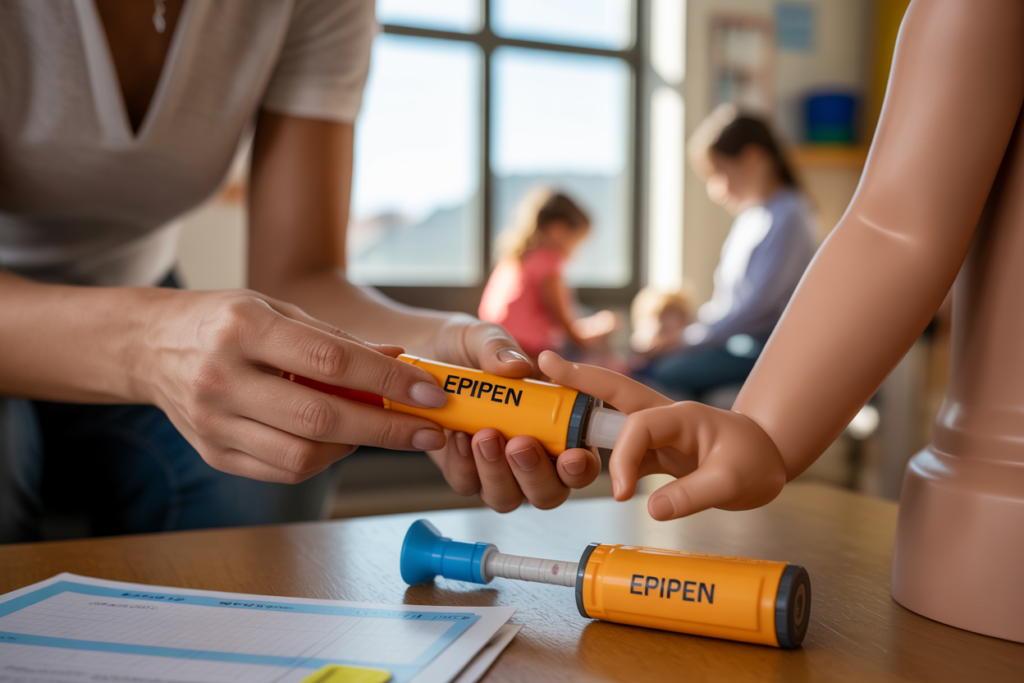
Hands-on anaphylaxis practice – is where you’re actually holding EpiPen trainers and practicing administration technique. Good providers will have you practice multiple times—not just watching the instructor demonstrate once. The instructor’s coaching your grip, your angle, your pressure, your timing.
You’ll also work through scenario-based learning. “Child comes to you saying their mouth is itchy after afternoon snack. What do you do?” You’re learning decision-making, not just technique. When do you grab the EpiPen versus when do you just monitor?
Asthma management section – covers spacer technique for different ages, action plan interpretation, recognizing when wheeze is dangerous versus normal. You’re practicing with spacers and inhaler trainers multiple times.
This section also covers overlap scenarios. What if a child’s having an asthma attack and you suspect they’re also having an allergic reaction? How do you prioritize when everything’s happening at once?
Assessment and wrap-up – happens at the end. After assessment, you’ll get your completion paperwork and the instructor will answer any final questions.
The Assessment: What You’re Actually Being Tested On
Let’s address the anxiety directly: The vast majority of participants pass the practical assessment on their first attempt. This isn’t some trick test designed to make you fail. It’s checking that you can demonstrate the skills you’ve been practicing all session.
There’s no written exam. None. You’re not memorizing medical terminology or answering multiple choice questions about histamine response. The assessment is purely practical demonstration—showing that you can physically perform the emergency response skills.
For anaphylaxis (22579VIC), you’ll demonstrate:
- Recognizing signs and symptoms of anaphylaxis
- Locating and retrieving the EpiPen and action plan
- Administering the EpiPen correctly on a trainer
- Calling 000 and providing the right information
- Positioning the person appropriately while waiting for ambulance
For asthma (22578VIC), you’ll demonstrate:
- Recognizing asthma emergency symptoms
- Locating reliever medication and spacer
- Administering the medication correctly with proper technique
- Following the action plan steps in order
- Knowing when to call 000 versus when to monitor
The instructor walks you through each step. If you miss something, they’ll prompt you: “What’s your next action?” This isn’t a silent test where you’re left to panic—it’s a coached demonstration where they’re helping you succeed.
If your hands are shaking (totally normal), the instructor will give you time to steady yourself. If you need to practice the EpiPen administration one more time before the formal assessment, most instructors will let you. If you completely mess up during assessment, they’ll typically let you try again rather than marking you as failed.
The pass/fail criteria is whether you can safely demonstrate each skill. You don’t need to be fast. You don’t need to be perfect. You need to show that if a real emergency happened tomorrow, you’d know what to do and you’d do it safely.
Certificate Delivery: From Course Completion to Your Director’s Inbox
Course finishes. Digital certificate arrives in your email that same day. You download the PDF, forward it to your director, and by Monday morning your compliance file is updated.
That same-day turnaround is for providers who’ve got their systems organized. The instructor submits completion paperwork as soon as the course finishes. Certificates get generated automatically and emailed out. You’re receiving an official PDF certificate with your name, the qualification codes (22579VIC and 22578VIC), your completion date, the provider’s RTO details, and a verification number.
Physical certificates get mailed within the week. Most centers are fine with digital certificates for their compliance files, but some directors want the physical copy for the wall display. Either way, you’re not waiting—the digital version covers you immediately.
Add the certificate email address to your contacts before the course so it doesn’t land in spam. If the certificate doesn’t arrive when expected, check spam first, then contact the instructor.
Most providers also give you access to an online portal where you can log in anytime and download your certificates again.
✅ Stop Procrastinating: Your certificate's either expired or close to it. Book this week, get certified, email your director the same day. Three minutes on your phone. Done.
Book Your Brisbane Asthma and Allergy Training This Week
You’ve got all the information now. Combined 22579VIC and 22578VIC courses give you both ACECQA-approved certificates in one session. You need same-day digital certificate delivery so your director gets proof of compliance immediately. You want hands-on EpiPen practice—multiple rounds, not just one demonstration—so your hands actually know what to do when a real emergency happens.
The providers worth booking offer small classes, instructors with pediatric emergency backgrounds, convenient Brisbane suburban locations with free parking, and transparent pricing with everything included. Weekend courses are most common, though some weeknight options exist if that works better for your schedule.
If your certificate’s already expired, you’re not alone—book the next available course and get compliant this week. If you’ve still got a couple months before expiry but you’re finally in the headspace to actually book instead of procrastinating another week, do it now while you’re thinking about it. Pull out your phone, find a provider with good reviews and a convenient location, check their calendar for availability, and book. Done.
The course itself isn’t as stressful as you’re imagining. Most participants pass the practical assessment on their first attempt. The instructor’s not trying to fail you—they’re coaching you to succeed. You’ll practice each skill multiple times before assessment. By the end of the session, you’ll walk out genuinely feeling more confident about emergency response, not just holding another piece of paper.
Your certificate arrives by email that afternoon. You forward it to your director. You screenshot it for your own records. Physical certificate arrives in the mail within the week. Compliance sorted. Job secured. One less thing keeping you awake at 3am worrying about ACECQA audits and whether your hands would shake too much in a real emergency.
Book it this week. You’ll thank yourself Monday morning.
Book Your First Aid Training Now
Fast, affordable, and nationally accredited training delivered by professionals who care
Frequently Asked Questions About Asthma and Allergy Training
Q.Can I do asthma and allergy training online?
Not fully. You can do some theory components online with certain providers who offer blended learning, but the practical assessment has to be face-to-face. Nobody's issuing valid 22579VIC or 22578VIC certificates based purely on watching videos and ticking boxes online—ACECQA won't accept them. Programs advertising "100% online anaphylaxis and asthma training with instant certification" aren't ACECQA-compliant, and your director won't accept them. You need the face-to-face practical component where you're actually practicing EpiPen administration and spacer technique to get valid certificates.
Q.What if my certificate already expired?
You're not the first person whose certificate expired before they got around to renewal. Most providers don't care whether your certificate's expired—you just book the course like anyone else and complete the full training again. The issue is your employment situation—if you're working in rooms with allergic or asthmatic children while your certificate's expired, that's a compliance breach. Your director might remove you from floor ratios until you're current, or in some cases send you home until you complete training. If you're already expired and need urgent certification, call providers directly instead of just checking online calendars—they might have emergency spots or flexibility they don't advertise.
Q.What do I need to bring to the course?
Photo ID for registration—driver's license or passport works. That's mandatory because the certificate gets issued in your legal name. Bring a water bottle because you're doing physical practice and demonstration all session. Wear comfortable clothing that lets you kneel down and practice floor-based scenarios—you're demonstrating recovery positions and positioning for asthma and anaphylaxis responses. Maybe bring a snack for the break. Your phone's probably more useful than pen and paper for taking photos of reference charts and emergency response flowcharts that you'll actually look at later.
Q.What happens if I fail the practical assessment?
First, you probably won't fail—the vast majority of participants pass on their first attempt. The assessment's checking that you can perform the skills you've been practicing all session, not testing whether you've memorized medical procedures under pressure. If you do struggle with the assessment, most instructors will give you additional coaching and let you try again. This isn't a one-shot-and-you're-done situation. In the rare case where someone genuinely can't demonstrate competency, providers typically offer to reschedule you for another session at no additional cost. The assessment isn't designed to trick you—you're demonstrating skills in the order you'd perform them in real life, with the instructor prompting you if you get stuck.
Q.How often do I need to renew my anaphylaxis and asthma certificates?
Both 22579VIC and 22578VIC certificates are valid for 3 years from your completion date. Your certificate will show the exact expiry date. ACECQA regulations require you maintain current certification whenever you're working with children who have documented allergies or asthma—there's no grace period. The day your certificate expires, you're technically non-compliant if you're in ratios with medical condition children. When renewal time comes, you complete the full course again—same content, same assessment. There's no shorter "refresher" version of 22579VIC or 22578VIC, though some educators wish there was.
Q.What's the difference between this training and general first aid?
HLTAID012 (Provide First Aid in an Education and Care Setting) is your general first aid certificate—it covers CPR, basic wound care, burns, fractures, choking, shock, and includes brief sections on asthma and anaphylaxis among many other topics. But 22579VIC and 22578VIC are specialized, deep-dive certifications focusing exclusively on anaphylaxis and asthma management with extensive hands-on practice and scenario-based learning. For ACECQA compliance, you need both—general first aid isn't sufficient if you're working with children who have documented allergies or asthma. Think of first aid as foundational emergency response, and 22579VIC/22578VIC as the specialized expertise for managing medical conditions.
Making first aid training more affordable for
every classroom
We believe every student deserves access to life-saving first aid knowledge. That’s why we offer specially reduced pricing for schools and educational groups. Whether you’re booking for a single class, a year group, or your entire school, our flexible packages make training more accessible and cost-effective — without compromising quality.
