
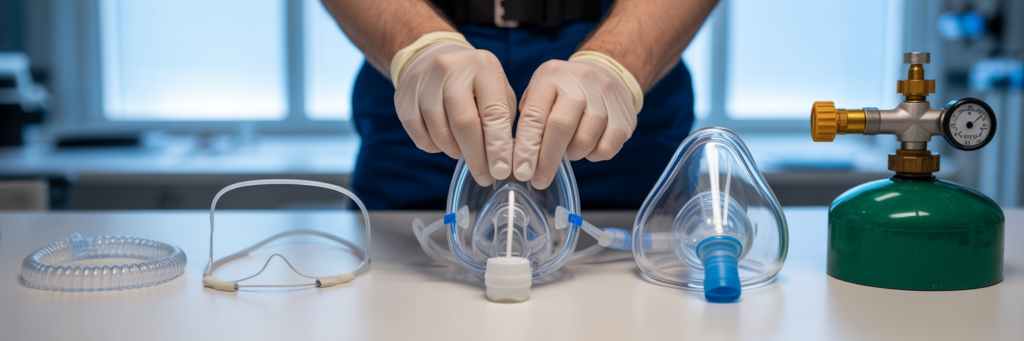
You’re preparing for QAS recruitment with your First Aid certificate and degree, competing against hundreds of applicants for limited positions. Then you discover HLTAID010 – Basic Emergency Life Support – the certification that separates casual first aiders from serious paramedic candidates.
But here’s what most aspiring paramedics don’t realize: 68% of BELS students make critical mistakes during training that undermine their skills, confidence, and interview performance. These aren’t small errors – they’re fundamental misunderstandings about oxygen delivery systems, airway management, and BVM ventilation that become obvious gaps during QAS panel interviews.
I’m a current QAS paramedic who’s been directing BELS courses since 2015, training thousands of students. This guide reveals the seven most common Basic Emergency Life Support mistakes I see – and the specific corrections that transform nervous students into confident practitioners.
⚠️ INTERVIEW REALITY: QAS panels can identify checkbox students in 30 seconds. They ask "why" questions that expose surface-level learning versus deep understanding. Your certificate proves you passed once - clinical reasoning proves you're ready now.
Mistake #1: Treating Basic Emergency Life Support Like a Checkbox Certification
Why This Happens
When you’re competing against hundreds of applicants, your brain goes into credential-collection mode. BELS becomes another box to tick rather than genuine skill-building.
The problem? QAS panels test your understanding through clinical reasoning questions that expose whether you actually know this stuff or just passed an assessment once. They can tell the difference in about 30 seconds.
The Interview Reality
Sample question: “Walk us through your oxygen delivery decision-making for a COPD patient.”
Checkbox student: “I’d give them oxygen through a mask.”
Competent student: “I’d assess respiratory rate, work of breathing, and oxygen saturation first. For a COPD patient, I’d start conservative with nasal cannula at 2-4 L/min due to hypoxic drive concerns. COPD patients rely on low oxygen to trigger breathing, so high-flow oxygen can suppress respiratory effort. I’d continuously reassess throughout.”
One memorized steps. The other understands clinical reasoning. Panels hear the difference immediately.
The Fix
Ask your instructor “Why would a paramedic choose this intervention over alternatives?” for every skill. Practice explaining your clinical reasoning out loud. Go beyond course requirements – read paramedic case studies on Reddit, watch scenario videos. Create decision trees showing when to use skills, when NOT to use them, and why.
Success metric: Can you explain the why behind every skill without hesitation?
Mistake #2: Not Building True Familiarity With Oxygen Delivery Systems
The Equipment Challenge
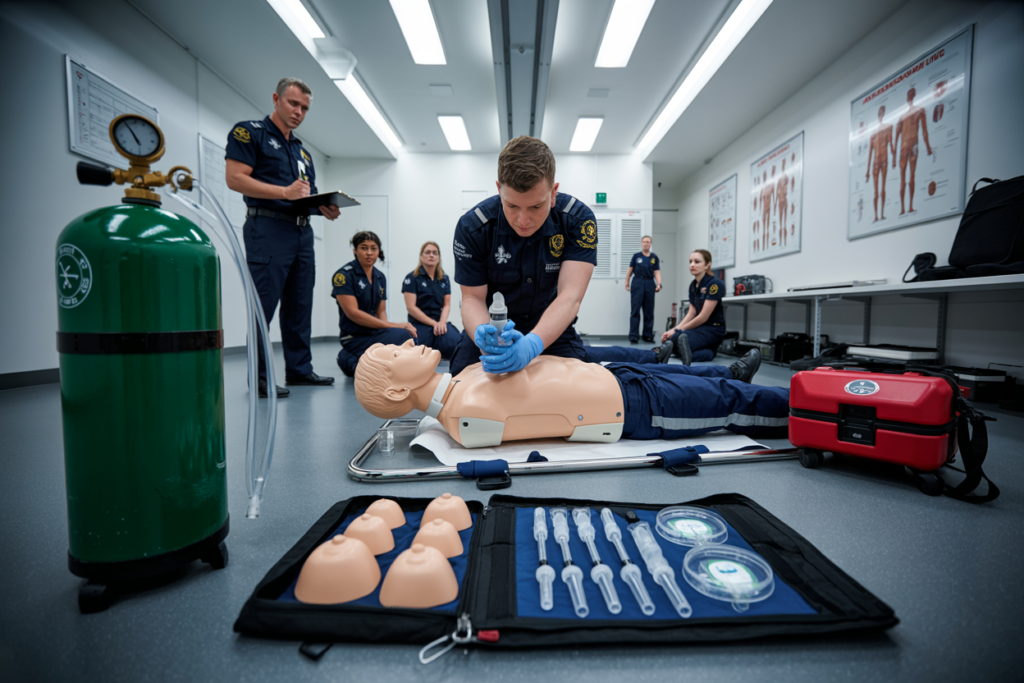
73% of students report oxygen equipment as their most challenging component. You’re dealing with five different delivery device types, each with specific flow rates and oxygen percentages. Hesitation during interviews screams “I passed but I’m not comfortable with this equipment.”
The Five Devices You Must Master
Nasal Cannula: 1-6 L/min, delivering 24-44% oxygen. For conscious patients with mild distress or COPD patients needing low-flow specifically.
Simple Face Mask: 5-10 L/min, giving 35-60% oxygen. Never run below 5 L/min – prevents CO2 rebreathing.
Non-Rebreather Mask: 10-15 L/min, delivering 60-95% oxygen. Pre-fill reservoir bag before applying. For severe distress, cardiac emergencies, trauma.
BVM: With oxygen at 10-15 L/min, delivers up to 100% with proper seal. For non-breathing or inadequate breathing patients.
Regulators: Control pressure and flow from cylinder. Always check cylinder pressure before patient contact.
Common Mistakes
Setting nasal cannula at 10 L/min (maximum safe is 6 L/min). Not checking cylinder pressure before use. Forgetting to pre-fill non-rebreather reservoir bag. Confusing flow rate with oxygen percentage.
Practice Protocol
Request extra equipment time after class. Practice assembly blindfolded to build muscle memory. Create flow rate decision charts for different scenarios. Film yourself explaining each device. Study equipment photos regularly.
Success metric: Assemble any oxygen setup quickly without needing references.
Mistake #3: Treating Airway Management as “Just Insert the Tube”
Why Airway Skills Matter
Airway is priority number one. Without patent airway, all other interventions fail. QAS exams heavily test this because it’s foundational.
OPA vs NPA: Critical Differences
Oropharyngeal Airway (OPA):
- Requires unconscious patient with NO gag reflex
- Size: earlobe to corner of mouth
- Insert upside-down, rotate 180° at soft palate
- Risk: vomiting/aspiration if gag reflex present
Nasopharyngeal Airway (NPA):
- Can use on semi-conscious patients
- Size: nostril to earlobe
- Lubricate well, insert bevel toward septum
- Contraindication: suspected skull fracture
Decision Framework:
- Unconscious, no gag reflex → OPA preferred
- Semi-conscious, gag reflex present → NPA only
- Facial trauma/skull fracture → NPA contraindicated
Critical Mistakes
Wrong size selection causes trauma or worsens obstruction. Inserting OPA on conscious patient triggers vomiting. Forcing NPA causes significant bleeding. Not maintaining head-tilt-chin-lift during insertion. Failing to suction before adjunct placement.
Practice Framework
Practice sizing on multiple people. Memorize contraindications until automatic. Practice insertion on mannequin repeatedly. Simulate patient assessment scenarios. Practice verbal explanations while performing.
Success metric: Explain AND perform without hesitation.
Mistake #4: Inadequate Bag-Valve-Mask Practice
Why BVM Is Hardest
61% of students fail adequate seal on first attempt. You’re coordinating two tasks simultaneously while proper seal is invisible. Patient head positioning affects everything. Easy to hyperventilate or underventilate.
Clinical reality: BVM failure means patient deterioration. Either you’re delivering effective breaths or you’re not.
The Four Components
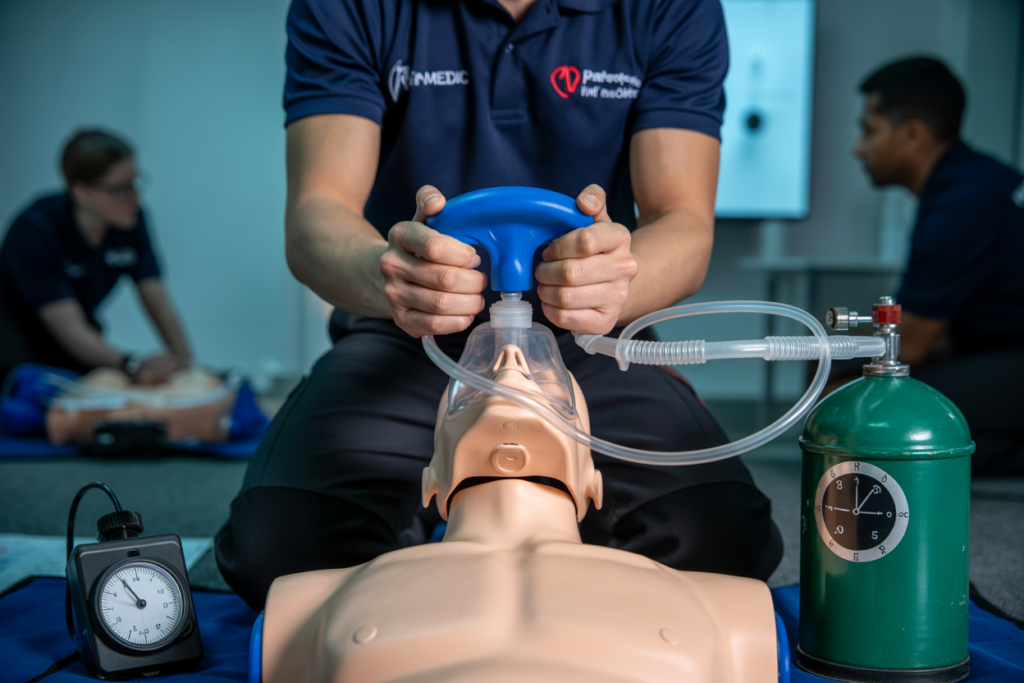
- Mask Seal – C-E Grip: Thumb and index form “C” around mask top. Three fingers form “E” along jawline, lifting jaw UP into mask. Don’t push mask down – lift jaw up.
- Head Positioning: Standard: head-tilt-chin-lift. Trauma: jaw thrust without head tilt. Maintain position continuously.
- Ventilation Rate: One breath every 5-6 seconds (10-12/minute). Each breath takes one second. Count to maintain rhythm.
- Tidal Volume: Watch for visible chest rise, not dramatic expansion. Compress one-third to one-half of bag, not full squeeze.
Warning Signs
No chest rise despite compression. Audible air hiss around mask. Gastric distension (stomach inflating). Difficulty maintaining seal. Patient oxygen saturation not improving.
Practice Drills
Daily C-E grip practice. Partner air leak checks. Blindfolded practice. Timed ventilations without external timing. CPR-to-BVM transition practice.
Success metric: Consecutive effective ventilations with chest rise, no air leaks, proper rate.
💡 INTERVIEW ADVANTAGE: Panels ask "why" to separate students who understand emergency medicine from those who memorized steps. Apply these five questions to every training scenario. Practice during commute time - run mental scenarios using this framework without equipment.
Mistake #5: Learning “How” Without Understanding “Why”
Clinical Reasoning Separates Candidates
Panels ask “why” to identify who understands emergency medicine versus who memorized steps.
Five Questions Every Decision Must Answer
- What’s the patient’s primary problem? Respiratory, cardiac, airway obstruction, neurological?
- What’s the urgency level? Immediate, urgent, or stable?
- Which BELS skill addresses this? Match skill to problem.
- What are contraindications? When NOT to use intervention?
- How will I know it’s working? What improvement should you see?
Apply these questions before touching equipment in every scenario.
Key Scenarios
COPD Patient: High-flow oxygen removes hypoxic drive, can cause respiratory arrest. Start low-flow 2-4 L/min, monitor closely.
Trauma Airway: Head-tilt-chin-lift moves cervical spine. Use jaw thrust without head tilt for spinal precautions.
Choking Patient: Forceful coughing means partial obstruction. Patient’s cough is more effective than suction. Encourage coughing, only suction if it becomes weak or stops.
Build Your Library
Ask instructors about contraindications. Read paramedic case studies on r/Paramedics. Watch scenario videos and predict interventions. Create decision tree flowcharts. Join Facebook group scenario discussions.
Success metric: Explain reasoning for every choice without hesitation.
Mistake #6: Treating BELS as Isolated Skills
The Connection Students Miss
BELS equipment is identical to what paramedic students use early in QAS training. Same brands, same models, same operation.
BELS skills in operational context: Oxygen therapy used in most ambulance callouts. BVM in every cardiac arrest. Airway adjuncts for unconscious patients. This IS paramedic foundation, not pre-training.
Practice With Paramedic Mindset
Visualize real patients during mannequin practice – add environmental details, time pressure, emotional weight. Practice explaining actions out loud for team coordination. Time your interventions. Add complications mid-scenario.
Real QAS Scenarios Using BELS
Cardiac Arrest: CPR, BVM, oxygen, AED – foundational skills for all advanced care.
COPD Exacerbation: Oxygen therapy with careful selection, continuous assessment, balancing need against hypoxic drive risk.
Overdose/Unconscious: Airway positioning, OPA/NPA based on gag reflex, oxygen therapy.
Choking: Suction equipment, assessment, knowing when to intervene versus monitor.
Post-Seizure: Recovery position, oxygen, NPA if needed, suction for secretions.
Mistake #7: Letting Skills Deteriorate After Certification
The Timeline
CPR quality decreases significantly within months. Equipment confidence fades within weeks. Clinical decision-making becomes hesitant. Without maintenance, substantial skill degradation occurs quickly.
Certificate vs Competency
Panels request practical demonstrations. Certificate proves you passed once. Current competency is what they evaluate.
Real scenario: Candidate with no maintenance fumbles equipment, takes excessive time. Candidate with regular practice shows smooth setup, confident technique. Both have certificates – only one is currently competent.
Weekly Maintenance Schedule
Week 1: Review oxygen device specs, practice setup, create patient scenarios, study photos.
Week 2: Review OPA/NPA differences, practice sizing, mannequin insertion if available, mental scenarios.
Week 3: C-E grip practice, full BVM ventilation, count rate carefully, partner feedback.
Week 4: Review course scenarios, verbal walkthrough, practice STAR responses, watch YouTube scenarios.
Repeat cycle continuously. Monthly: read paramedic case study, identify BELS skills used, analyze decisions.
Success metric: Perform any skill confidently with minimal notice.
Your BELS Certification Is Just The Starting Point
You’re going to get your certification – that’s straightforward. The hard part is what you do afterward. Whether it becomes a checkbox that loses value, or genuine competency that sets you apart from hundreds of competitors.
Every mistake covered – checkbox mentality, equipment gaps, airway complexity, inadequate BVM practice, learning how without why, not connecting to paramedic work, skill deterioration – these are exact gaps panels identify every recruitment cycle.
Panels aren’t trying to trick you. They’re finding people genuinely ready for paramedic training who understand clinical reasoning, not just equipment operation.
Most applicants read this, nod, then do nothing different. They book BELS, pass, add it to resume, done. Later their skills have degraded and clinical reasoning sounds hollow.
You’re different because you’re reading this strategically. You recognize BELS isn’t just another credential – it’s your paramedic foundation.
Your advantages: Equipment access through healthcare connections. Biomedical background for pathophysiology understanding. Position exposing you to operational reality. Systematic preparation approach.
Those hundreds of applicants? Most have first aid certificates. Many have BELS. Some have volunteer experience. What they don’t all have is clinical reasoning depth, maintained skill competency, and understanding of why interventions work.
That’s your competitive advantage. Not better credentials. Better understanding.
When panels ask “Walk us through oxygen therapy for a COPD patient,” you won’t hesitate. You’ll explain clinical reasoning confidently because you genuinely understand it.
That’s how you compete against hundreds. Not through more certifications. Through deeper competency.
Your paramedic career starts with BELS. Make it count.
Book Your First Aid Training Now
Fast, affordable, and nationally accredited training delivered by professionals who care
Frequently Asked Questions About Basic Emergency Life Support
Q.What is Basic Emergency Life Support (BELS) training?
Basic Emergency Life Support (HLTAID010) teaches advanced emergency skills beyond standard first aid, including oxygen therapy delivery systems, advanced airway management with OPA and NPA, bag-valve-mask ventilation, mechanical suction operation, and AED use with CPR. The course focuses on life-threatening respiratory and cardiac emergencies using hospital-grade equipment that paramedics use operationally. Unlike Provide First Aid (HLTAID011) which covers basic emergency response, BELS deals specifically with equipment skills paramedics need. Your certification is valid for 12 months and meets pre-employment requirements for Queensland Ambulance Service recruitment.
Q.What's the difference between BELS and standard first aid?
Standard first aid (HLTAID011) covers basic emergency response including CPR, wound management, and assisting with patient medications, but doesn't include medical equipment operation. BELS builds advanced skills on that foundation, teaching you to operate oxygen cylinders and regulators, select appropriate delivery devices, insert airway adjuncts, perform BVM ventilation, and use mechanical suction - all hospital-grade equipment matching what paramedics use in ambulances. BELS assumes you already have first aid knowledge and takes you to the next level with equipment skills that separate paramedic candidates from basic first aiders.
Q.How often should I practice BELS skills after certification?
Without regular practice, your skills degrade significantly - research shows CPR quality decreases within months, equipment confidence fades within weeks, and clinical decision-making becomes hesitant. Implement a weekly maintenance schedule: Week 1 focuses on oxygen equipment review, Week 2 covers airway management, Week 3 is BVM technique with mannequin practice, and Week 4 is clinical reasoning and scenario walkthroughs, then repeat this cycle continuously. If you have access to practice equipment through healthcare connections, nursing programs, or paramedic friends, use it weekly - that's a massive competitive advantage over students limited to class time only.
Q.Do I need Provide First Aid before doing BELS?
Most RTOs require current Provide First Aid certification before enrolling in BELS because the course assumes baseline first aid knowledge and builds advanced skills on that foundation - you need to understand basic assessment, CPR fundamentals, and emergency response protocols before adding equipment skills. Some providers offer combined courses teaching both sequentially if you're starting from zero, but if you already have first aid, doing BELS separately allows focus purely on advanced skills. For QAS applications specifically, you need both certifications current since first aid demonstrates baseline competency while BELS demonstrates advanced preparation.
Q.What happens if I struggle during BELS assessment?
Most quality BELS providers offer remediation rather than immediate failure - if you struggle with specific skills, instructors typically provide additional coaching and allow reassessment. Failure usually happens from not engaging during training, rushing through practice, or treating it like checkbox certification, while students who ask questions, practice thoroughly, and take it seriously pass first attempt in the vast majority of cases. If you do struggle, identify specific skill gaps, practice those areas intensively using the protocols in this guide, then return for reassessment when ready - struggling isn't career-ending, just means more practice needed before competency is achieved.
Making first aid training more affordable for
every classroom
We believe every student deserves access to life-saving first aid knowledge. That’s why we offer specially reduced pricing for schools and educational groups. Whether you’re booking for a single class, a year group, or your entire school, our flexible packages make training more accessible and cost-effective — without compromising quality.
