
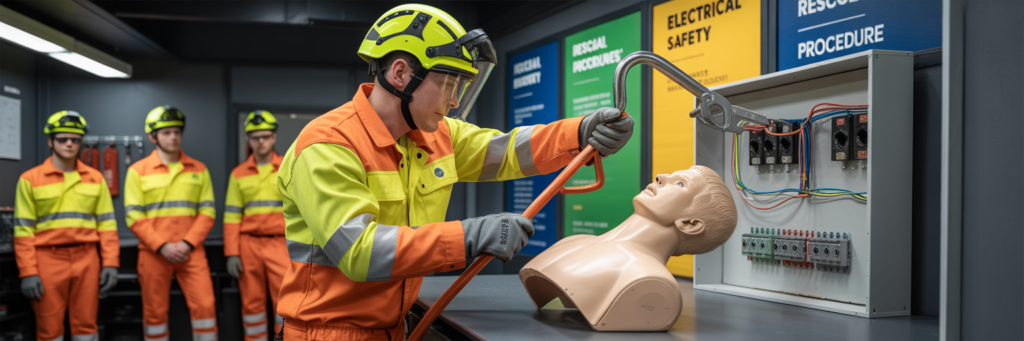
Your apprentice is convulsing against a live 240V panel. Everyone on site is looking at you—the licensed sparkie who’s supposed to know what to do. You reach for your rescue equipment and realize: you’ve never actually practiced with these tools. The insulated hook feels awkward in your hands. Where’s the isolation switch? Every second you hesitate matters.
This scenario keeps electricians awake at 3 AM, and for good reason. The best LV rescue equipment in 2025 isn’t just about ticking compliance boxes—it’s about having tools you can operate instinctively when someone’s life depends on it.
This guide reviews LV rescue equipment specifically for Queensland electricians working under WorkSafe regulations. You’ll discover which insulated rescue hooks actually work on commercial panels, what PPE meets AS/NZS standards without breaking your budget, and which tools experienced sparkies keep in their vans versus what gathers dust in the toolbox.
We’ve tested equipment on real electrical scenarios, consulted with licensed electricians who’ve performed actual rescues, and identified what genuinely prepares you for emergencies—not just what looks good when a WorkSafe inspector shows up.
What Equipment Is Required for Low Voltage Rescue?
Low voltage rescue equipment requirements for Queensland electricians include both personal protective equipment (PPE) and rescue tools mandated by WorkSafe Queensland and AS/NZS 4836:
Essential LV Rescue Equipment:
- Insulated rescue hook (minimum Class 0, rated to 1000V AC) – for separating victims from live electrical sources
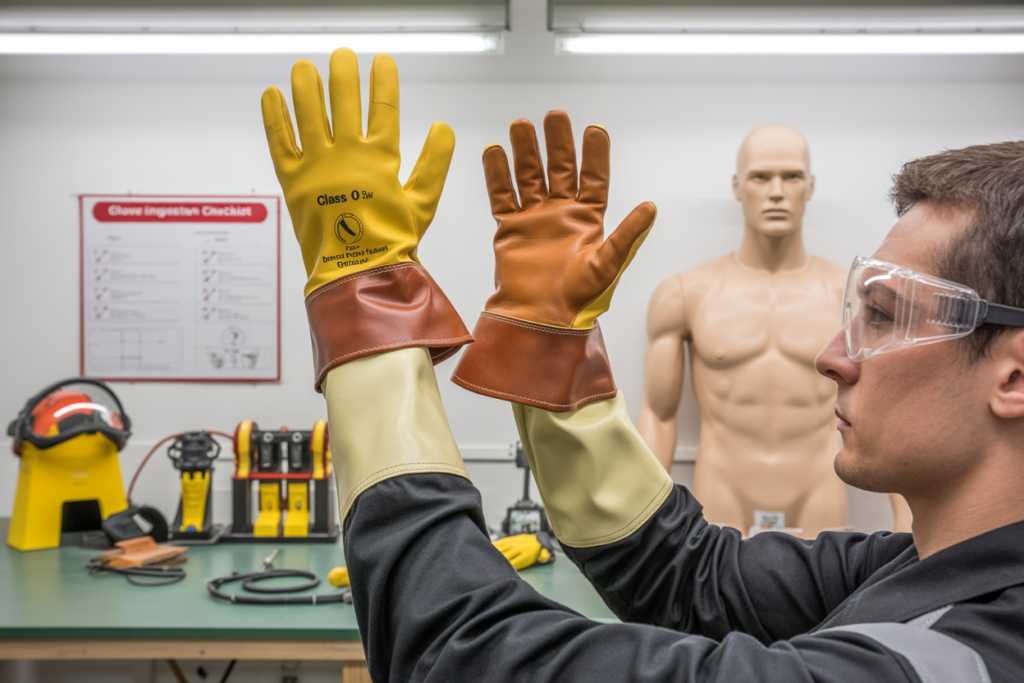
- Voltage-rated gloves (Class 00 or Class 0) with leather protectors – for hand protection during rescue
- Insulated matting or blanket – for standing surface and victim coverage
- Safety boots (AS/NZS 2210.3) with electrical hazard protection
- Face shield and safety glasses – for arc flash protection
- CPR barrier device or pocket mask – for safe resuscitation
- Insulated screwdriver set – for emergency isolation procedures
- First aid kit – for post-rescue treatment
All equipment must be regularly tested, maintained, and readily accessible on work sites where electrical work occurs.

Essential LV Rescue Equipment Every Electrician Needs
Insulated Rescue Hooks: Your Primary Rescue Tool
Here’s what nobody tells you about rescue hooks until you actually need one: the cheap models won’t reach the top-mounted panels in most commercial buildings. You’ll figure this out at exactly the wrong moment.
Class 0 vs Class 00 ratings explained
Class 0 is rated to 1000V AC—that’s your minimum for commercial electrical work. Class 00 only handles 500V AC, which sounds fine until you’re working on a 415V three-phase system and realize you’ve got zero safety margin. Most sparkies working commercial sites won’t touch anything rated below Class 0. It’s not about what’s legal—it’s about what keeps you alive when something goes sideways.
Both ratings require testing per AS/NZS 4836. That means annual electrical testing at an accredited facility, plus visual inspection before every single use. You’re looking for cracks, damage to the insulation, any sign the hook’s been compromised. Find a crack? Chuck it.
Length considerations (commercial vs residential sites)
Standard hooks are 1-1.2m long. Fine for residential switchboards where everything’s mounted at chest height. Useless for commercial work where panels are mounted 2+ meters up, or when you’re trying to reach someone who’s collapsed behind equipment.
Extended hooks run 1.5-1.8m. That extra reach matters when you can’t get close to a live panel, or when someone’s wedged in a confined space. Most commercial sparkies keep a telescopic model in the van. It collapses down for storage but extends when you need it.
Telescopic vs fixed-length hooks
Telescopic hooks cost more than fixed-length. You’re paying for convenience—they collapse down to maybe 60cm for storage, then extend when needed. The trade-off is more moving parts, which means more potential failure points.
Fixed-length hooks are simpler. One solid piece of fiberglass with insulated coating. Nothing to extend, nothing to break. But try storing a 1.8m fixed hook in a van that’s already packed with tools, cable, and the random collection of equipment that accumulates when you’re working three jobs simultaneously.
What do experienced sparkies actually choose? Most go telescopic. The convenience wins out, and quality telescopic hooks from reputable suppliers have proven reliable enough that the extra failure points aren’t a real concern.
Testing and inspection requirements
Visual inspection before every use isn’t optional. You’re checking for cracks in the insulation, damage to the hook itself, any sign the tool’s been compromised. Takes 30 seconds. Could save your life or someone else’s.
Annual electrical testing is required by an accredited testing facility. They’ll give you a test certificate with an expiry date. Keep that certificate—WorkSafe auditors will ask for it.
If your hook fails testing or shows damage, replace it immediately. Don’t try to repair it. Don’t keep using it “until the new one arrives.” A compromised rescue hook is worse than no rescue hook, because you’ll rely on it when you shouldn’t.
Rescue Hook Comparison:
| Hook Type | Voltage Rating | Length | Storage Size | Best For |
|---|---|---|---|---|
| Fixed - Standard | Class 0 (1000V) | 1.2m | 1.2m (full length) | Residential work, limited panel heights |
| Fixed - Extended | Class 0 (1000V) | 1.8m | 1.8m (full length) | Industrial sites, awkward storage |
| Telescopic - Standard | Class 0 (1000V) | 1.5-1.8m | ~60cm collapsed | Commercial contractors (most common) |
| Telescopic - Premium | Class 0 (1000V) | 1.8-2.4m | ~70cm collapsed | Mining, industrial, high-risk sites |
Voltage-Rated Gloves: Hand Protection That Works
Most sparkies have voltage-rated gloves. Most sparkies have never tested them. That’s a problem when you need to grab someone who’s touching 240V.
Class 00 (500V) vs Class 0 (1000V) selection guide
Class 00 handles up to 500V AC. Class 0 handles 1000V AC. For most low voltage work, Class 00 is technically sufficient. But here’s what experienced sparkies know: you don’t buy safety equipment based on what’s technically sufficient. You buy based on what gives you margin for error when everything’s going wrong.
Both types require leather protectors worn over the top. The gloves provide electrical insulation. The leather protectors provide physical protection—puncture resistance, abrasion resistance, general durability. You can’t use voltage-rated gloves without protectors. The rubber tears too easily.
Testing intervals (AS/NZS 2225)
Voltage-rated gloves must be tested every 6 months by an accredited facility. Not annually like rescue hooks—every 6 months.
Visual inspection before each use is also required. You’re checking for punctures, tears, degradation, any sign the rubber’s compromised. Fill the gloves with air and look for leaks. Takes two minutes. Do it anyway.
Storage and maintenance tips
Here’s where most sparkies mess up: they store voltage-rated gloves in their van. Hot van, direct sunlight, temperature swings from 5°C to 50°C depending on weather. Rubber degrades fast under those conditions.
Store your gloves in a cool, dry location. Not the van. Not the shed where it gets hot. In your house or in climate-controlled storage if you’ve got a workshop setup. Keep them in a protective bag away from sunlight, chemicals, sharp objects, and anything else that might damage them.
Keep your testing records. WorkSafe auditors want to see proof your gloves are current.
Insulated Matting and Blankets
Nobody thinks about where they’re standing during a rescue until they realize they’re standing in water next to a live panel. Insulated matting solves that problem. Insulated blankets solve the problem of covering live equipment you can’t isolate immediately.
When to use matting vs blankets
Matting is your standing surface. You roll it out, stand on it, and now you’ve got electrical insulation between you and ground. That matters during rescue operations where you might be working near live equipment or dealing with situations where complete isolation isn’t immediately possible.
Blankets are for covering. Covering live equipment you can’t reach to isolate. Covering the victim once you’ve separated them from the electrical source. Covering any exposed conductors that might present ongoing hazards.
You need both. They serve different purposes.
Voltage ratings and thickness requirements
Class 0 matting (1000V) is minimum for low voltage work. Class 1 (7500V) if you’re working around higher voltage systems. Thickness typically runs 3-4mm for Class 0, thicker for higher voltage ratings.
Both matting and blankets have testing requirements. Visual inspection before each use, electrical testing per manufacturer recommendations (typically annually or every 2 years depending on usage).
Storage to prevent damage
Roll matting, don’t fold it. Folding creates stress points and cracks over time. Store it somewhere clean and dry where it won’t get chemicals, sharp objects, or other contaminants on it.
Blankets should be stored flat or loosely rolled. Keep them in a protective bag. Don’t pile heavy equipment on top—you’ll damage the insulation.
PPE for LV Rescue: Beyond Basic Compliance
Face Shields and Arc Flash Protection
Most sparkies wear safety glasses. Few wear face shields. That changes real quick after you’ve seen what an arc flash does to someone’s face.
When glasses aren’t enough
Safety glasses protect your eyes. Face shields protect your entire face—eyes, nose, mouth, the whole front of your skull. During LV rescue operations, you’re potentially dealing with arc flash risks. Someone’s being electrocuted, they’re in contact with live equipment, and when you separate them there’s a real chance of arcing.
Arc flash produces intense light, heat, and sometimes projectiles—molten metal, bits of equipment, debris. Safety glasses protect your eyes from the light. They do nothing for the rest of your face when molten copper hits your cheek at high velocity.
AS/NZS 1337 specifies requirements for eye protection. For electrical work involving arc flash risks, you need both safety glasses (primary eye protection) and a face shield (secondary full-face protection).
Comfort and usability (will you actually wear it?)
Here’s the real test: will you actually wear it? Face shields that fog up, cause neck strain, or interfere with your vision tend to stay in the van. Equipment you don’t wear doesn’t protect you.
Look for adjustable headbands, lightweight construction, and good ventilation to reduce fogging. Some shields have anti-fog coatings. Find what works for your workflow and you’ll actually use it.
Safety Boots with Electrical Hazard Rating
You’re already wearing work boots. Question is whether they’re actually protecting you from electrical hazards or just keeping your toes safe from dropped tools.
AS/NZS 2210.3 electrical hazard requirements
Standard work boots meet AS/NZS 2210 for general safety footwear—steel toes, puncture resistance, slip resistance. That’s fine for general work. For electrical work, you want boots that also meet AS/NZS 2210.3 for electrical hazard protection.
The electrical hazard rating means the boots provide insulation between your feet and ground. Look for boots marked with “EH” or “Electrical Hazard Protection.” Not all safety boots have this rating.
Insulating sole requirements
The protection comes from the sole construction. Electrical hazard boots have specialized insulating soles that resist electrical current. But here’s what they don’t tell you: the insulation only works if the sole is intact and dry.
Worn-out soles compromise the insulation. Water on the sole compromises the insulation. Chemicals that degrade rubber compromise the insulation. You need to maintain your boots properly and replace them when they’re worn.
❤️ THE REALITY: Separating someone from 240V is only half the rescue. If their heart's stopped, you've got 3-4 minutes before brain damage starts. CPR training means nothing if you don't have the equipment to actually do it. This section covers what you need for the critical minutes after electrical contact.
CPR and First Aid Equipment for Electrical Emergencies
CPR Barrier Devices and Pocket Masks
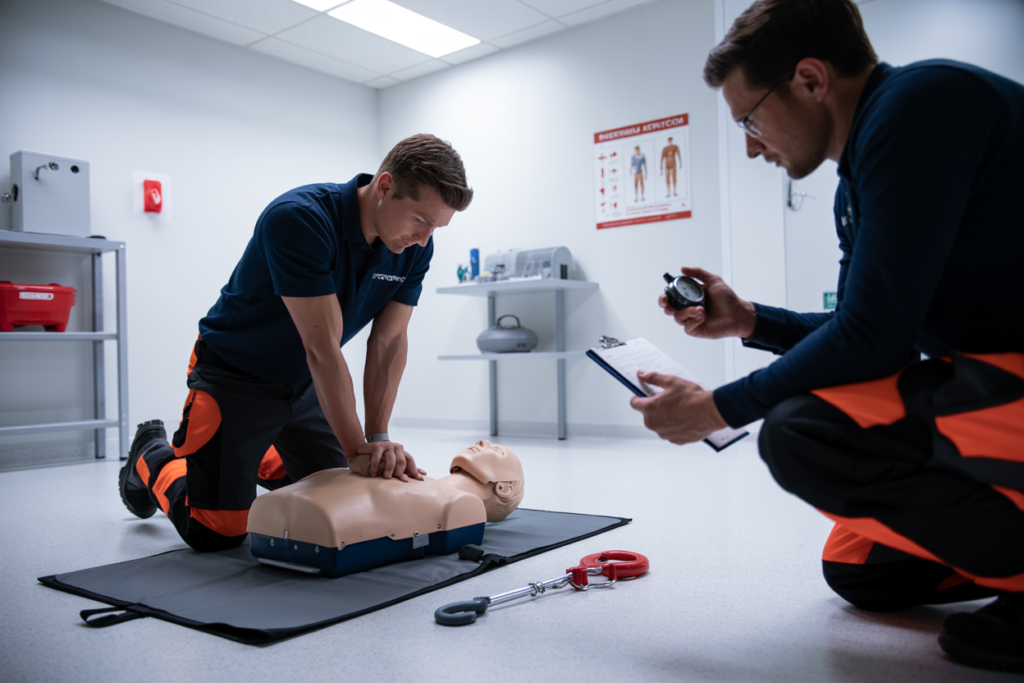
Here’s an uncomfortable truth: most sparkies carry CPR certification but no CPR equipment. You know how to do mouth-to-mouth. You just don’t have anything to actually do it with when someone’s on the ground not breathing.
Why standard first aid kits aren’t enough
Your van probably has a first aid kit. Maybe it’s got bandaids, antiseptic cream, some gauze. What it probably doesn’t have is a CPR barrier device or pocket mask.
Electrical shock can cause cardiac arrest. Someone gets hit with 240V, their heart stops, they collapse. You’ve got maybe 3-4 minutes before brain damage starts. You need to do CPR. You need to do it now. And you need proper equipment to do it safely.
Single-use vs reusable pocket masks
Single-use CPR barrier devices are basically a piece of plastic with a one-way valve. They’re flimsy. They’re hard to position properly. And in a high-stress emergency, you’re fumbling with a piece of plastic that wants to slide around.
Reusable pocket masks have proper hard case, good seal around the victim’s mouth, easy to position, one-way valve that actually works. After use, you clean and disinfect it according to manufacturer instructions.
Proper storage and accessibility
Your CPR mask needs to be accessible immediately. Not buried under tools in the van. Not in a kit that takes 5 minutes to dig out. Keep it in your first aid kit in a marked, easy-to-grab location.
First Aid Kits Specific to Electrical Injuries
Burns treatment supplies
Electrical burns are different from thermal burns. They often involve both entry and exit wounds where current entered and left the body. They can cause internal damage that’s not visible on the skin.
Your first aid kit should include:
- Sterile burn dressings (not regular bandages)
- Cling film (for covering burns without adhering to tissue)
- Sterile saline solution (for cooling and cleaning)
- Non-adherent dressings
Don’t use ice on electrical burns. Don’t use butter, oil, or any of that old-school nonsense. Cool running water for minor burns, sterile dressings, and get them to hospital for anything more than superficial.
Isolation and Testing Equipment for Safe Rescue
Non-Contact Voltage Testers: Your First Line of Defense
Before you touch anything during a rescue, you need to know if it’s live. Your eyes can’t tell you. Your experience can’t tell you. A non-contact voltage tester tells you.
Why you can’t rely on visual inspection
Panel looks isolated. Breaker’s off. You saw someone switch it off. That’s great. Now test it anyway because people make mistakes, breakers fail, and backfeed from other sources happens more often than anyone admits.
NCV testers vs multimeters
Non-contact voltage (NCV) testers detect electrical fields without making contact. You hold it near a conductor and it lights up or beeps if voltage is present. Fast, easy, doesn’t require exposed conductors.
For rescue situations, NCV tester is your go-to tool. Quick scan to see what’s live before you proceed.
Features that matter in emergency situations
Your NCV tester needs to work when you’re stressed, rushed, and your hands are shaking. That means:
- Clear indication: Bright LED plus loud beep, not just one or the other
- Sensitivity adjustment: Low voltage to high voltage detection
- Pocket clip: Keeps it accessible
- Battery test function: Confirms the tester itself is working
- Robust construction: Drops happen during emergencies
Testing before and after isolation
Here’s your procedure during rescue:
- Test the panel/equipment with NCV tester (confirms it’s live)
- Isolate the source (switch off, pull breaker, whatever’s needed)
- Test again with NCV tester (confirms isolation worked)
- Only then proceed with rescue
Equipment Storage and Maintenance
Van Storage Solutions That Actually Work
Your rescue equipment can’t save anyone if you can’t find it during an emergency. Most sparkies have all the right gear somewhere in their van—buried under cable offcuts, tools, and the random accumulation of stuff.
Dedicated rescue kit vs scattered equipment
Two approaches: keep all rescue equipment together in one dedicated kit, or scatter individual items throughout your van.
Dedicated kit approach means everything’s in one place. Grab the kit, you’ve got your rescue hook, gloves, matting, CPR mask, NCV tester, lockout equipment, first aid supplies. Nothing’s missing. Nothing’s forgotten. During an emergency when you’re running on adrenaline and not thinking clearly, this approach wins.
Most commercial sparkies eventually go with dedicated kit approach. The small inconvenience of grabbing the whole kit beats the massive problem of realizing your CPR mask is in your other van when someone needs it.
Temperature considerations
Summer means your van hits 50°C+ inside. That’s death for voltage-rated gloves, CPR masks, and any equipment with rubber or plastic components.
Your rescue kit can’t live in the van during summer. Either take it inside at night, or invest in a small insulated storage container. Those portable coolers (unplugged, just for insulation) work.
Conclusion: Equipment Preparation Meets Emergency Readiness
Having the best LV rescue equipment in 2025 doesn’t make you rescue-ready. It makes you rescue-capable, which isn’t the same thing.
Quality equipment matters. That Class 0 telescopic rescue hook, those properly tested voltage-rated gloves, that professional CPR mask—they’re the foundation. But foundations don’t save lives on their own. You need to know how to use them when your hands are shaking and someone’s life depends on your next move.
The sparkies who perform successful rescues aren’t the ones with the most expensive equipment. They’re the ones who’ve practiced with their equipment enough times that the procedures are automatic. Muscle memory beats mental checklists when you’re operating under extreme stress.
Invest in quality equipment—the specifications that meet professional standards, not just minimum compliance. Maintain it properly so it’s ready when needed. Store it correctly so temperature and contamination don’t compromise it.
But most importantly, get proper training. The equipment in your van is worthless if you freeze when you need it. Practice until you don’t freeze. Practice until the rescue hook feels natural in your hands. Practice until separating someone from live equipment is instinctive, not something you’re trying to remember from a video you watched three years ago.
Your rescue equipment protects one thing above everything else: your ability to live with yourself if someone gets hurt on your watch.
Don’t wait until you need these skills to discover you don’t have them.
Book Your First Aid Training Now
Fast, affordable, and nationally accredited training delivered by professionals who care
Frequently Asked Questions
Q.What's the minimum rescue equipment required to meet WorkSafe Queensland requirements?
At minimum you need a Class 0 insulated rescue hook (1000V rated), voltage-rated gloves (Class 00 or Class 0) with leather protectors, insulated matting or blanket, safety boots with electrical hazard rating (AS/NZS 2210.3), face shield and safety glasses, CPR barrier device or pocket mask, insulated screwdrivers for isolation, and a basic first aid kit. All equipment must have current testing certificates where required, be readily accessible on work sites, and be maintained according to manufacturer specifications and Australian standards.
Q.How often do voltage-rated gloves need testing?
Voltage-rated gloves require professional electrical testing every 6 months at an accredited testing facility—not annually like rescue hooks. You also need to do visual inspection before every single use, checking for punctures, tears, or any degradation in the rubber. Most sparkies don't realize their gloves are compromised until they fail testing, which is why the 6-month interval is so important. Keep your testing certificates because WorkSafe auditors will ask for them during inspections.
Q.Can I store my rescue equipment in the van during summer?
No, you shouldn't store voltage-rated gloves, CPR masks, or equipment with rubber/plastic components in your van during summer. Vans can hit 50°C+ inside, and that heat rapidly degrades rubber insulation, compromises glove integrity, and damages CPR equipment. Store temperature-sensitive gear in a cool, dry location—inside your house or in climate-controlled storage. If you must keep equipment in the van, use a small insulated storage container (like unplugged portable coolers) to minimize temperature swings and protect your investment.
Q.Do I need different rescue hooks for commercial vs residential work?
Standard 1-1.2m rescue hooks work fine for residential switchboards mounted at chest height, but they're useless for commercial work where panels are often mounted 2+ meters up or in hard-to-reach locations. Most commercial sparkies keep a 1.5-1.8m telescopic rescue hook that collapses for storage but extends when needed. The extra reach matters when you can't get close to a live panel or when someone's collapsed behind equipment—you need to be able to reach them from a safe distance.
Q.How do I know if my rescue equipment has failed and needs replacing?
Rescue equipment fails testing at accredited facilities, shows visible damage during inspection (cracks, tears, degradation), or reaches the end of its specified lifespan. Never try to repair rescue equipment—if your hook is cracked, gloves are torn, or matting shows damage, replace it immediately. For gloves specifically, 42% of gloves tested during training courses fail electrical testing despite looking fine visually, which is why professional testing at required intervals isn't optional. A compromised rescue hook is more dangerous than no hook because you'll rely on it when you shouldn't.
Making first aid training more affordable for
every classroom
We believe every student deserves access to life-saving first aid knowledge. That’s why we offer specially reduced pricing for schools and educational groups. Whether you’re booking for a single class, a year group, or your entire school, our flexible packages make training more accessible and cost-effective — without compromising quality.
