

A labourer on a subdivision job reaches under a sheet of formwork ply to shift it and feels a sharp nip on the wrist. He doesn’t see what got him. Could’ve been a nail, could’ve been something with fangs. QAS is a long way out, and every bloke on that site turns round and looks straight at the supervisor. That wait belongs to you, and what you do with it comes down to bites and stings first aid.
Snakes hole up in trenches, redbacks in sheds and portaloos, ticks in the scrub. And here’s the bit most people get wrong: some bites need the exact opposite treatment to others.
This guide covers picking the culprit, when a pressure bandage goes on, spotting anaphylaxis, calling QAS, and where HLTAID014 fits.
How to Give Bites and Stings First Aid
Bites and stings first aid depends on what caused the bite. Snake bites and funnel-web spider bites both need a pressure immobilisation bandage. Redback bites and most insect stings get a cold pack instead. Start with DRSABCD every time, then work through these steps in order:
Call 000 now, then jump straight to the snake bite steps.
| What’s in this guide |
1 | Why bites and stings are a real risk on site |
2 | Snake bites |
3 | Redback vs funnel-web |
4 | Insect stings and ticks |
5 | Anaphylaxis |
6 | Calling QAS |
7 | Training your first aiders |
🚧 On site: If it's dark, warm and hasn't been moved in a while, check it before a hand goes in.
Why Bites and Stings Are a Real Risk on Queensland Work Sites
Most crews think of bites as a bush problem. But an SEQ site is full of what snakes and spiders like: dark gaps, warm surfaces and freshly turned ground.
Where the risk sits on a typical site
The hot spots jump out pretty quick:
- Trenches and excavations, where a snake can drop in and end up with nowhere to go
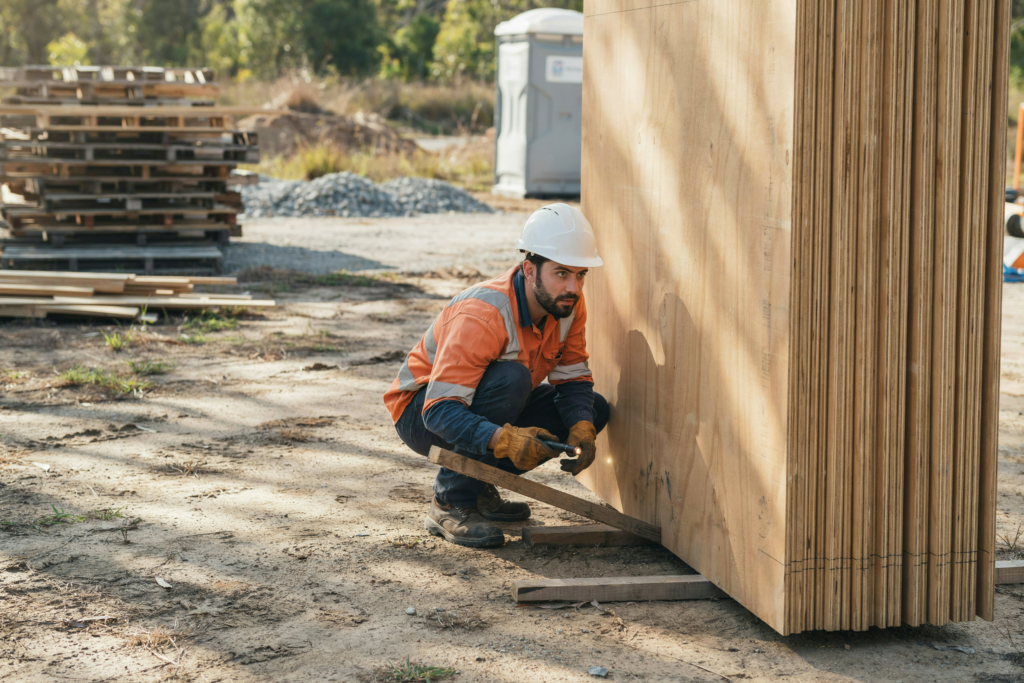
- Stockpiles, pallets and stacked formwork ply, full of shaded gaps
- Site sheds, portals and cable pits, dark, quiet and rarely disturbed
- Scrub and vegetation clearing, where your crew works straight through their patch
The SEQ species that matter
You only need the handful that actually turn up.
Group | What to watch for |
Snakes | Eastern brown, red-bellied black |
Spiders | Redback, plus big black spiders, treated as a funnel-web risk in SEQ (ANZCOR 9.4.2) |
Ticks and flying insects | Paralysis ticks, bees, wasps |
Ants | Fire ants in the SEQ biosecurity zone |
The distance problem
Plenty of SEQ sites are a long drive from QAS. From the bite until the paramedics walk through the gate, the first aider runs the show. Nobody’s coming to take over early.
🐍 Remember: Pressure, bandage, splint, stay still. Bring the transport to the patient.
Snake Bite First Aid: The Pressure Immobilisation Technique
If you drill one skill until your hands do it without thinking, make it this one. Pressure immobilisation, or PIT, is the go-to for snake bites, and the one people fumble most, usually cos the bandage is buried in a kit nobody’s opened since induction.
How to apply a pressure immobilisation bandage
Grab an elasticised bandage 10 to 15 cm wide. No elastic one in the kit, use crepe, and if there’s none of those, tear up clothing. Something beats nothing.
If the bite is on the body instead of an arm or leg, hold firm direct pressure over it. Just don’t put anything around the neck or head, or anything that makes it harder to breathe (ANZCOR 9.4.8).
The brown snake warning sign supervisors need to know
After an eastern brown bite, the worker might collapse or go confused, then seem to come good. He sits up, says he’s right, wants to get back on the tools. That collapse or confusion followed by apparent recovery may be the only sign you get that something serious has happened (ANZCOR 9.4.1).
The recovery isn’t all-clear. Don’t cancel the ambulance. Keep the bandage on, keep him lying still, and let QAS decide what happens next.
Snake bite mistakes that make things worse
A few of these still get passed around the lunch shed like gospel. Every one makes things worse.
❌ Snake bite don’ts |
Don’t cut the bite |
Don’t suck the bite |
Don’t wash the bite site |
Don’t use an arterial tourniquet |
Don’t try to catch or kill the snake. That’s how you end up with two patients |
Don’t take the bandage off once it’s on |
Don’t let the person walk anywhere, not even to the site office |
Spider Bite First Aid: Redback or Funnel-Web?
Two spiders, two completely different responses. Get them backwards and you’ve left the dangerous one untreated.
Redback bites: cold pack, no pressure bandage
A redback bite doesn’t get a pressure immobilisation bandage. PIT isn’t used for redbacks (ANZCOR 9.4.2).
Put a cold pack on the bite instead to help with the pain. If the pain turns severe, or they start feeling crook beyond the bite itself, like sweating, nausea or feeling generally unwell, get medical advice.
Big black spiders in SEQ: treat as funnel-web
In SEQ, any big black spider bite gets treated as a funnel-web bite. Don’t wait to confirm the species.
That means a full pressure immobilisation bandage, exactly like a snake bite, and a call to 000 straight away. Don’t try to catch the spider. If you can grab a phone photo without slowing the first aid, go for it, but the bandage comes first.
Redback | Big black spider (treat as funnel-web) | |
Pressure immobilisation bandage | No | Yes |
Cold pack | Yes | No |
Call 000 | Get medical advice if severe or systemic | Yes, straight away |
Catch the spider | No | No, phone photo only if it doesn’t delay first aid |
Other spider bites
For other spider bites, keep the person calm, use a cold pack for pain, and get medical advice if things get worse. If it was big and black, use the funnel-web steps.
🐝 Watch after the sting: Getting it out fast matters, but watching for anaphylaxis matters more.

Insect Stings and Tick Bites on Site
Stings usually get brushed off as minor. The risk is the one worker who reacts badly, and nobody finds out who that is until it happens.
Bee and wasp stings
The main thing with a bee sting is speed. Get the sting out fast, any way that works. Scrape it, flick it, pull it, doesn’t matter. Quick counts for more than how (ANZCOR 9.4.3).
Then put a cold pack on and watch for any sign of anaphylaxis. Don’t send them straight back to work and forget about it.
Fire ant stings in the SEQ biosecurity zone
Disturbed soil, stockpiles and fresh earthworks are where nests get stirred up. Put a cold compress on the stings and watch the worker closely for anaphylaxis, same as a bee sting.
If you find a nest, report it to Biosecurity Queensland. Don’t let the crew just flatten it and carry on.
Paralysis ticks
Clearing vegetation or working near bushland puts your crew in tick country. Removal advice differs between ANZCOR and ASCIA, so follow the method taught in your first aid training. Some people are allergic to ticks and can have a serious reaction (ASCIA). If a worker has reacted badly to a tick before, make sure the first aider knows.
Recognising and Managing Anaphylaxis on Site
Anaphylaxis is why a “minor” sting can turn into the worst day of your career. It can come on fast, even in a worker who’s been stung plenty of times before.
Signs of anaphylaxis to watch for
These are the signs on the ASCIA action plan. Watch for any one of them:
- Difficult or noisy breathing
- Swelling of the tongue
- Swelling or tightness in the throat
- Wheeze or persistent cough
- Difficulty talking or a hoarse voice
- Persistent dizziness or collapse
For insect allergy, ASCIA also lists abdominal pain and vomiting as signs of anaphylaxis. On a hot site that’s easy to write off as heat or a dodgy servo pie, so don’t.
Using an adrenaline autoinjector
If you see any of those signs, give the adrenaline autoinjector. ASCIA’s guidance is plain: if in doubt, give it.
Don’t let them stand or walk, even if they say they feel better. Lay them flat. If breathing is hard, let them sit with their legs outstretched (ASCIA). Then call 000 if nobody has yet.
Should your site first aid kit carry an adrenaline autoinjector?
It comes back to your risk assessment. A crew clearing scrub in the fire ant zone, a long way from QAS, has a very different risk profile from an indoor fit-out job, and the kit should reflect it.
Calling QAS From a Remote Site: What to Say
A new subdivision with no street numbers is hard to find. Every minute QAS spends at the wrong gate is time your first aider spends holding the fort alone.
Getting the ambulance to you
When you call 000, give the site address. If there isn’t one yet, give the nearest cross street and describe the entry. Tell them which gate to use, because big sites can have a few.
Send a worker who isn’t needed for first aid to meet QAS at the gate.
The Emergency+ app is worth having on every supervisor’s phone. It shows your location to read out. For advice while you wait, the Poisons Information Centre is on 13 11 26.
What to hand over when QAS arrives
When the paramedics walk up, they’ll want the facts fast. Have these ready:
- Time of the bite or sting
- Suspected animal, what you saw or what the worker thinks it was
- Any collapse, even a brief one where they seemed to recover
- Symptoms since the bite
- First aid given
- Time the bandage went on
Jot it on a glove or delivery docket if you have to. Under pressure, times are the first thing people forget.
📋 Site Bites & Stings Pack: Get your site ready before a bite happens, not after.
Are Your Site First Aiders Trained for This?
A certificate on the register isn’t the same as someone who can bandage a shaking worker’s leg while the crew watches. The question is whether the person holding the kit would actually know what to do.
HLTAID011 vs HLTAID014 for envenomation
HLTAID011 is the standard Provide First Aid certificate, and it’s the right fit for a lot of workers on a lot of sites.
Think about who your go-to person is, and whether their training fits your site’s risks. That’s where HLTAID014 Provide Advanced First Aid comes in for high-risk and remote jobs.
Training your crew without losing a day on site
Pulling a leading hand off a live job costs momentum, so ask about group bookings for the whole crew, training delivered on-site at your depot or shed, or a Saturday session so nobody leaves mid-pour.
⚠️ Be prepared: Get your site's go-to first aider ready for a snake bite far from QAS.
Go back to that bloke under the formwork ply. What happens next doesn’t come down to luck. It comes down to whether the person standing over him knows bites and stings first aid well enough to act without second-guessing.
Most of it rests on one split. Snakes and big black spiders get a pressure bandage and a splint. Redbacks and most stings get a cold pack. DRSABCD every time.
Then there are the traps. A brown snake collapse followed by recovery isn’t the all-clear, and anaphylaxis can hit a worker who’s been stung plenty of times. If in doubt, give the adrenaline.
Out on remote jobs, everything until QAS arrives is yours to manage. Give a clear location, send someone to the gate, and have your handover ready.
The best time to sort this out is a quiet day, not with a worker on the ground. Walk your site, check the kit, and have an honest look at your go-to first aider’s training.
Your Next Step
There are two ways to act on this guide, depending on where your site sits right now.
If your crew needs training, start there. The bandage only works if someone on site can put it on properly under pressure.
HLTAID014 Provide Advanced First Aid suits the go-to first aider on high-risk and remote jobs, where they’re managing everything until QAS walks through the gate.
Group bookings, on-site training at your depot or shed, and Saturday sessions keep your crew on the job. Enquire about group training to see what fits.
If your first aiders are already trained, get the site ready instead. The Site Bites & Stings Pack helps you prepare before a bite happens, not after.
Either way, do it on a quiet day. It’s a lot easier than working it out with a worker on the ground.
Book Your First Aid Training Now
Fast, affordable, and nationally accredited training delivered by professionals who care
Bites and Stings First Aid FAQs
Q.Should you wash a snake bite?
No. Leave the bite site alone. Put firm pressure over it, bandage the whole limb, splint it and keep the person lying still until QAS arrives.
Q.Do you put a pressure bandage on a spider bite?
Only for big black spiders, which get treated as funnel-web bites in South East Queensland (SEQ), along with a call to 000. Redback bites get a cold pack instead, and medical advice if it turns severe.
Q.How long does a pressure immobilization bandage stay on?
Once it's on, it stays on. Don't take it off to check the bite, even if the person seems to come good. Leave it for QAS and the hospital, and note the time it went on.
Q.Should you kill the snake so the hospital can identify it?
No. Chasing the snake is how one patient becomes two. Tell QAS what you saw and put all your effort into the bandage and keeping the person still.
Q.What should be in a first aid kit for snake bites on a work site?
Elasticized bandages 10 to 15 cm wide, something to splint a limb, a marker for the bite site, and cold packs for redbacks and stings. Whether you carry an adrenaline autoinjector comes back to your risk assessment.
Making first aid training more affordable for
every classroom
We believe every student deserves access to life-saving first aid knowledge. That’s why we offer specially reduced pricing for schools and educational groups. Whether you’re booking for a single class, a year group, or your entire school, our flexible packages make training more accessible and cost-effective — without compromising quality.
