

Your CPR certificate expires in two weeks, and you can’t work your next shift without it. You’re not alone—70% of Brisbane professionals booking certified CPR courses are racing against the same deadline.
Not all CPR courses are created equal. Some aren’t nationally recognized, which means your employer won’t accept them. Others take days to process your certificate.
This checklist walks you through everything you need to know before booking your CPR training in Brisbane—verifying accreditation, choosing the right course format, and getting your same-day certificate.
Whether you’re a personal trainer, teacher, childcare educator, or aged care worker, you’ll discover what to look for in a legitimate CPR provider and how to book with confidence.
What is a Certified CPR Course?
A certified CPR course is a nationally recognized training program that teaches cardiopulmonary resuscitation techniques and is accredited by a Registered Training Organization (RTO). In Australia, these courses must meet national standards and issue valid certifications accepted by all employers.
What makes a CPR course certified:
- Accredited by ASQA (Australian Skills Quality Authority)
- Issues nationally recognized certificates like HLTAID009
- Delivered by qualified trainers with current credentials
- Includes both theory and practical assessment
- Meets workplace requirements across Australia
- Certificate validity clearly stated (typically 12 months)
In Brisbane, certified CPR courses must be delivered by an RTO with proper accreditation. Always verify the provider’s RTO number before booking.
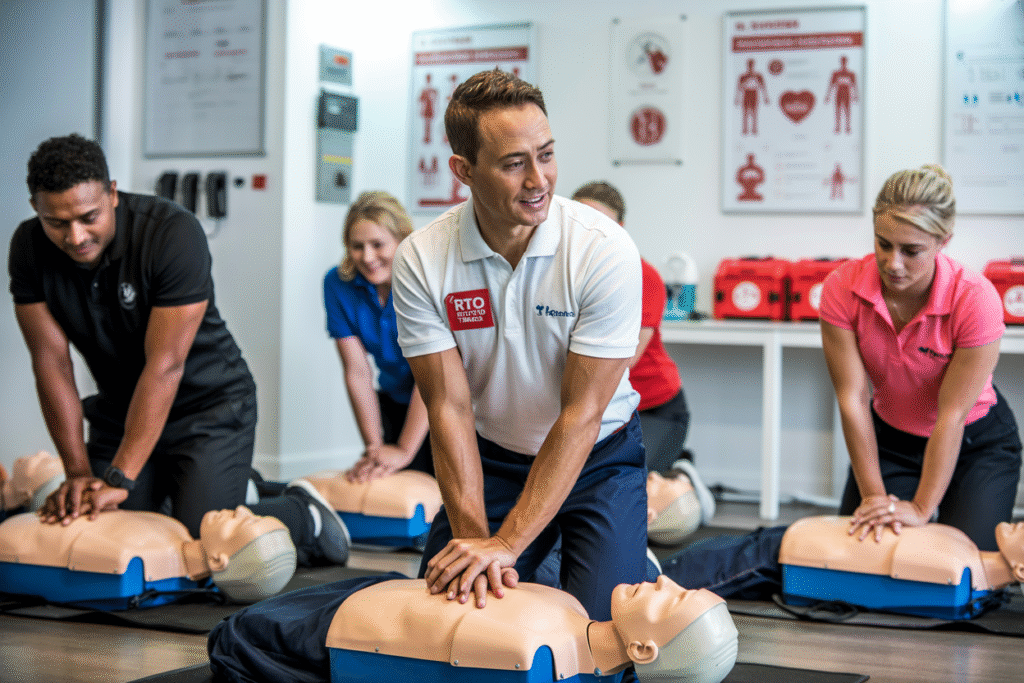
Verify Your CPR Course Provider is Legitimate
This is where people get caught out. You book what looks like a legit CPR course, complete the training, get your certificate… and then your employer tells you it’s not recognized. Now you’re back at square one.
Check the RTO Registration Number
Every legitimate CPR training provider in Brisbane needs to be a Registered Training Organization, or operate under one’s accreditation. This isn’t optional—it’s a legal requirement.
Here’s how to verify it:
- Go to training.gov.au (the official government site)
- Look for the RTO search function
- Type in the provider’s name or RTO number
- Check their accreditation is current and covers CPR training (HLTAID009)
The provider’s RTO number should be displayed somewhere obvious on their website—usually in the footer, about page, or course booking page. If you’re hunting for it, that’s a red flag.
When you find their RTO listing, check the status says “Active” and look at what courses they’re approved to deliver. Some RTOs are accredited for business training but not health and safety—they can’t legally certify you for CPR even if they’re offering it.
What ASQA Accreditation Means for You
ASQA is the Australian Skills Quality Authority—the government watchdog ensuring training providers aren’t just printing certificates and calling it a qualification.
When a provider is ASQA-accredited:
- Your certificate will be accepted nationwide, not just in Queensland
- The training meets national competency standards for CPR
- Your employer can verify your certification through official channels
- You’re covered by government protections if something goes wrong
Without ASQA accreditation, your certificate has basically no value.
Red Flags: Non-Certified CPR Courses to Avoid
No RTO number displayed anywhere: Legitimate providers put their RTO number on everything—website, booking confirmations, certificates. If you can’t find it, don’t book.
Certificates issued “immediately” with no assessment: Real CPR certification requires practical assessment. If someone’s promising a certificate without checking you can perform CPR correctly, that certificate’s worthless. Some operators offer “online-only” CPR courses—these aren’t recognized for workplace compliance.
Vague course descriptions: Legit providers tell you exactly what course code you’re getting (HLTAID009 for CPR, HLTAID011 for first aid). If the website just says “CPR training” without the qualification code, be suspicious.
No physical training location: CPR requires hands-on practice with manikins. If there’s no mention of where training happens, that’s a problem.
Most employers won’t accept non-certified CPR certificates. If you book with a dodgy provider, you’ll end up doing the course again with a legitimate one. Two minutes of verification now saves all that hassle.
Understanding CPR Course Codes (HLTAID009 vs HLTAID011)
You start looking at CPR courses and suddenly you’re seeing codes like HLTAID009 and HLTAID011. Half the websites assume you already know what they mean.
Let’s break it down.
HLTAID009: Provide Cardiopulmonary Resuscitation (CPR Only)
This is your CPR-only course covering:
- How to perform CPR on adults, children, and infants
- How to use an AED (automated external defibrillator)
- When to call emergency services
- Basic life support techniques
Best for: People who specifically only need CPR certification, or who are renewing and just need to refresh that one skill.
HLTAID011: Provide First Aid (Includes CPR)
This is the full first aid course. You’re getting everything from HLTAID009, plus:
- Managing bleeding and shock
- Treating burns, fractures, sprains
- Dealing with poisoning and bites
- Asthma and anaphylaxis management
- Head, neck, and spinal injuries
Best for: Anyone needing comprehensive first aid training for work or wanting preparation for more than just cardiac emergencies.
Which Course Does Your Job Actually Require?
There’s no point spending extra time on full first aid if your employer only needs CPR. But there’s also no point getting CPR-only if your workplace requires first aid.
You probably only need HLTAID009 (CPR only) if you’re:
- A personal trainer or fitness instructor
- Renewing your CPR and your first aid is still current
- A volunteer in certain roles where only CPR is mandated
You definitely need HLTAID011 (First Aid including CPR) if you’re:
- A teacher or teacher aide in any Queensland school
- A childcare educator (ACECQA requirements)
- An aged care or disability support worker
- Working in health services
- A workplace first aid officer
- In retail or hospitality management
⚠️ Here's the confusing part: Even if you get HLTAID011 first aid, the CPR component still expires after 12 months. So if you did first aid in January 2024, by January 2025 you need to renew your CPR (but your first aid is valid until January 2027).
Booking Strategies for Urgent Deadlines
Let’s be real—there’s a decent chance your CPR certificate either expired last week or expires in the next few days. Most people don’t plan renewals months in advance.
When Your Certificate Expires This Week
Don’t panic. Brisbane has multiple CPR providers running courses most days of the week.
Check real-time availability on provider websites. You need to see what’s actually available right now, today.
Look for providers offering multiple sessions across the week. Some training companies only run courses on certain days. Providers running daily sessions give you more chances.
Be ready to book immediately when you find an available spot. When courses are near capacity, spots get snapped up fast.
Have your payment details ready and your USI number handy (Unique Student Identifier—you’ll need it for enrolment). If you don’t have a USI yet, create one at usi.gov.au.
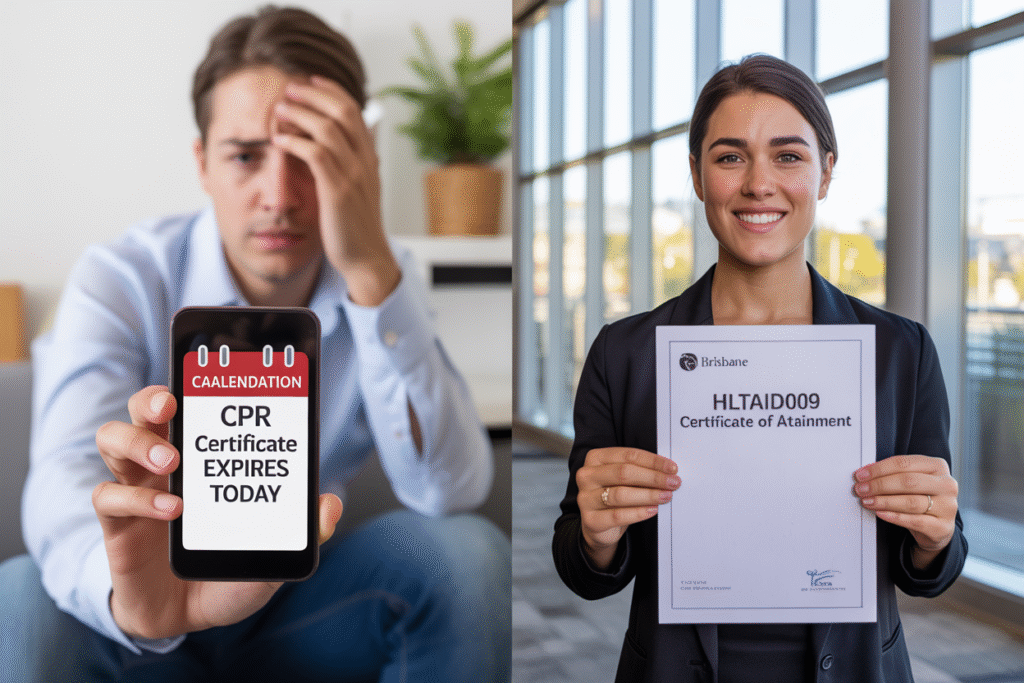
Same-Day Certification: What’s Realistic
Most legitimate providers will give you a digital certificate via email within hours of completing the course. This is your official certificate. You can forward it to your employer immediately. It’s valid straight away.
Some providers still process certificates manually and it takes 2-3 business days. If you’re working against a deadline, confirm the certificate turnaround time before you book.
What “same-day” doesn’t mean:
It doesn’t mean you can rock up without booking and expect to jump into a course. Classes need minimum numbers.
It also doesn’t mean you can skip the practical assessment. You still need to demonstrate competency.
Backup Plans if Your First Choice is Fully Booked
Get on the waitlist if available. Cancellations happen all the time—people get sick, work commitments come up. Take the waitlist spot, then keep looking for alternatives.
Check other Brisbane locations immediately. Don’t spend ages trying to make your preferred location work.
Book the next available course even if it’s after your deadline. Then contact your employer, explain the situation, and ask about flexibility. Sometimes there is.
What to Expect on Your CPR Course Day
You’ve booked your certified CPR course in Brisbane. Here’s what happens.
Course Structure
Theory and demonstration: You’ll cover the basics—when to perform CPR, recognizing cardiac arrest, calling for help, legal considerations. The trainer demonstrates proper CPR technique on a manikin.
Some providers let you do online pre-learning before you arrive, cutting down this theory section.
Hands-on practice: This is where you actually learn CPR. You’ll practice on manikins a lot. Compressions, rescue breaths, using the AED, the full sequence.
The trainer watches your technique, gives feedback, helps you adjust. This isn’t about catching you out—it’s about making sure you know how to do this if you ever need to.
You’ll practice on adult, child, and infant manikins because the technique’s slightly different. Chest compressions are genuinely tiring if you’re doing them properly.
Assessment and paperwork: The trainer assesses you performing CPR and using an AED. This isn’t a written test—it’s practical. Then there’s admin: signing forms, confirming your details for the certificate.
The Practical Assessment
You’ll need to demonstrate:
- Checking for danger, response, and breathing (DRS sequence)
- Calling for help and requesting an AED
- Starting CPR with correct hand position and compression depth
- Maintaining the right compression rate (about 100-120 per minute)
- Giving rescue breaths or continuous compressions
- Using an AED correctly when it arrives
What the trainer’s looking for: Are your compressions deep enough? Are you doing them at roughly the right speed? Is your hand position correct? Can you follow the AED prompts?
They’re not looking for perfection. They’re looking for competence. Can you perform CPR well enough that if someone collapsed tomorrow, you’d actually be able to help?
Common Concerns
Most people pass first time. The course is designed for regular people, not medical professionals. If you’ve been paying attention during practice and following guidance, you’ll be fine.
If your technique needs work, the trainer will give you more practice time and reassess you. Their job is to make sure you can actually do CPR, which means teaching you properly.
What causes people to struggle:
- Not pushing hard enough on compressions (people worry about hurting the manikin)
- Getting flustered when being watched
- Overthinking instead of just doing what they practiced
If you’re anxious, tell the trainer at the start. They’ve seen nervous students before.
Getting Your Certificate
Once you’ve completed the assessment, the certificate process starts.
Your details get entered into the RTO’s system, the certificate gets generated, and it arrives in your email inbox—usually within hours. Check your spam folder.
This PDF certificate is your official qualification. Save it somewhere you won’t lose it. Print a copy. Email it to your employer right away.
What’s on your certificate:
- Your name and date of birth
- The qualification code (HLTAID009)
- The date you completed training
- The expiry date (12 months from course date)
- The RTO’s details and logo
- A unique certificate number
Double-check all these details are correct before you leave.
Common Mistakes to Avoid
Not Checking Which Course Code You Actually Need
You book a CPR-only course (HLTAID009) because it fits your schedule. You complete it, hand your certificate to your employer… and they tell you they needed full first aid (HLTAID011).
Now you need to book and pay for another course.
How to avoid it: Before you book, confirm in writing what qualification your employer requires. Email HR and ask specifically. Don’t assume.
Booking Too Close to Your Expiry Date
Your certificate expires Friday. You book for Saturday. But Saturday’s course gets cancelled, or you wake up sick, or there’s a family emergency. Now you’re trying to find another course with zero buffer time.
How to avoid it: Give yourself at least a week of buffer. Book earlier than you think you need to. Things come up.
Showing Up Without Your USI Number
You arrive at the course. The trainer asks for your USI (Unique Student Identifier). You don’t have one.
Now you’re creating a USI on your phone while everyone else is starting.
How to avoid it: Get your USI before course day. Go to usi.gov.au, create one, and save that number somewhere accessible. If you already have a USI but can’t remember it, retrieve it from the same website.
Wearing the Wrong Clothing
You show up in tight jeans and dress shoes. Now you need to kneel on the floor doing compressions.
How to avoid it: Wear comfortable clothing you can move and kneel in. Sneakers or flat shoes. You’re going to be on the floor.
Not Updating Your Contact Details
You complete the course. But they have your old email address from years ago. The certificate gets sent to an email account you don’t use anymore.
✅ How to avoid it: When you enroll, double-check all your contact details are current. Email address, phone number. Don't assume they'll ask.
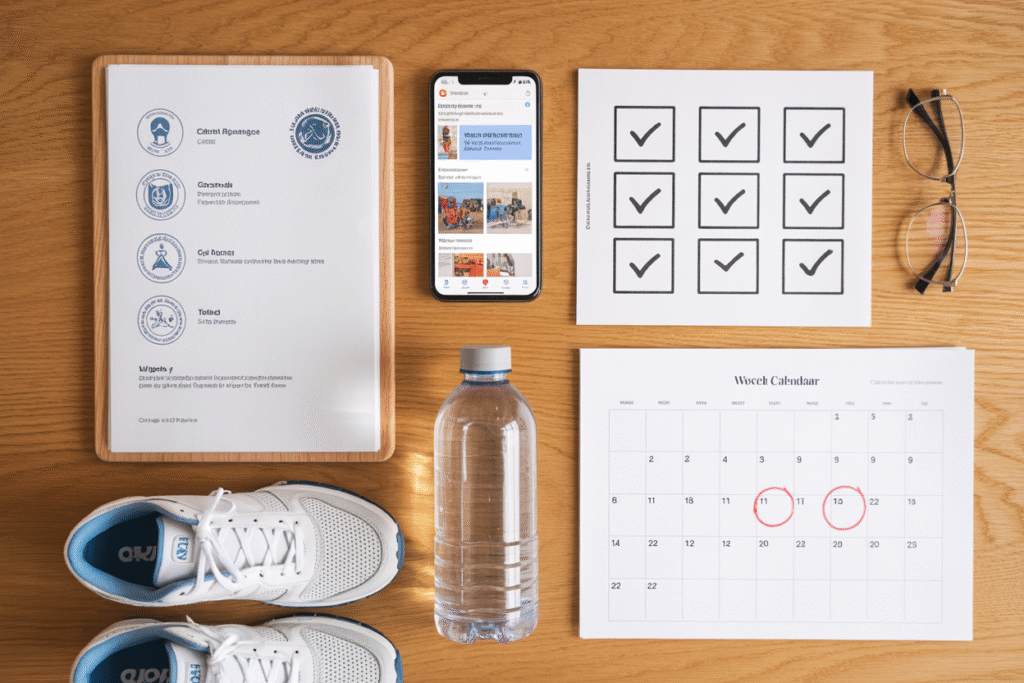
Post-Certification: What Happens After
You’ve got your certificate. Sort out a few things now to avoid scrambling in 12 months.
Storing Your Certificate
Save that certificate somewhere you can find it.
Create a dedicated folder on your computer or phone. Save it to cloud storage so you can access it from anywhere. Print a physical copy. Email it to yourself at multiple addresses.
Updating Your Employer
Submit your certificate as soon as you receive it. Email it to HR or upload it to your workplace system. Don’t wait until they ask.
Confirm they’ve received it. Update any registration portals—Queensland College of Teachers for teachers, ACECQA for childcare educators.
Setting Up Renewal Reminders
Your CPR certificate expires in 12 months. Set multiple reminders in your phone calendar for 11 months and 10 months from now.
Sign up for provider reminder systems. Most CPR training providers offer email reminders when your certificate’s getting close to expiry.
Add it to your yearly planning alongside other annual admin tasks.
Final Thoughts
Getting a certified CPR course in Brisbane is straightforward when you know what you’re looking for. Accredited provider, right course code, same-day certificate.
Check the RTO number. Confirm the course code. Book with confidence. Set those renewal reminders.
Your CPRProvide CPR certification keeps you working, keeps you compliant, and could save someone’s life. Get it sorted properly.
Book Your First Aid Training Now
Fast, affordable, and nationally accredited training delivered by professionals who care
Frequently Asked Questions
Q.How long is a CPR certificate valid in Brisbane?
Your CPR certificate (HLTAID009) is valid for 12 months from the date you complete training. Australian resuscitation guidelines require annual renewal because CPR skills fade without practice. Even if you did first aid (HLTAID011), which lasts three years, the CPR component still needs annual renewal.
Q.Can I do CPR training online in Brisbane?
Not entirely. Some providers offer online pre-learning where you complete theory at home, then attend a shortened in-person session for practical assessment. But you can't get a legitimate, workplace-accepted CPR certificate purely online. CPR requires hands-on practice with manikins and a practical assessment. Anyone offering a completely online CPR certificate is selling something your employer won't accept.
Q.What's the difference between CPR and first aid certification?
CPR (HLTAID009) focuses specifically on cardiopulmonary resuscitation and using an AED. First aid (HLTAID011) includes CPR plus everything else—treating bleeding, burns, fractures, managing asthma, anaphylaxis, and handling most common emergencies. If your job only requires CPR, that's all you need. But teachers, childcare educators, and aged care workers typically need full first aid.
Q.What do I need to bring to my CPR course?
Your USI number (get it from usi.gov.au if you don't have one), photo ID, and comfortable clothes you can move in. You'll be kneeling on the floor doing chest compressions, so wear something practical. Bring water because you'll get warm.
Q.What happens if I don't pass the assessment?
You'll get additional practice time and reassessment. Trainers aren't trying to fail you—their job is to make sure you can actually perform CPR. Most people who struggle just need a bit more practice. The assessment standards are achievable for regular people.
Q.How do I know if a CPR provider is legitimate?
Check their RTO number on training.gov.au. Every legitimate provider must display their RTO number on their website. Verify their accreditation is current and covers CPR training (HLTAID009). If you can't find an RTO number or it doesn't check out, don't book.
Q.Can I renew my CPR before it expires?
Yes, but you'll lose whatever time is left on your current certificate. If you renew a month early, your new certificate starts from the renewal date and lasts 12 months from then. Most people wait until closer to expiry unless there's a specific reason to renew early.
Making first aid training more affordable for
every classroom
We believe every student deserves access to life-saving first aid knowledge. That’s why we offer specially reduced pricing for schools and educational groups. Whether you’re booking for a single class, a year group, or your entire school, our flexible packages make training more accessible and cost-effective — without compromising quality.
