

Here’s something that’ll make your stomach drop: 72% of aged care facilities in Queensland reported at least one cardiac emergency in 2024, yet audits reveal that 34% of aged care workers had expired or inadequate CPR certifications at the time of inspection.
Think about that for a second. Nearly three-quarters of facilities had someone’s heart stop. And one in three workers weren’t properly certified when inspectors showed up.
These statistics from the Aged Care Quality and Safety Commission aren’t just numbers—they’re showing us a gap that’s getting people in serious trouble. You know CPR certification is mandatory. Every aged care worker knows that. But between rotating night shifts, back-to-back double shifts, and the mental exhaustion of caring for residents, tracking your certification expiry date falls through the cracks. You’re not alone if you’ve had that panic moment when you realize your cert expired three weeks ago and there’s an audit notice sitting in the staff room.
2025 brought stricter rules. HLTAID011 certification is now the only acceptable standard. Annual renewals are mandatory—no exceptions, no grace periods. And compliance enforcement? It’s immediate. Whether you’re an Enrolled Nurse working night shift, a Personal Care Assistant handling morning routines, or an Activities Coordinator running group programs, your certification status is non-negotiable.
One lapsed certificate can pull you off the floor until you’re recertified. That means lost shifts, awkward conversations with your manager, and the stress of knowing your facility’s compliance rating just took a hit because of your expired cert.
Let’s sort this out so you can stop worrying about compliance and focus on what you do best—caring for your residents.
| Certification Type | Valid For | Required For Aged Care? | Nationally Recognized? |
|---|---|---|---|
| HLTAID011 (Provide First Aid) | CPR: 12 months / First Aid: 3 years | ✅ Yes - Mandatory | ✅ Yes |
| HLTAID009 (CPR only) | 12 months | ❌ No - Insufficient | ✅ Yes |
| HLTAID010 (Basic First Aid) | 3 years | ❌ No - Outdated | ❌ No longer accepted |
| HLTAID003 (Old standard) | Expired | ❌ No - Superseded | ❌ No longer accepted |
Understanding HLTAID011 Requirements for Aged Care Workers in 2025
What is HLTAID011 Certification?
HLTAID011 is officially called “Provide First Aid” certification, and yeah, the name’s a bit misleading because it sounds like it’s just about bandaids and ice packs. It’s actually the full package—CPR training, emergency response, casualty management, the works.
This replaced the old HLTAID003 certification a few years back, and if you’re still holding onto an HLTAID003 cert, aged care facilities won’t accept it anymore. You need HLTAID011 now.
HLTAID011 covers everything—not just cardiac arrests. You’re learning how to respond to choking incidents (massive deal in aged care), manage wounds and bleeding, handle allergic reactions, treat burns, recognize strokes, and manage someone in shock. The CPR component is just one part of the bigger picture.
It’s nationally recognized under the Australian Qualifications Framework, which means every aged care facility will accept this certification. No confusion about whether you’ve got the “right” type of first aid cert.
The Aged Care Quality and Safety Commission requires this specific certification under Standard 3: Personal Care and Clinical Care. When auditors show up at your facility, they’re checking that everyone in direct care roles has current HLTAID011. Not “current first aid training.” Not “workplace CPR certification.” HLTAID011 specifically.
Core CPR Skills Covered in HLTAID011
The CPR component follows what’s called the DRSABCD action plan, and if you’ve done first aid training before, you’ll recognize this acronym. It’s the step-by-step process for responding to any emergency:
D – Danger: Check the scene is safe before you approach
R – Response: Check if the person responds to voice or touch
S – Send for help: Call 000 immediately
A – Airway: Check and clear the airway
B – Breathing: Look, listen, feel for normal breathing
C – CPR: Start chest compressions if not breathing normally
D – Defibrillation: Use an AED if available
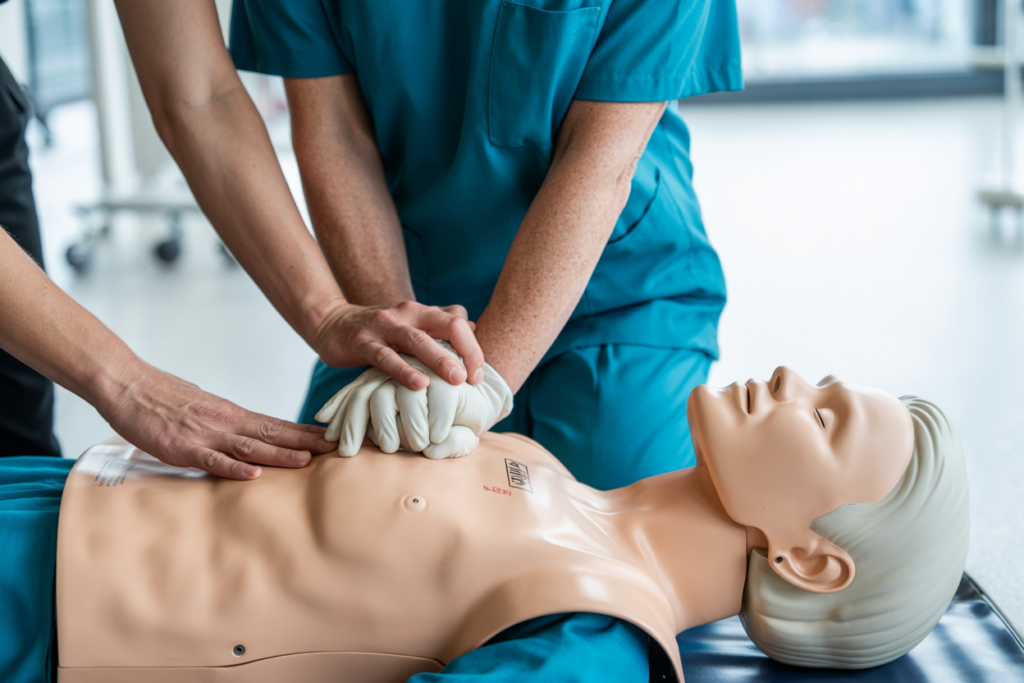
The hands-on CPR training focuses heavily on high-quality chest compressions. You’re practicing on mannequins until it becomes muscle memory—100 to 120 compressions per minute (about the beat of “Stayin’ Alive” if you need a mental reference), pushing down 5-6 centimeters into the chest.
You’ll learn the 30:2 ratio—that’s 30 chest compressions followed by 2 rescue breaths. Then repeat that cycle continuously until paramedics arrive or the person starts breathing normally again.
Aged Care-Specific Training Components
Here’s where HLTAID011 training for aged care workers gets specific, because performing CPR on an 85-year-old resident with osteoporosis is completely different than performing CPR on a healthy 40-year-old.
Recognizing atypical cardiac symptoms in elderly residents is huge. About 67% of cardiac arrests in aged care facilities present without the classic chest pain you’d expect. Instead, you might see sudden confusion, extreme fatigue, unexplained shortness of breath, or nausea. A resident who suddenly seems “off” or stops responding normally might be having a cardiac event, not just a bad day.
Managing dentures during emergency response comes up way more often than you’d think. Loose dentures can become an airway obstruction during rescue breaths. You’re taught to quickly assess whether dentures are secure or need to be removed, and how to do that safely without wasting precious seconds.
Compression modifications for frail patients is where aged care CPR training really differs from standard courses. Residents with osteoporosis, brittle bones, or very low body weight need adjusted technique. You’re still aiming for 5-6cm compression depth, but you’re learning to recognize when you need to reduce force slightly to prevent rib fractures while still maintaining effective compressions.
Choking response in dementia patients is its own challenge. Residents with dementia are three times more likely to experience choking emergencies because they might forget to chew properly, eat too quickly, or have difficulty swallowing. The training covers modified communication techniques and physical response when a resident can’t follow verbal instructions during a choking incident.
How Often Must Aged Care Workers Renew CPR Certification?
Annual Renewal Requirement
Here’s the part that catches people off guard: the CPR component of your HLTAID011 certification expires every 12 months. Not three years. Not two years. Every single year.
The full First Aid component lasts three years, which creates this confusing situation where part of your certification is current but part of it isn’t. Most aged care workers just complete the full HLTAID011 renewal annually to avoid the headache of tracking two separate expiry dates.
The Australian Resuscitation Council recommends annual CPR renewal because the research shows your skills start degrading after about 6 months without practice. Your hands forget the exact compression depth, your timing gets sloppy, and that confidence you had right after training? It fades when you’re not using these skills regularly.
The Aged Care Quality and Safety Commission doesn’t give you wiggle room on this. Your renewal must happen BEFORE your expiry date. There’s no grace period. The day your certification expires is the day you’re technically unqualified to provide care.
Consequences of Expired Certification
This is where things get serious fast, and it’s worth understanding exactly what happens when your CPR certification lapses.
You get removed from direct care duties immediately. Not at the end of your shift. Not after the weekend. The moment management realizes your cert is expired, you’re off the floor. They might reassign you to administrative tasks, laundry, or kitchen duties if there’s work available, but you can’t provide hands-on care to residents.
Your facility goes into non-compliance with Standard 3.7 (skilled workforce requirements). Every aged care facility needs to maintain records showing that all direct care staff hold current certifications. When auditors from the Aged Care Quality and Safety Commission show up—and they do show up unannounced—they pull staff files and check certification dates.
Professional indemnity insurance complications come into play too. If you’re an RN or EN, your professional insurance coverage assumes you’re maintaining current certifications. Perform CPR with an expired cert and something goes wrong? Your insurance might deny coverage because you weren’t qualified at the time of the incident.
Legal liability is the nightmare scenario nobody wants to think about. If a resident experiences cardiac arrest and you perform CPR with an expired certification, and that resident doesn’t survive, families can question whether you were legally qualified to provide care.
One aged care facility manager told us about an incident where a PCA performed CPR on a resident during a cardiac arrest. The resident survived—everything went perfectly. But during the incident investigation, they discovered the PCA’s certification had expired two months earlier. The family found out during the paperwork process and filed a complaint with ACQSC. The PCA lost her job. The facility copped a significant fine.
She did everything right in the emergency. She saved the resident’s life. But the expired certification made it a compliance violation instead of a success story.
Who Needs CPR Certification in Aged Care Facilities?
Mandatory Certification Roles
Registered Nurses (RNs) need current CPR certification—no exceptions. You’re the clinical lead on the floor, you’re managing complex medical situations, and you’re often the first responder when a resident goes into cardiac arrest.
Enrolled Nurses (ENs) are in the same boat. You’re providing direct clinical care, administering medications, monitoring vital signs, and responding to emergencies.
Personal Care Assistants (PCAs) and Assistants in Nursing (AINs) absolutely need certification. You’re the ones spending the most hands-on time with residents. You’re also the ones who usually discover when something’s wrong because you’re in resident rooms constantly.
Medication-endorsed care workers require HLTAID011 because you’re handling medication administration. If a resident has an adverse reaction or goes into cardiac arrest shortly after taking medication, you need to respond immediately.
Lifestyle and Activities Coordinators fall into mandatory territory if you’re supervising residents during group activities. If someone collapses during your program, you can’t wait for nursing staff to arrive from another building.
🚨 REMEMBER THIS: In aged care, cardiac arrest often looks like "something's not quite right" rather than dramatic chest-clutching collapse. Trust your instincts when a resident seems suddenly different from their baseline.
CPR Techniques Specific to Aged Care Patients
Recognizing Atypical Cardiac Arrest Symptoms
Here’s something they don’t emphasize enough in standard CPR courses: elderly cardiac arrests look completely different from what you see in the training videos.
An 82-year-old woman experiencing cardiac arrest might just seem confused. She’s asking the same question repeatedly, seems disoriented about where she is, maybe thinks it’s 1987 and she needs to pick up her kids from school. You might assume it’s dementia progression or a UTI causing delirium. But it could be her heart.
Extreme fatigue that comes on suddenly is another one. A resident who was fine during breakfast is now so exhausted they can barely keep their eyes open during morning tea. Not the gradual tiredness that comes with aging—sudden, overwhelming fatigue that doesn’t match their baseline.
This is why your DRSABCD training matters so much in aged care. You can’t rely on textbook symptoms. You’ve got to assess response, breathing, and circulation every single time something seems off.
Modified Compression Techniques for Elderly Patients
Standard CPR training tells you to compress 5-6 centimeters into the chest. That works for average adults. But your 78-year-old resident with osteoporosis? She’s got bones that could fracture from normal compression force.
You’re still aiming for effective compressions—you need adequate depth to circulate blood. But you’re also learning to recognize when you need to modify slightly for extremely frail patients.
Some rib fractures during CPR are unfortunately common and acceptable—survival is more important than broken ribs. But you’re trying to minimize unnecessary trauma while still getting effective circulation.
The 30:2 ratio stays the same regardless of patient size—30 compressions, 2 rescue breaths, repeat.
Denture Management During Emergency Response
If dentures are secure and well-fitting, leave them in. They actually help maintain the shape of the mouth and make rescue breaths more effective because you get a better seal.
If dentures are loose and rattling around, remove them immediately. Loose dentures can slide back into the throat during rescue breaths and create a complete airway obstruction.
Quick assessment: tilt the resident’s head back to open the airway. If you see dentures moving around loosely, hook your finger in and pull them out. Drop them on the floor—doesn’t matter if they break, you need that airway clear.
Using AEDs with Pacemakers and ICDs
Most aged care facilities have AEDs (Automated External Defibrillators) mounted on walls in common areas. But here’s the aged care-specific complication: a lot of your residents have implanted cardiac devices.
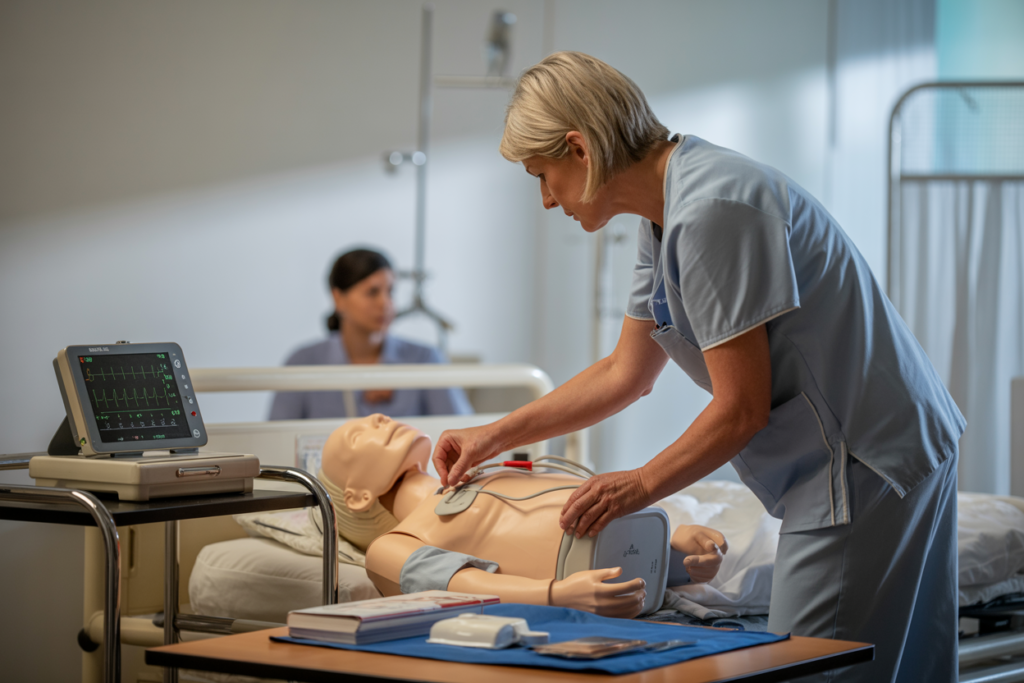
When you’re using an AED on someone with an implanted device, you need to position the electrode pads away from the device itself.
Run your hand quickly across the upper left chest area (most common placement). You’re feeling for a hard rectangular bump about the size of a matchbox under the skin. That’s the device.
If you find it, place your AED pads at least 8 centimeters away from the device. The AED will still work. Just keep the pads away from direct contact with the implant.

Maintaining Your Certification and Skills Between Renewals
Setting Up Automatic Renewal Reminders
You walk out of your HLTAID011 course feeling great—certificate in hand, skills fresh in your mind. Twelve months feels like ages away. Then suddenly it’s 11 months later, your cert expires in three weeks, and convenient courses are fully booked.
Put it in your phone calendar right now. Set three separate calendar alerts:
- 60 days before expiry: “CPR cert expires in 2 months – start looking at course options”
- 30 days before expiry: “CPR cert expires in 1 month – BOOK YOUR COURSE NOW”
- 14 days before expiry: “CPR cert expires in 2 weeks – FINAL WARNING”
Sign up for training provider renewal reminders. When you complete your course, the training provider usually asks if you want renewal reminder emails. Say yes. They’ll email you before your expiry with available course dates.
Create a “Certifications” folder in your email. Every time you get a certificate, training receipt, or renewal reminder, save it in that folder. Makes it easy to find proof of certification when your manager asks for an updated copy.
Don’t Wait Until Your Certification Expires
Your HLTAID011 certification expires every 12 months for the CPR component. The day it expires is the day you’re pulled from direct care duties if management catches it.
The consequences of expired certification aren’t worth the risk. Emma’s case study showed us what happens—competent nurse, performed CPR perfectly, but the expired cert created compliance violations, facility fines, professional consequences, and family complaints. All preventable by booking a course earlier.
Your residents are counting on you to be ready when cardiac emergencies happen. And they will happen. 72% of Queensland aged care facilities reported cardiac emergencies in 2024. Your facility is not the exception.
When it happens on your shift, in your section, with a resident you’ve cared for every day, your hands need to know what to do. The DRSABCD protocol needs to be automatic. Chest compression depth, rate, ratio—all muscle memory so your brain can focus on staying calm and coordinating the emergency response.
Check your certification expiry date right now. Pull out your certificate or check your personnel file. What’s the date?
If it expires in the next 60 days, book your renewal course this week. If it expires in the next 30 days, book your course today. If it expired already, you need to handle this immediately. You’re technically working unqualified right now.
Set up your renewal reminders before you close this page. Open your phone calendar, add alerts before your expiry. Make them repeat annually. This one action prevents the panic scramble next year.
Your professional reputation, your facility’s compliance rating, and most importantly your residents’ lives depend on you maintaining current certification. That’s not dramatic—that’s the reality of working in aged care.
You already do the hardest part of this job—showing up every shift to care for residents who need help with every aspect of daily living. Getting your CPR certification renewed is the easy part. Once a year.
Book your course. Show up. Practice the skills. Get certified. Set your reminders. Repeat next year.
Your residents deserve care workers who are ready for emergencies. Be ready.
Book Your First Aid Training Now
Fast, affordable, and nationally accredited training delivered by professionals who care
Frequently Asked Questions
Q.Can I work in aged care with an expired CPR certification?
No, you cannot provide direct care to residents with expired certification. The moment your HLTAID011 expires, you're technically unqualified under Aged Care Quality Standards and must be removed from direct care duties immediately. Your facility risks compliance violations and fines if you continue working with expired certification, and your professional indemnity insurance may not cover you in emergencies. Even if you performed CPR perfectly during an emergency, an expired certification creates legal and compliance issues that can result in job loss, facility penalties, and increased insurance premiums.
Q.What's the difference between HLTAID009 and HLTAID011?
HLTAID009 is CPR-only certification that covers cardiopulmonary resuscitation techniques, while HLTAID011 (Provide First Aid) is the comprehensive qualification that includes CPR plus wound management, choking response, burns, fractures, allergic reactions, and other first aid scenarios. Aged care facilities require HLTAID011 specifically because you need the full range of emergency response skills, not just CPR. While HLTAID009 is acceptable for some industries like fitness training, it doesn't meet the Aged Care Quality and Safety Commission's requirements for direct care workers.
Q.How long does HLTAID011 certification last?
The CPR component of HLTAID011 expires after 12 months and must be renewed annually, while the broader First Aid component remains valid for 3 years. However, most aged care workers complete the full HLTAID011 renewal every year to avoid tracking two separate expiry dates and to maintain fresh skills in all emergency response areas. The Australian Resuscitation Council recommends annual CPR renewal because research shows compression technique and emergency response skills degrade significantly after 6-12 months without practice.
Q.Can I do my CPR certification online?
No, you cannot complete a valid HLTAID011 certification entirely online. While some training providers offer blended learning where you complete theory modules online before attending hands-on practical sessions, you must attend an in-person assessment where an instructor watches you perform CPR on mannequins and demonstrate proper technique. Any provider advertising "fully online CPR certification" is not offering legitimate HLTAID011 qualification. Aged care facilities and the ACQSC will not accept certificates from courses without mandatory practical assessment components.
Q.What if my certification expired during my time off work?
Your certification expiry date doesn't pause when you're on leave—it continues to count down whether you're working or not. If you're taking extended leave (parental leave, sick leave, annual leave), you're responsible for ensuring your certification remains current if you plan to return to direct care duties. Some aged care workers time their renewals for just before returning from extended leave, but this is risky if your return date gets pushed back. Better practice is to renew before taking leave or during leave if it's going to expire, so you can return to work without compliance issues holding up your shift resumption.
Q.Will I definitely pass the HLTAID011 assessment?
About 95-98% of participants pass HLTAID011 on their first attempt because the assessment evaluates practical competency, not trick questions or obscure knowledge. You're demonstrating CPR technique, AED operation, and basic first aid procedures that you've practiced extensively during the course—the instructor ensures you're competent before you're assessed. If you pay attention during training, practice properly on mannequins, and follow the techniques taught, you'll pass. The small percentage who don't pass first time usually get free reassessment within 30 days, and instructors provide feedback on exactly what needs improvement so you can succeed on the second attempt.
Making first aid training more affordable for
every classroom
We believe every student deserves access to life-saving first aid knowledge. That’s why we offer specially reduced pricing for schools and educational groups. Whether you’re booking for a single class, a year group, or your entire school, our flexible packages make training more accessible and cost-effective — without compromising quality.
