

It’s 11pm and Jake’s just been told he needs proof his CPR is current before his shift tomorrow morning. He googles it, and the first three results tell him three different things. One says 1 year. One says 3 years. One doesn’t say at all, it just tries to sell him a course. Sound familiar?
Here’s the actual answer, no fluff: if you’re CPR-only, your HLTAID009 certificate is valid for 12 months. Not 3 years. That’s the full first aid certificate (HLTAID011), and it’s a different animal.
If you’re a personal trainer, swim instructor, or working in allied health and you only need the CPR ticket, this is the number that matters to you. Not the childcare compliance stuff, not the WHS paperwork, just the 12-month cycle and what it means for your work.
This confusion isn’t really Jake’s fault either. Search results blend HLTAID009 and HLTAID011 together constantly, as if they’re interchangeable, and providers aren’t always great at spelling out which course they’re actually talking about on a given page. So you end up with three different answers to what should be a simple question, and no clear way to tell which one applies to you.
Below we’ll cover how long it actually lasts, why it’s shorter than the full first aid cert, what happens if you let it lapse, and how to get it sorted with the least amount of hassle.
CPR vs First Aid: Why the Validity Periods Are Different
Why CPR resets every 12 months
This one’s not arbitrary. The Australian Resuscitation Council (ARC) and ANZCOR review their resuscitation guidelines on a pretty tight cycle, and CPR technique is exactly the kind of thing that gets fine-tuned as new evidence comes in. Compression depth, ratios, how you handle an AED, small stuff shifts. So the training body keeps the certificate window short to make sure what’s in your head matches what’s actually current best practice. Twelve months keeps you close to the latest guideline, not three years behind it.
Think about it this way: resuscitation science is one of the more actively studied corners of medicine. Researchers are constantly running trials on compression rates, ventilation timing, when to shock and when not to. A guideline that felt right three years ago can genuinely be a step behind what’s now considered best practice. CPR-only certification tracks that pace deliberately, not because someone decided to make life harder for PTs and swim instructors, but because the whole point of the certificate is that you’re doing the current thing, not the thing that used to be current.
Why full first aid (HLTAID011) lasts 3 years
First aid covers a lot more ground, wound care, burns, fractures, anaphylaxis, the works. That broader scope doesn’t shift anywhere near as often as resuscitation technique does, so the training body doesn’t need to pull you back in every year for a full retrain. You’re still meant to do a CPR refresher annually even if you’re a full first aid holder though, because CPR is the bit that keeps moving.
It’s a bit like the difference between updating your phone’s operating system and updating a single app. The operating system, in this analogy the broader first aid knowledge, doesn’t need a full rebuild every few months. But the one app that’s under constant development, the CPR component, needs updating far more often to stay useful.
HLTAID009 (CPR Only) | HLTAID011 (First Aid) | |
Validity | 12 months | 3 years |
Covers | CPR, AED use | CPR plus wounds, burns, fractures, anaphylaxis, more |
Typical holder | PTs, swim instructors, allied health | Workplace first aid officers, broader roles |
If you want the full walkthrough on renewing, we’ve got a dedicated piece on that. And if you’re trying to figure out what your specific workplace or industry body requires beyond just CPR, our ARC Guidelines piece breaks down the compliance side of things.
🏋️ Worth knowing: if you only need CPR, you don't need to sit through a full first aid course to get it. The two are separate certificates with separate rules.

What 12-Month Validity Actually Means for Fitness, Aquatics & Allied Health Workers
Knowing the number is one thing. Knowing what it actually means for your specific job is another. Here’s how it plays out across the people who search for this most.
Personal trainers & group fitness instructors
If you’re a PT or you run group fitness classes, your CPR currency isn’t just a nice-to-have, it’s usually tied straight to your registration body or your gym’s insurance policy. Let it lapse and you’re not just out of compliance on paper, you can actually be stood down from shifts until it’s sorted. And because so many PTs are sole traders picking up work across two or three gyms, this certificate is yours, not your employer’s. Nobody’s chasing you to renew it. That’s on you.
This is the part a lot of trainers underestimate when they first start out. In an employed role, someone in HR usually has a system that flags expiring certificates before they become a problem. As a sole trader bouncing between venues, that safety net doesn’t exist. You are the HR department. If your certificate quietly lapses, nobody at any of your gyms is necessarily going to catch it until they run their own compliance check, and by then you might already be off the roster for a shift or two while it gets sorted.
Swim instructors & aquatics staff
Pool decks are a CPR-heavy environment for obvious reasons, and pool operators tend to be strict about currency because the risk profile is higher. If you’re supervising a group in water, an expired certificate isn’t something that quietly slides, it usually gets picked up fast in an audit or a spot check.
Aquatics venues also tend to run tighter documentation than a typical gym floor, partly because of how visible and immediate the risk is when something goes wrong in water. That means less room for a “I’ll sort it next week” approach. If your certificate is due, or worse, already expired, it’s usually flagged well before it becomes an emergency, but only if you’re the one tracking it in the first place.
Allied health & beauty therapists
Massage therapists, beauty therapists, dental assistants, this crowd often gets caught out because the requirement comes from an insurer or professional association rather than an obvious workplace rule. It’s easy to lose track of a 12-month cycle when it’s not something your boss is reminding you about every week.
Unlike a gym or pool where there’s often a manager physically checking rosters and credentials, a lot of allied health and beauty settings run more independently. You might be the only person in the room who even knows the certificate exists, let alone when it’s due. That independence is great day to day, but it also means the reminder has to come from somewhere, and usually that somewhere is you.
Across all three groups, the pattern’s the same: it’s a personal, portable requirement, and the 12-month window sneaks up faster than the old 3-year first aid cycle ever did. What starts as a quick renewal in your first year on the job can quietly slip a few times over, until one day you’re the one explaining an expired certificate to someone who really wasn’t expecting to hear that.
🎯 Worth knowing: whether it's a gym, a pool, or a clinic, this certificate is tracked by you, not for you. Nobody else is watching the clock on your behalf.
What Happens If Your CPR Certificate Lapses
Can you still work with a lapsed certificate?
Short answer: usually not, or at least not for long. Most gyms, pools, and associations want to see a current certificate, not an expired one with a promise you’ll “get to it.” Depending on your employer or insurer, you might get a short grace window, but plenty won’t budge at all. If your CPR is the thing standing between you and your next shift, it’s worth checking with whoever’s asking before you assume you’ve got wiggle room.
It’s also worth saying plainly that this isn’t providers or employers being difficult for the sake of it. If something happens on the floor or on deck, an expired certificate isn’t just a paperwork problem, it puts your employer’s insurance and your own professional standing at risk. The strictness exists because the stakes are genuinely higher than a missed timesheet or a late invoice.
How long does renewal take once it’s expired?
Here’s the part that actually matters: an expired CPR certificate doesn’t mean starting from zero in terms of difficulty, it just means you’re back in a full session rather than doing a quick top-up. There’s no shortcut version for lapsed certificates, expired is expired, and the training has to run in full again. The upside is the course itself stays simple. It’s one sitting, not a drawn out process.
A lot of people picture renewing an expired certificate as some drawn-out ordeal, almost like starting a whole new qualification from scratch. It’s not that. The content itself hasn’t changed dramatically since you last did it, you’re refreshing knowledge you already have rather than learning something completely foreign. The main difference between renewing on time and renewing late is simply which side of the expiry date you’re sitting on when you walk in.
The good news is catching it early is a five-minute fix, not a lost shift. Count 12 months forward from your certification date, printed on your Statement of Attainment, and you’ll know exactly where you stand.
If you’re already past the date, don’t sit on it. Have a look at our full HLTAID009 renewal piece for the step by step on getting booked back in.
How Fast Can You Renew?
Typical CPR-only session
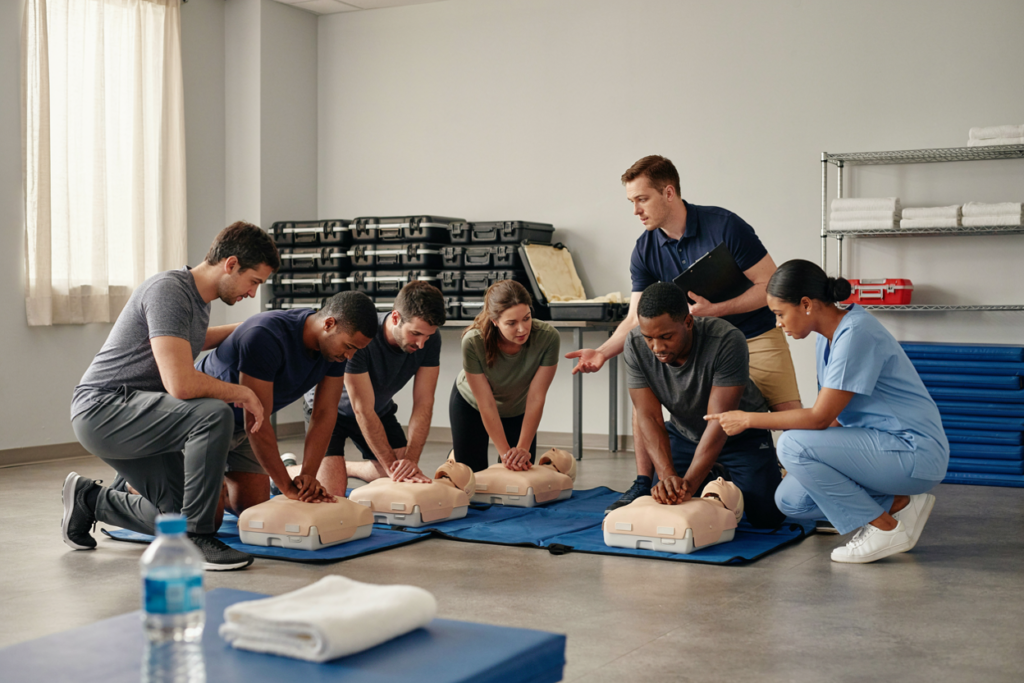
This is the bit Jake actually cares about most. A CPR-only session is built to get you in, certified, and back out to whatever else is going on in your day. You’re not sitting through a full first aid day when all you need is the resuscitation component.
That distinction matters more than people realise until they’ve accidentally booked the wrong one. Some providers bundle CPR into a broader first aid course by default, which means you end up sitting through content you don’t need just to get the one component that actually applies to you. A clearly labelled CPR-only option means you’re not paying for someone else’s compliance requirement on top of your own.
Fitting it around your roster
Shift work doesn’t run on business hours, so renewal shouldn’t either. Session times that fit around a roster matter more here than they do for a lot of other course types, because this crowd is rarely free during a standard nine to five.
If you’re working split shifts across multiple venues, finding a session that doesn’t force you to burn an entire day off is genuinely useful, not just a nice extra. It’s the difference between renewing on your own terms and renewing because you had no other choice and had to make it work around everything else going on that week.
Straightforward booking, no surprises
Nobody wants to book something and then find out the real terms once they’re already committed. Whatever you’re booking in for, it should be clear upfront, with nothing sprung on you once you’re in the room.
📅 Worth knowing: a CPR-only session should stay CPR-only. If it's bundled into something longer without you asking for that, it's the wrong course for what you need.
Never Let It Lapse Again: Setting Up a Renewal Reminder
Why a 12-month cycle catches people off guard
A year goes fast, especially when you’re juggling shifts across multiple gyms or venues. Unlike the 3-year first aid cycle, which gives you plenty of runway to notice it coming, 12 months has a way of sneaking up. You get certified, life happens, and suddenly you’re the one explaining to a gym manager why your certificate’s showing has expired.
It’s a strange quirk of how memory works with anything on a yearly cycle. Twelve months feels long enough that you assume you’ll remember, right up until the date’s already passed. Compare that to something you do daily or weekly, which stays front of mind simply through repetition. A once-a-year task doesn’t get that same reinforcement, so it’s easy for it to slip through without you noticing until someone else points it out.
A reminder that does the noticing for you
The idea’s simple: get reminded before you’re caught out, not after. Instead of relying on memory or a calendar note you’ll forget to set, a reminder can do the noticing for you. One less thing to track when you’re already juggling a dozen other things.
There’s also a quieter benefit here beyond just avoiding a lapsed certificate. Knowing it’s handled means you’re not carrying that low-level background worry of “when was my last renewal again?” every time someone asks to see your currency. It’s one fewer thing sitting at the back of your mind while you’re focused on actually doing your job.
Conclusion
So there it is, the number that actually matters. Twelve months for CPR only, three years if you’ve gone the full first aid route. Not the confusing muddle of “is it one year or three or something else entirely” that most people land on when they first go looking.
The reason behind it isn’t red tape for the sake of red tape either. Resuscitation guidelines shift more often than the broader first aid content does, so keeping the CPR cycle tighter just means what’s in your head lines up with what’s actually current. Three years would be too long a gap for something that specific.
For the fitness, aquatics, and allied health crowd, this isn’t background trivia, it’s the thing that decides whether you’re allowed on shift tomorrow. A PT running solo across two gyms, a swim instructor on deck, a therapist whose insurer wants proof, none of them have someone else tracking this for them. It’s personal, it’s portable, and it’s on you to notice when the date’s creeping up.
And if it does lapse, it’s not the catastrophe it feels like in the moment. No certificate means no shortcuts, sure, you’re back into a full session rather than a quick refresher. But that session stays simple. One sitting and you’re sorted again, not days of retraining hanging over your week.
The bit that actually saves people the stress is catching it early. Five minutes of checking your certification date beats scrambling the night before a shift because someone asked for proof you didn’t know you’d lost. That’s really the whole point of a reminder, taking the noticing off your plate so it’s not something you have to hold in your head alongside everything else you’re juggling.
Get the date locked in, book in when it’s close, and let the reminder do the remembering next time round. That’s the whole trick to never being caught out by a certificate that quietly expired while you were busy doing everything else.
Book Your First Aid Training Now
Fast, affordable, and nationally accredited training delivered by professionals who care
Frequently Asked Questions
Q.How long does a CPR certificate last?
A CPR-only certificate, HLTAID009, is valid for 12 months in Australia. That's shorter than a full first aid certificate, HLTAID011, which lasts 3 years. The gap comes down to how often resuscitation guidelines get reviewed compared to the rest of first aid content.
Q.Is a CPR certificate the same as a first aid certificate?
No, they're separate certificates with separate scopes and separate validity periods. CPR-only covers resuscitation and AED use, while full first aid covers a much broader range including wounds, burns, fractures, and anaphylaxis. If you only need CPR, you don't need to complete the full first aid course to get it.
Q.Can I still work if my CPR certificate has expired?
Generally not, or only for a short grace period depending on your employer, insurer, or association. Most gyms, pools, and workplaces require a current certificate before you're allowed on shift, so it's worth checking directly with whoever's asking rather than assuming you have room to delay.
Q.What happens when I renew an expired CPR certificate?
An expired certificate means completing a full session again rather than a quick top-up, since there's no shortened version for lapsed certificates. The course content itself hasn't changed dramatically though, so it's a refresh of knowledge you already have rather than starting from scratch.
Q.How do I know when my CPR certificate expires?
Your expiry date is 12 months from your certification date, which is printed on your Statement of Attainment. Counting forward from that date gives you an exact answer, and setting a reminder ahead of it is the simplest way to avoid finding out the hard way.
Making first aid training more affordable for
every classroom
We believe every student deserves access to life-saving first aid knowledge. That’s why we offer specially reduced pricing for schools and educational groups. Whether you’re booking for a single class, a year group, or your entire school, our flexible packages make training more accessible and cost-effective — without compromising quality.
