

Googling “do I need CPR certification” usually means one thing. Someone, your gym manager, your association, your new employer, has told you to “sort out your first aid,” and now you’re sitting there wondering if that means a quick afternoon session or a whole day away from work. Maybe you got the message in a group chat, maybe it was a one-line email from HR, maybe your association just sent a renewal notice with a code you don’t recognise. Either way, you’re staring at two acronyms and no clear answer.
Here’s the short version. You probably don’t need full first aid.
If your job only asks you to respond when someone’s heart stops or they stop breathing, not treat a burn, not splint a fracture, not manage an allergic reaction, then the CPR only certificate, HLTAID009, is very likely all you need. It’s shorter. It’s cheaper. And it covers exactly what most fitness, aquatics, and allied health roles are actually asked to have. This isn’t a guess or a sales pitch either, it’s simply how these two qualifications are structured under the national training framework, one is narrow and specific, the other is broad and general.
But not everyone fits that bucket. And booking the wrong course wastes an afternoon and money you didn’t need to spend, which is a pretty rough way to spend a day off. Worse still, some people book the shorter course when their role actually needs the broader one, and don’t find out until an audit, an inspection, or an incident makes the gap obvious. Getting this right the first time matters more than most people assume walking in.
Let’s get you into the right course, first time.
Do I need CPR certification or first aid?
You need CPR certification (HLTAID009) if your role only requires you to respond to cardiac or breathing emergencies, most fitness, aquatics, and allied health roles fall into this camp. You need full first aid (HLTAID011) if your role also requires you to treat injuries like burns, fractures, or allergic reactions.
The distinction sounds small on paper, but it changes what you’re actually being trained to do, and how often you need to go back and renew it. Getting clear on which one applies to you is really the whole point of this article.
You likely only need CPR-only if:
- Your employer, gym, or association specifically asks for "CPR" or "HLTAID009"
- You work solo or in a low injury risk setting, think personal training, swim instruction, group fitness
- You're just renewing an existing CPR only certificate on its 12 month cycle
You likely need full first aid if:
- Your workplace requires you to be a registered "first aider"
- Your role involves higher injury risk, childcare, construction, trades
- Your employer specifies "HLTAID011" or "Provide First Aid" in writing
If you’re still not sure which bucket you fall into after reading that, don’t worry, the next section breaks down exactly what each course actually covers, and the section after that gives you a simple way to confirm it directly with whoever’s asking.
📋 Callout: The two courses aren't ranked "basic vs advanced," they're built for different jobs entirely. Scope is what separates them, not skill level.

CPR Certification vs. First Aid: What’s Actually Different
This is the bit most people skip past, and it’s the bit that actually matters. CPR certification and first aid certification aren’t two versions of the same thing, they cover genuinely different territory. Understanding that difference is what actually lets you self-qualify with confidence, instead of just picking whichever course shows up first when you search.
What CPR Certification (HLTAID009) Covers
Think of HLTAID009 as the emergency-only skillset. It’s built around one job: keeping someone alive when their heart or breathing has stopped.
- Scope: cardiac arrest, breathing emergencies, and how to use an AED (that's the defibrillator you see mounted on gym walls)
- Valid for 12 months
That short validity period trips a lot of people up, more on that later. It’s short by design, resuscitation guidelines get reviewed regularly, and providers want to know your skills are current, not something you learned once years ago and never revisited.
What Full First Aid (HLTAID011) Covers
HLTAID011 is the bigger ticket. It includes everything CPR does, then builds on top of it.
- Scope: CPR, plus wound care, fractures, burns, anaphylaxis, and a broader spread of emergency response situations
- Valid for 3 years
So the real difference isn’t really about quality or seriousness, one course isn’t the “lesser” version of the other. It’s about scope. CPR is the narrow, high-frequency skill. First aid is the wide net. Someone holding HLTAID009 isn’t less capable in an emergency, they’ve simply been trained for a specific type of emergency rather than the full spread that HLTAID011 covers.
For the official word on what HLTAID009 actually covers under ANZCOR guidelines, the unit descriptor is publicly listed on training.gov.au if you want to check it against exactly what your employer is asking for. It’s a genuinely useful five-minute read if you want to see the exact wording rather than take anyone’s summary of it, including this one.
Who Actually Only Needs CPR Certification
Here’s where it gets practical. If you’re one of these, there’s a good chance CPR-only is genuinely enough for you, not just the cheaper option, but the correct one. Read through each group and see which one sounds like your situation.
Fitness & Personal Training
If you’re a personal trainer or group fitness instructor, chances are your registration through AUSactive (formerly Fitness Australia) or your gym’s insurance policy specifically asks for CPR. Not first aid. CPR. Worth checking the actual wording rather than assuming, but this is the most common CPR-only crowd we see. Most of the injury risk in a gym setting is muscular or joint-related, not the kind of thing that first aid training addresses, which is exactly why the industry standard settled on CPR-only rather than the broader ticket.
Aquatics & Swim Instruction
Pool staff and swim instructors are often renewing CPR-only certificates on an annual basis without even thinking about it much anymore, it’s just part of the job rhythm. Same deal here, the requirement is usually cardiac and breathing response, not full injury treatment. Given how directly relevant CPR skills are to a pool environment, this is one of the clearest matches between a role and a certificate type you’ll find anywhere in this list.
Allied & Beauty Health
Massage therapists, dental assistants, beauty therapists, this group often gets caught out because the requirement comes from an insurer or a professional association rather than an employer, and that requirement is frequently CPR specifically, not a full first aid ticket. Because the request often arrives through an association renewal notice rather than a workplace conversation, it’s easy to assume you need the bigger course simply because nobody explained the difference.
Parents, Coaches & Volunteers
This one’s different in flavour. Nobody’s forcing a parent or a weekend sports coach to get certified, there’s no compliance department chasing them up. This group does it because they genuinely want the peace of mind of knowing what to do if a kid collapses or stops breathing. No employer requirement needed here, just wanting to be capable if it ever counts. If that’s you, CPR-only usually covers exactly what you’re after, since the scenarios you’re worried about, choking, cardiac events, drowning, are precisely what this course is built around.
📞 Callout: Not sure your role fits neatly into one of these boxes? That's exactly what the next section is for, confirm it directly rather than guessing.
How to Confirm What Your Employer or Association Requires
Before you book anything, do this. It takes two minutes and it saves you an afternoon, and it’s honestly the single most useful step in this whole process.
Check the exact wording
Different employers and associations phrase it differently, and the wording actually matters:
- Some say "HLTAID009" specifically
- Some just say "CPR"
- Some say "current first aid," which is vague and could mean either
If what you’ve been told is vague, don’t guess. Guessing is how people end up in the wrong course. Vague wording is more common than you’d think, a lot of workplaces copy old policy language forward year after year without anyone checking whether it still matches what’s actually required.
The one question to ask before you book
Send this, word for word, to whoever’s asking you to get certified:
That’s it. Most people get a one-line answer back within the day, and then you know exactly what to book instead of hoping you guessed right. It feels like an unnecessary extra step when you’re keen to just get it sorted and move on, but it’s genuinely the fastest way through this, not the slowest.
When You’d Need Full First Aid Instead
CPR-only isn’t the answer for everyone, and it’s worth being straight about that rather than pushing the cheaper course on people it doesn’t actually suit.
Higher injury-risk settings
If you’re working in childcare, construction, or trades, the injury profile of the job is just different. Burns, cuts, fractures, these come up in a way they don’t in a gym or a pool. Full first aid is built for that broader range, and honestly, in those environments it’s not really optional, it’s what the day-to-day risk actually calls for.
Roles requiring a “registered first aider” or “first aid officer”
This one’s less about what skills you personally need and more about a legal or compliance box that has to be ticked. If your workplace needs a registered first aider or first aid officer on site, that’s a defined role under work health and safety requirements, and it calls for HLTAID011, not the CPR-only certificate, regardless of how low-risk your actual day-to-day tasks are. This is the trap some people fall into, they reason their own job is low-risk so CPR-only should cover it, without realising the requirement isn’t really about their personal risk exposure at all, it’s about a formal workplace role someone has to fill.
✅ Callout: Once you've confirmed HLTAID009 is right for you, here's exactly what the booking and course day actually look like.
What to Expect Once You Book CPR-Only Certification
So you’ve confirmed HLTAID009 is what you need. Here’s what actually happens next, so there’s no surprises walking in.
Course format
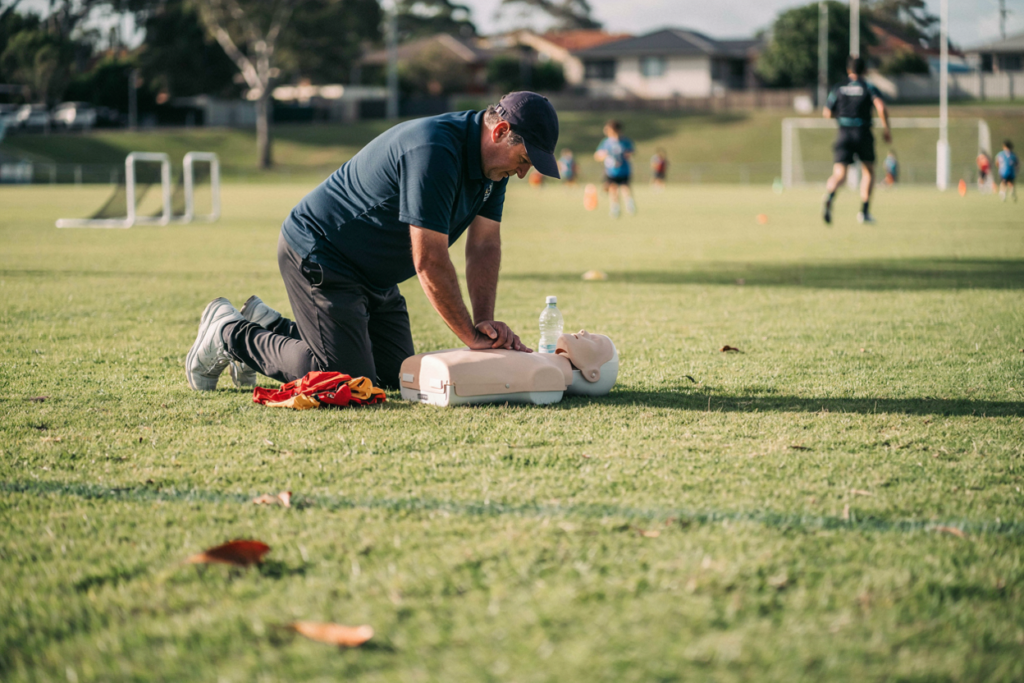
It’s in-person, hands-on, you’re not sitting through hours of slides. Expect to spend most of the session actually practising on a manikin, working through the AED, and running through the sequence until it’s second nature rather than something you’re recalling under pressure. That hands-on repetition is really the whole point, this isn’t a course you pass by remembering facts for a test, it’s one you pass by actually being able to do the thing when it counts.
Same-day digital certificate
Once you’ve finished, you get a digital Statement of Attainment the same day, something you can forward straight to your gym manager, your association, or your employer without waiting around for a certificate to turn up in the post. That matters more than it sounds like it should, plenty of people need proof of currency on short notice, sometimes the very next shift, and a same-day digital copy means you’re never caught out waiting on paperwork.
Common Mistakes People Make Booking CPR Certification
Even once you know you only need CPR-only, there are still a couple of ways this goes sideways at the booking stage. Both are avoidable, and both come down to the same root cause, moving fast without double-checking the fine print.
Accidentally booking a bundled/longer course
The mistake: Some providers bundle CPR into a longer first aid session by default, and if you’re not paying close attention to the course code listed, you can end up booked into the wrong course entirely. This tends to happen when someone’s scrolling quickly, sees “CPR” mentioned somewhere in the listing, and books without reading the fine print underneath it.
The fix: Check the course code before you book. HLTAID009 means CPR-only. If the listing says HLTAID011 or doesn’t mention a code at all, ask before you pay. It takes seconds and it’s the single clearest way to avoid this mistake entirely.
Booking the wrong code for their association
The mistake: Booking whichever course is cheapest or comes up first in search, without actually checking it matches what your association or employer asked for. This one’s especially common among renewal bookers, people who assume this year’s requirement is the same as last year’s without confirming it.
The fix: Go back to that one-line question from earlier, get the answer in writing, then book the exact code that matches. It takes two minutes and it means you’re not doing this twice.
Know exactly what you need now? Book your CPR-only course and walk out with a same-day certificate. Still not sure which one applies to you? Send us your employer’s exact wording and we’ll confirm, free, no booking required. And if it turns out you actually need full first aid, that’s a different course, and better to know now than after you’ve sat through the wrong one.
Conclusion
So here’s where you’ve landed, if your job only asks you to respond to cardiac or breathing emergencies, CPR certification is genuinely the right call for you. Not the cheap shortcut, not settling for less, the actual correct course for what you need to do. That’s worth sitting with for a second, because a lot of people book the bigger, longer course out of habit or uncertainty when they never needed to.
The difference between the two courses isn’t really about which one’s “better.” It’s about scope. CPR covers the emergency response piece, keeping someone alive until help arrives. First aid covers that plus wound care, fractures, burns, and a wider spread of situations. Neither one is the watered down version of the other, they’re just built for different jobs.
If you fall into the fitness, aquatics, or allied health crowd, chances are good you’re in CPR-only territory. Personal trainers, swim instructors, massage therapists, dental assistants, this is the group where CPR-only shows up again and again as the actual requirement, not first aid dressed up as something smaller.
But don’t skip the confirming step. Send that one line question to whoever’s asking you to get certified, ask them straight out whether they need HLTAID009 or HLTAID011. It costs you two minutes and it means you’re not sitting in the wrong course wondering how you ended up there.
And if it turns out you’re in a higher risk role, childcare, construction, trades, or your workplace needs a registered first aider on site, that’s a different path. Full first aid is what covers that, and there’s no shortcut around it, the scope of the job calls for the wider skillset.
Wherever you land, the goal’s the same. Walk into the right course the first time, spend the right amount of time and money, and walk out with a certificate that actually matches what was asked of you. That’s the whole point of checking before you book, not after.
Book Your First Aid Training Now
Fast, affordable, and nationally accredited training delivered by professionals who care
Frequently Asked Questions
Q.Do I need CPR certification or first aid?
You need CPR certification (HLTAID009) if your role only requires you to respond to cardiac or breathing emergencies. You need full first aid (HLTAID011) if your role also requires you to treat injuries like burns, fractures, or allergic reactions. Most fitness, aquatics, and allied health roles fall into the CPR-only category.
Q.What is HLTAID009?
HLTAID009 is the nationally recognized CPR-only certificate. It covers cardiac arrest, breathing emergencies, and AED use, and is valid for 12 months before it needs renewing.
Q.What is HLTAID011?
HLTAID011 is the full first aid certificate. It includes everything CPR covers, plus wound care, fractures, burns, anaphylaxis, and a broader range of emergency response skills. It's valid for 3 years.
Q.How do I know which one my employer needs?
Check the exact wording of the requirement. Some say "HLTAID009," some just say "CPR," and some say "current first aid" without specifying. If it's vague, ask directly rather than guessing. A one-line question to your employer or association usually gets a quick, clear answer.
Q.Can I upgrade from CPR-only to full first aid later?
Yes. Plenty of people start with CPR-only and move up to full first aid later if their role changes or they want broader coverage. There's no penalty for starting with the narrower course if that's genuinely what your role requires right now.
Q.Will my certificate be accepted by my gym, association, or employer?
As long as it's the correct code for what's being asked, HLTAID009 or HLTAID011, and it's issued by a registered training organisation, it should be accepted without issue. A same-day digital Statement of Attainment is usually enough to satisfy most employer or association checks.
Making first aid training more affordable for
every classroom
We believe every student deserves access to life-saving first aid knowledge. That’s why we offer specially reduced pricing for schools and educational groups. Whether you’re booking for a single class, a year group, or your entire school, our flexible packages make training more accessible and cost-effective — without compromising quality.
