
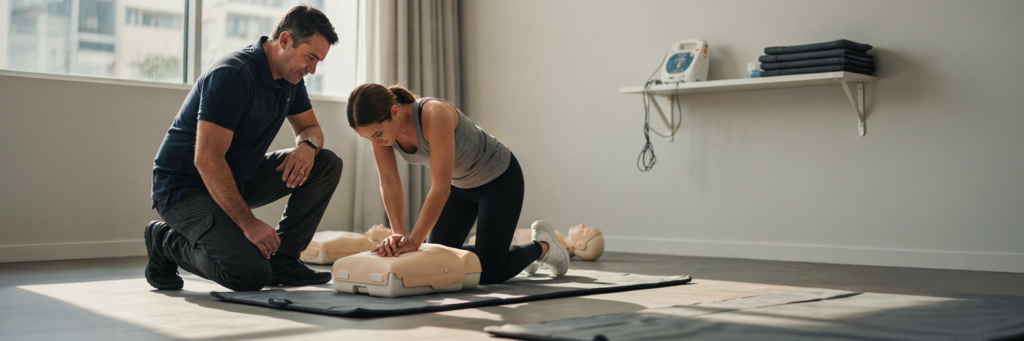
You book a CPR course online. Pay for it, pick your time slot, feel good about ticking the box. Then you scroll down and spot the fine print: “includes a face-to-face practical assessment.” Wait, is that a separate thing? Do you need to book that too, or is it just part of what you already paid for?
Here’s the short answer: it’s not an extra step tacked on to make the course longer, and it’s not just a formality either. A face to face CPR assessment is the part of your HLTAID009 course where a qualified trainer actually watches you perform compressions, rescue breaths, and AED use on a mannequin, in person, and confirms you can do it under a bit of pressure, not just recite the steps back on a quiz. No CPR certificate in Australia is nationally recognised without this happening, whether your course runs fully in person or you did the theory online and only came in for the practical.
A lot of people assume “online CPR course” means the whole thing happens on a screen, tap through some slides, answer a few questions, and print a certificate. That’s not how it works here, and honestly, that’s a good thing when you stop and think about it. Would you actually trust a certificate from someone who’d never had a real person watch them do compressions? Probably not, if you’re being honest with yourself.
If you’re renewing your CPR ticket for work, a gym, or an association and just want to know what this assessment actually involves, how long it eats out of your day, and what to bring, that’s what this guide is for. No jargon, no wasted reading time, just what you need so you walk in prepared and walk out certified.
What Is a Face-to-Face CPR Assessment?
Put simply, it’s the in-person practical bit of your CPR course where a qualified trainer stands right there and watches you perform CPR on a mannequin, and then signs off that you actually did it correctly under realistic conditions. It doesn’t matter if you did all your theory online at midnight in your pyjamas, this part still has to happen in person. It’s required for every nationally recognised CPR certificate (HLTAID009) going in Australia, no exceptions.
During the assessment, your trainer is checking a handful of specific things:
- Correct hand placement and compression depth
- Keeping your compression rate in the 100–120 per minute window
- Delivering rescue breaths the right way
- Operating an AED trainer unit properly
- Staying reasonably composed through a simulated emergency scenario
None of these are things you can really fake your way through on paper. Compression depth, for instance, is something you genuinely have to feel in your arms and shoulders to get right, no amount of reading about it substitutes for actually doing it under a trainer’s eye and getting corrected in the moment.
Skip this step, and honestly, your CPR certificate just isn’t valid under Australian training standards. Doesn’t matter how well you did on the theory questions.
It’s worth saying plainly too, this isn’t the trainer standing there with a clipboard trying to trip you up or find a reason to fail you. Most trainers genuinely want you to walk out able to help someone. The assessment is there so they can actually confirm that, rather than just take your word for it.
⚖️ Why it matters: This is a legal requirement, not a provider preference. The Standards for RTOs 2015 say competency has to be demonstrated through direct observation, and there's no online-only substitute.
Why Face-to-Face Assessment Is Required Under Australian Standards
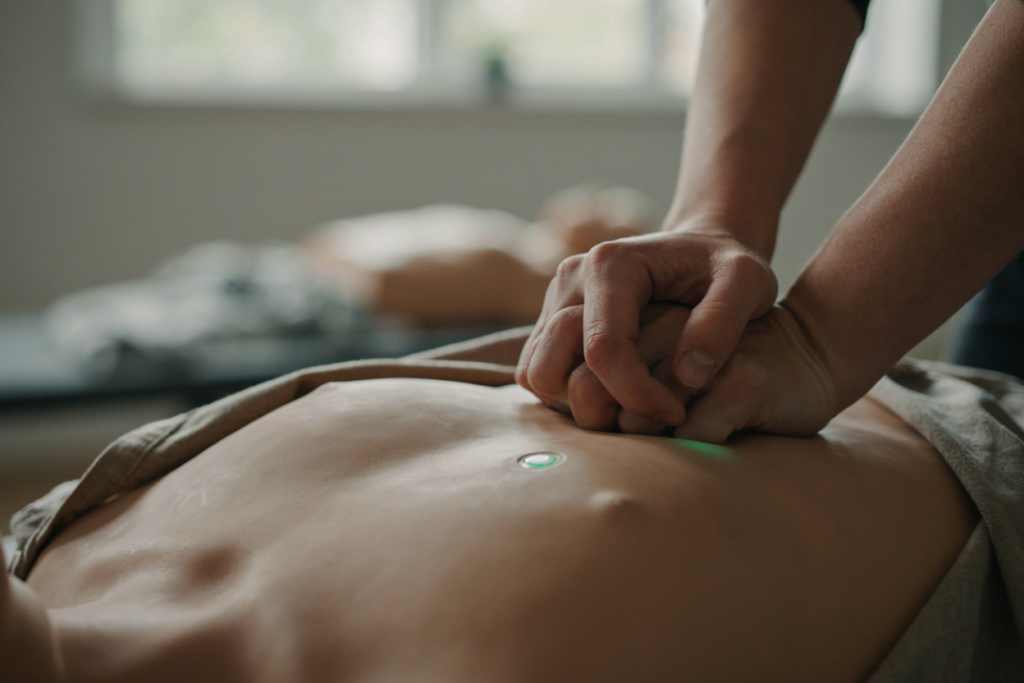
This isn’t some rule that one provider dreamed up to make you jump through extra hoops. It comes straight from the Standards for Registered Training Organisations (RTOs) 2015, the rulebook that governs how every nationally recognised CPR course in Australia has to be delivered. Under these standards, you have to demonstrate competency for HLTAID009 through direct observation by a qualified assessor. There’s no exception carved out for online-only delivery, no shortcut, and definitely no video-upload-and-hope-for-the-best substitute that counts as the real thing.
That’s actually the whole reason “fully online” CPR courses still need an in-person or live-video practical component tucked in somewhere. A provider can move all the theory content online, sure, but the second it comes to proving you can actually perform CPR properly, a real person has to be watching you do it.
Think of it less as red tape and more as the thing that keeps the certificate worth the paper (or PDF) it’s printed on. If a face-to-face check wasn’t required, a CPR certificate would only prove you could pass a multiple-choice quiz, not that you could actually step up and help someone having a cardiac emergency. The assessment is what makes the certificate something your gym, your association, or an employer can genuinely rely on when it matters.
It also protects you, not just the person checking your paperwork. If you’re ever actually in that situation, someone collapses, seconds count, you want to know your body remembers what to do, not just that you once read the right answer on a quiz screen. That’s the whole point of the practical component, and it’s honestly the part that matters most.
What This Means If Your Employer or Association Checks Certificates
Workplaces are getting a lot more thorough about verifying certificates these days, so don’t assume nobody’s checking. Gyms, AUSactive, and aquatic centres are increasingly cross-checking RTO registration numbers and unit codes at induction, not just glancing at a PDF and moving on. A certificate that skipped or shortcuts the practical assessment, or came from a provider not actually running it properly, can get rejected on the spot. Right there at induction, in front of everyone.
It’s not just embarrassing either, it can genuinely hold up your start date. Imagine turning up ready to begin a new role, gear packed, excited to get going, only to be told your paperwork doesn’t check out and you can’t start until it’s sorted. That’s the kind of setback nobody wants, and it’s completely avoidable if the certificate was done properly the first time.
That’s not really a situation worth risking just to save half an hour somewhere. Booking with a provider that runs a proper face-to-face assessment means you’re not gambling on whether your certificate will actually hold up the day it gets checked.
Think about how this plays out for someone in a fast-moving job. A personal trainer starting at a new gym, a swim instructor moving between pools, someone picking up a casual shift at short notice. In all of those situations, someone official is likely to actually look at the certificate, not just take your word that you’re covered. That’s exactly the moment a shortcut certificate falls apart, and it’s not a great first impression to make with a new employer.
What Happens During Your Face-to-Face CPR Assessment
Here’s the realistic walkthrough, so there’s nothing sprung on you on the day.
You get individual time on a mannequin, this isn’t some group demo where you’re just watching someone else have a go. A trainer works through the core skills with you one on one: chest compressions at the right depth and rate, rescue breaths, using an AED trainer unit. Then you’ll run through a short simulated scenario, basically a mock emergency, so the trainer can actually see you string the skills together in sequence rather than just performing isolated steps on command.
And the trainer genuinely isn’t trying to catch you out or trip you up. They’re checking that you can perform the sequence competently, not that you nail it perfectly on your very first attempt.
Most mannequins used for this kind of assessment give real-time feedback too, a light or a click that tells you and the trainer whether your compression depth and rate are actually landing where they need to. It takes a lot of the guesswork out of it. You’re not just being told “that felt about right”, the mannequin itself is confirming it.
If you did your theory online through a blended course beforehand, your on-the-day time is shorter, mostly just the practical component and the assessment itself.
Do You Need Prior Experience to Pass?
No, and this trips people up more than it should. The course is built from the ground up for people with zero CPR background. The trainer talks you through every single step before you’re ever assessed on it, you’re not expected to walk in already knowing the technique.
🔀 Two paths, same assessment: Fully face-to-face or blended, both end with the exact same in-person practical check. Only the theory delivery changes.
Face-to-Face vs Blended Learning: Which Assessment Format Fits Your Schedule?
Both pathways include the exact same mandatory face-to-face assessment, that part never changes. The only real difference between them is where the theory happens.
- Fully face-to-face: Theory and practical assessment both happen in the one session. Simplest option if you'd rather just get it all done in one sitting and not think about it again.
- Blended learning: Theory gets completed online before your course day, at your own pace, whenever suits you. Your face-to-face session then focuses purely on practical skills and assessment, which usually means less time spent on-site.
For shift workers juggling a tight roster, blended is often the better fit, it shortens the on-the-day commitment down to just the hands-on part. If you want the full detail on how blended CPR courses work and how fast you can actually get certified, our guide on same-day CPR certificates breaks down the format comparison in a lot more depth. This page here is just focused on what the assessment itself involves, under either format.
Neither format is the “easier” one when it comes to what you’re actually assessed on, it’s really just about matching the format to how you work and live your week. Someone with a predictable weekday routine might prefer knocking the whole thing out face-to-face in one go, no need to think about it twice. Someone bouncing between casual shifts might prefer doing the theory whenever they get a spare half hour on the couch, then just turning up for the practical part when it suits.
How to Prepare for Your CPR Assessment
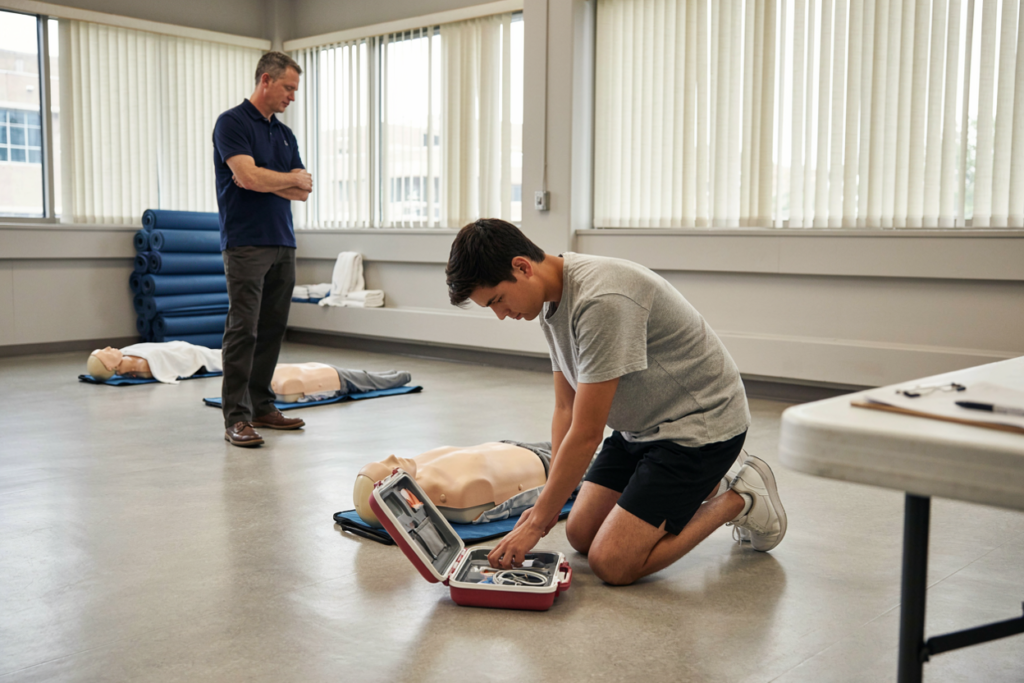
Good news, there’s genuinely very little to prepare. A few practical points worth knowing:
- Wear comfortable clothing you can kneel and move around in, you'll be down on the floor working on a mannequin for a fair chunk of it
- Bring photo ID
- Arrive early for check-in, don't cut it fine
- If you're doing a blended course, complete the online theory module beforehand, that's the only "study" required really
There’s no separate exam sitting off to the side that you need to cram for. The whole assessment is built around exactly what you’re taught on the day, nothing sprung on you from left field.
If it helps, treat it a bit like a driving test rather than a written exam. Nobody expects you to already know how to parallel park perfectly before your first lesson, the instructor teaches you the technique, then checks if you can actually do it. CPR assessment works pretty much the same way.
Common Reasons People Feel Nervous (and Why They’re Usually Fine)
Some people get a flicker of performance anxiety about being “watched” while they do compressions, and that’s completely normal, it doesn’t actually affect most people’s ability to pass. Trainers expect to correct your technique as you go, that’s just part of the process, not some sign you’re failing. If something doesn’t click the first time round, you’ll get the chance to run through it again before the assessment gets finalised.
Most people who walk in nervous end up saying afterwards it was nowhere near as bad as they built it up to be in their head. That’s a pretty common pattern with anything unfamiliar, the anticipation is usually worse than the actual thing.
📅 Ready when you are: Evening and weekend sessions, same-day digital certificate, no long weekday commitment required.
Wrapping Up: What the Face-to-Face Assessment Really Means for You
So here’s the thing worth sitting with for a second. That face-to-face assessment you spotted in the fine print isn’t a hurdle someone put in your way, it’s actually the entire reason your certificate means something once you walk out the door with it. Anyone can memorise a few facts and click through a multiple-choice quiz online. Standing there, hands on a mannequin, running through compressions while a trainer watches, that’s a different thing entirely, and it’s the part that proves you could genuinely do this if you ever had to.
Think about it from the other side for a moment too. If you ever needed someone to step in and help you or someone you love, would you want them to have just read about CPR, or would you want to know they’d actually done it, been checked, been corrected where it counted? That’s really what this whole process protects, not a piece of paper, but the chance that the skill is actually there when it’s needed.
The practical side of it really isn’t much to stress over. A short stretch of one-on-one time, a trainer talking you through every step before you’re ever assessed on it, and a scenario built for people who’ve never done this before in their life. Nobody’s walking in expected to be perfect, and nobody’s trying to catch you out.
Whether you go fully face-to-face or knock the theory out online first through a blended course, the assessment itself stays exactly the same. What changes is how much of your actual day gets eaten up getting there, and for a lot of shift workers, that difference matters more than people expect.
And if you’re the type who tends to let renewals slip until the last minute, or worse, past it, that’s worth solving now rather than scrambling later. A quick reminder before your twelve months runs out saves you the awkward moment of turning up to a shift with a certificate that’s quietly expired.
None of this needs to feel like a big production. People build it up in their heads a lot more than the actual experience deserves. Walk in, follow the trainer’s lead, do the compressions, breathe through the nerves if you’ve got them, and you’ll walk out the other side with something real to show for it.
At the end of the day, this assessment isn’t red tape standing between you and a certificate. It’s the part that makes the certificate worth having in the first place. Book it in, get it done properly, and you walk out with something that’ll actually hold up whenever it gets checked.
Book Your First Aid Training Now
Fast, affordable, and nationally accredited training delivered by professionals who care
Face-to-Face CPR Assessment: Common Questions
Q.Can I skip the face-to-face component entirely?
No. Every nationally recognized HLTAID009 certificate in Australia requires a face-to-face or live-supervised practical assessment, and there's no fully self-paced pathway that results in a valid certificate.
Q.What if I don't pass on my first attempt?
You'll get further guidance and another go at demonstrating the skill within the same session. It's genuinely rare for someone to leave without being signed off, and reassessment is treated as a normal part of the process rather than a formal failure.
Q.Is the assessment different for HLTAID009 vs HLTAID011?
The core assessment principles are the same: direct observation and hands-on demonstration. However, HLTAID011 (full first aid) covers a broader range of skills beyond CPR, such as wound management and a wider range of emergency scenarios.
Q.Do I need to bring anything besides ID?
Just comfortable clothing you can kneel and move in. There's no equipment or study materials required beyond completing your online theory module if you've booked a blended course.
Q.Will I know straight away if I've passed?
Yes. The trainer confirms your competency on the day, and you'll walk out with a digital Statement of Attainment issued the same day, ready to forward to your employer, gym, or association.
Making first aid training more affordable for
every classroom
We believe every student deserves access to life-saving first aid knowledge. That’s why we offer specially reduced pricing for schools and educational groups. Whether you’re booking for a single class, a year group, or your entire school, our flexible packages make training more accessible and cost-effective — without compromising quality.
