

It happens fast. One second the kids are eating grapes at the kitchen table, laughing about something on their tablet, and the next second one of them is clutching their throat and no sound is coming out. No warning. No time to think it through. Just you, a scared kid, and whatever you actually know how to do.
That’s the moment this whole article is really about.
Whether you’re a parent about to hand your kids over to someone for the night, or you’re the person about to take on that responsibility, the question underneath it all is the same one: does this person actually know what to do if something goes wrong?
Not “have they done a course” in some vague, ticked a box kind of way. Actually know what to do, hands on, under pressure, with a child in front of them.
Most people don’t think about this until they’re already standing in the middle of it. A parent books a babysitter based on a good chat and a friendly recommendation, and first aid training barely gets a mention. A babysitter, especially a younger one just starting out, might not even realise there’s a specific course they’re meant to have done.
Below we’ll get into exactly which first aid course covers this, what it teaches, and how to find one, so nobody’s left guessing when it matters most. Whether you clicked on this because you’re a parent doing your homework before your next date night out, or because you’re the one who’s about to start babysitting and want to know what’s actually expected of you, this covers both sides of the same conversation.
What First Aid Course Do Babysitters Need?
Quick answer, because you’re probably searching this on your phone five minutes before you’re meant to be somewhere: HLTAID012 (Provide First Aid) is the nationally recognized course that covers what a babysitter actually needs to know.
There’s no separate “babysitter certificate” here in Australia, and that trips a lot of people up, especially if you’ve seen references to things like the Red Cross Babysitter’s Training course overseas. That’s a US thing. Here, HLTAID012 is the course that does the job, and it’s built to cover real situations involving infants, kids, and adults alike, not just adults.
Here’s what it actually teaches:
- CPR for infants, children, and adults
- Choking and airway obstruction response
- Severe allergic reaction (anaphylaxis) management
- Bleeding, wounds, and burns
- Asthma emergencies
- Basic injury and illness management
If the child you’re minding has a diagnosed allergy or asthma condition, it’s worth also asking whether the household wants asthma and anaphylaxis specific training on top of this. HLTAID012 covers the basics of both, but a kid with a known, serious allergy is at a different level of “need to get this exactly right.”
One more thing worth knowing upfront: this certificate isn’t a one and done deal. It has a currency period, so it’s worth confirming when it was issued and when it expires, not just whether it exists. A certificate that was done years ago and never renewed doesn’t tell you much about whether the skills are still sharp, and CPR technique in particular is one of those things that gets rusty if it’s not refreshed.
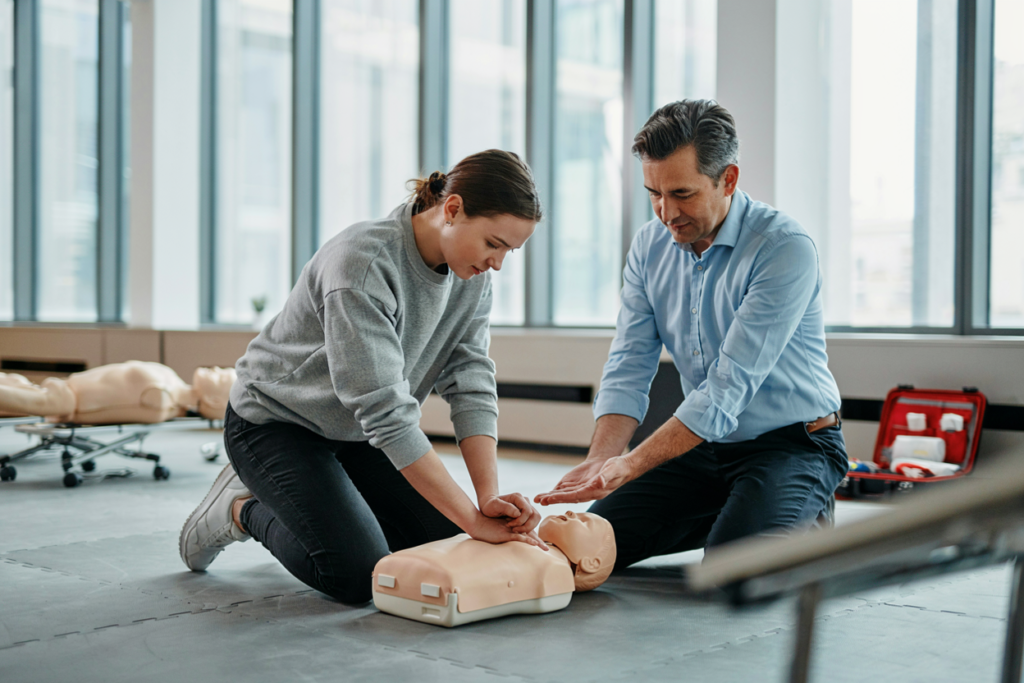
It’s also worth saying that a genuine course covers more ground than most people expect going in. Trainers walk through realistic scenarios and get people practicing on equipment designed to feel close to the real thing, rather than just handing out a checklist to memorise. A checklist you can forget under pressure. Muscle memory and confidence built through proper practice tend to stick.
Skill area | What it means for a babysitter |
CPR (infant, child, adult) | Knowing the right technique for the right age group |
Choking response | Clearing an airway obstruction quickly and correctly |
Anaphylaxis management | Recognising and responding to a severe allergic reaction |
Asthma emergencies | Helping a child through an asthma attack safely |
Bleeding, wounds, burns | Basic wound care that doesn’t make things worse |
Illness and injury management | General judgement for the smaller, everyday incidents |
Why First Aid Training Matters for Babysitters
You don’t need me to tell you that kids get into things. Anyone who’s spent an afternoon with a toddler already knows this. But there’s a difference between “kids are accident prone” as a vague idea, and actually knowing what the real, specific emergencies tend to look like.
The Most Common Emergencies Babysitters Face
These are the ones that come up again and again:
- Choking is usually food related, and toddlers are the biggest risk group here. Grapes, hot dogs, hard lollies, small bites that seem fine until they're not.
- Falls and head injuries off furniture, off playground equipment, down a couple of stairs. Kids are basically small, wobbly daredevils and gravity doesn't care.
- Allergic reactions and anaphylaxis can escalate quickly, and the scary part is a first time reaction can happen with a food the child has eaten before without issue.
- Asthma attacks especially in kids who already have a diagnosis, but also sometimes as a first ever episode nobody saw coming.
- Cuts, burns, and minor wounds are less dramatic, more frequent, and still something you need to handle properly rather than just putting a bandaid on it and hoping.
None of these are rare, once in a blue moon events either. Ask anyone who’s spent real time around young kids and they’ll tell you they’ve seen at least a couple of these play out firsthand. That’s exactly why this training is built around what genuinely happens, not hypothetical worst case scenarios out of a textbook.
What Happens in the First Few Minutes Matters Most
This is the part that’s easy to underestimate until you’re in it. In a genuine emergency, the first few minutes, before an ambulance arrives, before a parent gets home, before anyone more qualified shows up, are often the minutes that matter most. That’s not meant to scare anyone, it’s just the reality of why this training exists in the first place. A babysitter who knows how to respond in that window isn’t just doing a good job, they’re potentially the difference between a scary story and a genuine tragedy.
Think about how quickly things can turn. A child goes from playing happily to struggling to breathe in a matter of seconds. There’s no slow build up, no warning countdown. The adult in the room either knows what their hands are supposed to do or they’re figuring it out for the first time while it’s happening. That gap, between knowing and figuring it out on the fly, is exactly what proper training closes.
That’s really the whole case for this course in one sentence: it’s not about the certificate on the wall, it’s about what happens in your hands at the moment it counts.
✅ Worth knowing: there's no separate "babysitter certificate" in Australia. HLTAID012 is the course that does the job, covering infants through to adults in one qualification.
What First Aid Course Should a Babysitter Do? (HLTAID012 Explained)
We touched on this above, but it’s worth sitting on for a minute, because this is the bit people get wrong most often.
What HLTAID012 Covers
HLTAID012, Provide First Aid, is built around real emergencies, not just theory you forget the second you leave the room. It walks through CPR for infants, children, and adults, choking response, anaphylaxis, asthma, and how to manage bleeding, wounds, and burns properly. It’s hands on. You’re not just watching a slideshow, you’re practicing on training equipment so your hands know what to do, not just your brain.
That hands on part matters more than people realise. Reading about how to do CPR on an infant and actually doing it, even in a practice setting, are two completely different experiences. Your body needs the memory, not just your head.
There’s also a confidence side to this that doesn’t get talked about enough. A lot of first time babysitters walk in nervous about the CPR component, worried they’ll get it wrong. Good training addresses that head on, so by the time you leave you actually feel like you could step in and act if you had to.
Is There a Babysitter-Specific First Aid Course in Australia?
Short answer: no, and that’s fine. Some parents go looking for a course literally labelled “babysitter first aid” because that’s what shows up in searches from the US, where the Red Cross runs a specific Babysitter’s Training program. That course doesn’t exist in the same form here.
What we’ve got instead is HLTAID012, and honestly, it does more than a babysitter specific course would anyway, because it’s designed to cover infants through to adults, not just kids. So if you’re a parent trying to figure out what to look for on a certificate, HLTAID012 is the one you want to see.
Age Requirements Can Teenage Babysitters Do This Course?
This one comes up a lot, especially from parents of teenagers who babysit for extra money, or from the teens themselves. Minimum age policies can vary a bit depending on the provider running the course, so if you’re booking for a teenager, it’s worth a quick call to confirm they’ll be able to enroll before you lock anything in. Better to ask upfront than to find out on the day.
It’s also worth mentioning to any teen enrolling for the first time that this course isn’t just for adults. Trainers are used to running sessions with a mix of ages and experience levels in the room, from first time teenage babysitters through to parents wanting to be prepared. Nobody’s expected to walk in already knowing this stuff.
Choosing a First Aid Course as a Parent Hiring a Babysitter
If you’re the one doing the hiring, this bit’s for you. It’s easy to get caught up asking about a sitter’s availability, their rate, whether they’ve got references, and forget to actually dig into the first aid question properly. So here’s what to actually ask.
Questions to Ask a Prospective Babysitter About Their First Aid Training
A quick checklist to run through:
- Is your certificate current, or has it expired?
- Does your training cover infant and child CPR specifically, not just adult CPR?
- Have you done anaphylaxis training, especially if my child has an allergy?
- Which course did you do, and can I see the certificate?
None of this needs to feel like an interrogation. Most sitters who’ve actually done proper training are more than happy to show you the certificate, because it’s proof they take the job seriously too.
How to Verify a First Aid Certificate Is Current and Legitimate
Here’s where a lot of parents get stuck, because a certificate is just a piece of paper unless you know what you’re looking at. A few things to check:
- The NRT logo is the Nationally Recognised Training logo, and it should be on any legitimate certificate for HLTAID012.
- Every registered training organisation has a code, and it should be printed on the certificate.
- Digital verification most providers can verify a certificate is real and current if you contact them directly, so don't be shy about calling to check if something looks off.
Doing this bit properly takes maybe five minutes, and it’s the difference between actually knowing your kids are in safe hands and just hoping so.
It’s a fair conversation to have with a babysitter too, not an awkward one. A babysitter who’s done proper training generally wants you to ask, because it shows you actually care about the details. The sitters who get a bit cagey or vague about it are the ones worth asking a follow up question or two.
📅 Worth knowing: weekend and after school course times exist specifically so teenage babysitters don't have to miss school to get certified.
Booking a First Aid Course as a Babysitter or a Parent
If you’re ready to get this sorted, here’s what booking actually looks like.
Courses run regularly, so you’re not stuck waiting weeks for the next available spot. That matters when you’re a parent trying to get a sitter certified before a specific booking, or a teenager trying to squeeze this in before summer holiday babysitting season kicks off.
For teenage babysitters juggling school, weekend and after school course times are worth looking for specifically, since not every provider runs them. It means a teen can get certified without missing a full week of classes.
You can check the full HLTAID012 course and booking page for details, and if you want to verify the unit itself, it’s listed on training.gov.au, which is the official national register for recognized qualifications like this one.
This course has been running for over 20 years now. That’s not a small thing when you’re trusting someone to teach hands on emergency skills properly rather than just running through slides to get through the day. Twenty plus years means he’s seen just about every question, every nervous first timer, every “wait, what if the baby is smaller than the practice doll” moment there is.
That kind of experience shows up in the small things. A trainer who’s been doing this for decades knows how to explain a technique until it clicks, and knows how to keep a room of nervous first timers calm enough to actually take the skills in. That’s the difference between a course you sit through and a course that actually sticks.
Getting Certified (Or Getting Peace of Mind)
There’s a version of this article that could’ve just said “book a first aid course” and left it there, but that misses the actual point of why you’re reading this. Whether you’re a parent scrolling through this at 11pm after putting the kids to bed, worried about who you’re leaving them with next weekend, or you’re the babysitter yourself trying to work out what you actually need to do before your next job, the real question underneath everything we’ve covered is the same one from the start: does the person in charge of these kids know what to do if something goes wrong.
HLTAID012 is the answer to that question, properly answered. Not a watered down version, not a course that skips the infant CPR bit because it’s “probably fine,” but the real thing, covering choking, allergic reactions, asthma attacks, falls, cuts, burns, the full list of what actually happens when you’re minding kids for a few hours. It’s hands on, it’s nationally recognized, and it’s the same course whether the child you’re minding is six months old or six years old.
If you’re a parent, don’t let this be the thing you meant to check but didn’t get around to. Ask the questions. Look for the NRT logo. Make the call if something on the certificate doesn’t look right. It takes five minutes and it’s worth every second of it, because the alternative is finding out the hard way that “I did a first aid course once” doesn’t mean much if it wasn’t the right course, or if it expired two years ago.
If you’re the babysitter, or the parent of a teenager who babysits, getting HLTAID012 done isn’t just a box to tick for a job application. It’s the difference between freezing up in an emergency and actually knowing what your hands are supposed to do. That’s not a small thing to carry into a job looking after somebody else’s kids, and it’s not a small thing to be able to say you’ve got, either.
So whichever side of this you’re standing on, hiring or being hired, the next step’s the same. Get the training sorted properly, with a provider who takes it as seriously as you do. Book Your HLTAID012 First Aid Course today, or if you’re not sure which course fits your situation, get in touch and we’ll point you the right way. Because the goal was never really the certificate. It was always about knowing that if something happens, the person in the room knows exactly what to do.
Book Your First Aid Training Now
Fast, affordable, and nationally accredited training delivered by professionals who care
Frequently Asked Questions
Q.What first aid course do babysitters need in Australia?
HLTAID012 (Provide First Aid) is the nationally recognized course that covers what a babysitter needs to know, including infant, child, and adult CPR, choking response, anaphylaxis, asthma, and basic wound care.
Q.Is there a specific "babysitter first aid" course in Australia?
No, there isn't a separate babysitter-branded course here like there is in the US. HLTAID012 is the relevant nationally recognized course, and it actually covers more ground than a babysitter-specific course would, since it spans infants through to adults.
Q.Can teenagers do a first aid course to become a babysitter?
Yes, teenagers can generally enroll, though minimum age policies can vary depending on the provider, so it's worth a quick call to confirm before booking.
Q.How do I know if a babysitter's first aid certificate is legitimate?
Check for the NRT (Nationally Recognized Training) logo and an RTO code printed on the certificate, and if anything looks unclear, most providers can verify a certificate is current if you contact them directly.
Q.Does a babysitter need to redo the course regularly?
Yes, first aid certificates have a currency period and need to be renewed, since skills like CPR techniques can get rusty if they're not refreshed.
Making first aid training more affordable for
every classroom
We believe every student deserves access to life-saving first aid knowledge. That’s why we offer specially reduced pricing for schools and educational groups. Whether you’re booking for a single class, a year group, or your entire school, our flexible packages make training more accessible and cost-effective — without compromising quality.
