
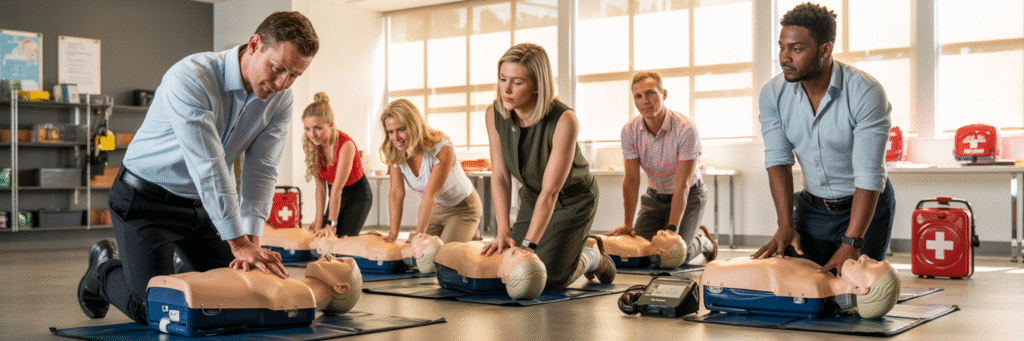
What would you do if a colleague collapsed at work right now? Would you know how to respond, or would you freeze in panic?
I talked to a retail manager last month who told me she’d let her first aid certificate expire. She wasn’t too worried about it until a customer fainted in her store. Standing there, watching her team scramble, not knowing if they were doing the right things—that’s when it hit her. This wasn’t just some compliance thing. This was real.
Most Brisbane professionals complete first aid training because they have to. It’s a workplace requirement, something to tick off a list. But what starts as a compliance checkbox often becomes one of the most valuable skills you’ll ever learn.
In this guide, we’ll walk through 15 compelling first aid training benefits that go way beyond meeting employer requirements. Whether you’re a retail manager, a personal trainer, or considering a career change, understanding these benefits will show you why this investment pays off for years to come.
What Are the Benefits of First Aid Training?
First aid training delivers significant personal and professional advantages that go way beyond workplace compliance.
Life-Saving Capabilities:
- You can respond effectively to cardiac arrests, choking, and severe bleeding
- You provide critical care before paramedics arrive
- You could potentially save family members, colleagues, or complete strangers
Professional Benefits:
- You meet mandatory workplace health and safety requirements
- You enhance career prospects and open up leadership opportunities
- You fulfill industry-specific certifications
Personal Advantages:
- You build real confidence in emergency situations
- You reduce panic and anxiety when accidents happen
- You gain practical skills you’ll use in everyday life
Community Impact:
- You become a valuable resource in your workplace and community
- You create safer environments for everyone around you
Studies show that immediate bystander intervention increases cardiac arrest survival rates by up to 70%. That’s the difference between someone making it home to their family or not.
⚠️ CRITICAL STAT: Studies show that immediate bystander intervention increases cardiac arrest survival rates by up to 70%. That's the difference between someone making it home to their family or not.
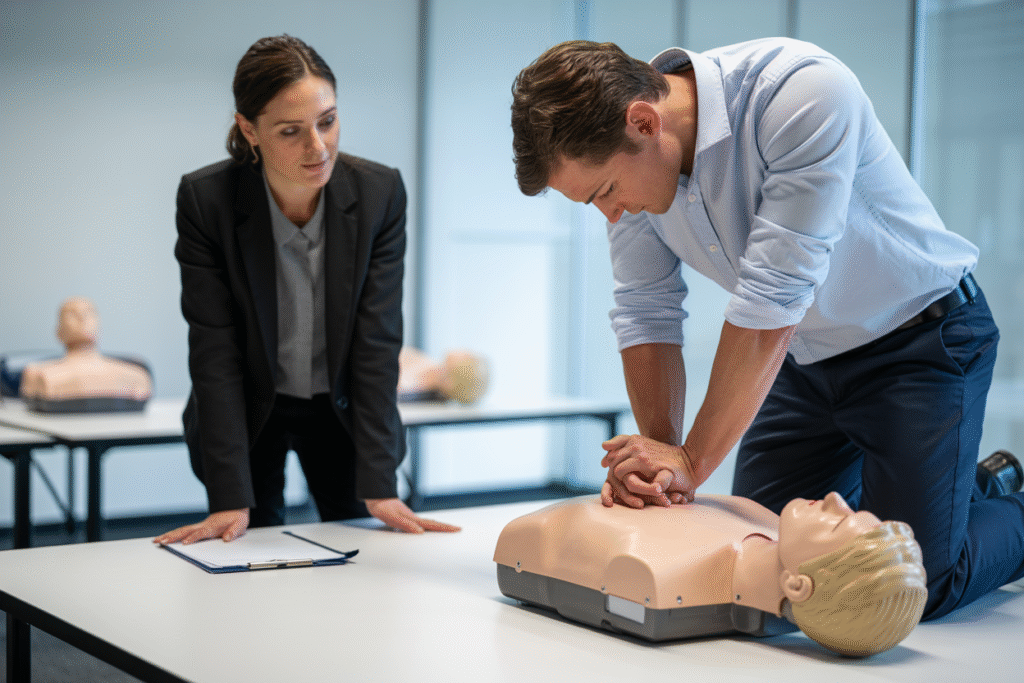
1. You Can Save Lives in Critical Emergencies
This is the big one. The reason most people eventually care about first aid training, even if they started out just ticking a compliance box.
A man collapsed at a shopping centre last year. Heart attack. There were probably 200 people within earshot. One person stepped forward—a guy who’d done his first aid training three months earlier. He started CPR immediately. That man walked out of hospital two weeks later.
Average ambulance response time across Brisbane metro is 8-12 minutes. Brain damage from lack of oxygen starts at the 4-minute mark. Your response time when someone collapses? Immediate.
Brisbane experiences more than 400 out-of-hospital cardiac arrests every year. Without bystander CPR, there’s a 5% survival rate. With immediate bystander CPR, that jumps to 70%. You could turn a 5% chance into a 70% chance just by knowing what to do.
2. Prevent Minor Injuries from Becoming Major Medical Events
Most of what you’ll actually use isn’t the dramatic stuff. It’s the everyday injuries that you handle completely wrong if you don’t know better.
About 32% of workplace incidents in Australia are cuts and lacerations. In Brisbane’s humid subtropical climate, improper wound care can turn into nasty infections. Proper wound care isn’t just running it under water and slapping a bandaid on it.
About 18% of workplace injuries are burns. Most people run cold water over it for 30 seconds and think they’re done. Proper burn treatment is 20 minutes of cool running water. That’s what stops the burn from getting deeper.
First aid training teaches you the difference between “I can handle this” and “I need to see a doctor now.” Proper immediate treatment reduces infection risk by about 60%. That’s the difference between a bandaid and antibiotics, between three days off work and three weeks.
3. Recognize Medical Emergencies Others Might Miss
The really dangerous emergencies don’t always look like what you see on TV. A guy at a stadium last year thought he had bad indigestion. Sat through the rest of the game. Went home. His wife insisted they go to the hospital. Heart attack. He’d been having one for three hours.
Heart attacks don’t always look like someone clutching their chest. Sometimes it’s chest pressure lasting more than 15 minutes, pain spreading to your arm or jaw, sweating when you shouldn’t be, or nausea.
Strokes are time-sensitive in a terrifying way. There’s a treatment that can completely reverse a stroke if you get it. F.A.S.T. is what you need to remember: Face drooping, Arms can’t raise both, Speech slurred, Time to call 000 immediately.
Anaphylaxis can go from “I feel weird” to life-threatening in minutes. Swelling of face or tongue, difficulty breathing, rapid pulse—these need immediate response.
Heart Attack Warning Signs
| What People Think | What It Actually Looks Like |
|---|---|
| Dramatic chest clutching and collapse | Chest pressure lasting 15+ minutes |
| Always severe chest pain | Pain spreading to arm, jaw, or back |
| Same symptoms for everyone | Women often have nausea, jaw pain, or just feel "really wrong" |
| Obvious and unmistakable | Often dismissed as heartburn or indigestion |
⏰ TIME-SENSITIVE EMERGENCY: There's a treatment that can completely reverse a stroke if you get it within 4.5 hours. After that window closes, the damage is permanent.
4. Meet Mandatory Workplace Compliance Requirements
If you manage people, work with the public, or operate in certain industries, first aid certification isn’t optional. It’s legally required.
Safe Work Australia mandates that workplaces must have adequate first aid provisions. Industries where it’s non-negotiable include retail and hospitality, fitness and personal training, education and childcare, healthcare and aged care, construction and trades, and office environments with 50+ employees.
Queensland has its own workplace health and safety regulations under WorkSafe Queensland. Regular safety audits can happen with minimal warning, and one of the first things they check is current first aid certifications.
If someone gets injured at your workplace and you don’t have adequate first aid provisions, your business can cop fines up to $100,000. But the fine isn’t even the worst part. The worst part is if something happens to someone and you didn’t have basic first aid coverage.
5. Enhance Your Career Prospects and Employability
This certificate might be the thing that gets you the promotion you’ve been chasing. Management positions in retail, hospitality, fitness centres, even some office roles—probably 60% of them list “current first aid certificate” as required or highly desirable.
A first aid certificate on your resume tells employers you take workplace safety seriously, you’re willing to invest in professional development, and you can handle pressure. Training a new employee in first aid costs companies time and money. If you show up already certified, you’re saving them both.
Team leader roles, supervisor positions, anything with “senior” in the title almost always require or strongly prefer first aid certification. The salary jump from base-level employee to team leader can be significant.
For self-employed people, having first aid certification means you can charge premium rates, work in more locations, take on corporate clients, and get insurance at reasonable rates.
6. Fulfill Industry-Specific Certification Requirements
Some industries don’t just prefer first aid certification. They flat-out won’t let you work without it.
If you’re a personal trainer in Australia, Fitness Australia requires first aid as part of your registration. No current certificate means no valid registration, and no valid registration means you can’t legally train clients.
Teachers, teacher aides, early childhood educators all need the education and care version of first aid. It’s more comprehensive because you’re dealing with kids who can’t always tell you what’s wrong. Let it lapse and you can’t work until you’re recertified.
If you work in aged care, disability support, nursing, allied health—first aid certification is the baseline. Home care workers especially need this because you’re often the only person there if something goes wrong.
Construction sites, mining, remote work locations require designated first aiders on site at all times. The more isolated or dangerous the work, the more stringent the requirements.
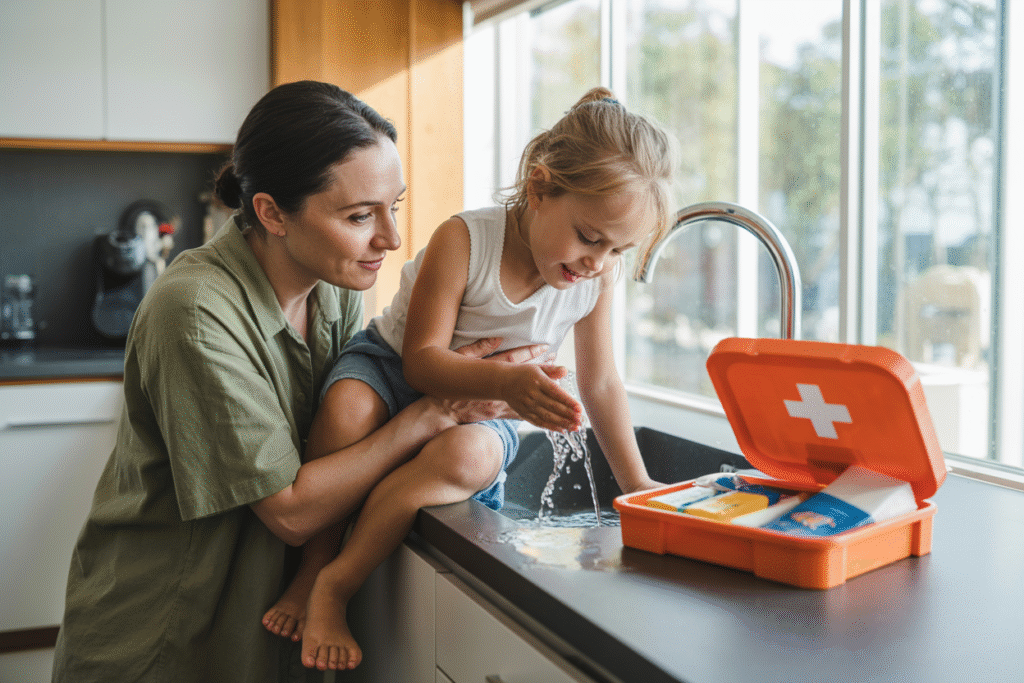
7. Demonstrate Professional Responsibility and Duty of Care
Duty of care means if you’re responsible for people, you’re responsible for their safety. If you’re a manager, a team leader, a business owner—you have a duty of care to your staff.
People feel safer working for managers who are first aid trained. An office manager told me that when she mentioned getting her certificate, one employee said, “That makes me feel better knowing you’d know what to do if something happened.” That trust shows up in better team morale and lower turnover.
Having current first aid certification shows you took reasonable steps to fulfill your duty of care. Your insurance company wants to know you’ve got qualified first aiders. WorkSafe Queensland wants to know it.
If you’re in management and you’ve got first aid certification, you’re setting the standard. After one manager got recertified, two team members asked about doing the course too because she’d talked about how valuable it was.
8. Build Genuine Confidence in Emergency Situations
First aid training replaces panic with a plan. When something scary happens, most people freeze. Training short-circuits that freeze response. You’ve practiced CPR on a mannequin dozens of times. When something actually happens, your brain goes “oh, I know this” instead of “oh god, what do I do?”
A woman told me she was terrified about the practical assessment. But by assessment time, she’d done CPR so many times it felt automatic. Six months later, her neighbour collapsed while they were chatting. And she just did it. Started CPR, sent someone to call 000, kept going until the ambulance arrived.
That’s what training gives you. Muscle memory that kicks in when thinking would waste time. The difference between someone with training and someone without is clear: one person panics, the other steps up and takes charge calmly.
Learning to stay calm in emergencies teaches you that you can stay calm when things go wrong anywhere.
💪 MUSCLE MEMORY SAVES LIVES: "I didn't even think about it. My hands just knew what to do." That's what training gives you. Muscle memory that kicks in when thinking would waste time.
9. Reduce Anxiety About “What If” Scenarios
There’s this low-level anxiety that sits in the back of your mind when you don’t know first aid. “What if my kid chokes?” “What if my partner has a heart attack?” “What if something happens and I just stand there useless?”
A retail manager told me she didn’t realize how much mental space that worry was taking up until it was gone. Before training, every time her elderly parents visited, she’d have this nagging thought about what if something went wrong.
After training, the panicky edge was gone. She knew what to do. She’d practiced it. That knowledge replaced anxiety with preparedness.
If you’ve got kids, you know this feeling intimately. First aid training doesn’t stop kids from being kids, but it does mean you know exactly how to handle choking, burns, cuts, allergic reactions, head injuries.
Bad things can still happen. But you’re not carrying around that constant dread of “what if I don’t know what to do?” That peace of mind is worth everything.
10. Empower Yourself to Act Instead of Freezing
There’s a famous psychology study about bystander effect—the more people who witness an emergency, the less likely anyone is to help. Everyone assumes someone else will do something. First aid training turns you into the “someone else.”
When someone collapses in a crowded place, most people stand around watching because they genuinely don’t know what to do. With first aid training, you’re the person who steps forward.
A guy told me about an incident at his gym. Someone passed out during a workout class. Thirty people in the room, everyone just stood there. He’d done his training two weeks earlier. He stepped forward, checked if the person was breathing, put them in recovery position, sent someone to call 000.
First aid training gives you a mental checklist: check the scene for danger, check the person’s response, call for help, start treatment, monitor until help arrives. That structure stops you from freezing.
11. Handle Everyday Injuries and Accidents
You’ll probably never use first aid training for a cardiac arrest. But you’ll use it for regular everyday stuff all the time.
Kitchen burns—that’s what you’ll deal with most. Most people treat burns completely wrong. They stick the burn under cold water for 30 seconds and wonder why it blisters. Proper treatment is 20 minutes of cool running water.
A Brisbane mum told me she used her first aid training three times in one month for her kids. One burn from touching the barbecue, one deep cut from a bike fall, one suspected broken finger from cricket. Nothing dramatic, just regular family life. But knowing exactly what to do meant she didn’t panic.
Brisbane’s an outdoor city. Sprained ankles, twisted knees, heat exhaustion in summer, jellyfish stings, dehydration during outdoor training. A personal trainer said he uses his first aid knowledge literally every week.
People who’d completed training use it 4-6 times per year for something meaningful. Burns, cuts, sprains, suspected fractures, allergic reactions, nosebleeds that won’t stop, someone fainting.
12. Protect Your Family and Loved Ones
This is the one that hits different. Workplace compliance is one thing. But what if it’s your kid who’s choking? Your partner who collapses? Your parent who falls?
A dad told me he booked his course the day after his toddler started choking on a grape. His wife knew what to do. But he didn’t. He just stood there frozen while his wife handled it. That feeling of watching his kid in danger and being completely useless—that’s what finally got him to book the course.
A career changer said her main motivation wasn’t even career stuff. It was her parents in their 70s, still independent. But things happen—falls, dizzy spells, her dad has diabetes, her mum has a dodgy heart. She used to have this background anxiety the whole time she visited. After training, she knew the warning signs to watch for.
Kids are accident magnets. Pool accidents, skateboard falls, sports injuries, allergic reactions. If you’re a parent and you don’t know first aid, you’re constantly on edge. First aid training gives you that judgment call.
First aid training doesn’t guarantee you’ll save everyone. But it does mean you won’t be standing there helpless.
13. Apply Skills in Public Spaces and Travel
First aid knowledge travels with you everywhere. Emergencies don’t just happen to people you know.
A woman was at South Bank when she saw an elderly man collapse near the river. Nobody was doing anything. Everyone was just standing around with their phones out, but nobody was actually helping. She’d done her course six months earlier. She checked if he was breathing, put him in recovery position, stayed with him until the ambulance arrived.
The further you get from major hospitals, the more valuable first aid knowledge becomes. In remote areas, you might be waiting 30-45 minutes for help. Your first aid skills become the primary medical care until help reaches you.
A couple who did their training before a big Australian road trip said it completely changed how they felt about traveling. They weren’t constantly worried about “what if something happens in the middle of nowhere?”
Your first aid skills don’t need translation. A cardiac arrest in Bali requires the same response as one in Brisbane. Several people told me they felt way more confident traveling internationally after getting certified.
14. Contribute to a Safer Community
When you get first aid trained, you’re not just helping yourself. You’re making your entire community safer.
Think about your workplace. If five people are trained versus just one, the chances of someone capable being nearby during an emergency increase dramatically. Same goes for your neighbourhood, your sports club, your kid’s school community.
A community centre manager told me they made a push to get 15 staff members certified over one year. Now they’ve always got multiple trained people on site during programs and events. That’s not overkill—that’s smart.
After one manager got recertified and told her team about it, two staff members asked about doing the course themselves. That ripple effect matters. You get trained, you talk about why it was valuable, other people get interested.
Queensland Ambulance Service has said publicly they depend on bystanders providing care before they arrive. That gap between when something happens and when help arrives—that’s where trained bystanders save lives.
First aid knowledge spreads. You learn it, you teach your family members. They tell their friends. One person getting trained can lead to dozens of people getting trained over time.

15. Model Responsibility for Children and Young People
Kids watch everything you do. They might not listen to what you say, but they’re definitely watching what you actually do.
When your kids see you taking a first aid course, staying up to date with your certification, actually using that knowledge when someone gets hurt—you’re teaching them that being prepared matters. You’re showing them that responsible adults don’t just hope nothing bad happens. They prepare for when it does.
| What Kids See | What They Learn |
|---|---|
| You taking a first aid course | Continuous learning is important |
| You staying up to date with certification | Following through on commitments matters |
| You helping someone who's hurt | We take care of each other |
| You staying calm in emergencies | Panic doesn't help, action does |
| You teaching them basic skills | Knowledge is meant to be shared |
A mum said her 10-year-old daughter asked if she could learn first aid too after watching her mum practice CPR at home. They found a kids’ first aid workshop, and now her daughter knows basic emergency response. That’s the kind of thing that sticks with kids.
The people who become paramedics, nurses, emergency responders—a lot of them got interested in emergency care because someone in their life took it seriously. When you model that preparedness, that willingness to help others, you’re potentially shaping the next generation of people who respond instead of freeze.
A personal trainer mentioned this with his younger clients. When they see him respond calmly and competently to injuries or emergencies, they learn that’s how you handle problems. You don’t panic. You don’t ignore it. You address it properly.
Why First Aid Training Benefits Matter More Than You Think
Look, you probably came here because someone told you that you need a first aid certificate. Maybe it’s for work, maybe it’s for insurance, maybe it’s because your partner’s been nagging you about it for six months.
But here’s what actually happens: you book the course thinking it’s just another thing to tick off your list. And then somewhere during the training—maybe when you’re practicing CPR, maybe when you’re learning to recognize a stroke—it clicks. This isn’t just compliance. This is one of the most practical skills you’ll ever learn.
You’ll use it for everyday injuries way more than dramatic emergencies. You’ll sleep better knowing you can help your family if something goes wrong. You’ll handle workplace accidents without panicking. You’ll probably open up career opportunities you didn’t even know existed.
And yeah, there’s a small chance you might actually save someone’s life. Maybe a stranger. Maybe someone you love.
If you’ve been putting off getting your first aid certificate—or if yours expired and you keep meaning to renew it—this is your sign to just book it. Stop putting it off. Book it, do it, get it done. Your future self (and possibly someone who needs your help someday) will thank you.
Book Your First Aid Training Now
Fast, affordable, and nationally accredited training delivered by professionals who care
Frequently Asked Questions About First Aid Training Benefits
Q.What are the main benefits of doing a first aid course?
The main first aid training benefits include being able to save lives during cardiac arrests and other emergencies, preventing minor injuries from becoming major medical events, meeting mandatory workplace compliance requirements, enhancing your career prospects, and building genuine confidence to act instead of freezing when something goes wrong. You'll also reduce anxiety about "what if" scenarios, protect your family and loved ones, and contribute to making your entire community safer. Most people use their training 4-6 times per year for everyday injuries like burns, cuts, and sprains.
Q.How often will I actually use my first aid training?
You'll use your first aid training way more often than you think—just not for the dramatic emergencies. Most people who've completed first aid training use it 4-6 times per year for meaningful situations like treating burns, managing cuts and wounds, handling sprains, dealing with nosebleeds, responding to someone fainting, or assessing suspected fractures. Kitchen burns are probably what you'll deal with most, followed by outdoor activity injuries, especially in Brisbane's active lifestyle. The life-threatening emergencies are rare, but the everyday applications are constant.
Q.Can first aid training help me protect my family?
Absolutely. This is one of the most meaningful first aid training benefits. You'll know exactly how to handle choking incidents with your kids, recognize heart attack and stroke symptoms in your partner or elderly parents, treat burns and cuts properly, and assess when injuries need professional medical attention versus home treatment. A dad told me he booked his course the day after his toddler started choking and he didn't know what to do while his wife handled it. That feeling of helplessness is what motivates most parents to get trained.
Q.What if I'm nervous about the practical assessment?
Most people are nervous about the practical assessment, and that's completely normal. But here's the thing—by the time you get to the assessment, you've practiced CPR and other skills dozens of times. It becomes automatic. Training providers report a 98% first-time pass rate because instructors don't assess you until they're confident you'll pass. The assessment is individual (not in front of the whole group), you can take your time, and if you need extra practice, they'll provide it at no additional cost. The goal is for everyone to leave certified and confident.
Q.Will I really remember everything after the course?
You'll remember more than you think because the training focuses on muscle memory and simple checklists rather than memorizing facts. When someone collapses, your brain won't need to recall a textbook—your hands will just start doing compressions because you've practiced it 30 times. The mental checklist (check scene for danger, check response, call for help, start treatment, monitor) cuts through panic and confusion. A woman told me that six months after her course, when her neighbour collapsed, she just acted automatically without thinking. That's what training gives you.
Q.Can I use my first aid skills when traveling?
Yes, and this is one of the underrated first aid training benefits. Your skills travel with you everywhere—to the beach, camping in remote areas, interstate road trips, and even international travel. A cardiac arrest in Bali requires the same CPR response as one in Brisbane. The further you are from hospitals, the more valuable your skills become because you might be waiting 30-45 minutes for help in remote areas. Several people told me they felt way more confident traveling after getting certified because they knew they could handle emergencies while figuring out local emergency services.
Making first aid training more affordable for
every classroom
We believe every student deserves access to life-saving first aid knowledge. That’s why we offer specially reduced pricing for schools and educational groups. Whether you’re booking for a single class, a year group, or your entire school, our flexible packages make training more accessible and cost-effective — without compromising quality.
