

With QAS paramedic recruitment opening in March 2025 and 450+ applicants competing for limited positions, your certification strategy could determine whether you’re reviewing acceptance letters or waiting another 12 months. HLTAID010 (Provide Basic Emergency Life Support) isn’t just another first aid course—it’s the same oxygen therapy, airway management, and ventilation training that QAS graduate paramedics receive in Week 1.
This complete guide to HLTAID010 certification covers everything Brisbane paramedic applicants need to know: exact prerequisites, assessment criteria, and how BELS strengthens your QAS application against candidates with only basic first aid certification.
What Are the Requirements for HLTAID010 Certification?
To obtain HLTAID010 (Provide Basic Emergency Life Support) certification, you must meet four core requirements and complete a structured training program that qualifies you to manage emergency medical situations using advanced life support equipment.
HLTAID010 Certification Requirements:
- Minimum Age: 14 years or older (no upper age limit)
- Language Proficiency: Ability to read, write, and communicate in English at a level that’s good enough to complete written assessments and follow emergency protocols
- Physical Capability: Ability to perform CPR on the floor continuously and lift/maneuver emergency equipment (oxygen cylinders, suction devices)
- Course Completion: Attend training session covering oxygen therapy, airway management, suction techniques, and ventilation support
- Assessment Pass: Successfully demonstrate practical skills and complete written evaluation on emergency life support procedures
No prerequisites required: Unlike some advanced certifications, HLTAID010 doesn’t require current first aid certification or prior medical training, making it accessible for aspiring paramedics beginning their emergency services career pathway.
Understanding HLTAID010 Basic Emergency Life Support
Here’s what most people don’t realize about HLTAID010 basic emergency life support: it’s not an upgraded version of basic first aid. It’s the actual clinical training that QAS paramedic students go through in their first week at the academy. While everyone else is showing up to interviews talking about CPR and bandages, you’ll be discussing oxygen delivery systems and airway management.
What Skills Does HLTAID010 Cover?
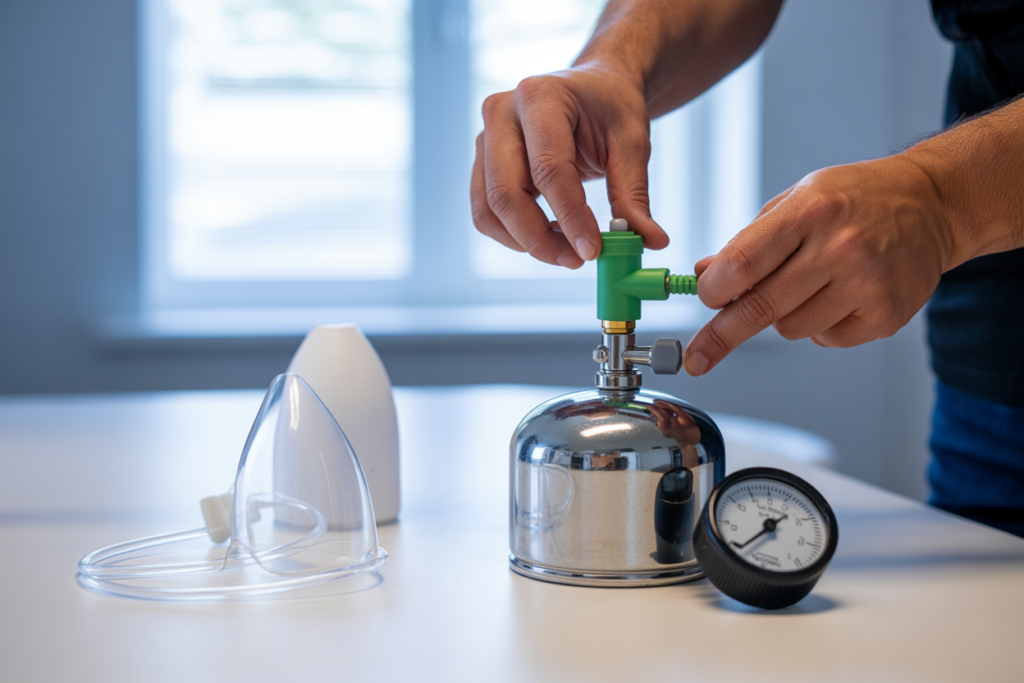
HLTAID010 training gives you hands-on experience with the same hospital-grade equipment paramedics use every day. You’re actually setting up oxygen systems, inserting airways, and operating ventilation equipment under instructor supervision.
Core Skills You’ll Master:
Oxygen Therapy Systems – You’ll learn to set up and administer supplemental oxygen using nasal cannulas and non-rebreather masks. This includes calculating appropriate flow rates and adjusting delivery based on clinical presentation. Paramedics use these systems on about 60% of emergency calls.
Advanced Airway Management – The course covers oropharyngeal airways (OPAs) and nasopharyngeal airways (NPAs)—the devices paramedics use to maintain open airways in unconscious patients. You’ll practice proper sizing, insertion techniques, and recognizing when each airway type is appropriate.
Bag-Valve-Mask (BVM) Ventilation – You’ll practice the two-person technique (one person maintains mask seal, other squeezes bag), proper ventilation rates, and chest rise assessment. When QAS interviewers ask about your emergency training, being able to discuss BVM ventilation shows you’ve gone beyond basic certification.
Suction Equipment Operation – You’ll learn to operate portable suction devices, select appropriate catheter sizes, and perform oral/pharyngeal suctioning on training mannequins. It’s practical skill development that translates directly to operational work.
Clinical Assessment and Vital Signs – The course includes systematic patient assessment, vital signs monitoring, and recognizing clinical deterioration. You’re learning the same assessment framework paramedics use.
HLTAID010 vs HLTAID011: Which Do Paramedic Applicants Need?
| Aspect | HLTAID011 (Provide First Aid) | HLTAID010 (Basic Emergency Life Support) |
|---|---|---|
| Who Has It | 90% of QAS applicants | 15-20% of QAS applicants |
| Equipment Training | Basic first aid kit, AED | Oxygen systems, BVM, airways, suction |
| Clinical Skills | CPR, bleeding control, basic wound care | Advanced airway management, ventilation support, oxygen therapy |
| Application Value | Expected baseline certification | Differentiates serious candidates |
HLTAID011 is the baseline. So many applicants have HLTAID011 that it doesn’t differentiate you anymore. It’s like listing “proficient in Microsoft Word” on your resume. Expected, not impressive.
HLTAID010 signals something different. It tells the recruitment panel you’ve taken the time to learn the actual clinical skills you’ll use as a paramedic. When they ask about your emergency training and you start discussing ventilation support and airway adjuncts, you’re speaking their language.
Having both certifications on your QAS application shows comprehensive preparation. If you’re competing against 450 other applicants, you want every advantage.
HLTAID010 Assessment Requirements
The HLTAID010 assessment isn’t a gotcha exam where they spring surprise scenarios on you—it’s a demonstration of the exact techniques you’ve already practiced multiple times during the course.
Practical Skills Assessment
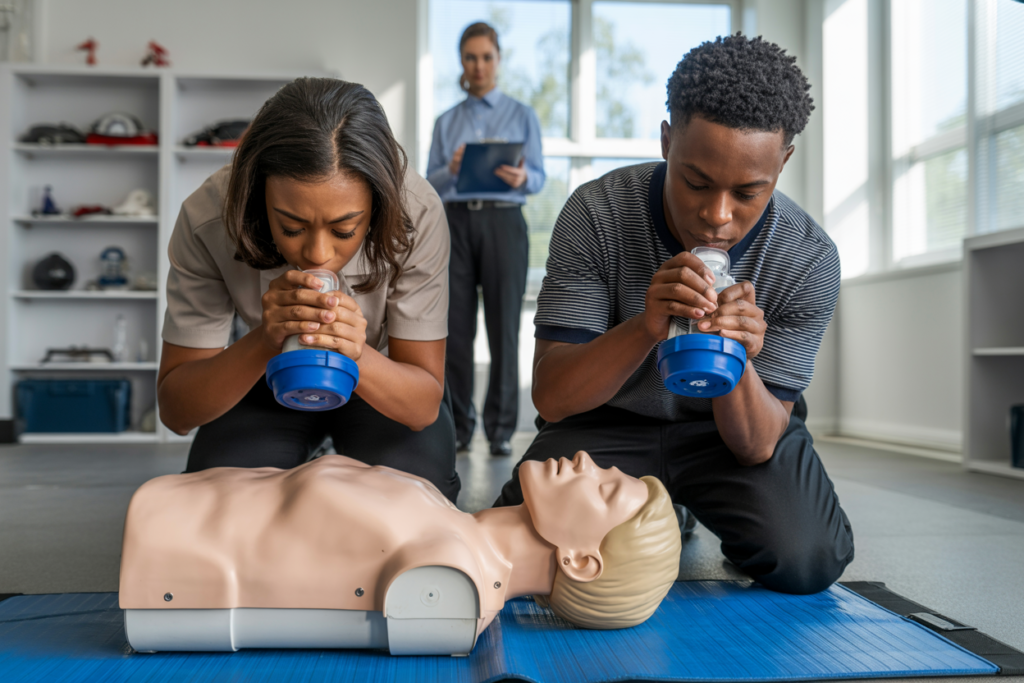
You’ll demonstrate proper BVM technique on a mannequin, showing proper head positioning, effective mask seal, appropriate ventilation rate, and adequate chest rise. You’re not being timed—the instructor wants to see competent technique, not speed.
For oxygen therapy, you’ll set up an oxygen delivery system from scratch: attach regulator to cylinder, check for leaks, connect delivery device, set appropriate flow rate, and explain when you’d use each delivery method.
You’ll demonstrate sizing and insertion of both oropharyngeal and nasopharyngeal airways, showing proper measurement technique and correct insertion method.
The suction component involves setting up portable suction, selecting appropriate catheter size, and demonstrating oral/pharyngeal suctioning technique with proper infection control.
✅ Pass Criteria: You must demonstrate competent performance of all required skills. "Competent" means you can perform the skill safely and effectively as per Australian Resuscitation Council guidelines.
Written Assessment
The written component tests your understanding of emergency protocols, equipment use, legal responsibilities, and clinical decision-making through multiple choice and scenario-based questions covering:
- Australian Resuscitation Council guidelines
- Oxygen therapy indications and safety
- Airway management techniques
- Legal and ethical responsibilities
- Infection control procedures
The assessment is usually open book—you can reference course materials and guidelines while completing questions. This reflects real-world practice: paramedics constantly reference protocols.
What Happens If You Don’t Pass?
If you don’t demonstrate competence on a particular skill, the instructor provides immediate feedback and additional practice time. You get specific feedback, additional practice with coaching, then reassessment—all during the same course day with no additional fees.
The high first-time pass rate exists because the training prepares you thoroughly. If you engage with the training, you’ll develop the competence to pass.
HLTAID010 Certification Validity and Renewal
Your HLTAID010 certification is valid for 12 months from the date of issue. The Australian Resuscitation Council updates clinical guidelines regularly based on new evidence, so annual renewal ensures you’re practicing current techniques.
Planning Your Certification Timeline:
If QAS recruitment is opening soon, book your HLTAID010 course several weeks before application submission. This ensures your certificate is current when you apply and you have recent training to discuss in interviews.
If the next recruitment intake is many months out, decide whether to book now and renew later, or wait and book closer to when applications open. Plan your renewal well before expiry to maintain continuous certification—courses fill up during peak periods.
Renewal Requirements:
Renewal covers theory updates (changes to Australian Resuscitation Council guidelines), skills refresher (review of all practical components), and reassessment to demonstrate current competence. Renewal courses run shorter than initial certification since you already have the foundational knowledge.
Choosing HLTAID010 Providers
What to Look for in a Training Provider
RTO Registration Verification:
Every legitimate HLTAID010 provider must be registered with ASQA (Australian Skills Quality Authority) to issue nationally recognized certifications. Verify registration at training.gov.au—enter the provider’s RTO number, check the status shows “Current,” and verify HLTAID010 is in their scope of registration.
QAS recruitment specifically requires nationally recognized certifications from registered training organizations. If your certificate comes from a non-registered provider, it doesn’t count.
Instructor Credentials:
Current or recently retired paramedics bring the most value—they have active QAS experience, can answer recruitment questions, and provide real-world context. Emergency nurses with ED/ICU experience are also excellent. Career first aid trainers are acceptable but may lack operational emergency services insights.
Providers who employ current paramedics usually advertise this prominently. If the provider is evasive about instructor credentials, you’re probably getting whoever’s rostered that day.
Equipment Quality:
The equipment should mirror what you’ll encounter during QAS paramedic work—hospital-grade oxygen systems, professional training mannequins, quality airways and BVM equipment. For paramedic applicants, equipment quality during training translates to comfort and confidence during QAS interviews.
Red Flags to Avoid
“Guaranteed Pass” promises signal they’ll pass you regardless of actual competence—your certificate means nothing if assessment was a formality. Quality providers mention high pass rates due to comprehensive training, not guaranteed outcomes regardless of performance.
No visible RTO registration – is a major red flag. Legitimate providers display their RTO number prominently.
Vague instructor credentials – suggest you’re not getting quality instruction. You have the right to know who’s teaching you.
HLTAID010 for QAS Paramedic Recruitment
The real question is: “Will this actually make a difference when I’m competing against 450+ other applicants for 32 positions?”
Here’s the honest answer: HLTAID010 certification doesn’t guarantee you a QAS paramedic position. Nothing does when acceptance rates are 6-7%. But it moves you from the “meets minimum requirements” category into the “demonstrates serious preparation” category.
How BELS Certification Strengthens Your Application
Stage 1: Initial Screening
QAS receives 450-500 applications per recruitment intake. The first stage eliminates 100-150 applications—people who didn’t read instructions properly, missing certifications, unqualified applicants. You’re not in this group.
Stage 2: Competitive Ranking (The Real Battle)
The remaining 300-350 applications get ranked based on education, qualifications, relevant experience, additional certifications, and demonstrated commitment. This is where HLTAID010 makes tangible difference.
Most applicants have various degrees, HLTAID011 Provide First Aid (nearly everyone), some combination of volunteer hours, and generic statements about “wanting to help people.”
Your application with HLTAID010 stands out because:
- It signals serious preparation – Most applicants do minimum required certifications. HLTAID010 shows you’ve invested in learning advanced skills directly relevant to paramedic work.
- It demonstrates genuine interest – Anyone can claim they’re passionate about paramedicine. You’ve backed it up by completing the same training paramedic students receive in Week 1.
- It provides concrete interview content – When the panel asks about your emergency training, you’re discussing oxygen therapy and airway management while other candidates talk about CPR and bandages.
- It shows forward-thinking – Your HLTAID010 certification demonstrates you’ve already started preparing for the actual demands of the role, not just the application process.
What QAS Recruitment Panels Actually Look For
QAS recruitment panels typically include a senior operational paramedic, education and training representative, HR specialist, and sometimes a recently graduated paramedic. They’ve seen hundreds of applications and know the difference between “checking boxes” and genuine preparation.
They’re Assessing:
Clinical Readiness – Will this person adapt quickly to paramedic training? HLTAID010 signals you’re arriving at the academy already comfortable with oxygen equipment, BVM technique, and airway management.
Genuine Commitment – The panel has interviewed countless applicants who say they’re passionate but have done zero practical preparation. Your HLTAID010 certification (plus your QAS experience, plus your degree) creates a coherent narrative of sustained commitment.
Self-Directed Learning – HLTAID010 isn’t required for QAS applications. Completing it anyway demonstrates you’re a self-directed learner who goes beyond minimum requirements—exactly the type of person who’ll excel in ongoing professional development.
Your Next Steps: From HLTAID010 to QAS Acceptance
You’ve made it through this entire guide about HLTAID010 certification, which means you’re serious about this. That’s exactly the mindset that separates successful QAS applicants from people who just talk about wanting to be paramedics.
The Timeline to Success
Immediately Post-Course:
- Save digital certificate to multiple locations
- Print physical copy for your application folder
- Start practicing BELS skills regularly
- Identify skills needing more practice
Before Application Opens:
- Draft QAS application materials
- Write interview talking points about HLTAID010 training
- Research current QAS recruitment patterns
- Ensure all other certifications are current
When Applications Open:
- Submit application within first week
- Continue skill practice while waiting for interviews
- Prepare interview responses using BELS training experiences
The Real Question You’re Asking
You didn’t read this entire guide because you wanted to know the course details. You read it because you’re asking yourself: “Am I doing enough to stand out from 450+ other applicants?”
Here’s the honest answer: HLTAID010 alone won’t guarantee you a position. Nothing will. The competition is fierce and the acceptance rate is brutal.
But HLTAID010 combined with your biomedical degree, your QAS experience, your genuine commitment to emergency services, and a strong application package will make you competitive.
You’re not trying to be perfect. You’re trying to be in the top applications that get interviewed. Then you’re trying to be in the top interviews that get offers.
HLTAID010 moves you closer to both of those thresholds.
Your Decision Point
The difference between aspiring paramedics who succeed and those who keep aspiring is simple: successful ones take action.
Stop researching. Stop comparing. Stop overthinking.
Pick up your phone, call an HLTAID010 provider, and book your course for the next available weekend.
This time next month, you’ll have HLTAID010 certification. Three months from now, you’ll be submitting your QAS application with advanced emergency life support training. Six months from now, you could be sitting in an interview discussing your oxygen therapy and airway management experience.
Or you could still be scrolling through paramedic forums and telling yourself “I’ll do it next month.”
The choice is yours. But you already know what you need to do.
Your paramedic career starts with one decision: booking your HLTAID010 course today.
Book Your First Aid Training Now
Fast, affordable, and nationally accredited training delivered by professionals who care
Frequently Asked Questions About HLTAID010 Certification
Q.Do I need to have HLTAID011 before I can do HLTAID010?
No, HLTAID010 has no prerequisites—you can complete it without holding current HLTAID011 or any other first aid certification. However, most paramedic applicants complete both certifications because QAS recruitment increasingly expects baseline first aid certification (HLTAID011) alongside any advanced qualifications. The practical reality is that HLTAID010 assumes you understand basic emergency response principles like DRSABCD, so having HLTAID011 foundation makes the advanced content easier to grasp, but it's not a formal requirement for enrollment.
Q.Will QAS accept my HLTAID010 certificate if it expires before my interview?
QAS typically requires certifications to be current at the time of application submission, not just when you eventually interview. If your HLTAID010 expires between submitting your application and attending your interview (which can be 3-6 months later), you should renew it before the interview to demonstrate you're maintaining current competence. The recruitment panel will likely ask about your certifications during the interview, and explaining "it's expired but I'm planning to renew it" undermines the whole point of having the certification in the first place—it signals you're not actively maintaining your emergency skills.
Q.Can I do HLTAID010 if I'm not applying to become a paramedic?
Absolutely—HLTAID010 is valuable for anyone who might need to provide emergency life support in their work or volunteer roles. The certification is common among lifeguards, wilderness first responders, community emergency response team members, industrial first aiders, flight attendants, and remote area workers who need advanced skills beyond basic first aid. Sports trainers, event medical volunteers, and workplace first aid officers also benefit from knowing proper oxygen therapy and airway management techniques. The training is practical for any situation where you might need to manage a medical emergency before ambulance arrival.
Making first aid training more affordable for
every classroom
We believe every student deserves access to life-saving first aid knowledge. That’s why we offer specially reduced pricing for schools and educational groups. Whether you’re booking for a single class, a year group, or your entire school, our flexible packages make training more accessible and cost-effective — without compromising quality.
