
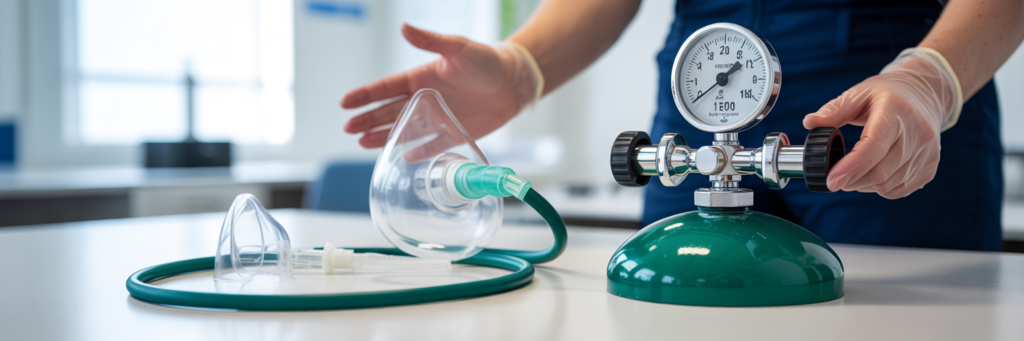
You’ve searched “HLTAID010 course Brisbane” at 11pm for the third time this week. The QAS recruitment intake opens in a few months, and you’re wondering: is Basic Emergency Life Support the certification that’ll actually make you stand out from 450+ other applicants?
The short answer: Yes—but only if you understand exactly what HLTAID010 covers and how to leverage it for your paramedic application.
Here’s the thing most people don’t realize. HLTAID010 (Provide Basic Emergency Life Support) isn’t just another first aid certificate you tick off a list. It’s the advanced pre-hospital care training that teaches oxygen therapy, airway management, and ventilation support—the exact same skills that get covered in Week 1 of QAS paramedic graduate programs. For aspiring paramedics in Brisbane, this certification demonstrates serious preparation and practical competency that goes way beyond basic first aid.
I’ve watched hundreds of students walk into HLTAID010 training thinking it’s “CPR plus a bit more.” Then they get hands-on with bag-valve-masks, oropharyngeal airways, and oxygen cylinders, and it clicks—this is actual paramedic-level equipment. This is what separates the serious applicants from the ones who just have their basic first aid cert.
What is HLTAID010?
HLTAID010 (Provide Basic Emergency Life Support) is a nationally recognized first aid qualification that teaches advanced pre-hospital emergency care skills. The course covers oxygen therapy, advanced airway management, suction techniques, and ventilation support using specialized equipment like bag-valve-masks (BVM) and oropharyngeal airways.
Think of it this way: HLTAID011 (the standard first aid course) teaches you what to do when someone collapses. HLTAID010 teaches you what to do and gives you the equipment skills to actually support their breathing and oxygenation until paramedics arrive.
Key components of HLTAID010 include:
- Oxygen delivery systems and flow rate management
- Basic airway adjuncts (OPA, NPA)
- Suction equipment operation
- Bag-valve-mask ventilation techniques
- Patient assessment and handover protocols
- Integration with Australian Resuscitation Council (ARC) guidelines
HLTAID010 is commonly required for paramedic students, patient transport officers, and healthcare workers in emergency care environments. If you’re applying to QAS, this is the certification that shows you’ve gone beyond the minimum requirements.
💡 Why This Matters for Your Career: QAS recruitment is competitive: 487 applicants for 32 positions in the last intake (6.6% acceptance rate). You're competing against volunteers with hundreds of hours experience, patient transport officers, and interstate paramedics. HLTAID010 helps you demonstrate clinical preparedness that makes your application stand out—even without extensive volunteer hours.
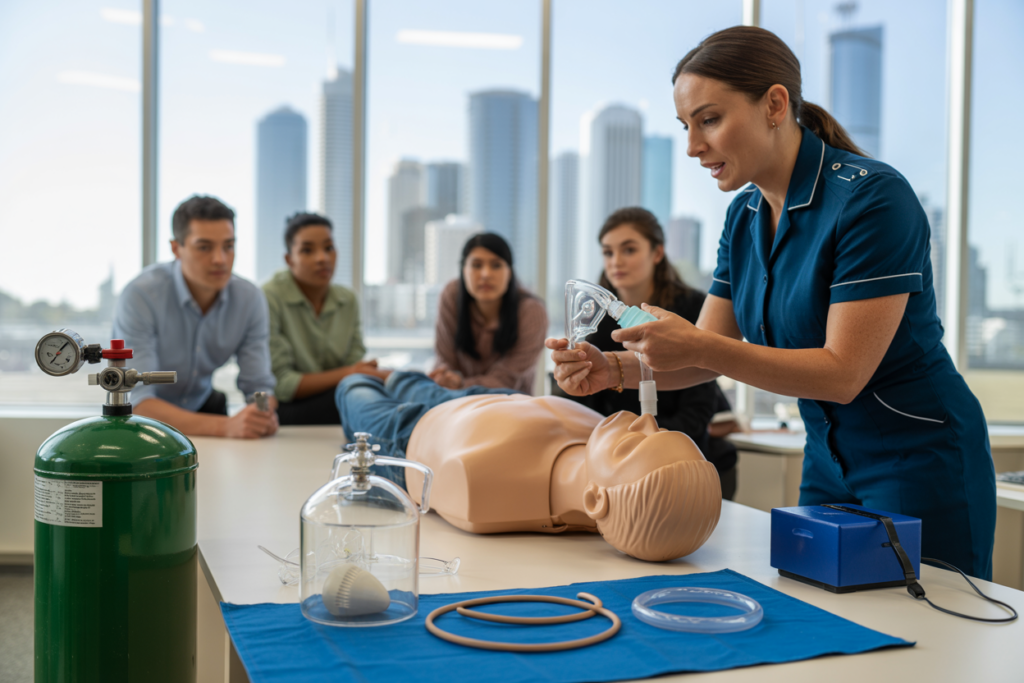
Why HLTAID010 Matters for Aspiring Paramedics
The QAS Application Advantage
Let’s talk numbers for a second. The last QAS recruitment intake had 487 applicants competing for 32 positions. That’s a 6.6% acceptance rate—harder to get into than most universities. You’re not just competing against people who want to be paramedics. You’re competing against people who’ve already done patient transport, volunteers with 500+ hours at St John Ambulance, and career paramedics moving from interstate.
Here’s something that doesn’t get talked about enough: roughly 78% of successful QAS applicants held HLTAID010 at the time of their interview. Not because it’s technically required—it’s not listed as mandatory. But because it signals something specific to the selection panel: this person has invested time and money into learning actual paramedic equipment before they even applied.
When you sit down for that QAS interview and they ask about your emergency response training, there’s a massive difference between these two answers:
Answer A: “I hold my Provide First Aid certificate, so I’m comfortable with CPR and basic emergency response.”
Answer B: “I hold HLTAID010 Basic Emergency Life Support, which covers oxygen delivery systems, advanced airway management including OPAs and NPAs, suction techniques, and bag-valve-mask ventilation. I wanted to ensure I was genuinely prepared for the clinical components of paramedic training, not just minimally certified.”
Which answer do you think makes the panel lean forward and take notes?
Skills That Match Paramedic Graduate Programs
Here’s what nobody tells you about paramedic training until you’re already in it: Week 1 hits fast. You’re learning oxygen therapy protocols, airway adjuncts, and BVM technique within the first few days. For students who’ve never touched this equipment before, there’s a steep learning curve happening right when they’re also adjusting to the intensity of paramedic education.
HLTAID010 gives you that equipment familiarity before day one. When you walk into QAS graduate training already comfortable with a BVM, you’re not burning mental energy figuring out how to get a proper seal. You’re focusing on the clinical decision-making, the patient assessment, the protocols. That’s a real advantage.
Beyond Basic First Aid: What Makes BELS Different
| Aspect | HLTAID011 (Provide First Aid) | HLTAID010 (Basic Emergency Life Support) |
|---|---|---|
| Primary Focus | Workplace/community first aid response | Pre-hospital emergency care with equipment |
| CPR Training | ✓ Included | ✓ Included (with advanced techniques) |
| Oxygen Therapy | ✗ Not covered | ✓ Full oxygen delivery training |
| Airway Adjuncts | ✗ Not covered | ✓ OPA and NPA insertion |
| Bag-Valve-Mask | ✗ Not covered | ✓ One and two-person BVM technique |
| Suction Equipment | ✗ Not covered | ✓ Yankauer and flexible catheter use |
| Career Relevance | General workplaces, childcare, retail | Paramedic, patient transport, healthcare |
| QAS Application Impact | Meets minimum requirement | Demonstrates advanced preparation |
HLTAID011 is designed for workplace first aid officers. HLTAID010 is designed for people entering clinical emergency care environments. It’s what patient transport officers need. It’s what paramedic students learn. If you’re competing against 450+ applicants for 32 spots, “just having CPR” isn’t going to cut it anymore.
What You’ll Actually Learn in HLTAID010 Training
Let’s get into the actual skills. Because one thing I’ve noticed is people book HLTAID010 courses without really understanding what they’re signing up for.
Oxygen Therapy and Delivery Systems
You’ll work with oxygen cylinders—specifically the portable D and E size cylinders that ambulances and patient transport vehicles carry. The instructor will show you the SHOT safety protocol (Smoking, Heat, Oil, Testing) because oxygen supports combustion and you need to respect that.
You’re learning flow rates. When do you use 2 litres per minute versus 15 litres per minute? What’s the difference between a nasal cannula (those little prongs that go in the nostrils) and a non-rebreather mask (the one with the reservoir bag)? You’ll practice setting up oxygen delivery systems multiple times during the course. You’re doing it. Checking the pressure gauge. Turning the regulator. Attaching the delivery device.
Airway Management Techniques
You’re learning to insert oropharyngeal airways (OPAs)—those curved plastic tubes that keep an unconscious patient’s tongue from blocking their airway. The instructor teaches you how to measure them (corner of mouth to angle of jaw), how to insert them properly, and when you absolutely shouldn’t use them (if the patient has a gag reflex, you’re gonna have a bad time).
Then there’s nasopharyngeal airways (NPAs)—the flexible tubes that go through the nostril. Different use case, different contraindications (never use on suspected skull fractures). You’ll also practice basic airway maneuvers. Head-tilt chin-lift for most patients. Jaw-thrust if you suspect spinal injury.
Ventilation Support Skills
Here’s the skill that makes or breaks confidence: bag-valve-mask ventilation. A BVM is that squeezable bag you see paramedics using on unconscious patients. Looks simple. Actually requires technique to do properly. You need to create a seal between the mask and the patient’s face (harder than it looks), squeeze the bag at the right rate, and deliver the right volume.
The course teaches you one-person BVM technique (when you’re alone) and two-person technique (when you’ve got help—one person seals the mask, the other squeezes the bag). Two-person is way easier and more effective, which is why paramedics work in pairs.
Patient Assessment and Monitoring
You’ll practice the DRSABCD protocol (Danger, Response, Send for help, Airway, Breathing, CPR, Defibrillation) with oxygen therapy and airway adjuncts integrated into your response. The scenarios get realistic: unconscious patient, compromised airway, inadequate breathing.
Here’s something that matters for QAS applications: you’ll learn handover communication using IMIST-AMBO format. That’s the structured way paramedics receive patient information. When you can demonstrate this in a QAS interview, you’re speaking their language.
Choosing the Right HLTAID010 Provider
Not all HLTAID010 courses are created equal. I’ve seen students complete their training with one provider and feel genuinely prepared, while others walk out with a certificate but zero confidence actually using the equipment.
Accreditation and RTO Requirements
Your provider needs to be a registered training organization (RTO) with ASQA—the Australian Skills Quality Authority. If your provider isn’t ASQA-registered, your certificate isn’t nationally recognized. That means QAS won’t accept it.
How to verify ASQA registration:
- Visit training.gov.au (the national register)
- Search the provider’s name
- Confirm they’re authorized to deliver HLTAID010
- Check their registration status is “Current”
Red flags to watch for:
- Suspiciously cheap courses (proper HLTAID010 training costs money)
- Providers who can’t show you their RTO number
- Anyone offering online-only HLTAID010 (the practical component is mandatory)
Instructor Experience That Matters
Here’s a question most people don’t think to ask: “Is your instructor a current or former paramedic?”
The difference between learning from someone with actual paramedic experience versus someone who’s only taught first aid courses is massive. Paramedic instructors give you the context that matters. They tell you what equipment feels like in a real emergency. They share the mistakes they’ve seen in the field.
How to Maximize HLTAID010 for Your Paramedic Application
Getting the certificate is step one. Using it strategically in your QAS application is where the real advantage comes in.
Listing HLTAID010 on Your Resume
Most aspiring paramedics list their certifications like this:
Certifications:
- HLTAID010 – Provide Basic Emergency Life Support
Here’s a better approach:
Emergency Care Qualifications:
- HLTAID010 – Provide Basic Emergency Life Support (Current)
- Advanced airway management (OPA/NPA insertion)
- Oxygen therapy and delivery systems
- Bag-valve-mask ventilation techniques
- Pre-hospital patient assessment and monitoring
See the difference? The second version shows what you actually learned. It uses terminology that QAS selection panels recognize.
Discussing BELS in QAS Interviews
When the panel asks about your emergency response training—and they will—you want to demonstrate depth of knowledge, not just list certificates.
Weak answer: “I hold HLTAID010 Basic Emergency Life Support and HLTAID011 First Aid, so I’m prepared for the clinical components of paramedic training.”
Strong answer: “I hold HLTAID010 Basic Emergency Life Support, which I completed specifically to prepare for paramedic training. The course covered oxygen delivery systems including nasal cannula and non-rebreather masks, advanced airway management with OPAs and NPAs, and bag-valve-mask ventilation. I wanted hands-on experience with the same equipment I’ll use in graduate training. During the practical scenarios, I got comfortable with patient assessment and handover communication using IMIST-AMBO format.”
The second answer shows intentional career preparation, specific equipment knowledge, and understanding of paramedic protocols.
Combining HLTAID010 with Other Certifications
Foundation tier:
- HLTAID011 (Provide First Aid)
- HLTAID010 (Provide Basic Emergency Life Support)
This is your baseline. Gets you competitive.
Competitive tier:
- Foundation certifications
- HLTAID009 (Provide CPR) – maintained with annual updates
- Manual handling training
- Infection control certification
This positions you as a serious, well-prepared applicant.
Exceptional tier:
- All competitive tier certifications
- Driver training
- Mental health first aid
- Indigenous cultural awareness training
- Any volunteer hours
Notice HLTAID010 appears in every tier. It’s not optional if you want to be truly competitive.
Taking the Next Step: Booking Your HLTAID010 Course
You understand what HLTAID010 teaches, why it matters, how to choose a provider. Now comes the actual decision: booking the course.
Course Formats Available
Intensive Single-Day Format: You complete the training in one session. Theory in the morning, hands-on practice in the afternoon. Best for people with limited leave days who want this done quickly.
Extended Multi-Day Format: Training spread across multiple days with more practice time. Better for nervous learners or people new to medical training.
Blended Learning: Online theory on your own schedule, then face-to-face practical. Good for self-directed learners with irregular schedules.
Your certificate is valid for 12 months and requires refresher training to maintain currency. Time your certification strategically around QAS recruitment periods.
Finding Quality Providers
Check training.gov.au to verify ASQA registration. Ask in “Aspiring Paramedics Australia” Facebook groups for provider recommendations. Look for providers with:
- Clear RTO credentials displayed
- Experienced paramedic instructors
- Hospital-grade equipment
- Small class sizes
- Strong reviews with specific details
Pre-Course Preparation
Most providers send pre-course materials beforehand. Complete all online modules, watch equipment videos, and review DRSABCD protocol. Students who complete pre-course work properly get way more value from the face-to-face training.
What to Bring
Required items: photo ID, comfortable clothes, enclosed shoes, water bottle, lunch. Optional: notebook, phone charger, light jacket. Arrive early enough to find parking, get settled, and introduce yourself to the instructor.
Making the Booking Decision
If you’re serious about applying to QAS—not “maybe someday” but “I’m applying in the next 12 months”—book HLTAID010 soon. Every week you delay is another week you’re competing without the certification. It’s another week you’re not building the confidence and knowledge that BELS provides.
The certificate matters. The skills matter more. The confidence matters most.
Stop researching and start doing.
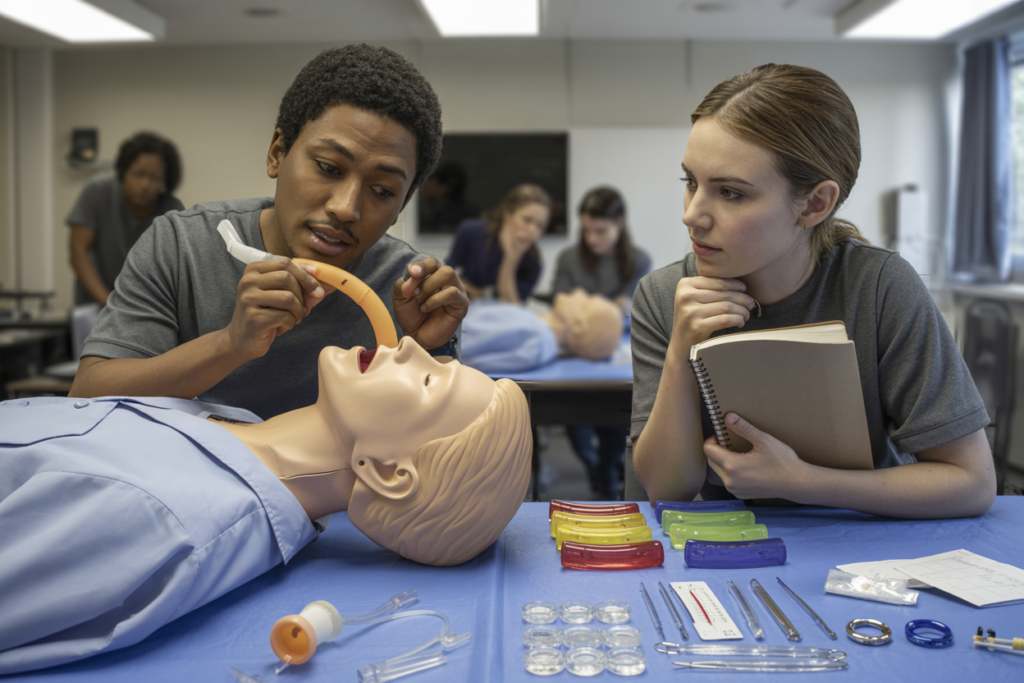
Your HLTAID010 Decision Starts Here
HLTAID010 isn’t just another certificate. It’s the advanced pre-hospital emergency care training that teaches you oxygen therapy, airway management, and ventilation support—the same skills covered in Week 1 of QAS paramedic programs. For aspiring paramedics competing against hundreds of applicants, this certification demonstrates serious clinical preparation that basic first aid simply doesn’t provide.
You’ve learned what the course actually teaches. You understand how to verify ASQA registration, what questions to ask providers, and what red flags to avoid. You’ve seen how successful QAS applicants leveraged HLTAID010 in their interviews to demonstrate genuine competency instead of just ticking certification boxes.
The equipment skills matter—BVM technique, oxygen cylinder operation, airway adjunct insertion. The interview advantage matters—being able to discuss IMIST-AMBO handover protocols and clinical decision-making. The confidence matters most—knowing you can handle paramedic-level equipment before you walk into graduate training.
Every week you wait is another week you’re competing without the certification that 78% of successful applicants already have. The panel won’t ask “why do you have HLTAID010?” They’ll wonder “why doesn’t this applicant have HLTAID010 when everyone else does?”
Book your training. Get the hands-on equipment experience. Walk into your QAS interview prepared to discuss oxygen delivery systems, advanced airways, and bag-valve-mask ventilation with confidence.
The pathway to paramedic starts with preparation. HLTAID010 is that preparation.
Book Your First Aid Training Now
Fast, affordable, and nationally accredited training delivered by professionals who care
Frequently Asked Questions About HLTAID010
Q.Do I need first aid experience before doing HLTAID010?
No, HLTAID010 is designed for people starting from scratch—the instructor won't assume you know what a bag-valve-mask is or that you've touched oxygen equipment before. That said, students who arrive with current Provide First Aid (HLTAID011) certification typically have an easier time because they're already comfortable with CPR and DRSABCD protocol, so they can focus mental energy on the new skills (oxygen therapy, airways, BVM) instead of also learning basic CPR for the first time.
Q.Is HLTAID010 recognized in other Australian states?
Yes, HLTAID010 is a nationally recognized qualification under the Australian Qualifications Framework, so your Brisbane-issued certificate is valid everywhere in Australia. The certification code (HLTAID010) is the same nationwide, training standards are set nationally by ASQA, and as long as your provider is ASQA-registered, your certificate has full national portability.
Q.What happens when my HLTAID010 certificate expires?
Your HLTAID010 certificate is valid for 12 months, after which you need refresher training (shorter course, updated ARC guidelines, skills reassessment) to receive a new certificate with updated issue date. For paramedic applications, don't let your certificate lapse during recruitment periods—if QAS applications open soon and your HLTAID010 expires before then, renew early because having a current certificate when you submit looks way better than scrambling to book a refresher.
Q.Does HLTAID010 count as CPR certification?
Yes, HLTAID010 includes CPR training as part of the course, but many aspiring paramedics also maintain separate HLTAID009 (Provide CPR) certification with annual renewals to show ongoing commitment to current resuscitation protocols. This is particularly valuable for QAS applications because it demonstrates you're actively maintaining skills, not just letting certifications expire.
Q.What's the difference between HLTAID010 and HLTAID011?
HLTAID011 (Provide First Aid) is workplace first aid designed for office first aid officers and retail environments covering CPR and basic wound care, while HLTAID010 (Provide Basic Emergency Life Support) is clinical emergency care designed for paramedic students and patient transport officers that includes everything in first aid PLUS oxygen therapy, advanced airways (OPA/NPA), bag-valve-mask ventilation, and suction equipment. For QAS applications, HLTAID011 meets the minimum requirement but HLTAID010 demonstrates you've gone beyond minimum into actual paramedic-level preparation.
Q.Can I use HLTAID010 for workplace first aid requirements?
Generally yes because HLTAID010 includes all the content from HLTAID011 plus advanced skills, but some employers specifically require "HLTAID011" listed on your certificate, so check with your workplace. For most situations HLTAID010 exceeds workplace first aid requirements, but if your employer's policy specifically states HLTAID011, you might need both certifications.
Making first aid training more affordable for
every classroom
We believe every student deserves access to life-saving first aid knowledge. That’s why we offer specially reduced pricing for schools and educational groups. Whether you’re booking for a single class, a year group, or your entire school, our flexible packages make training more accessible and cost-effective — without compromising quality.
