

You’re about to book your HLTAID011 Provide First Aid course in Brisbane, but you’ve seen “manual handling” listed in the course content and you’re wondering: “What exactly is manual handling, and do I really need to learn this for a first aid certificate?”
You’re not alone. Manual handling is one of the most misunderstood components of the HLTAID011 course, yet it’s actually one of the most practical skills you’ll learn. It’s what keeps both you and the patient safe during emergencies.
Here’s what HLTAID011 manual handling actually means: It’s the safe techniques for moving, positioning, and supporting injured or ill people during emergencies. Whether you’re helping someone who’s collapsed, positioning a patient for CPR, or assisting someone with a sprained ankle, you’ll use manual handling skills.
In this guide, you’ll discover exactly what manual handling techniques are taught in HLTAID011, why these skills matter in real emergency scenarios, what you’ll be assessed on during your Brisbane course, and practical tips to master these techniques on course day.
What is Manual Handling in First Aid?
Manual handling in first aid refers to the safe techniques used to move, position, support, and transport injured or ill people during emergency situations. Unlike workplace manual handling (lifting boxes, moving equipment), first aid manual handling focuses specifically on managing casualties without causing further injury to them or yourself.
Key manual handling tasks in first aid include:
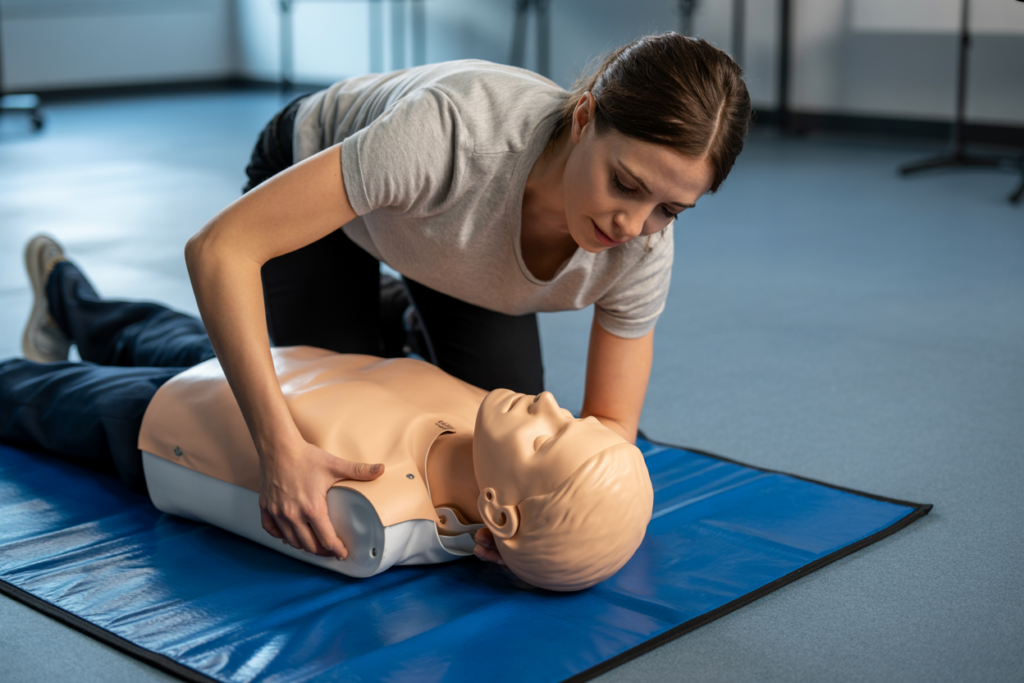
- Positioning an unconscious person into the recovery position
- Moving a patient to perform CPR on a firm surface
- Supporting someone with a suspected spinal injury
- Assisting a person with a sprained ankle or leg injury
- Safely transferring a casualty away from immediate danger
- Log-rolling techniques for suspected back injuries
In HLTAID011 Provide First Aid courses, you’ll learn and practice these techniques to ensure you can respond effectively while maintaining both patient and personal safety.
Manual Handling vs. Workplace Manual Handling: What’s the Difference?
If you’ve previously completed workplace manual handling training—perhaps when you started a retail, hospitality, or warehouse job—you might think you already know what to expect from the manual handling component of HLTAID011. However, first aid manual handling is quite different.
The Key Differences
| Aspect | Workplace Manual Handling | First Aid Manual Handling |
|---|---|---|
| What You're Moving | Objects, boxes, equipment | Injured or ill people |
| Predictability | Objects don't move unexpectedly | Patients may be unconscious, panicked, or unable to help |
| Primary Goal | Prevent back injuries | Prevent worsening patient injuries while protecting yourself |
| Technique Focus | Lifting, carrying, pushing | Rolling, positioning, supporting |
| Emotional Component | None | Managing patient fear and maintaining dignity |
| Decision-Making | Assess weight and plan | Assess injuries and decide if moving is safe |
What Manual Handling Techniques Are Taught in HLTAID011?
Your HLTAID011 Provide First Aid course covers five core manual handling techniques that you’ll learn, practice, and potentially be assessed on.
Recovery Position Placement
What it is: Rolling an unconscious but breathing patient onto their side to keep their airway clear.
When you’d use it: When someone has fainted, is unconscious from alcohol, or is breathing but unresponsive.
What you’ll learn: How to safely roll a patient from their back onto their side, proper positioning of arms and legs for stability, supporting the head and neck during the roll, and maintaining the airway while in recovery position.
Real scenario: A customer faints in your store. Once you’ve checked they’re breathing, you need to roll them into recovery position while you wait for the ambulance. This prevents them from choking if they vomit.
CPR Positioning and Body Mechanics
What it is: Safely positioning yourself and the patient for effective CPR delivery.
When you’d use it: During cardiac arrest when someone’s heart has stopped.
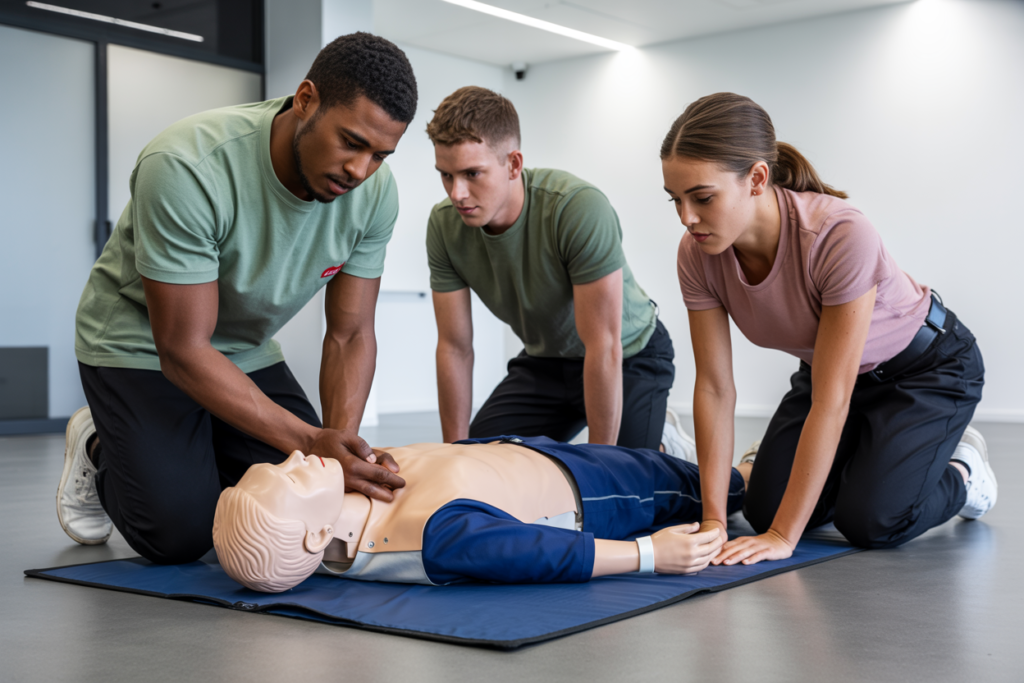
What you’ll learn: Moving a patient onto a firm surface if needed, proper hand placement and body positioning, using your body weight (not just arms) for compressions, minimizing strain on your back and wrists, and switching positions with another rescuer during extended CPR.
Real scenario: Someone collapses in your gym. They’re on carpet, which is too soft for effective CPR. You need to quickly assess whether you can perform CPR where they are or if you need to move them to a harder surface first.
Supporting Ambulatory Patients (Walking Wounded)
What it is: Helping someone who can walk but needs support due to injury or weakness.
When you’d use it: Twisted ankles, dizziness, weakness after injury, assisting someone away from danger.
What you’ll learn: Proper positioning to support someone’s weight, how to take weight through your legs (not your back), communication techniques, assessing when someone shouldn’t walk despite wanting to, and moving at the patient’s pace.
Real scenario: Someone in your office has twisted their ankle coming down the stairs. They can’t put weight on that foot but can hop with support. You need to help them to a chair and keep them there until medical help arrives.
Log-Rolling for Spinal Injuries
What it is: A technique to roll someone with suspected spinal injuries while keeping their spine aligned.
When you’d use it: Suspected back or neck injuries, especially if the patient is vomiting or their airway is compromised.
What you’ll learn: Coordinating with multiple rescuers, maintaining spinal alignment during the roll, communication between team members, and when log-rolling is necessary versus when to leave patient still.
Real scenario: Someone has fallen from a ladder and landed on their back. They’re conscious but complaining of back pain. If they start vomiting, you need to roll them onto their side to protect their airway—but you must do it in a way that doesn’t worsen a potential spinal injury.
Drag Techniques for Emergency Situations
What it is: Moving an unconscious person away from immediate danger when you’re alone.
When you’d use it: Fire, gas leak, unstable structure, traffic danger—situations where the person must be moved immediately despite potential injuries.
What you’ll learn: Different drag techniques (shoulder drag, blanket drag, clothing drag), when dragging is justified despite risk of worsening injuries, how to protect your own back while dragging, and the “life over limb” decision-making process.
Real scenario: There’s a fire in the workplace and someone has collapsed from smoke inhalation. Waiting for help isn’t an option—the immediate danger outweighs the risk of worsening any injuries.

Why Manual Handling Skills Matter More Than You Think
When people book their HLTAID011 course, they’re usually focused on learning CPR. Manual handling often gets dismissed as “the boring bit” or “just common sense.” But here’s why manual handling first aid techniques might be the most practical thing you learn.
You’ll Use Manual Handling More Often Than CPR
Most people will never perform CPR in their lifetime. But supporting someone who’s feeling faint? Helping someone with a sprained ankle? Positioning someone who’s unwell? These situations happen regularly in workplaces and public spaces.
Retail managers deal with customers feeling unwell every few months. Personal trainers occasionally have gym members push too hard and need to sit down quickly, or pull a muscle and need support walking. These aren’t dramatic emergencies, but proper manual handling prevents making the situation worse.
Poor Manual Handling Can Worsen Injuries
Moving someone incorrectly can convert a stable spinal injury into permanent paralysis, worsen broken bones, cause a dislocated joint to damage surrounding tissue, compromise an already difficult airway, or cause internal injuries to worsen.
Someone falls down stairs and can’t get up. Your instinct is to help them stand. But if they’ve injured their back, pulling them upright could cause catastrophic damage. Manual handling training teaches you when to assist and when to leave the person still and call an ambulance.
Manual Handling Protects You From Injury
First aid responders injure themselves all the time trying to help others. You’re so focused on the patient that you forget about your own body mechanics—throwing your back out performing CPR incorrectly, wrenching your shoulder trying to drag someone, hurting your knees kneeling on hard surfaces, or straining your wrists during compressions.
HLTAID011 manual handling teaches you to help effectively without becoming a casualty yourself. This is especially important if you’re the only person available—if you injure yourself, now there are two people who need help.
What to Expect: Manual Handling Assessment
One of the biggest sources of anxiety about HLTAID011 courses is the assessment component. Let’s be really clear about what you’ll actually be assessed on regarding manual handling.
Are You Specifically Assessed on Manual Handling?
Manual handling isn’t usually a standalone assessment—it’s integrated into your practical scenarios. You won’t have an instructor say “okay, now demonstrate the recovery position for assessment.” Instead, they’ll give you a scenario like “this person is unconscious but breathing—what do you do?” and you’ll naturally use manual handling as part of your response.
What Instructors Are Actually Looking For
Your instructor isn’t expecting perfection. They’re looking for safety awareness (are you thinking about the patient’s safety and your own?), communication (are you talking to the patient and explaining what you’re doing?), reasonable technique (are you using your body mechanics properly, even if it’s not perfect?), decision-making (do you understand when to move someone and when not to?), and willingness to try.
Instructors have taught everyone from 18 to 70+ and have seen students with bad knees, wrist pain, back problems, and general anxieties. They can make reasonable accommodations while still ensuring you meet the competency requirements.
The Pass Rate Reality
Here’s something that should reassure you: 98% of students pass HLTAID011 on their first attempt. That includes students who have never done first aid before, are nervous about physical requirements, have various physical limitations, or aren’t naturally “hands-on” people.
Why is the pass rate so high? Because your instructor practices with you extensively before assessment. You’ll do the recovery position multiple times during the morning. You’ll practice CPR positioning on mannequins repeatedly. By the time assessment happens, it’s familiar.
The assessment isn’t designed to trick you or make you fail—it’s designed to confirm you can do what you’ve just spent hours practicing.
Common Manual Handling Mistakes (and How to Avoid Them)
Mistake #1: Trying to Lift Instead of Roll or Drag
New first aiders often try to pick someone up under their arms to move them. This creates high risk of dropping the patient, can worsen spinal injuries, is terrible for your back, and is usually impossible if the person is unconscious. Use rolling techniques (like recovery position) or dragging techniques (in emergencies). You should almost never be trying to lift an adult casualty.
Mistake #2: Rushing the Movement
Panic mode kicks in and you try to move someone quickly without planning. This increases risk of dropping them, means you don’t check for spinal injury first, your technique falls apart when rushed, and the patient feels unsafe and panics too. Take three seconds to think before you move anyone: “Do they need to be moved? How will I do this safely? Do I need help?”
Mistake #3: Forgetting to Communicate With the Patient
You start moving someone without explaining what you’re doing. The patient tenses up or resists, increased anxiety for the patient, you lose their cooperation, and it looks unprofessional and uncaring. Instead say: “I need to roll you on your side to help you breathe. I’m going to support your head and shoulders. Ready? I’m going to roll you now.”
Mistake #4: Moving Someone With a Suspected Spinal Injury
Someone falls and hits their back, and you help them stand up or move them to be more comfortable. This can convert a stable injury to permanent paralysis—one of the few first aid mistakes with catastrophic consequences. If someone has fallen from height, been in a car accident, fallen down stairs, or has any mechanism that suggests spinal injury: keep them still, support their head in position, call ambulance immediately, and only move them if life-threatening situation (fire, etc.).
👕 What to Wear: Comfortable pants (not jeans or skirts), closed-toe shoes, and clothing you can kneel and move in freely. Think yoga class, not office meeting.
The Most Important Thing About Manual Handling
Here’s what veteran first aiders wish someone had told them: The goal of manual handling isn’t perfection—it’s preventing further harm.
In a real emergency, you probably won’t have ideal conditions, your technique won’t be textbook perfect, you’ll be working with stress and adrenaline, and things will be messier than in training. That’s okay.
Your HLTAID011 manual handling training gives you the foundation. It teaches you basic principles that work in most situations, how to adapt when conditions aren’t ideal, when to ask for help, and when moving someone is necessary versus when it’s dangerous.
You’re not expected to be a paramedic. You’re expected to provide reasonable first aid response using the skills you’ve been taught. Doing something imperfectly is better than doing nothing because you’re paralyzed by fear of getting it wrong.
Conclusion: You’re More Capable Than You Think
When you first clicked on this article, you were probably confused or anxious about the manual handling component of HLTAID011. Maybe you were worried about whether you’re physically capable. Maybe you didn’t understand what manual handling in first aid actually meant. Maybe you were concerned about assessment.
Here’s what you now know: HLTAID011 manual handling is practical, learnable, and designed for regular people—not athletes or healthcare professionals. It’s about safely managing injured or ill people during emergencies using techniques that prioritize both patient and rescuer safety.
The five core techniques—recovery position, CPR positioning, supporting ambulatory patients, spinal management, and emergency drags—cover the vast majority of situations you’ll face. You’ll practice these extensively during your course before any assessment happens.
The assessment isn’t designed to make you fail. Your instructor will work with you throughout the day, provide accommodations for physical limitations, and ensure you’re ready before assessing. The 98% pass rate isn’t a marketing claim—it’s reality.
You’ll use these skills more often than you expect, though probably not in dramatic, life-or-death situations. More likely: helping customers who feel unwell, supporting colleagues with minor injuries, assisting people who’ve lost their balance, making good decisions about when to move someone and when to keep them still.
And even if you never use these manual handling skills in a real emergency? You’ll leave your course with confidence that you could respond if needed. That’s worth something.
The manual handling component of HLTAID011 isn’t the scary part—it’s the practical part. It’s what makes first aid training actually useful rather than just theoretical. You’re about to learn skills that could genuinely help someone.
Book Your First Aid Training Now
Fast, affordable, and nationally accredited training delivered by professionals who care
Frequently Asked Questions About HLTAID011 Manual Handling
Q.Do I need to be physically strong to do manual handling techniques?
No, manual handling in first aid is about technique, not strength. The techniques are designed to use body mechanics and leverage rather than pure muscle power. Your instructor will show you how to use your body weight effectively for CPR compressions, how to roll someone using proper positioning rather than arm strength, and how to support patients by taking weight through your legs. People of all sizes and fitness levels successfully complete HLTAID011 every day.
Q.How is first aid manual handling different from workplace manual handling?
Workplace manual handling teaches you to safely lift boxes, use trolleys, and move equipment without injuring your back. First aid manual handling teaches you to safely move, position, and support injured or ill people during emergencies. The techniques are completely different because you're dealing with humans who may be unconscious, in pain, or have injuries that could worsen if moved incorrectly. Your workplace manual handling certificate doesn't cover patient care situations.
Q.Will I actually use these manual handling skills in real life?
Yes, probably more than you'd expect. While most people never perform CPR, manual handling situations are common — helping someone who feels faint and needs support to a chair, assisting a colleague who's twisted their ankle, positioning someone who's unwell while waiting for an ambulance, or supporting elderly customers who've lost their balance. These aren't dramatic emergencies, but they happen regularly in workplaces and public spaces.
Q.What's the most common mistake beginners make with manual handling?
The most common mistake is trying to lift someone instead of using proper rolling or dragging techniques. People instinctively try to pick someone up under their arms, which is dangerous for both the patient and the rescuer. The second most common mistake is rushing movements without taking a few seconds to plan. Your instructor will specifically teach you to avoid these habits.
Q.Do I need to remember everything perfectly after the course?
No, and this is why you receive a manual and certificate that includes key information. The goal is to understand the principles and feel confident responding to emergencies, not to memorize every detail perfectly. In real emergencies, you'll remember the core techniques because you've practiced them physically. You can always refer back to your course materials for specific details.
Making first aid training more affordable for
every classroom
We believe every student deserves access to life-saving first aid knowledge. That’s why we offer specially reduced pricing for schools and educational groups. Whether you’re booking for a single class, a year group, or your entire school, our flexible packages make training more accessible and cost-effective — without compromising quality.
