

Did you know your HLTAID011 certificate might expire sooner than you think? While the full qualification lasts 3 years, the CPR component requires annual renewal—a detail that catches thousands of Australian workers off guard every year.
Here’s the thing that trips people up: you check your certificate, see it’s valid until 2027, and figure you’re sorted. But meanwhile, your CPR component expired six months ago. You’re technically non-compliant, your insurance might not cover you, and if there’s a workplace audit? That’s when the panic sets in.
Understanding HLTAID011 validity periods means knowing exactly when to renew, avoiding compliance gaps, and protecting yourself from liability issues.
How Long Does HLTAID011 Last?
HLTAID011 Provide First Aid certificates last 3 years from the date of completion. However, the CPR component requires annual renewal.
Here’s the complete validity breakdown:
- Full HLTAID011 qualification: Valid for 3 years
- CPR component (HLTAID009): Must be renewed every 12 months
- Certificate expiry date: Listed on your certificate as completion date plus 3 years
You need to complete a CPR refresher course annually to maintain valid certification, even though your full HLTAID011 certificate shows a 3-year expiry date.
Example: If you completed HLTAID011 on January 15, 2024:
- CPR renewal due: January 15, 2025
- Full certificate expires: January 15, 2027
Think of it like a driver’s license that’s valid for 5 years, but you still need to service your car every 12 months. Both matter, but they’re on different schedules.
⚠️ Important: Your HLTAID011 certificate shows a 3-year expiry, but your CPR component expires every 12 months. You need to track BOTH dates separately. Most workplace compliance issues happen because workers forget about the annual CPR requirement.
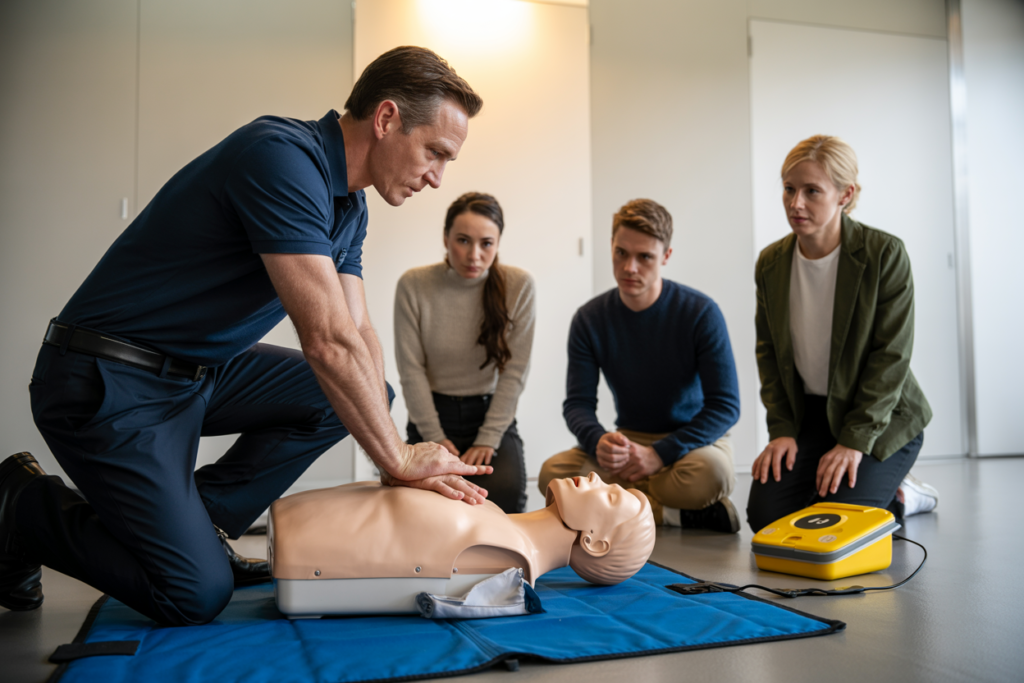
Understanding HLTAID011 Validity
The 3-Year Rule Explained
Your HLTAID011 certificate is valid for three years from the date you complete the course—not from when you book it, not from when you receive the certificate, but from the actual day you finish training and pass your assessment.
Check your certificate for the “Date Issued” or “Date of Achievement” field. Some certificates show the expiry date directly, but if yours doesn’t, just add three years to your completion date.
HLTAID011 replaced the old HLTAID003 back in 2022, but the validity period stayed the same—still three years. If you’ve got an old HLTAID003 certificate that hasn’t expired yet, it’s still valid until the date shown.
The three-year rule isn’t arbitrary. Training standards require this renewal period to make sure your skills stay current with medical guidelines and best practices. CPR techniques get updated, treatment protocols change, new equipment comes out.
The Annual CPR Renewal Requirement
Why CPR Needs Annual Renewal
You’ve got a certificate that’s valid for three years, but you still need to renew part of it every year.
CPR techniques change more frequently than other first aid skills. The Australian Resuscitation Council updates their guidelines regularly based on new research. But there’s another reason: muscle memory deteriorates fast.
You can learn proper chest compressions, pass your assessment, and genuinely know what you’re doing. But if you don’t practice for 18 months? Your technique will have degraded.
If someone collapsed in front of you right now, could you confidently perform CPR? If your last training was two years ago, probably not as well as you think. That’s why the annual refresh exists.
HLTAID011 vs HLTAID009 Validity
HLTAID011 (Provide First Aid) = Full first aid qualification valid for 3 years
HLTAID009 (Provide CPR) = CPR component renewed every 12 months
When you complete HLTAID011, you’re getting both. But even though you learned CPR as part of your HLTAID011, that CPR component still expires after 12 months.
Here’s why they’re different: CPR is a physical skill that degrades quickly. Bandaging a wound, recognizing a stroke, managing a fracture—these are knowledge-based skills that stick around longer. But proper chest compressions? That’s muscle memory, and it fades fast.
What “Maintain Valid Certification” Means
Most employers require “current” first aid certification. And by current, they usually mean CPR that’s been renewed within the last 12 months. Your HLTAID011 certificate might show you’re valid until 2027, but if your CPR component is 15 months old? You’re not compliant anymore.
For personal trainers, this is non-negotiable. Fitness Australia explicitly requires CPR renewal every 12 months. Let that lapse, and your insurance coverage becomes invalid.
About 40% of workers don’t realize CPR expires annually. They completed HLTAID011, filed away their certificate, and assumed they were sorted for three years. Then their employer asks for updated CPR certification, and they’re scrambling.
When to Book Your Renewal
The Ideal Timeline
Don’t wait until the last minute. Here’s the timeline you should follow:
3 months before expiry: Start researching your options. Check which providers have courses available.
6-8 weeks before: Book your course. You’re far enough out that popular dates haven’t filled up yet.
2-4 weeks before: Complete your renewal. You walk out with your new certificate, submit it to your employer, and you’ve got zero gap in compliance.
Never let it fully expire. If your certificate expires, you’re technically operating without valid first aid certification. That’s a workplace safety breach.
Annual CPR Renewal Schedule
Month 11: Start planning. Check your calendar, figure out when you can spare time for the refresher course.
Month 12: Complete your CPR refresher. Don’t push it into month 13.
Set calendar reminders. Set a reminder at 11 months, another at 11.5 months, and a final one at 11 months and three weeks. Make it impossible to forget.
Try to schedule your annual CPR renewal for the same time each year. Makes it easier to remember.
Certificate Expiring Soon?
If your certificate expires in two weeks or has already expired, don’t panic—it happens more than you’d think.
A retail manager completed her HLTAID011 three years ago and forgot about it. Then her area manager mentioned an upcoming safety audit. She checked her certificate and discovered it had expired two months earlier. She booked a course immediately, completed it, and got her certificate same day. Crisis averted, but stressful.
A personal trainer let his certificate expire for three months. When a gym member had a minor incident during a session, he realized—if something major happened, he’d been operating without valid insurance. He booked a course the next week and set up reminders.
If your certificate is expiring or has already expired:
- Check available course dates
- Book the soonest one that fits your schedule
- Complete the course
- Submit your new certificate immediately
Don’t wait another week. Book it now.
What Happens When HLTAID011 Expires?
Immediate Consequences
The moment your HLTAID011 certificate expires, you’re in breach of workplace compliance. It doesn’t matter if it’s expired by one day or one year—technically, you’re no longer certified.
Workplace compliance breach: Most employment contracts for retail managers, gym staff, hospitality supervisors, and similar roles require current first aid certification. It’s written into your position requirements. When your certificate expires, you’re not meeting the conditions of your employment.
Insurance coverage gaps: This one’s serious, especially for self-employed workers. If your first aid certificate has expired, your professional indemnity insurance might not cover you. You could be training clients or working in your role thinking you’re protected, but if there’s an incident? You’re personally liable. Insurance companies check certification dates. They’re not going to pay out a claim if you weren’t properly certified when the incident occurred.
Legal liability implications: Let’s say someone has a medical emergency at your workplace. You attempt to help, something goes wrong, and it comes out later that your first aid certificate had expired. That changes the legal situation entirely. You’re no longer a certified first aider acting within your training—you’re an uncertified person who intervened.
Employment requirements violation: If your employer discovers you’ve been working with an expired certificate, that’s grounds for disciplinary action. Depending on your workplace and how long it’s been expired, that could range from a formal warning to actual termination.
I’m not trying to scare you—I’m telling you what actually happens. These aren’t theoretical consequences, they’re real situations workers face when they let certificates lapse.
Can You Still Work With Expired Certification?
Technically? Maybe. Practically? You shouldn’t.
There’s no law saying you can’t show up to work with an expired first aid certificate. You’re not going to get arrested. But that doesn’t mean there aren’t consequences.
Your employer’s policy is what matters. Some workplaces have strict requirements—if your certificate expires, you’re not supposed to be in that role until you renew. Others are more flexible and might give you a grace period to get it sorted.
But here’s the thing: even if your employer doesn’t notice immediately, you’re still operating outside your insurance coverage and workplace safety requirements. That’s a risk you shouldn’t take.
For industries with specific body requirements, it’s even clearer. Fitness Australia, for example, requires current first aid certification for personal trainers. If your certificate expires, you’re not meeting their standards. Period.
Do some people keep working with expired certificates? Yeah, they do. Maybe their employer hasn’t checked recently. Maybe they’re banking on renewing before anyone notices. But that’s playing with fire.
Grace periods? Not really. Some employers might not enforce it immediately, but that’s different from an official grace period. There’s no “you get an extra 30 days” rule. Once it expires, it’s expired.
How Long After Expiry Can You Renew?
There’s no official grace period for renewal, and you can’t “back-date” your certification.
If your certificate expired yesterday or six months ago, the process is the same—you need to complete the full HLTAID011 course again. You can’t just do a quick refresher. You’re starting from scratch.
A retail manager’s certificate had been expired for two months when she discovered it. She hoped she could just do a CPR refresher to “reactivate” it. Nope. She had to complete the full HLTAID011 course, same as someone doing it for the first time.
If you’ve been operating with an expired certificate, you need to document that gap when you update your insurance. Some insurance providers will ask when your last valid certification was. Be honest. Trying to hide a gap can void your policy entirely if they find out later.
Here’s the reality: most people who let their certificates expire don’t do it on purpose. They’re busy, they forget, life gets in the way. But the consequences are real whether it was intentional or not.
On average, people who let their certificates fully lapse go about five months before renewing. That’s five months of non-compliance, five months of insurance gaps, five months of potential liability. And about 30% of workers let their certificates lapse at some point during their career.
There’s literally no upside to letting it expire. The only thing that changes is how much stress and risk you’re taking on.
If your certificate has already expired, stop reading and book a course right now. Seriously—the longer you wait, the bigger the gap, the more risk you’re carrying.
📊 The 30% Reality: Nearly one in three workers lets their first aid certificate lapse at some point. The average gap before renewal is five months. That's five months of operating without valid insurance coverage, five months of potential liability, and five months of workplace non-compliance. Don't become part of this statistic.

Renewal vs Full Course
Understanding “Renewal” in First Aid Training
When we talk about “renewing” your first aid certificate, we don’t mean there’s a separate, shorter renewal course. You’re completing the full HLTAID011 course again—same content, same assessment.
The only exception is CPR. When your annual CPR renewal comes up, you can complete just the HLTAID009 Provide CPR course. You’re not re-doing the full first aid qualification—just refreshing your CPR component.
After 12 months: HLTAID009 (CPR only)
After 3 years: HLTAID011 (full first aid)
When You Need Full HLTAID011 vs CPR-Only
You need full HLTAID011 when:
- It’s been 3 years since your last full first aid course
- Your HLTAID011 certificate has expired (even by one day)
- You’re getting certified for the first time
You can do CPR-only (HLTAID009) when:
- Your HLTAID011 is still valid (hasn’t hit the 3-year mark)
- It’s been 12 months since your last CPR training
- You’re maintaining compliance between full renewals
Practical example: You completed HLTAID011 in January 2024. In January 2025, you complete HLTAID009 (CPR only). In January 2026, you complete HLTAID009 again. In January 2027, your HLTAID011 expires, so you need to do the full course again.
Two years of CPR refreshers, then back to the full course in year three.
Do Instructors Go Easier on Renewals?
Short answer: no.
The practical assessment standards are the same whether it’s your first HLTAID011 or your tenth. You need to demonstrate proper CPR technique with correct compression depth and rate, correct hand placement. You need to show you can manage injuries correctly, apply bandages and dressings appropriately, and recognize medical emergencies like heart attacks and strokes.
Instructors don’t grade on a curve. There’s a competency standard set by national training regulations, and everyone needs to meet it. No exceptions.
That said, people who are renewing often do find the course easier—not because standards are lower, but because they’ve done it before. You know what to expect from the day. You’re not nervous about the unknown. Muscle memory from your last training helps, even if it was three years ago. Your hands remember where to place themselves for compressions. Your brain remembers the basic assessment sequence.
But “easier” doesn’t mean the instructor is giving you a pass. You still need to perform the skills correctly and demonstrate competency. The assessment is the same. The requirements are the same. The only difference is your familiarity with the process.
Conclusion: Don’t Let Your HLTAID011 Expire
Your HLTAID011 certificate lasts three years, but your CPR component needs annual renewal. That’s two different timelines you need to track, and forgetting either one puts you in non-compliance.
Most workers who let their certificates lapse don’t do it because they don’t care—they do it because they’re busy, they forget, or they genuinely didn’t realize CPR expired annually. Now you know better.
The consequences of expired certification aren’t theoretical. Invalid insurance coverage, workplace compliance breaches, potential legal liability, failed audits—these affect real people.
Here’s what you should do right now:
Check your certificate. Find your HLTAID011 completion date. Add three years—that’s your full certificate expiry. Add 12 months—that’s when your CPR expired or will expire.
Set reminders. Don’t trust your memory. Set calendar alerts at 11 months (for CPR) and 33 months (for full renewal). Make them impossible to ignore.
Book ahead. If you’re within three months of either expiry date, book your renewal course now. Don’t wait.
The difference between staying compliant and letting your certificate lapse is planning. Advance notice turns a stressful emergency into a simple appointment.
You completed your first aid training to be prepared if someone needs help. Make sure that training stays current. Because the one time you’ll actually need to use those skills, you want to be confident you’re doing it right, and you want to know you’re legally covered.
Your certificate expiry date isn’t a suggestion. It’s the deadline for maintaining your professional obligations, your insurance coverage, and your ability to genuinely help someone in an emergency.
Don’t be the person who realizes their certificate expired six months ago when their employer asks for updated documentation. Be the person who renewed on time, submitted their new certificate without drama, and never had to stress about compliance gaps.
Your three-year validity period goes faster than you think. Plan ahead, stay compliant, and keep your skills current.
Book Your First Aid Training Now
Fast, affordable, and nationally accredited training delivered by professionals who care
Frequently Asked Questions
Q.Can I renew my HLTAID011 before it expires?
Yes, and you should. You can complete your renewal anytime before expiry. Most people book 2-4 weeks before their expiry date to avoid compliance gaps. There's no penalty for renewing early.
Q.What's the difference between HLTAID011 and HLTAID003?
HLTAID003 was replaced by HLTAID011 in 2022. They're essentially the same course with updated content. Both have 3-year validity. If your HLTAID003 hasn't expired, it's still valid, but you'll complete HLTAID011 when you renew.
Q.Do I need to do CPR every year if my HLTAID011 hasn't expired?
Yes. Even though your HLTAID011 is valid for three years, the CPR component must be renewed annually by completing HLTAID009. Most employers and insurance providers require current CPR within the last 12 months.
Q.What happens if I fail the HLTAID011 assessment?
You'll typically get additional coaching and another opportunity to demonstrate the skills. Most providers work with you until you're competent. The pass rate is very high (over 95%) because instructors ensure you're ready before assessing you.
Q.Can I do my first aid course online?
HLTAID011 requires face-to-face practical training. You can do theory components online beforehand, but you must attend in-person training to practice CPR, use an AED, and demonstrate physical skills. Fully online HLTAID011 courses aren't legitimate.
Making first aid training more affordable for
every classroom
We believe every student deserves access to life-saving first aid knowledge. That’s why we offer specially reduced pricing for schools and educational groups. Whether you’re booking for a single class, a year group, or your entire school, our flexible packages make training more accessible and cost-effective — without compromising quality.
