

Your principal contractor wants proof of HLTAID014 before your crew sets foot on site. The tender closes Friday. And honestly, the last thing you need right now is chasing up some RTO that can’t get you a certificate in time.
Here’s the thing about being a site supervisor, nobody calls you when everything’s going fine. They call you when a worker’s gone down, when there’s a gap in the qualifications register, or when a head contractor’s compliance officer is standing at the gate asking to see paperwork you thought was sorted weeks ago. You don’t get to plan for the bad day. You just have to be ready for it, and ready means having the right people with the right ticket, not just a ticket.
That’s where HLTAID014 comes in, and it’s also where a lot of supervisors get caught out. Standard first aid covers the basics fine for an office or a retail floor. But on a site with a mobile plant, working at heights, or excavation, basic isn’t what your WHS risk assessment is asking for anymore. It’s asking for advances.
In this guide, you’ll get the full picture: exactly what HLTAID014 covers, who actually needs it, how it stacks up against a standard first aid certificate, and how to get your crew booked in and certified with First Aid Alive.
What Is an HLTAID014 RTO?
Here’s the short answer first.
An HLTAID014 RTO is a Registered Training Organisation approved by ASQA to deliver and certify the nationally recognised unit HLTAID014, Provide Advanced First Aid. First Aid Alive (RTO 31106) is an HLTAID014 RTO offering:
- Online theory completed at your own pace, on any device
- A practical assessment at our venue or your workplace
- Statement of Attainment issued on course completion
- ASQA-compliant certification accepted by employers, principal contractors, and WorkSafe Queensland
Unlike standard first aid certificates (HLTAID011), an HLTAID014 RTO certifies advanced skills including casualty triage, trauma management, and complex medical emergency response, the kind of training required for high-risk industries like construction, mining, and utilities.
If you’re a one-man-band electrician or running a quiet warehouse, HLTAID011 probably does the job. But if your site’s got mobile plants moving around or blokes working at heights, that’s a different risk profile, and it calls for a different level of training. We’ll get into exactly who needs which one further down.
What Is HLTAID014, Provide Advanced First Aid?
HLTAID014 is the nationally recognised unit of competency for advanced first aid, sitting under Australia’s Health Training Package. It’s not a rebadged version of the standard course with extra paperwork bolted on. It builds on what you’ve already learned in HLTAID009, Provide CPR, and takes you well past general first aid into territory that’s genuinely useful when an incident on site is serious, not straightforward.
What Does HLTAID014 Cover?
Here’s what you’ll actually walk away knowing how to do:
- Casualty assessment and triage
- CPR and AED use
- Managing bleeding, fractures, burns, and other injuries
- Responding to asthma, anaphylaxis, seizures, and other medical emergencies
- First aider responsibilities in a workplace setting
That triage piece is one a lot of supervisors don’t expect going in. If you’ve got more than one person down, or you’re not sure yet how serious it actually is, triage is what helps you work out who needs attention first and who can wait a minute. On a site with multiple workers and a genuine emergency, that skill is the difference between calm, useful action and everyone just kind of standing around not knowing where to start.
A Format Built Around Your Schedule
Plenty of RTOs still run HLTAID014 as a full classroom day, start to finish, which means pulling a worker off-site for the better part of a shift. We don’t do it that way.
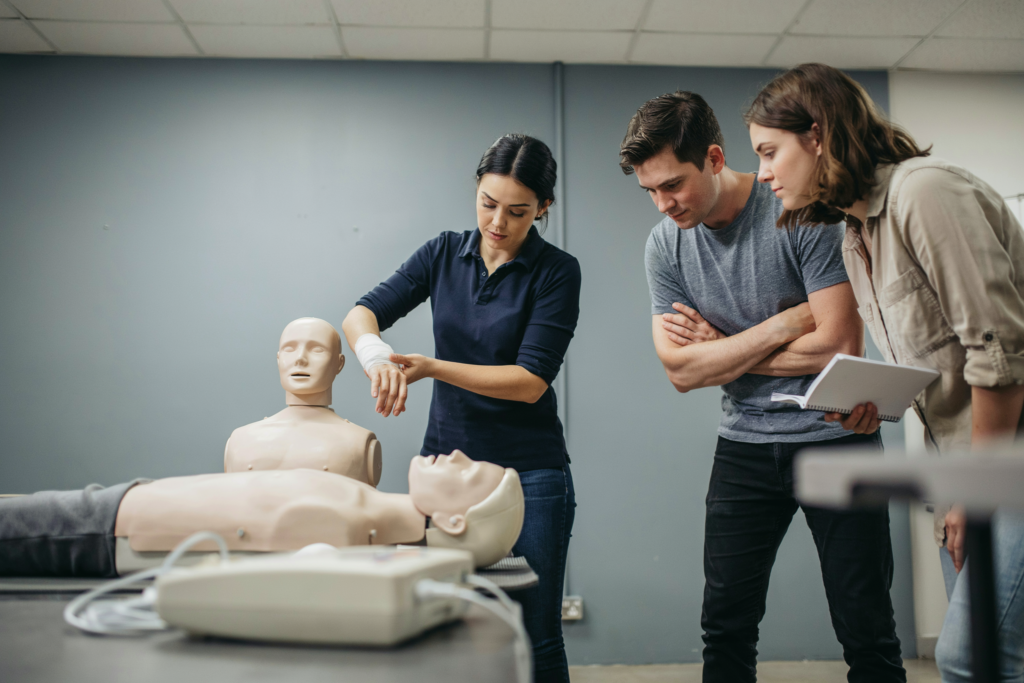
Our format is self-paced online theory, completed whenever and wherever suits you, paired with a practical session to lock in the hands-on skills. No wasted day sitting through theory you could’ve covered on your phone the night before.
💡 Worth knowing: HLTAID014 builds directly on HLTAID009 and HLTAID011. It's not a standalone unit—it's the next level up, and the course structure reflects that hierarchy.
The content and assessment standards are governed by the Australian Resuscitation Council (ARC) Guidelines, the same authority underpinning every other recognised first aid unit in the country. If you want to check the unit’s official currency and scope, the training.gov.au listing for HLTAID014 lays it out directly from the source.
Understanding the content is one thing. Knowing whether it’s the right level for your site is another. That’s exactly what we’ll cover next.
🏗️ Site reality check: If your WHS risk assessment already flags heights, plant, or excavation, the question usually isn't whether you need HLTAID014—it's how fast you can get it sorted.
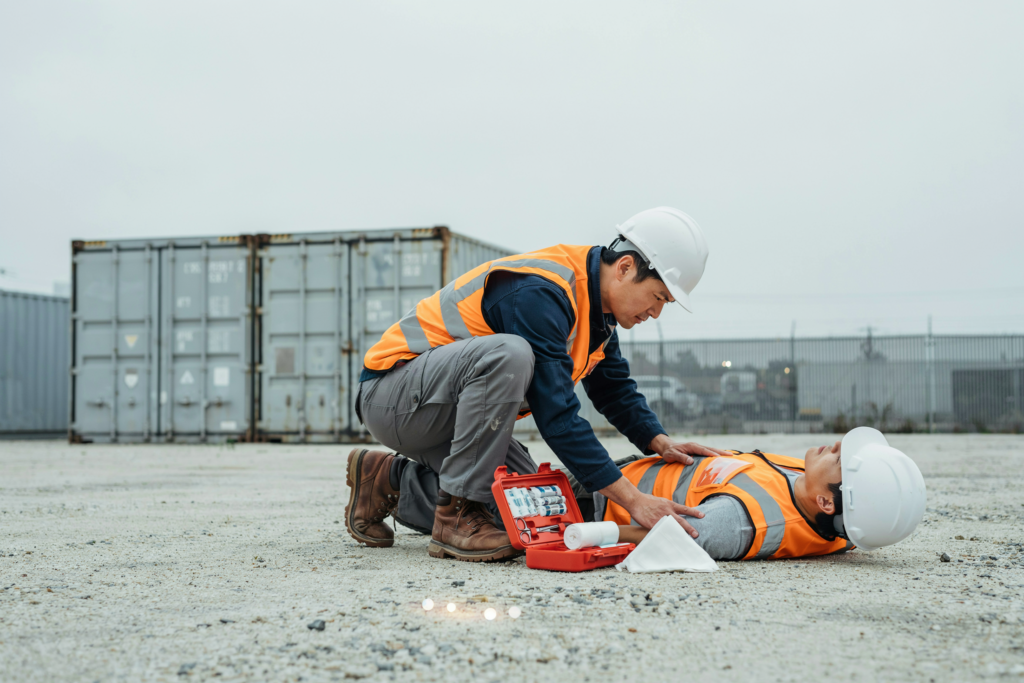
Who Needs HLTAID014? (Is This the Right Course for Your Site?)
Not every workplace needs advanced first aid, and that’s fine, there’s no point paying for a level of training your risk profile doesn’t actually call for. But if you’re reading this because someone above you flagged a gap, there’s a decent chance your site falls into one of these categories.
High-Risk Industries Requiring Advanced First Aid
HLTAID014 is built for workplaces where the type of injury you might be dealing with is more serious, and where help might take longer to arrive. That typically means:
- Construction and civil works
- Mining services
- Utilities, water, gas, telco infrastructure
- Manufacturing
- Warehousing and logistics with high-risk plant
If your site has got mobile plants moving around all day, blokes working at heights, or trenches and excavation work happening, you already know the kind of injuries that can happen aren’t always the simple cuts-and-scrapes variety. A fall from height, a crush injury from a plant, or a trauma case in a remote location, that’s exactly the scenario HLTAID014 is designed around.
When Your Site Requires More Than Standard First Aid
A few signs your site has moved past what a standard certificate can cover:
- Your principal contractor's tender or pre-qualification documents name HLTAID014 specifically, not just "first aid," but the advanced unit by name
- Your site sits well outside normal emergency service response times
- A WHS risk assessment has flagged high-risk plant, electrical work, excavation, or working at heights as live hazards on site
Safe Work Australia’s First Aid in the Workplace Code of Practice is the document that underpins most of these obligations. It sets out how employers are meant to assess first aid needs based on the actual risks present, not just a blanket minimum. And in Queensland specifically, WorkSafe plays a direct role in how those obligations get applied at the site level, which is often where the “you need HLTAID014, not HLTAID011” requirement actually originates from.
If you’ve had a tender knocked back, or a compliance audit flag a gap, this is usually the reason. It’s not that your crew did something wrong, it’s that the qualifications register hasn’t caught up with what the site actually demands.
If you’re still weighing this up against a standard first aid certificate, here’s the side-by-side.
HLTAID014 vs HLTAID011: What’s the Difference?
This is the question we get asked more than almost any other, usually from a supervisor who’s just been told their current certificates aren’t enough anymore and wants to know exactly why.
Standard First Aid vs Advanced First Aid
Feature | HLTAID011 (Standard) | HLTAID014 (Advanced) |
Scope | Core first aid response | Core, plus 7 specialist subjects (trauma, triage, complex bandaging, and more) |
Prerequisite | None | HLTAID009, Provide CPR |
Ideal for | General workplaces | High-risk industries: construction, mining, utilities |
Renewal | Every 3 years (CPR component annual) | Every 3 years (CPR component annual) |
The prerequisite is worth sitting on for a second, because it trips a few people up. You can’t walk straight into HLTAID014 without HLTAID009 already done and dusted, Provide CPR is the foundation everything else gets built on top of. So if you’re not sure where your crew stands, that’s the first thing worth checking before you book.
Beyond that, HLTAID014 isn’t a different course covering different ground. It’s HLTAID011’s scope, plus seven additional specialist subjects layered on top, trauma management, casualty triage, and more complex bandaging and wound care among them. Think of it less as “first aid, but harder” and more as first aid with the toolkit expanded for the kind of incidents a basic kit and basic training just weren’t built to handle.
Once you’ve confirmed HLTAID014 is what your site needs, the next question is which RTO to book with.
Why Choose First Aid Alive as Your HLTAID014 RTO
Once you’ve worked out HLTAID014 is what your site needs, the next decision is who you book it with. That decision matters more than people sometimes assume, not all RTOs run this course the same way, and not all of them are built around the reality of what a site supervisor is actually dealing with.
Fast Turnaround for Contractor Compliance Deadlines
If you’ve ever had a worker sitting idle because a Statement of Attainment hadn’t come through yet, you know how that delay can cost a job. Contractor management platforms like RapidGlobal, Cm3, and similar systems often won’t grant site access until that document is uploaded, and they don’t care that the course was completed, only that the paperwork’s there.
That’s why First Aid Alive prioritises fast issuing of the Statement of Attainment on course completion, built specifically with contractor management platform upload deadlines in mind.
Flexible Delivery, Your Site or Ours
You’ve got two ways to run the practical component. You can attend our venue, or have a mobile trainer come to your depot or site shed. The online theory gets done remotely beforehand either way, so by the time the practical day rolls around, your crew’s already across the content and ready to focus purely on the hands-on skills.
Nationally Recognised, ASQA-Compliant Certification
Every certificate issued is tied to our registration as RTO 31106, which means it’s nationally recognized and ASQA-compliant, accepted by employers, principal contractors, and WorkSafe Queensland. It’s not a “should be fine” certificate. It’s one built to hold up against an audit, a tender review, or a contractor management platform’s verification check, because that’s exactly the situation our clients are usually booking it for.
If you’re booking for more than one person, here’s how to make that simple.
👷 Worth remembering: Site supervisors rarely book one seat. Group pathways exist because that's not how this actually plays out on real sites.
How to Book Your HLTAID014 Course
By this point you’ve worked out whether HLTAID014 is right for your site, you know how it stacks up against HLTAID011, and you’ve got a sense of why First Aid Alive runs it the way we do. So here’s exactly what booking looks like, step by step.
Step-by-Step Booking Process
- Book online or contact the team directly
- Complete the online theory component at your own pace
- Attend the practical session, either at our venue or on-site
- Receive your Statement of Attainment
That’s the whole process, start to finish. No drawn-out enrollment back-and-forth, no chasing paperwork after the fact.
What to Bring to Your Practical Session
Nothing’s required. If you want to bring a pillow or towel for the floor-based CPR practice, you’re welcome to, but it’s entirely optional, most people just turn up and get stuck in.
Where This Leaves You
So, quick recap. HLTAID014 is the advanced first aid unit built for sites where standard training doesn’t quite cover the risk you’re carrying, construction, civil works, mining, utilities, manufacturing, and warehousing with high-risk plants. If your principal contractors named it specifically, your site sits well outside normal emergency response times, or a WHS risk assessment has flagged hazards like working at heights or excavation, that’s your sign it’s time to get your crew booked in.
Getting there doesn’t have to eat into your week. Self-paced online theory, a practical session, and a Statement of Attainment that’s ready to go straight into whatever contractor management platform your principal contractor’s using. No full day lost. No crew sitting idle waiting on paperwork.
If you’ve got a tender closing, an audit coming up, or a mobilisation date already locked in, the time to sort this is now, not the week it’s due.
Book Your First Aid Training Now
Fast, affordable, and nationally accredited training delivered by professionals who care
Frequently Asked Questions
Q. What is an HLTAID014 RTO?
An HLTAID014 RTO is a Registered Training Organisation approved by ASQA to deliver and certify the nationally recognised unit HLTAID014, Provide Advanced First Aid. First Aid Alive (RTO 31106) is a Brisbane-based HLTAID014 RTO offering online theory, a practical assessment, and ASQA-compliant certification accepted by employers and principal contractors.
Q. What does HLTAID014 cover?
HLTAID014 covers casualty assessment and triage, CPR and AED use, managing bleeding, fractures, burns, and other injuries, responding to medical emergencies including asthma, anaphylaxis, and seizures, and understanding first aider responsibilities in a workplace environment.
Q. How often should I refresh my HLTAID014 certification?
HLTAID014 certification should be renewed every 3 years, while the CPR component (HLTAID009) should be refreshed every 12 months.
Q. What are the prerequisites for HLTAID014?
Before enrolling in HLTAID014, participants must have completed HLTAID009, Provide Cardiopulmonary Resuscitation.
Making first aid training more affordable for
every classroom
We believe every student deserves access to life-saving first aid knowledge. That’s why we offer specially reduced pricing for schools and educational groups. Whether you’re booking for a single class, a year group, or your entire school, our flexible packages make training more accessible and cost-effective — without compromising quality.
