

Most people who book HLTAID015 oxygen therapy training in Brisbane have already used the gear for real. You’ve run CPR on a warehouse floor or a stadium concourse. Pads on, AED doing its thing, someone’s already dragged the cylinder over. Then you crack it open and lose a few seconds working out the regulator while half the crew stands there watching. Maybe the patient did fine. Plenty do. But the gap still bothers you, doesn’t it. It’s the bit you replay in the ute on the drive home.
That gap has a name. It’s skill fades, and honestly it’s normal for a kit you only pick up when something’s gone badly wrong. HLTAID015 Provides Advanced Resuscitation and Oxygen Therapy is built to close it. Only if the day gets spent on the equipment though, not on CPR basics you could just about teach yourself.
This guide walks through what the oxygen therapy side of HLTAID015 looks like with First Aid Alive in Brisbane. The equipment you’ll set up. The airway and ventilation skills you’ll practise. How scenario-based assessment works, what the entry requirements are, and how ERT leaders can get a whole team trained onsite. So if you’re renewing before an audit, a FIFO swing or event season, you’ll know exactly what you’re booking before you pick up the phone.
What Does HLTAID015 Oxygen Therapy Training Cover?
HLTAID015 Provide Advanced Resuscitation and Oxygen Therapy trains you to use specialised resuscitation and oxygen equipment in line with Australian Resuscitation Council (ARC) guidelines. The skills you are assessed on include:
- Identifying the need for oxygen, including with a pulse oximeter
- Knowing when oxygen helps and when it should not be used
- Making the environment safe for oxygen delivery
- Selecting, preparing and managing the cylinder and regulator
- Choosing the right delivery device for a conscious casualty
- Two-rescuer resuscitation using bag-valve-mask ventilation with oxygen
- Checking respirations, pulse and oxygen saturation
- Maintaining and restoring resuscitation and oxygen equipment after use
HLTAID015 supersedes, but is not equivalent to, HLTAID007.
Who Needs HLTAID015 Oxygen Therapy Training in Brisbane
This course isn’t for beginners. It’s for people who already carry the responsibility and want the skills to match.
ERT leaders and senior first aid officers
You’re the person who gets the radio call. When someone goes down on a warehouse or plant floor, the first aid room has oxygen, a bag-valve-mask and AEDs sitting in it, and everyone looks at you. HLTAID015 Brisbane sessions are where that gear stops being something you check on a list and becomes something you actually trust your hands with.
Event first aiders
Concerts, stadium games, big public shows. Huge crowds, long shifts, and you might go a whole season without touching a regulator, then need it twice in one night. Event medical providers set their own currency rules, so check with yours on what they need from you and how often.
FIFO and mine site workers based in Brisbane
You’re home for a short break and your ticket’s close to running out before the next swing. Site rules on what’s needed vary, so check with your site before you book.
Lifeguards, aquatic staff and outdoor guides
Pools, beaches, river trips and remote walks all put you a fair way from an ambulance. If oxygen is part of your kit, an advanced resuscitation course Brisbane providers run is the natural step up from standard first aid.
Dental practices
Plenty of dental practices hold oxygen and need staff trained to use it. Dental teams have their own needs, so we’ve covered them on a separate page.
Entry requirements
Check the entry requirement before you book. Most providers require a current HLTAID011 Provide First Aid.
If one of those roles sounds like yours, here’s what the day actually involves.
🧰 Hands first: Expect a lot more time on the cylinder and the bag-valve-mask than in a chair.
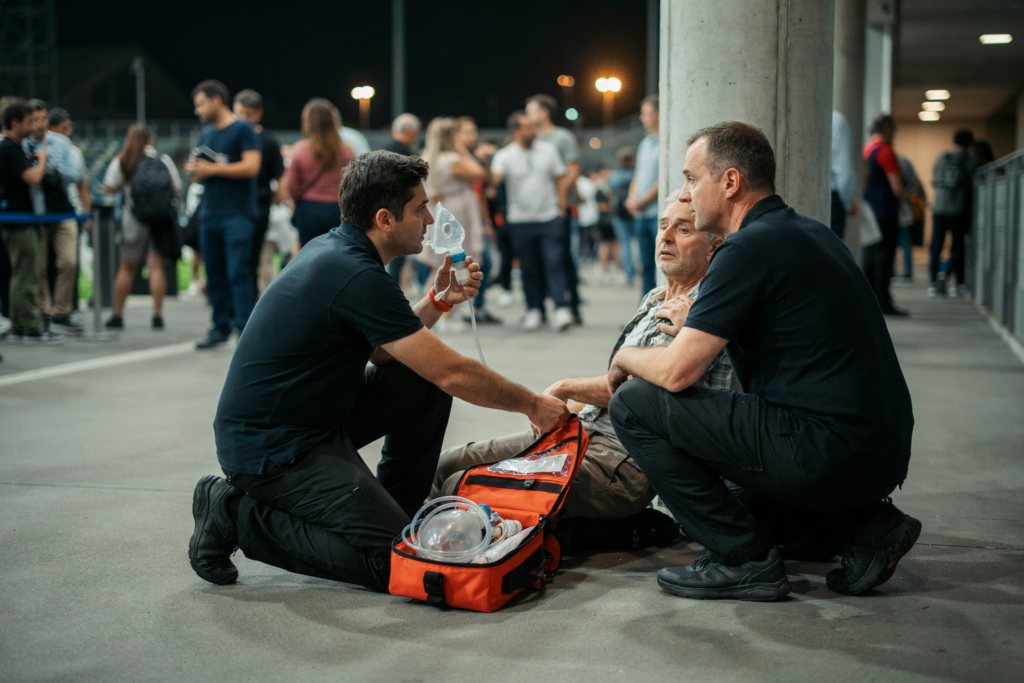
What You’ll Actually Do on an HLTAID015 Oxygen Therapy Course
This is the part most people want to know before they book. Not the theory. What your hands will be doing all day, which is setting up, using and packing away the equipment until it stops feeling foreign.
Setting up the cylinder and regulator
Here’s where the “fumble under pressure” problem gets fixed. You’ll set up the oxygen cylinder and regulator yourself, run through the checks, and handle it safely, not once but enough times that it’s muscle memory and not a guessing game. Reading about it helps a bit. Doing it with a trainer watching helps a lot more.
Choosing a delivery device for a conscious casualty
Not every patient gets oxygen the same way. You’ll practise choosing a delivery device that suits a conscious casualty. Just as important, you’ll cover when oxygen actually helps and when it shouldn’t be used at all, in line with ARC guidelines. That second part catches people out more than you’d think.
Pulse oximetry and patient observations
This one surprises a lot of experienced first aiders. You’ll use a pulse oximeter and check respirations, pulse and oxygen saturation, so the decision to give oxygen is based on what’s in front of you, not a hunch.
Airway management: suction and oropharyngeal airways
If you’ve ever looked up oropharyngeal airway sizing and come away with more questions, this is where it clicks. Sizing and insertion are practised hands-on, with suction alongside, so you’re not working it out on a real patient for the first time.
Two-rescuer resuscitation with a bag-valve-mask and oxygen
This is the heart of the day. Two rescuers, an adult manikin on the floor, one on bag-valve-mask ventilation with oxygen and one on compressions. On the floor, not a bench. Your knees will tell you about it later.
Bag valve mask technique is where small mistakes add up, with things like the seal and the pace of ventilation tripping people up. You’ll work through the common pitfalls and the complications to watch for with your trainer, rather than finding them out mid-incident.
AED use in advanced resuscitation
You already know about AEDs. The difference here is using one as part of a full advanced response, with oxygen and a BVM running at the same time and two of you working together.
Checking, maintaining and restoring equipment
The step most courses skip, and honestly the one that bites hardest in real life. An empty cylinder or missing piece of kit at the wrong moment is a disaster nobody plans for. You’ll learn to check, maintain and restore resuscitation and oxygen equipment after use, so the gear’s ready the next time someone needs it.
⚠️ Training matters: This guide doesn't replace training. It describes what you'll practise on the course. It isn't a how-to for using oxygen or airway equipment. That comes from hands-on training with a qualified trainer.
The full unit details are on the HLTAID015 unit on training.gov.au.
Practising the skills is half of it. Showing you can do them under realistic pressure is the other half.
How HLTAID015 Assessment Works (Scenario-Based, Not Slides)
Nobody books this course to watch someone click through a slide deck. Assessment is practical, on the floor, and it’s where you show you can do the job, not just talk about it.
The practical assessment on the floor
The unit requires two-rescuer resuscitation on the floor, so you and a partner share the BVM and compressions. You’ll need to communicate, swap roles and keep the rhythm going without it falling apart.
Realistic scenarios
Scenarios are where it stops feeling like a classroom. You’re working through a situation that asks you to think, talk and act like you would on the job.
Knowledge assessment and pre-course work
There’s a knowledge component too, covering things like when oxygen helps, when it shouldn’t be used, and bag-valve-mask complications. If you’re looking for an HLTAID015 refresher Brisbane session that fits around shifts, check the course page for how the knowledge side is delivered.
Incident reporting and the debrief
Every real incident ends with paperwork and a debrief, and the course reflects that. You’ll cover reporting what happened and what was done, which links straight back to your workplace’s incident reporting process. The debrief is usually where you spot the gaps, like a slow regulator set-up, before they turn into a problem next time.
Passing the assessment is one thing. Holding onto those skills until your next renewal is harder.
🔄 Reality check: The skill you use least is the one that slips first. For most people that's the regulator.
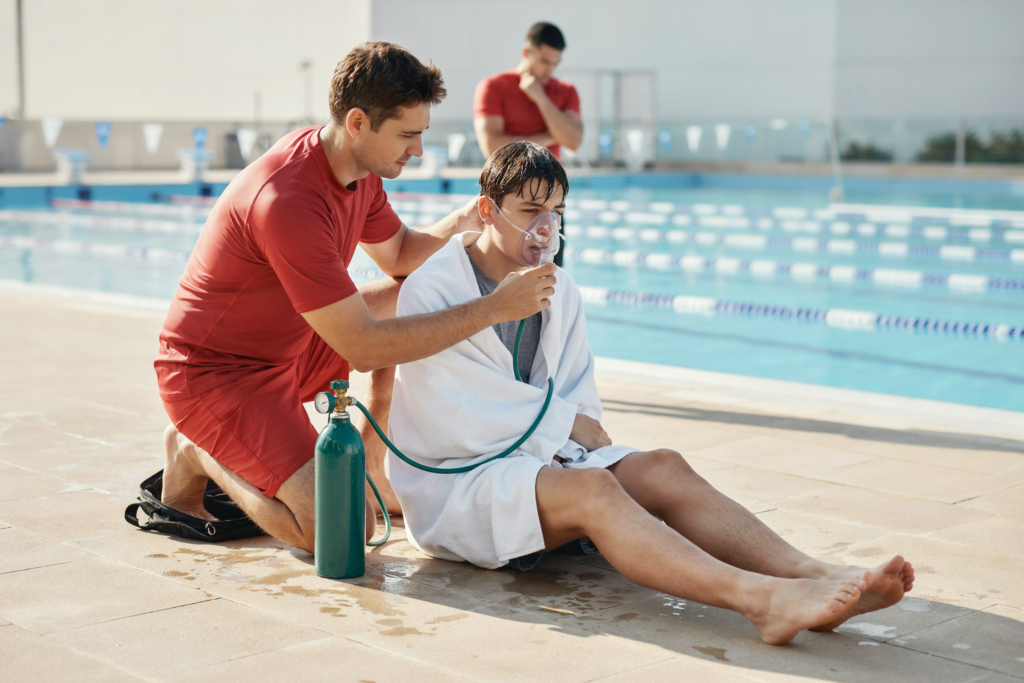
Why Oxygen Skills Fade Between Renewals
Skill fade isn’t a sign you’re slack. It’s what happens to any skill you don’t use often, and oxygen gear is about as “not often” as it gets.
Equipment you only touch in an emergency
Think about how often you actually open the oxygen cylinder at work. For most ERT members it’s an inspection tick, then nothing, then a real emergency where everything happens at once. CPR stays sharp because you drill it. The regulator doesn’t get that treatment, so it’s usually the first thing to go. That fumble with the regulator is the classic symptom.
How often should you renew HLTAID015?
The HLTAID015 unit itself doesn’t set an expiry date. Annual renewal is the common industry expectation though, and most Queensland employers, insurers and event providers work to it.
So if you’re wondering how often to renew advanced resuscitation, the honest answer is check your own requirements first. Your employer, your insurer and your principal client can each set their own rules, and they don’t always line up. The Australian Resuscitation Council also has guidance on keeping resuscitation skills current. Booking an HLTAID015 refresher before your ticket lapses is usually the simplest way to keep everyone happy.
Keeping skills sharp between courses
The best fix is boring but it works. Run short drills on your site’s own equipment. Set up the regulator during the regular first aid room check. Have a crew member time you.
Skill fade is a personal risk. Lapsed certificates are a business one.
HLTAID015 and Queensland Workplace First Aid Requirements
Training isn’t only about being ready on the day. For most workplaces it’s also about showing someone else, on paper, that you’re ready.
The Queensland first aid code of practice
The Queensland first aid code of practice (the WHSQ First Aid in the Workplace Code of Practice) is the go-to reference for how workplaces plan first aid. The basic idea is simple. The equipment you keep onsite and the training your first aiders hold should match each other, and both come out of your workplace risk assessment.
So if you’ve got oxygen in the first aid room, Queensland workplaces need to think about who’s trained to use it.
Insurer, principal client and audit expectations
Beyond the code, there’s usually a second layer. Insurers, principal contractors and client audits often require proof that your first aiders and ERT are current.
What your auditor checks | What they’re looking for |
Unit code and title | HLTAID015 Provide Advanced Resuscitation and Oxygen Therapy |
RTO number | A registered training organisation, e.g. RTO 31106 |
Completion date | Within your employer, insurer or client’s renewal window |
Names | Every ERT member listed against a current certificate |
Equipment match | Training lines up with the gear held onsite |
Holding an old HLTAID007?
If your certificate still says HLTAID007 Provide Advanced Resuscitation, here’s the catch. HLTAID015 supersedes HLTAID007, but the two units aren’t equivalent. The cleanest move is to complete HLTAID015 so you’re on the current unit before anyone asks the question.
For ERT leaders, compliance usually means getting the whole team current at once.
🏭 For ERT leaders: Training the team together on your own gear means everyone works to the same standard.
Training Your Whole ERT Onsite in Brisbane
Getting yourself trained is one thing. Getting the whole response team trained, without leaving the site uncovered, is a different headache. That’s where onsite delivery comes in.
On your site, on your own equipment
Training on your own regulator, BVM and first aid room layout is hard to beat. When the real call comes, nothing feels unfamiliar because you’ve already worked with it in the same space.
For a lot of ERT leaders, onsite advanced resuscitation training Brisbane sites can book is the simplest way to get everyone to the same standard in one go.
Split sessions so the site stays covered
You can’t have your whole ERT in a training room while the forklifts are still running. Splitting the team across sessions keeps the site covered while everyone gets through.
Building the full team pathway
A solid team setup usually looks like this. HLTAID011 Provide First Aid as the base for everyone, HLTAID014 Provide Advanced First Aid for your first aid officers, and HLTAID015 for the people running oxygen and advanced resuscitation. Pair that with emergency response team training Brisbane crews can repeat each year and you’ve got a team that’s current and confident.
Whether it’s just you or the full crew, booking takes a few minutes.
Booking HLTAID015 Oxygen Therapy with First Aid Alive
Once you know what the day involves, booking is the easy part.
Public sessions suit individuals and small groups, and easy parking makes a real difference when you’re driving in from a site or coming straight off a night shift.
Weekend sessions help a lot of people. FIFO workers can fit the course into a short break before the next swing, and even first aiders don’t have to give up a weekday shift.
If your employer is paying, it’s worth sending them the course page link so the booking and invoice go through without any back and forth.
You’ll finish with a Statement of Attainment for HLTAID015 Provide Advanced Resuscitation and Oxygen Therapy, issued by First Aid Alive, RTO 31106, as Nationally Recognised Training.
The full HLTAID015 Brisbane course details, including current dates and what to bring on the day, are on the HLTAID015 oxygen therapy course page.
Got questions about the equipment, the scenarios or the entry requirements? Ring a trainer before you book.
If your HLTAID015 oxygen therapy training is due, or the last real incident showed a gap, the fix is the same: time on the equipment with a trainer who knows it. Check the next Brisbane dates, call if you want to talk through the day first, or send an enquiry to train your whole ERT onsite. Your team will be relying on those skills either way.
Book Your First Aid Training Now
Fast, affordable, and nationally accredited training delivered by professionals who care
HLTAID015 Oxygen Therapy FAQs
Q.What does HLTAID015 oxygen therapy training cover?
It covers using specialised resuscitation and oxygen equipment in line with ARC guidelines. That includes setting up the cylinder and regulator, choosing a delivery device, using a pulse oximeter, two-rescuer resuscitation with a bag-valve-mask and oxygen, and looking after the gear once you're done.
Q.What are the prerequisites for HLTAID015?
Most providers require a current HLTAID011 Provide First Aid before you start. Check the entry requirement on the course page before you book so there are no surprises on the day.
Q.How often should I renew HLTAID015?
The unit doesn't set an expiry date, but annual renewal is the common industry expectation. Your employer, insurer or principal client may set their own rules, so check with them first.
Q.Is HLTAID015 the same as HLTAID007?
No. HLTAID015 supersedes HLTAID007, but the two units aren't equivalent. If your certificate still shows HLTAID007, completing HLTAID015 puts you on the current unit.
Q.Can HLTAID015 be run onsite for an emergency response team?
Onsite training lets your ERT practise on your own equipment in your own space, and splitting the team across sessions keeps the site covered. Get in touch to talk through what your site needs.
Q.What is the difference between HLTAID014 and HLTAID015?
HLTAID014 suits first aid officers who coordinate a broader first aid response. HLTAID015 focuses on using specialised resuscitation and oxygen equipment, and plenty of workplace first aid officers hold both.
Making first aid training more affordable for
every classroom
We believe every student deserves access to life-saving first aid knowledge. That’s why we offer specially reduced pricing for schools and educational groups. Whether you’re booking for a single class, a year group, or your entire school, our flexible packages make training more accessible and cost-effective — without compromising quality.
