

Rostered on again next week, and your HLTAID015 is about to lapse. Is it actually too late to book a HLTAID015 renewal that fits around your shifts, instead of costing you one of the few days off you get?
If you’re an ICU or ED nurse, a paramedic, or working retrieval, you already know the feeling. Your certificate expires, your credentialing team flags it, and suddenly you’re being pulled off duties you’re otherwise fully qualified for, all because the renewal date snuck up on you between night shifts and rostered days off.
Most providers don’t make this easier. They build their booking calendars for people with a normal Monday to Friday, and their course content for people who’ve never touched a defibrillator outside a classroom. Neither of those things works for you.
HLTAID015 renewal sessions built around clinical depth and rostered availability, not generic first aid scheduling. In this guide, we’ll walk through when your certificate actually expires, what a renewal session covers, how the documentation maps to your credentialing and CPD requirements, how group renewals work for ICU, ED, and retrieval teams, and exactly how to book, whether that’s just you or your whole unit.
How Often Do You Actually Need to Renew HLTAID015?
Quick answer, because you’re probably reading this on a break between patients:
HLTAID015 (Provide Advanced Resuscitation) is valid for 12 months from the date it’s issued. The Australian Resuscitation Council recommends renewing advanced resuscitation skills every 12 months, since the skill decay window for advanced techniques is shorter than for standard first aid, which is usually valid for three years.
Here’s the short version, broken down:
dapibus leo.
- ● Validity period: 12 months from the date of issue, full stop.
- ● Why annual and not every three years: The advanced skills, including defibrillation, airway management, and rhythm recognition, can deteriorate quickly if they aren't practised regularly, even for experienced clinicians.
- ● Who this actually applies to: ICU and ED nurses, paramedics, retrieval staff, and aged care clinical leads, essentially anyone whose scope of practice depends on maintaining advanced resuscitation competency.
- ● What it means for your job: Many hospital credentialing frameworks require a current HLTAID015 on file before you can perform certain clinical duties, making it more than just a certificate—it's part of what keeps you eligible to carry out the work you're trained to do.
That’s the headline. Now let’s get into what the renewal itself is actually going to look like, because that’s usually what people want to know next.
What’s Involved in a HLTAID015 Renewal Session
Right, so you know when to book. Now let’s talk about what you’re actually walking into on the day, because this is where a lot of providers lose clinical credibility fast.
If your renewal session feels like it’s aimed at someone doing CPR for the first time, that’s a red flag. You’re not there to learn what a chest compression is. You’re there to sharpen skills you already use, under pressure, in real clinical settings.
Rhythm Recognition & Defibrillation
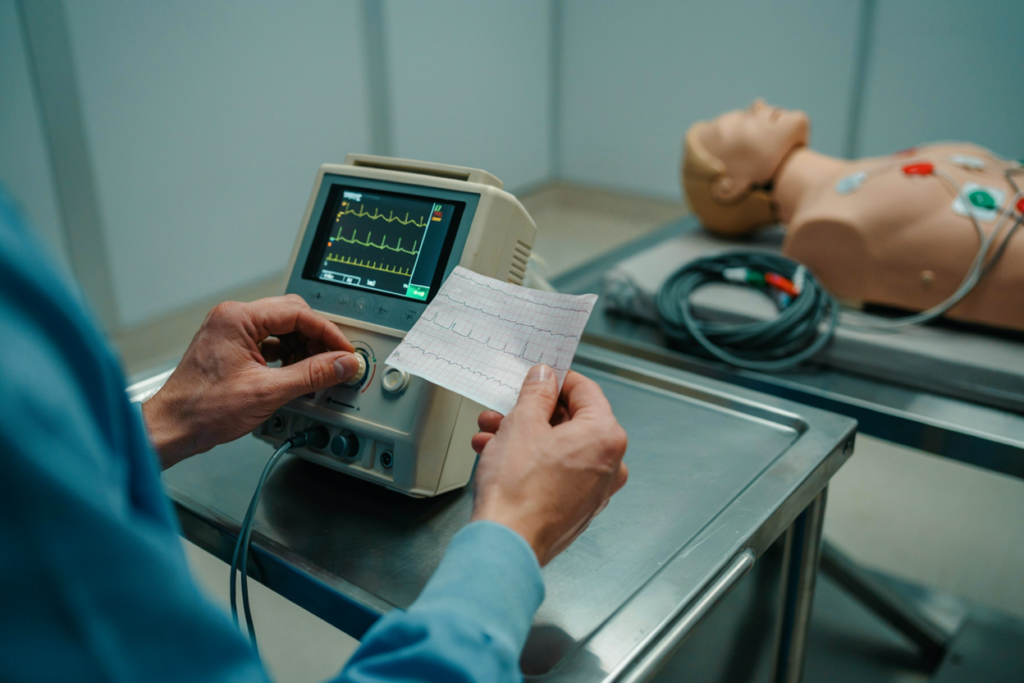
This is the core of the session, and it should feel like it. You’re working through rhythm strips, running defib scenarios, and getting hands-on time with the equipment, not watching a slideshow about what a defibrillator does. If the instructor is explaining basic anatomy to you at this point, something has gone wrong with how the course was pitched.
Airway Management Update
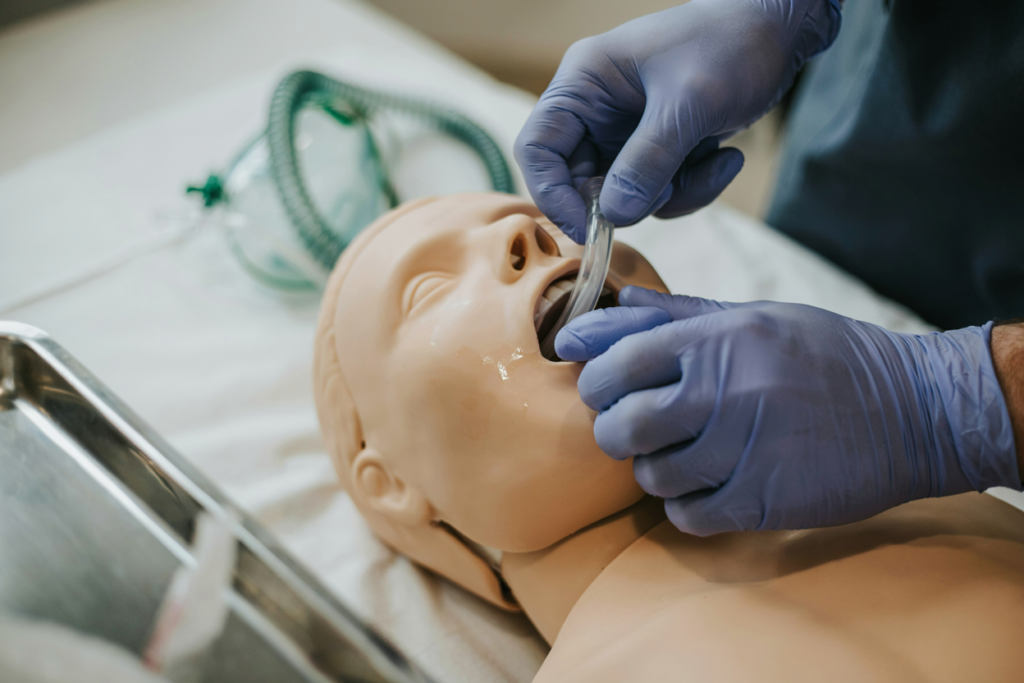
Airway skills are one of the fastest things to slip if you’re not using them weekly. A proper renewal session gives you time to run through current technique, not just a verbal recap. This is the part where small habits creep in over a year, and a good refresher catches them before they become a problem on shift.
Team-Based Resuscitation Scenarios (CRM)
This is the piece a lot of generic providers skip entirely, and it’s probably the most useful part for anyone working ICU, ED, or retrieval. Crisis resource management, the coordination, communication, and role clarity that happens during an actual resuscitation event, is practised in scenario form. It’s not just “can you do the skill,” it’s “can you do the skill as part of a team under pressure,” which is closer to what the job actually demands.
📋 Straight talk: Your certificate should slot into your CPD portfolio and credentialing file without you having to chase anyone for a reissue.
How HLTAID015 Renewal Maps to Your Credentialing and CPD
So you’ve done the session, rhythm strips, airway, the team scenarios. Now what actually happens to that piece of paper you walk away with, and does it actually do what your hospital needs it to do?
This bit matters more than people think. A certificate that just says “attended” isn’t going to cut it if your credentialing committee wants specific detail, or if you’re trying to slot it into your CPD portfolio without a bunch of back and forth emails.
AHPRA CPD Portfolio Documentation
Your renewal certificate gets issued in a format that maps straight into your professional development portfolio. No extra admin, no chasing up a “please can you reissue this with more detail” email three weeks later when you’re trying to submit for the year. It’s built to sit in your portfolio the way it needs to, first time.
Hospital Credentialing Committee Requirements
Different hospitals want different things sometimes, but the core of it is the same, they need proof that’s current, specific, and traceable back to a real unit of competency. Your Statement of Attainment covers exactly that. If you want the full detail on what’s included on the certificate itself, there’s a breakdown on our Statement of Attainment page that goes through it line by line, so we won’t repeat all of that here.
For the official word on what HLTAID015 actually covers as a unit, training.gov.au has the current listing, worth a look if your credentialing team wants the source document.
Booking Around Shift Rosters
Content depth matters, but for most clinicians, the real obstacle isn’t the syllabus, it’s finding a date that actually works.
Here’s the problem with most booking calendars, they’re built for people who work Monday to Friday, nine to five. You don’t get that. Your days off might be a Tuesday and a Wednesday this fortnight, then flip to a weekend the next, and a generic “book any Saturday” calendar just doesn’t solve that.
Filter by Date, Not Just “Any Saturday”
This is why the booking system is built around actual date filtering, not a rough monthly view you have to scroll through hoping something lines up. You put in the specific days you’ve got free, and you see what’s available on those days, straight away. No calling around, no emailing back and forth to ask “do you have anything on the 14th,” no guessing.
If you’ve only got one weekend free in a six week window, that shouldn’t mean missing your renewal date and scrambling later. It should mean finding the one session that fits, fast.
Group Renewals for ICU, ED, and Retrieval Teams
If you’re the one organising renewal for your whole unit, you’ve probably already had the experience of a group session going sideways. Not enough manikins, one instructor trying to run six people through defib scenarios at once, everyone standing around waiting their turn instead of actually practising. And you’re the one who booked it, so it reflects on you.
Instructor-to-Participant and Equipment Ratios
This is the part we state upfront, not something you have to ask about after you’ve already paid. You’ll know exactly how many participants per instructor, and exactly how much equipment is on hand, before you commit to a date. No turning up on the day to find out you’re sharing one defib trainer between eight people.
Sessions run both on-site, where the instructor comes to your unit or facility, and venue-based, depending on what works better for your team’s roster and space. Either way, the ratios stay the same, so the training quality doesn’t drop just because it’s a group of ten instead of one person.
✅ Straight talk: Solo or group, the booking process comes down to three steps, and the certificate at the end works the same way either time.
How to Book Your HLTAID015 Renewal
Right, here’s where it actually comes together. Whether you’re one person trying to squeeze this in around three night shifts, or you’re booking for your whole ED team, the process works the same way, just with a couple of different paths depending on which one you are.
Solo booking:
- Filter available dates against the days you’ve actually got free, not a generic monthly calendar
- Pick your session and lock it in
- Turn up with what’s on your checklist, sorted before you even walk in the door
Group booking:
- Get in touch about numbers and preferred dates for your unit
- Confirm on-site or venue-based, whichever suits your team and your space
- Lock in instructor and equipment ratios before the date’s confirmed, not after
However you’re doing it, the certificate you walk away with is built to slot straight into your credentialing and CPD requirements, so there’s no extra admin chasing you down weeks later.
Quick recap:
- Check when your certificate actually expires
- Decide if you’re going solo or organising a group
- Book a date that works around your roster, not the other way around
Bringing It All Together
So that’s the real picture of what a renewal actually looks like when it’s built around people who already know what they’re doing.
Twelve months goes fast when you’re rostered the way clinical staff are rostered. One minute you’re booking your last renewal, next minute it’s creeping up again and you’re trying to work out how it fits around three night shifts and a rare weekend off. That’s not a personal failing, that’s just what the job looks like, and any renewal process that doesn’t account for it is honestly just adding friction you don’t need.
The content should meet you where your skills already are, not where a generic first aid course assumes everyone starts. Rhythm recognition, airway management, team based scenarios under pressure, that’s what actually keeps you sharp for the moment it matters, not a slide deck recap of things you learned years ago.
And the paperwork side shouldn’t be a second job either. A certificate that slots straight into your CPD portfolio or credentialing file without three follow up emails is honestly the bare minimum, not a bonus.
Check when yours expires, work out if you’re going solo or pulling your unit together for a group session, and book something that actually works around the roster you’ve got, not the roster a booking calendar wishes you had.
Book Your First Aid Training Now
Fast, affordable, and nationally accredited training delivered by professionals who care
Frequently Asked Questions
Q. How long is my HLTAID015 certificate valid for?
HLTAID015 is valid for 12 months from the date it's issued, which is shorter than the three-year validity of a standard first aid certificate like HLTAID011. This shorter window reflects how quickly advanced skills like defibrillation, airway management, and rhythm recognition can decay if they're not practiced regularly, so the annual renewal is really about keeping you sharp for the moment it counts, not just ticking a compliance box.
Q. What happens if my HLTAID015 lapses before I renew?
If your certificate lapses, you can be pulled off shifts or duties that require current resuscitation credentials, since most hospital credentialing frameworks won't sign off on clinical work without it on file. It's not just an admin inconvenience, it can genuinely affect what you're rostered to do until you get renewed, so it's worth booking your session before the expiry date creeps up on you.
Q. Will my renewal certificate work for AHPRA CPD and hospital credentialing?
Your renewal certificate is issued in a format built to slot directly into your professional development portfolio and hospital credentialing paperwork, so you shouldn't need to chase up a reissue or extra documentation afterwards. If your credentialing committee wants the underlying unit detail, training.gov.au holds the official HLTAID015 unit listing as a reference.
Q. What's actually covered in a HLTAID015 renewal session?
The session covers rhythm recognition and defibrillation, an airway management update, and team-based resuscitation scenarios built around crisis resource management, all pitched at a clinical level rather than a basic first-aider level. It's built around skills you already use, not an introduction to them, so there's no basic anatomy explanation or generic first-aid trivia slowing things down.
Making first aid training more affordable for
every classroom
We believe every student deserves access to life-saving first aid knowledge. That’s why we offer specially reduced pricing for schools and educational groups. Whether you’re booking for a single class, a year group, or your entire school, our flexible packages make training more accessible and cost-effective — without compromising quality.
