
You’re hours from the nearest hospital when a crew member collapses with chest pain. Emergency services are coming—but they’re not here yet. Knowing how to do advanced first aid isn’t just a qualification; it’s the difference between life and death.
For remote site workers, construction supervisors, and outdoor professionals, basic first aid training isn’t enough when you’re the only medical response. That basic course taught you how to handle situations where help arrives quickly. But when you’re managing remote sites—you need advanced skills.
This guide breaks down how to do advanced first aid into practical steps for real emergencies. You’ll learn critical interventions including bleeding control, airway management, shock treatment, and extended care protocols.
How Do You Perform Advanced First Aid?
To perform advanced first aid, you assess the scene for safety, check the casualty’s responsiveness and breathing, and apply appropriate life-saving interventions while waiting for emergency services. Advanced first aid extends beyond basic care with techniques for managing serious injuries over extended periods.
Essential Advanced First Aid Steps:
- Ensure scene safety – Protect yourself and others before approaching
- Check responsiveness – Use DRSABCD protocol (Danger, Response, Send for help, Airway, Breathing, CPR, Defibrillation)
- Control severe bleeding – Apply direct pressure, pressure points, and tourniquets when necessary
- Manage airways – Use advanced positioning, suction, and airway adjuncts
- Treat for shock – Position appropriately, maintain body temperature, monitor vitals
- Provide extended care – Monitor and reassess casualties during prolonged wait times
- Document interventions – Record vital signs, treatments, and casualty status for handover
Advanced first aid training (HLTAID014) prepares you for these situations with hands-on practice using realistic equipment.
Understanding Advanced First Aid vs Basic First Aid
Basic first aid courses assume help is coming fast—maybe 10-30 minutes. The whole training focuses on keeping someone alive until professionals arrive. That assumption falls apart when you’re working remote sites or managing teams in regional areas.
What Makes First Aid “Advanced”
Time: Basic first aid assumes quick emergency response. Advanced first aid prepares you for managing casualties for hours. You’re not just stabilizing someone; you’re actively managing their condition, monitoring for deterioration, and making ongoing treatment decisions.
Complexity: Advanced training covers interventions basic courses don’t touch—oxygen therapy, tourniquets, haemostatic dressings, airway adjuncts, and managing complex emergencies where you can’t hand off to paramedics.
Responsibility: You’re often the most qualified person for hours. You’re making triage decisions in multi-casualty incidents and determining when to evacuate versus continuing to monitor.
When Basic First Aid Isn’t Enough
Real scenario: You’re supervising a crew. Heavy machinery accident. Worker has severe arm laceration—arterial bleeding. You apply direct pressure like basic training taught, but bleeding doesn’t stop. You elevate the arm. Still bleeding through. Help is over an hour away.
What now? Basic first aid didn’t cover tourniquets, pressure points, or managing someone going into shock while controlling life-threatening bleeding.
| Skill Area | Basic First Aid | Advanced First Aid |
|---|---|---|
| Bleeding control | Direct pressure, elevation | Pressure points, tourniquets, haemostatic dressings |
| Airway management | Recovery position | Airway adjuncts, suction, advanced techniques |
| Casualty duration | Short periods | Extended care for hours |
| Oxygen therapy | Not covered | Administration and monitoring |
| Shock management | Basic recognition | Detailed treatment and monitoring |
| Multi-casualty | Not covered | Triage and prioritization |
Essential Advanced First Aid Techniques
Advanced Bleeding Control Methods
Severe bleeding kills fast—you’ve got maybe 3-5 minutes before someone bleeds out from major arterial injury. Basic first aid teaches direct pressure and elevation, which works for most wounds. But serious trauma needs more.
Direct Pressure Escalation:
- Hand pressure first – Use your gloved hand directly on wound. Firm, constant pressure. Don’t peek—you’ll release clotting.
- Upgrade to pad and pressure – If bleeding continues, place sterile pad and maintain hard pressure.
- Pressure bandage – Secure pad with pressure bandage tight enough to maintain pressure but not cut off circulation.
Pressure Point Application:
When direct pressure isn’t working, compress the artery feeding that area:
- Brachial artery (upper arm injuries) – Press firmly inside upper arm, halfway between shoulder and elbow
- Femoral artery (leg injuries) – Press in groin crease where leg meets body
Tourniquet Use:
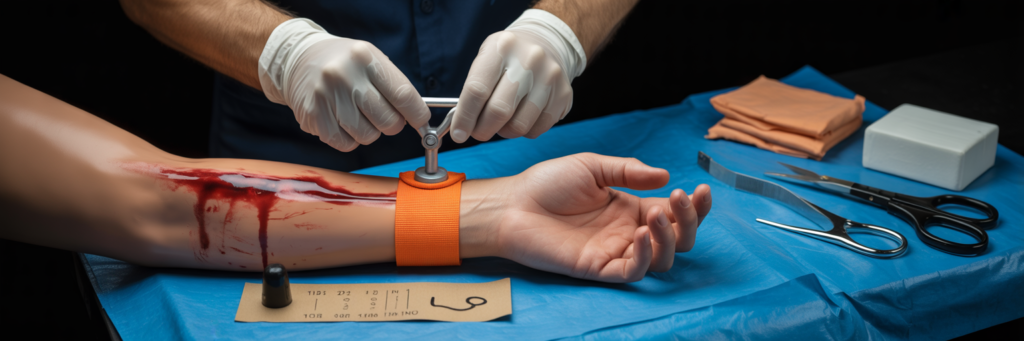
If you’ve got severe limb bleeding you can’t control with pressure, a tourniquet saves lives. Combat Application Tourniquet (CAT) application:
- Position 5-7cm above wound, between injury and heart
- Tighten until bleeding completely stops
- Lock windlass and secure
- Note exact time of application
⚠️WARNING: Never remove a tourniquet once applied. Only trained medical professionals should remove them. Write the time clearly.
Advanced Airway Management
Compromised airway means death in 4-6 minutes. Airway management is absolute priority after scene safety.
Head-Tilt Chin-Lift vs Jaw-Thrust:
Basic courses teach head-tilt chin-lift—tilt head back, lift chin to open airway. But if you suspect spinal injury (falls, vehicle accidents, significant trauma), use jaw-thrust instead. Push jaw forward without tilting head back.
Oropharyngeal and Nasopharyngeal Airways:
Oropharyngeal airway (OPA) is curved plastic tube holding tongue forward, keeping airway open:
- Size properly – Measure from corner of mouth to angle of jaw
- Insert carefully – Curve-up initially, rotate 180 degrees once past tongue
- Watch for gagging – If they gag, remove immediately
Nasopharyngeal airway (NPA): goes up nose, sits at back of throat. Better tolerated in semi-conscious patients. Lubricate well and insert straight back along nose floor.
Shock Recognition and Treatment
Shock kills people in remote situations because it develops gradually then becomes critical. Shock is your circulatory system failing to deliver enough oxygen to organs.
Early vs Late Signs:
Early shock:
- Pale, cool, clammy skin
- Rapid pulse
- Slight confusion or anxiety
- Mild blood pressure drop
Late shock:
- Grey, mottled skin
- Weak, rapid pulse
- Altered consciousness or unconsciousness
- Severe blood pressure drop
- Rapid, shallow breathing
| Shock Stage | Pulse | Skin | Mental State |
|---|---|---|---|
| Early | Fast (100-120) | Pale, cool, clammy | Anxious, slightly confused |
| Moderate | Very fast (120-140) | Very pale, cold | Confused, restless |
| Severe | Very fast & weak (140+) | Grey, mottled | Unresponsive or barely responsive |
Positioning:
Classic shock position is lying flat with legs elevated 30cm. But don’t elevate legs for:
- Suspected spinal injury – Keep flat
- Head injury – Elevate head slightly
- Chest injury or breathing difficulty – Semi-sitting
- Late pregnancy – Left side lying
Extended Casualty Care
This separates advanced from basic care. You’re actively managing casualties over hours.
SAMPLE History:
- S – Signs and Symptoms: What’s hurting? What can you see?
- A – Allergies: Known allergies to medications?
- M – Medications: Regular medications?
- P – Past medical history: Diabetes? Heart condition?
- L – Last meal: When did they last eat/drink?
- E – Events: What exactly happened?
Get this while they can communicate. Write it down.
Vital Signs Monitoring:
Check and record regularly:
- Pulse rate and strength
- Breathing rate and quality
- Level of consciousness (AVPU)
- Skin color and temperature
- Pain changes
Looking for trends tells you if they’re improving, stable, or deteriorating. Rising pulse with weakening strength suggests developing shock.
Document everything: injury time, interventions, vital signs, condition changes. This information is critical for paramedics.
Managing Specific Emergency Scenarios
Severe Trauma
Crush Injuries:
Crush syndrome is deceptive. Someone’s trapped, you free them, they seem okay—then later kidney failure and cardiac arrest. When tissue is crushed long-term, toxins build up. Once released, toxins flood bloodstream.
Before releasing (if trapped over 15 minutes):
- Call emergency services—tell them it’s crush injury
- Don’t release crush pressure if you can avoid it
- Keep them calm and still
After release:
- Treat for severe shock immediately
- Monitor for cardiac arrest—have AED ready
- Keep completely still
- Give water if conscious
- Prepare for rapid deterioration
Spinal Injuries:
Suspect spinal injury for falls from height, vehicle accidents, diving accidents, or significant blunt force trauma.
Don’t move them unless immediate danger or can’t manage airway. If must move, one person holds head and neck completely still while others move body as single unit.
Head Injuries:
Watch for increasing skull pressure:
- Decreasing consciousness level
- Unequal pupil sizes
- Clear fluid from nose or ears
- Persistent vomiting
- Seizures
- Severe or worsening headache
Assume spinal injury until proven otherwise. Monitor consciousness every 15 minutes. Deteriorating consciousness is alarm bell.
Environmental Emergencies
Heat Exhaustion vs Heat Stroke:
Heat exhaustion:
- Heavy sweating
- Pale, cool, clammy skin
- Rapid pulse, nausea, weakness
Treatment: Move to shade, cool down, give water if conscious.
Heat stroke:
- Hot, dry skin (sweating stopped)
- Red, flushed skin
- Altered mental state or unconscious
- Rapid pulse, possible seizures
Treatment: Life-threatening. Cool aggressively with water, fanning, ice packs in groin/armpits. Get emergency services.
Key: Still sweating and thinking straight = heat exhaustion. Sweating stopped and acting weird = heat stroke.
Snake Bites:
Pressure immobilization technique:
- Keep absolutely still
- Apply firm broad pressure bandage over bite
- Extend bandage up whole limb
- Splint limb to prevent movement
- Mark bite location on bandage
- Keep lying down
- Get emergency services
Don’t wash bite, cut it, apply ice, use tourniquet, or let them move.
Multi-Casualty Incidents
Triage is doing most good for most people. Assess everyone quickly, prioritize based on survivability.
Priority categories:
- Red (Immediate): Life-threatening but survivable with quick intervention—severe bleeding, airway compromise, shock
- Yellow (Delayed): Serious but can wait—fractures, moderate bleeding
- Green (Minor): Walking wounded, can wait hours
- Black (Deceased): Already deceased or incompatible with survival
Brutal but necessary. Can’t spend time on one person while three others bleed out.
When You Need Advanced First Aid Training (HLTAID014)
Reading about how to do advanced first aid versus actually doing it when someone’s bleeding out are completely different things.
Who Should Complete HLTAID014
Remote site workers – If emergency services are over 30 minutes away, you need extended care skills.
First aid officers – Advanced training is becoming mandatory in many industries.
Outdoor recreation professionals – Expedition leaders, outdoor instructors, tour guides in remote environments.
Team leaders and supervisors – If supervising teams in dangerous environments, you’ve got duty of care.
Security and event supervisors – Managing crowds, medical emergencies, multi-casualty incidents.
If you’re asking “do I need advanced training?” the answer’s probably yes.
Skills You’ll Master
In proper HLTAID014 training, you’ll develop practical competencies that go far beyond theory:
Practice under realistic conditions – Scenarios with fake blood, noise, multiple casualties, time pressure. Your instructors simulate real emergencies including stress and chaos. You’ll work through scenarios where everything’s going wrong at once—multiple casualties, limited equipment, deteriorating conditions.
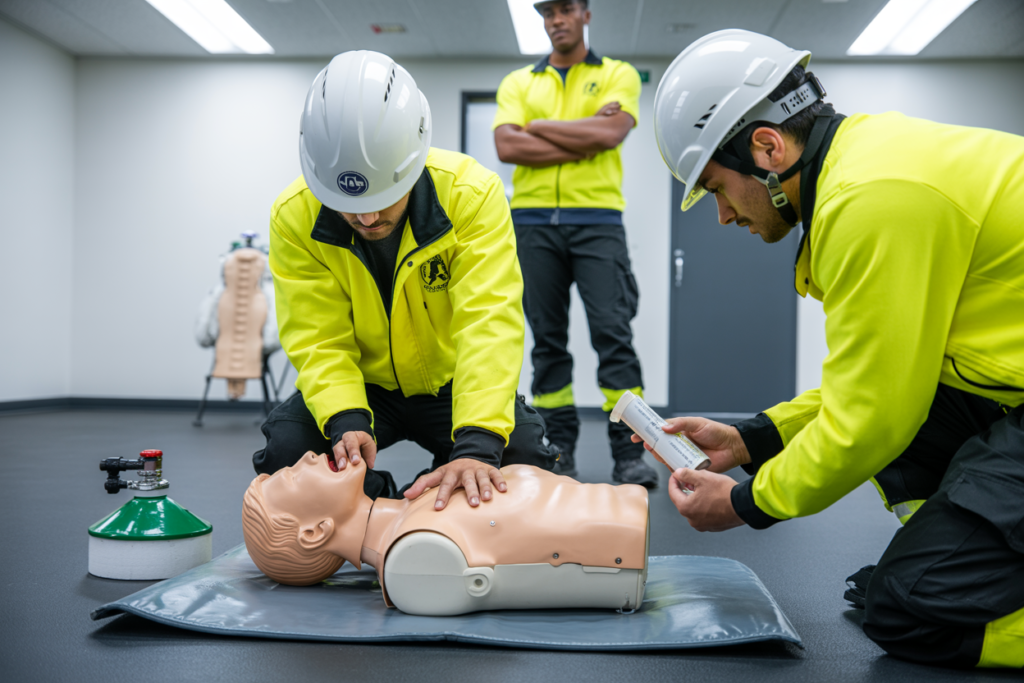
Use actual equipment – Real tourniquets, airway adjuncts, oxygen systems, suction units, defibrillators. You need to know how this equipment feels and functions before using it in emergencies. The weight of trauma bags, resistance of tourniquet windlasses, the feel of sizing airway adjuncts—these details matter under pressure.
Make decisions under pressure – Triage scenarios where you’ve got minutes to assess multiple casualties and prioritize. You’ll learn rapid decisions about who needs immediate help and who can wait. Practicing these hard calls builds the mental framework you need.
Receive expert feedback – Instructors who’ve been paramedics, remote area nurses, or military medics watch your technique and correct mistakes immediately. They’ll tell you what works based on real experience, not just training manuals.
Build genuine confidence – Confidence comes from actually performing skills dozens of times in realistic scenarios, not just reading about them. Muscle memory develops through repetition.
You can study online all day, but until you’ve applied a tourniquet to a training limb simulating arterial bleeding while someone’s yelling at you and a timer’s counting down, you don’t really know if you can do it when it counts.
Certification Requirements
HLTAID014 valid for three years. CPR component (HLTAID009) needs annual renewal.
To complete:
- Attend all face-to-face practical sessions
- Demonstrate competency in all skills
- Complete assessment tasks
- Pass written knowledge assessment
Certification is nationally recognized. The process is serious because stakes are high—you’re being trained for life-or-death decisions.
Advanced First Aid Resources and Next Steps
Reference Materials
Physical Quick Reference Cards:
Keep waterproof pocket reference card in first aid kit covering:
- DRSABCD steps
- Tourniquet procedure
- Vital signs normal ranges
- Shock treatment
- CPR ratios
Laminate them, keep in kit, reference during training.
Course Manuals:
Your course manual is ongoing reference for techniques you don’t use often. Keep accessible in work vehicle or expedition kit.
Ongoing Skill Development
Skills Fade Fast:
If you don’t use these skills regularly, you’ll lose them. CPR skills degrade within months without practice. Advanced skills fade even faster.
Regular Practice:
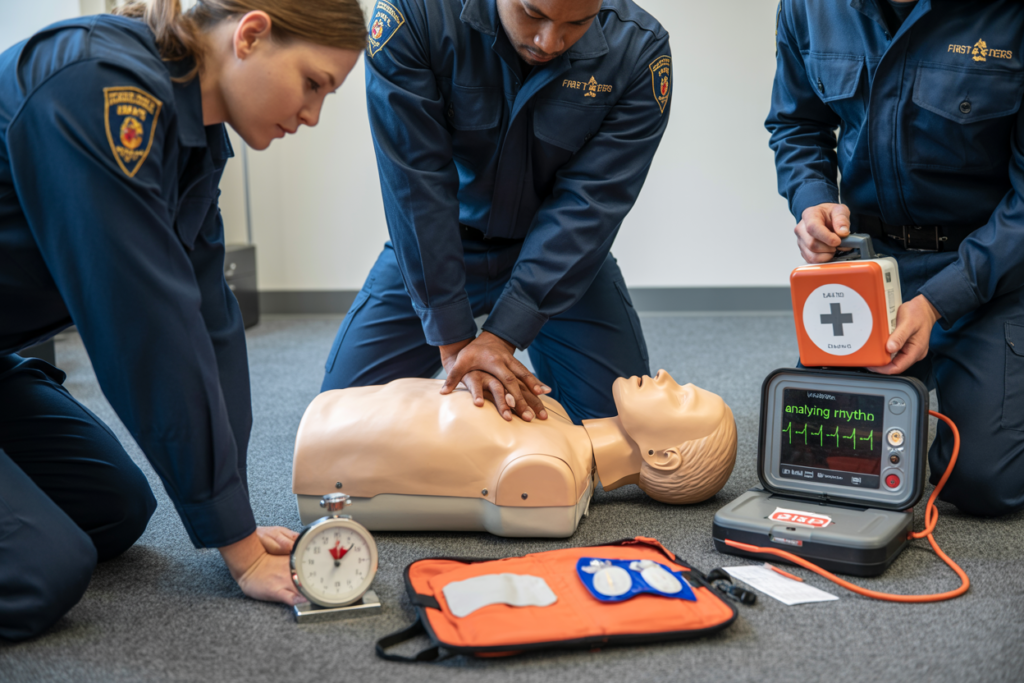
Get together with trained workmates and run scenarios:
- Set up realistic situations
- Use training manikins if available
- Practice communication and handover
- Time yourselves
- Critique each other
Make it realistic. Include stress, noise, time pressure. Comfortable practice doesn’t prepare for chaotic reality.
Getting Properly Trained
Instructor Experience:
Look at actual emergency services background. Best instructors are ex-paramedics, remote area nurses, military medics, or firefighters who’ve used these skills in real emergencies.
Hands-On Practice:
Quality courses spend most time on practical scenarios. Practice each skill multiple times until automatic.
Realistic Equipment:
Course should use actual equipment:
- Real tourniquets
- Airway adjuncts
- Oxygen systems
- Defibrillators
- Trauma simulation materials
You need to know how equipment feels before using on real person.
Final Thoughts
Knowing how to do advanced first aid isn’t just ticking compliance boxes. It’s being genuinely capable of keeping someone alive when you’re the only help for hours. It’s having confidence to act decisively. It’s not lying awake wondering if you’d know what to do if crew got seriously injured.
You can read every article, but until you’ve practiced these skills hands-on with realistic equipment and proper instruction, you don’t really know if you can do it.
If you’re working remote locations, supervising teams in high-risk environments, or taking people outdoors—get your HLTAID014 certification. Get it from quality instructors who’ve actually worked emergency services. Practice skills regularly so they don’t fade. Keep knowledge current.
Because when that moment comes—and in remote work, there’s decent chance it will—you’ll be glad you took it seriously enough to be properly prepared.
Book Your First Aid Training Now
Fast, affordable, and nationally accredited training delivered by professionals who care
Frequently Asked Questions
Q.What's the difference between basic first aid and advanced first aid?
Basic first aid (HLTAID011) assumes emergency services arrive quickly and covers fundamental care like CPR and bandaging. Advanced first aid (HLTAID014) prepares you for extended care situations where help might be hours away, covering tourniquets, airway adjuncts, oxygen therapy, shock management, and multi-casualty triage.
Q.How long does HLTAID014 certification last?
HLTAID014 certification is valid for three years, but the CPR component (HLTAID009) requires annual renewal. This means you'll need CPR refresher courses every year even though your advanced certificate technically lasts three years.
Q.Can I learn advanced first aid online?
No, you can't learn how to do advanced first aid purely online because practical hands-on training is mandatory. You need to physically practice skills like tourniquet application and airway management with actual equipment under instructor supervision.
Q.Is advanced first aid training hard?
The training is demanding but achievable—it's challenging because you're learning complex skills and making high-pressure decisions in realistic scenarios. The difficulty is in performing skills confidently under stress, not in understanding concepts, which is why hands-on practice matters.
Q.How often should I refresh my advanced first aid skills?
Best practice is refreshing skills annually through practice sessions or refresher courses, especially in high-risk environments. Skills degrade rapidly without use—studies show significant loss within months of training, so regular practice keeps skills sharp.
Making first aid training more affordable for
every classroom
We believe every student deserves access to life-saving first aid knowledge. That’s why we offer specially reduced pricing for schools and educational groups. Whether you’re booking for a single class, a year group, or your entire school, our flexible packages make training more accessible and cost-effective — without compromising quality.
