
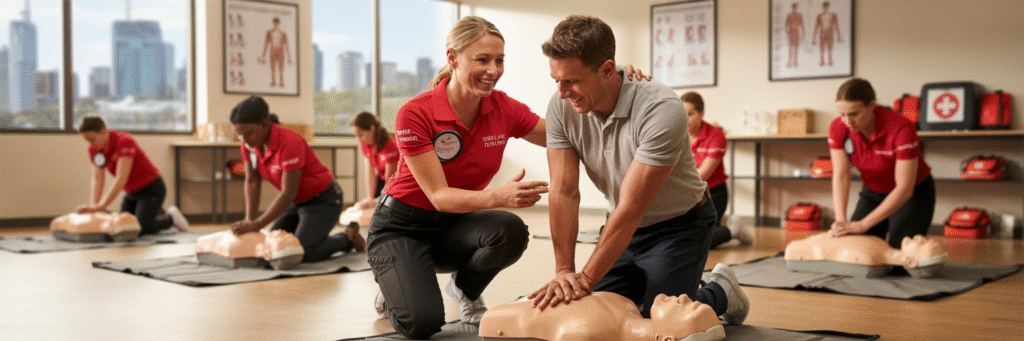
You’re standing in front of your computer on a Sunday evening, cursor hovering over “Book Now” for a first aid course. But a question stops you cold: Is this actually worth my time and money?
It’s a fair question. Between sacrificing your day off and the anxiety about learning CPR in front of strangers—you want to know this investment will pay off.
Here’s the truth I learned after training over 10,000 Brisbane residents: Over 60% of cardiac arrest victims who receive immediate CPR survive, compared to just 10% who don’t. That’s from the Australian Resuscitation Council’s 2024 data. That statistic alone might answer your question, but there’s more you need to know.
I remember Sarah—a retail manager from Camp Hill—who kept putting off her first aid course for three months. She thought it was just another compliance box to tick. Then one afternoon, a customer collapsed in her store. Sarah froze. Another staff member (who’d just done their training) jumped in and started CPR. The customer survived. Sarah booked her course that same week, and when she told me her story on course day, her hands were still shaking a bit.
Whether you’re a Brisbane retail manager needing compliance certification, a personal trainer whose insurance depends on it, or someone who just wants to be prepared when emergencies happen—this guide breaks down exactly what you get from a beginner first aid course.
💡 Quick Answer: Yes, a first aid course for beginners is worth it. You'll gain life-saving skills, meet workplace compliance, and develop confidence to act in emergencies—all in one day of training.
What Do You Learn in a First Aid Course for Beginners?
A beginner first aid course (that’s HLTAID011 Provide First Aid, if you want the official name) teaches you to respond to common medical emergencies and injuries. No previous experience needed—that’s the whole point.
Life-Saving Skills:
- CPR for adults, children, and infants (different techniques for each)
- Using an automated external defibrillator (AED)—it literally talks you through what to do
- Managing choking emergencies
- Recognizing and responding to cardiac arrest
Injury Treatment:
- Controlling severe bleeding (the kind that actually scares you)
- Treating burns and scalds properly
- Managing fractures and sprains without making things worse
- Bandaging techniques that actually stay in place
Medical Emergency Recognition:
- Heart attack warning signs (and no, it’s not always clutching your chest)
- Stroke identification using the FAST assessment
- Anaphylaxis response—because allergic reactions don’t wait
- Asthma emergency management
- Diabetic emergencies (high and low blood sugar)
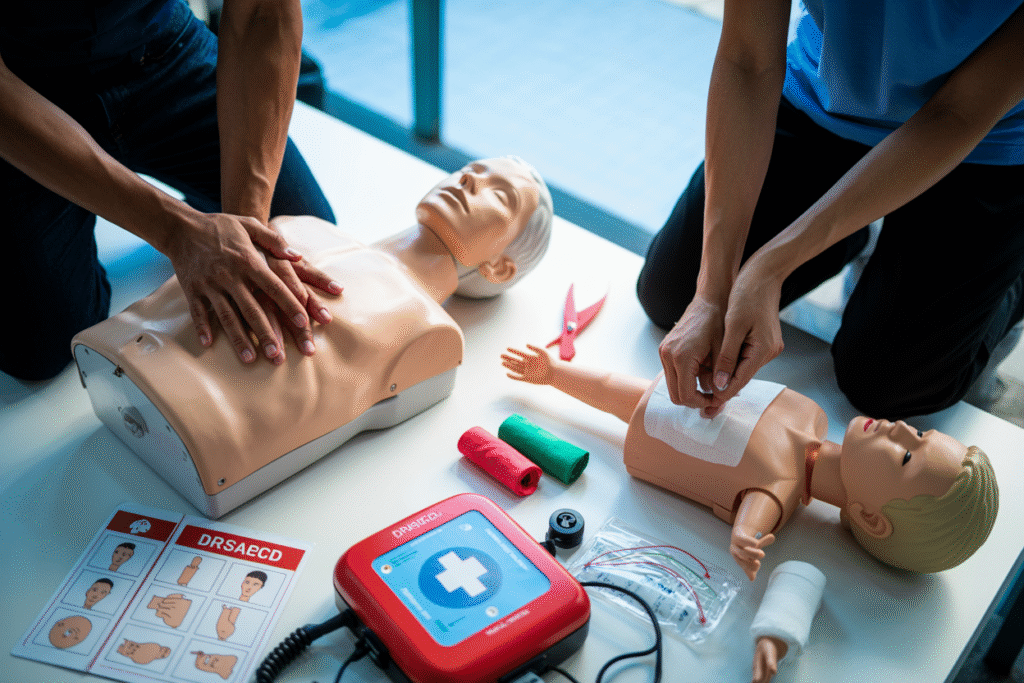
The course includes hands-on practice with professional equipment. You’ll practice on mannequins, not real people, which honestly makes it way less intimidating. Most Brisbane beginners pass their assessment first time through.
The Real Value of First Aid Training (Beyond the Certificate)
Why Most People Underestimate First Aid Skills
Here’s what happens: You book a first aid course thinking it’s just for work compliance. You show up, do the training, get your certificate, file it away. Job done.
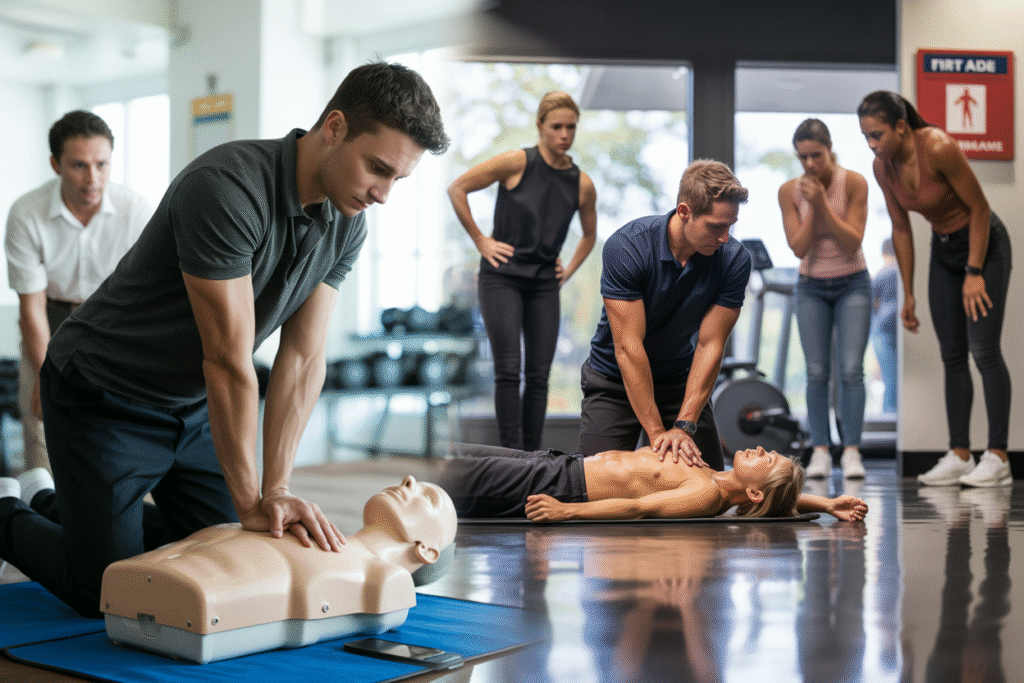
Then six months later, you’re at a barbecue and your mate’s kid starts choking on a sausage. Or you’re at the gym and someone collapses mid-workout. Or a colleague has a diabetic episode in the office. Suddenly that “compliance training” becomes the difference between helping effectively and standing there feeling useless.
Luke—a personal trainer from Nundah—told me he’d been putting off his renewal for months. “I thought I’d remember enough from last time,” he said. Then a client twisted their ankle badly during a session, started going into shock, and Luke realized he couldn’t remember half of what to do. That’s when the psychological value hits you: knowing what to do removes the panic.
The confidence alone is worth it. You stop second-guessing yourself in emergencies. You don’t freeze. You act.
The Statistics That Matter for Brisbane Residents
Let’s talk numbers that actually mean something:
Cardiac Arrest Survival:
- With immediate CPR: 60% survival rate
- Without CPR: 10% survival rate
- That’s a 50% difference. Six times better odds.
Queensland Workplace Incidents:
- Over 15,000 workplace first aid incidents happen annually across Queensland
- Average ambulance response time in Brisbane metro: 8-12 minutes
- What happens in those first 8 minutes? That’s where you come in.
Safe Work Queensland mandates first aid trained staff for most businesses. Your employer isn’t asking you to do this course because they like paperwork—they’re asking because someone might actually need help.
What Employers Actually Look For
Your HR department cares about compliance and liability protection. Under Safe Work Australia regulations, most workplaces need designated first aid officers with current HLTAID011 certification. Not expired. Not “I did it five years ago.” Current.
If you’re working in roles like personal training, childcare, or retail management, your employer’s insurance policy probably requires certified first aid officers on site. Luke found this out the hard way when his gym’s insurance asked for proof of current certification.
Brisbane Industry Requirements:
- Retail: Major shopping centres require management to hold current certificates
- Fitness: Fitness Australia won’t register you without HLTAID011
- Hospitality: Most venues require supervisors to be certified
- Office environments: Typically one first aider per 50 workers
What Makes a Good Beginner First Aid Course?
Understanding HLTAID011 vs Other First Aid Courses
Here’s where it gets confusing. You Google “first aid course Brisbane” and suddenly you’re drowning in course codes: HLTAID009, HLTAID011, HLTAID012, HLTAID014. What the hell is the difference?
Your old certificate might say “HLTAID003 Apply First Aid” on it. That course doesn’t exist anymore—it got replaced by HLTAID011 in 2022. Same content, updated delivery, new code.
These codes matter because your employer’s insurance policy, Fitness Australia registration, or workplace compliance requirements will specify exactly which course you need. Get it wrong and you’ve wasted a whole day.
Course Comparison:
| Course Code | Name | Who Needs It | What's Included |
|---|---|---|---|
| HLTAID009 | Provide CPR | CPR renewal only | CPR, AED, choking ONLY |
| HLTAID011 ⭐ | Provide First Aid | Most Brisbane workers | CPR + Full first aid |
| HLTAID012 | First Aid in Education & Care | Childcare/teachers | HLTAID011 + child-specific scenarios |
| HLTAID014 | Advanced First Aid | Remote workers/FIFO | Comprehensive remote training |
🎯 Here's the simple truth: HLTAID011 is what 90% of Brisbane employers mean when they say "get your first aid certificate." It includes CPR (so you don't need two separate courses), covers all the injury and medical emergency scenarios, and meets standard workplace requirements.
What “Beginner-Friendly” Really Means
Not all first aid courses are created equal. I’ve seen providers cram 25 people into a room with one instructor. That’s not beginner-friendly—that’s a nightmare if you’re nervous about the practical assessment.
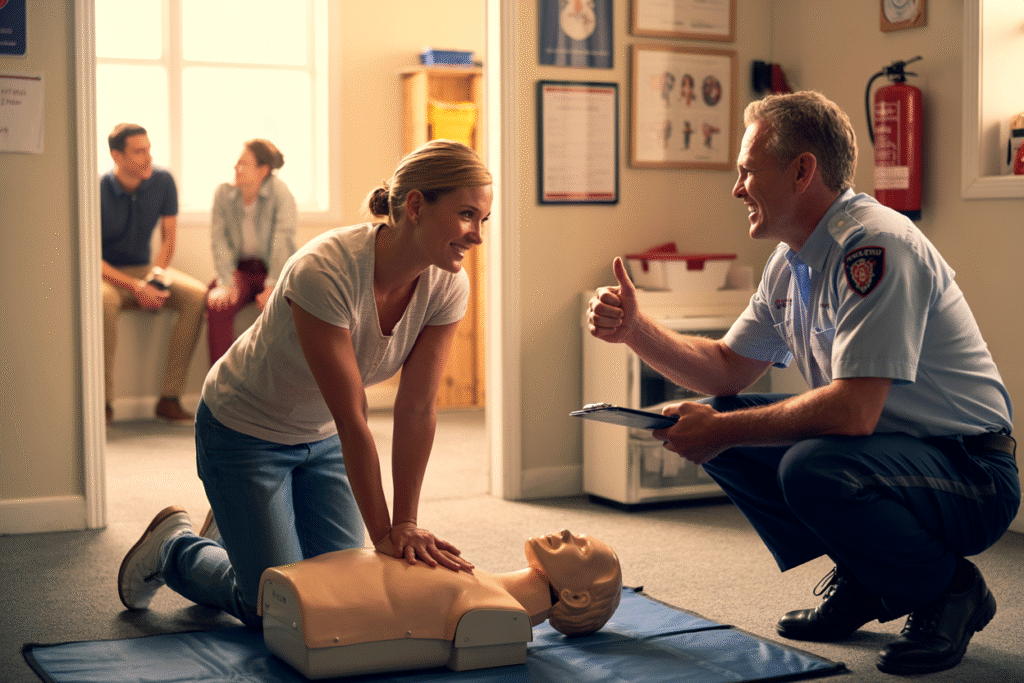
Quality providers keep classes small—maximum 12 students per instructor. Budget providers? They’ll cram 15-20+ students in. The difference matters because you get actual coaching, not just watching from the back.
Do they assess you one-on-one with the instructor, or do you have to perform in front of the whole class? Individual assessment removes 90% of the anxiety.
Claire—a 42-year-old from The Gap—told me she almost didn’t book because she was terrified about being the oldest person there. Turns out we had everyone from 19 to 67 in that class. The individual assessment meant she could ask questions without feeling judged.
Real beginner-friendly courses also work with your body. Got bad knees? They’ll show you how to do compressions standing. You shouldn’t avoid first aid training because of physical limitations.
✅ Bottom Line: If you're unsure which course you need, HLTAID011 Provide First Aid is the safe choice. It covers CPR plus comprehensive first aid training that meets most workplace requirements.
What You’ll Actually Remember (3 Months Later)
The Honest Truth About Skill Retention
Let’s not sugarcoat this: You won’t remember everything from your first aid course for beginners three months later. Nobody does. Studies show that people forget about 40% of course content within 30 days if they don’t practice.
But here’s the thing—you don’t need to remember everything. You need to remember the stuff that saves lives.
What Sticks in Your Memory:
The big, scary stuff stays with you because it’s dramatic and you practice it repeatedly:
- CPR compressions (the rhythm, the depth, the hand position)
- Calling 000 and what to say
- Recovery position for unconscious but breathing
- How to use an AED (these things talk you through it anyway)
- DRSABCD sequence (the basic framework for any emergency)
What Fades Faster:
The detailed, specific stuff tends to blur—exact bandaging techniques, specific differences between symptoms, precise burn treatment steps. This isn’t a failure of the training—it’s just how human memory works.
Sarah told me something interesting six months after her course. A customer had a minor burn in her store, and while she couldn’t remember the exact protocol from training, she remembered enough to know: cool running water, not ice. Cover loosely, don’t use cream. That basic knowledge prevented her from making common mistakes.
That’s what first aid training does—it gives you enough knowledge to help without making things worse.
Simple Ways to Keep Skills Fresh
You’re busy. You’re not going to practice CPR compressions every week. But here’s what actually works:
Once every couple months, spend 5 minutes reviewing the DRSABCD sequence and CPR compression rate (about 100-120 per minute—same tempo as “Stayin’ Alive”). Keep your course manual somewhere accessible—at work, in your first aid kit, saved on your phone.
And renew CPR annually as required. This isn’t just compliance—the annual refresher genuinely reinforces the most important skill.
When the Training Kicks In
Luke called me about 8 months after his course. A gym member collapsed during a workout. Luke said his conscious brain was panicking, but his hands were already checking for response, his mouth was already calling out for someone to grab the AED, and he was already starting compressions. “I didn’t think—I just did what we practiced,” he said.
That’s the value of hands-on training. Your muscle memory overrides panic.
Choosing the Right First Aid Course for Beginners in Brisbane
What to Look For When Comparing Providers
You’ve got about 15-20 different first aid providers operating in Brisbane. Some are excellent. Some are cutting corners.
Start With Google Reviews (But Read Them Properly)
Don’t just look at the star rating. Read what people actually say. Look for reviews that mention patient instructors, same-day certificates, small class sizes, and feeling confident after training.
Red flag reviews mention rushed material, too many people in class, delayed certificates, or annoyed instructors.
Check Instructor Credentials
Quality providers will tell you who’s teaching. Look for current or former paramedics and experienced emergency responders. If the website doesn’t mention instructor qualifications at all, that’s a warning sign.
Verify RTO Accreditation
Every legitimate first aid provider must be a Registered Training Organisation (RTO) or work with one. They should display their RTO number prominently.
Red Flags to Watch For
⚠️ No physical address listed – Training out of someone’s garage isn’t ideal
⚠️ No instructor credentials published – Who’s actually teaching you?
⚠️ Large class sizes – 15-20+ students means minimal individual attention
⚠️ Poor or no online reviews – Check Google reviews before booking
⚠️ Vague course descriptions – If they can’t clearly explain what’s covered, avoid
⚠️ Hidden fees – Materials or certification fees added at checkout
Emma from Fortitude Valley told me she almost booked with a provider but something felt off about the website. She went with a proper provider instead and said the difference was night and day—experienced paramedic instructor, small class, got her certificate same day.
Making the Final Decision
Here’s how to decide: Which provider has the most consistent positive reviews from beginners? Which location and schedule actually works for your life? Which website feels more professional?
Then book it. Seriously. You’ve done enough research. Putting this off for another month might mean you’re still operating without certification.
The Bottom Line: Is a First Aid Course for Beginners Worth It?
Let me answer the question you started with.
Yes. It’s worth it.
Not because I run first aid courses (though I do). It’s worth it because the alternative—standing helpless while someone needs help—is worse than sacrificing one day.
What You’re Actually Buying
You’re not just buying a certificate, though that’s what gets filed in your HR folder.
You’re buying:
- The confidence to act instead of freezing
- The knowledge to help without making things worse
- The muscle memory that overrides panic
- The psychological safety of knowing “I can handle this if it happens”
- Peace of mind for yourself and your family
When It’s Absolutely Worth It
If any of these apply to you, book the course:
- Your employer requires it (obviously)
- You work with the public in any capacity
- You have kids or look after other people’s kids
- You’re self-employed in fitness, trades, or services
- You just want to be prepared
Making the Decision Right Now
If you’re still on the fence, ask yourself this: If someone in your workplace, your family, or even a stranger on the street had a medical emergency tomorrow, would you feel confident helping them? If the answer is no, you’ve got your answer about whether the course is worth it.
Here’s what to do next:
- Pick a provider (you’ve got enough information now)
- Check their next available dates
- Book it (seriously, just click the button)
- Show up on course day (we’ll handle the rest)
That’s the value of a first aid course for beginners.
Don’t be the person who waits until after an emergency to get trained. Be the person who’s ready when it matters.
Book Your First Aid Training Now
Fast, affordable, and nationally accredited training delivered by professionals who care
Frequently Asked Questions About First Aid Courses for Beginners
Q.Do I need any prior experience or qualifications?
No. The instructor starts from scratch and teaches you everything you need to know.
Q.How hard is the practical assessment?
Not as hard as you think. You practice for hours before assessment, and it's one-on-one with the instructor. Most students pass first time.
Q.Is HLTAID011 the same as the old HLTAID003?
Yes. HLTAID003 was replaced by HLTAID011 in 2022. Same content, new code.
Q.Does HLTAID011 include CPR or do I need two separate courses?
HLTAID011 includes CPR. You only need one course.
Q.How long is the certificate valid?
Three years for the full certificate. CPR component requires annual renewal.
Q.Can I do this course online?
The practical components require hands-on training. Some providers offer theory online with practical in-person.
Q.What should I bring on course day?
Just yourself, photo ID, and comfortable clothes. Providers supply everything else.
Making first aid training more affordable for
every classroom
We believe every student deserves access to life-saving first aid knowledge. That’s why we offer specially reduced pricing for schools and educational groups. Whether you’re booking for a single class, a year group, or your entire school, our flexible packages make training more accessible and cost-effective — without compromising quality.
