

It’s 11pm, you’ve got your course booked for Saturday, and you’re lying in bed with your phone three inches from your face, typing “is HLTAID012 hard to pass” into Google like it’s going to give you some kind of secret answer that makes the knot in your stomach go away. Maybe you haven’t done a first aid course since school. Maybe the last “assessment” you sat was years ago and it did not go well. Either way, that little bit of dread is real, and honestly, you’re not the only childcare educator who has lost sleep over it.
Here’s the short version, and we’ll come back to unpack every bit of it: HLTAID012 is not a test you can fail the way you failed a maths exam in year 10. It’s competency-based, which basically means the trainer isn’t looking to catch you out or rank you against everyone else in the room. They’re checking that you can actually do the things a child in your care might one day need you to do. That’s a very different thing to “hard.”
We’ll walk through exactly what the assessment involves, the handful of things that genuinely do trip people up (spoiler, it’s rarely the CPR itself), what actually happens on the rare occasion someone doesn’t get there on the day, and if you’re a centre director, how you can set your whole team up to walk in confident instead of anxious. By the end you’ll know more about this than most people who’ve already done the course.
And look, the fact you’re even asking the question says something good about you. The educators who cause anyone concern in a classroom aren’t the ones lying awake worrying about whether they’ll do okay. It’s usually the opposite. The ones who take it seriously enough to Google it at midnight are exactly the ones who show up switched on, ready to have a go, and walk out with the skills properly bedded in. So take a breath. You’re not behind. You’re just prepared.
Quick Answer: Is HLTAID012 Hard to Pass?
No. HLTAID012 is competency-based, not curve-graded, so there’s no pass mark you need to beat other people to reach. You pass by showing up, having a go, and demonstrating you can actually perform the skills. In practice, that looks like:
- Attending the full session and actually taking part, not sitting at the back
- Practising the practical skills, things like CPR, choking response, and using an EpiPen
- Getting through a short knowledge check, with your trainer talking you through it, not throwing you in the deep end
- Asking questions when you're not sure, because a good trainer wants you walking out able to do this for real, not just ticking a box
That’s genuinely the whole picture. There’s no secret pass mark hiding behind a curtain, no percentage you need to clear, no comparison to how the person next to you performed. If you turn up, put the effort in, and let the trainer help you through the bits that feel unfamiliar, you get there.
🩹 What's covered: CPR, choking response, EpiPen and anaphylaxis response, and basic wound care, all practiced hands-on with your trainer guiding you.
What Does the HLTAID012 Assessment Actually Involve?
Let’s take the mystery out of it, because most of the anxiety around this course comes from not knowing what’s actually going to happen in the room.
Component | What It Covers | What To Expect |
Practical Skills Assessment | CPR, choking response, EpiPen/anaphylaxis response, basic wound care | Hands-on, guided, trainer coaches you through it |
Knowledge Check | Short questionnaire alongside the practical work | Trainer-supported, not a solo memory test |
Trainer Support | Coaching throughout the entire session | Not sink-or-swim, adjustments and re-attempts encouraged |
Practical Skills Assessment
This is the part everyone pictures when they think “assessment”, and honestly it’s the part you’ll come out of feeling proudest of. You’ll be asked to demonstrate:
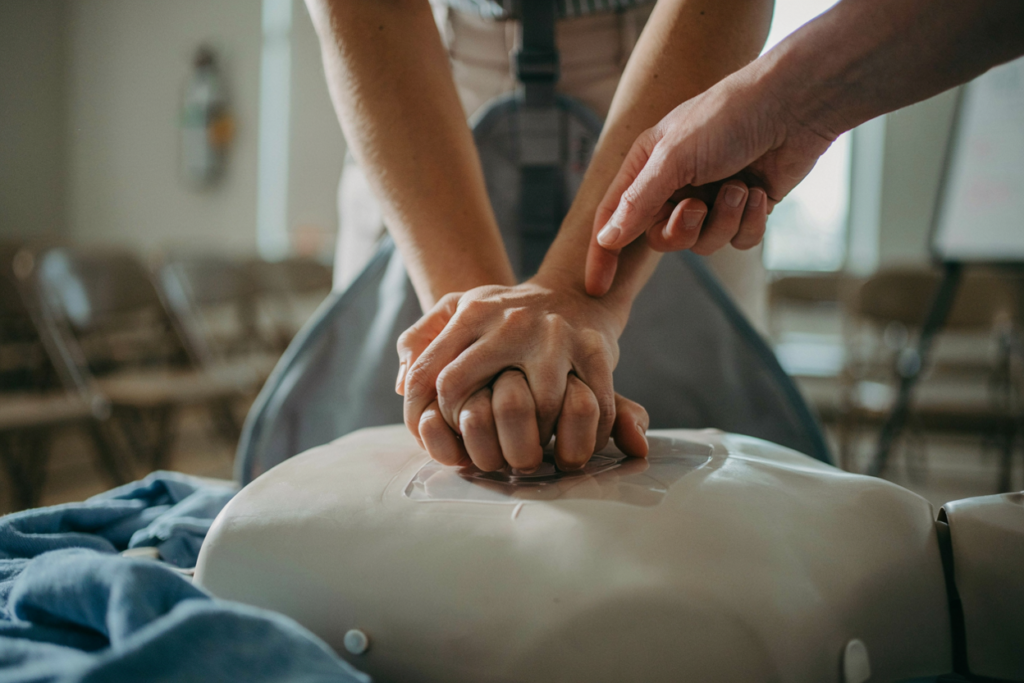
- CPR on a training manikin
- Choking response, worked through for both infant and child scenarios, because a choking baby and a choking four year old need different handling and the course makes sure you know the difference
- EpiPen and anaphylaxis response, which for anyone working in childcare is one of the most important skills in the whole course
- Basic wound care
None of this is a solo performance in front of a panel judging your form. It’s hands-on, it’s guided, and your trainer is right there the whole time.
A lot of educators come in thinking they need to nail each skill perfectly on the very first try, like it’s a one-shot audition. It isn’t. If your hand placement’s a little off during CPR, or you’re not quite sure which way to angle a baby during choking response, your trainer is going to adjust you and let you run through it again. Nobody’s counting your attempts against you. The whole point of a practical skills assessment is repetition until it clicks, not a single flawless performance under pressure.
Knowledge Check
There’s also a short knowledge check, a questionnaire that goes with the practical work rather than replacing it. It’s not designed to trip you up with trick questions or catch you out on some obscure bit of terminology. It’s there to confirm you understand the why behind what you just practiced.
Think about it from the trainer’s side for a second. They’re not trying to fail anyone off the back of a written question. They’ve just watched you do the compressions, watched you manage the choking scenario, watched you handle the EpiPen. The knowledge check is really just making sure the reasoning behind those actions has landed too, so that when you’re the one in the room with a real child, you’re not just going through motions you memorised, you actually understand why each step matters.
Trainer Support Throughout
This is honestly the bit that surprises people the most. HLTAID012 is not sink-or-swim. A decent trainer is coaching you the entire way through the practicals, not standing back with a clipboard waiting for you to stuff up. If your compressions are too shallow, they’ll tell you and get you to try again right there. If you freeze for a second during the EpiPen demonstration, that’s not a fail, that’s just Tuesday in a first aid class. You adjust, you go again, you get it.
Think of it less like sitting an exam and more like learning to parallel park with an instructor next to you who keeps saying “little bit more, little bit more, good, now straighten up.” You’re not being marked against a stranger in the car next to you. You’re just learning to do the thing.
So if the assessment itself is straightforward, what actually trips people up?
⚠️ Real talk: It's almost never the CPR or the EpiPen that trips people up. It's missing part of the session or walking in with the wrong mindset.
What Actually Causes People to Struggle (And How to Avoid It)
Here’s the truth nobody tells you upfront: it’s almost never the CPR or the EpiPen that causes someone to need a rest. It’s a small handful of avoidable things, and once you know what they are, you can just… avoid them.
None of these are about ability. Nobody walks out needing another go because they weren’t “smart enough” or “coordinated enough.” Every single one of the common causes below comes down to circumstance or mindset, both of which are completely within your control before you even walk in the door.
Not Attending the Full Session
This is the number one real cause of a resit, full stop. Not “difficulty.” Not “I’m bad at first aid.” It’s someone ducking out for an hour to deal with a work call, or turning up forty minutes late because the school drop-off ran over, and missing a chunk of hands-on practice they needed. The course is built around you being there for the whole thing, actively, not half-there while your brain is somewhere else on your to-do list.
If you can, treat the day like your phone doesn’t exist. Let your centre know ahead of time that you’re unreachable for the duration. It sounds like a small thing, but the educators who struggle almost always trace back to missing a stretch of the practical work, not to genuinely finding the content too hard.
Treating It Like a Memory Test
A lot of educators walk in bracing themselves to memorise a textbook, like they’re about to be quizzed on obscure facts. That’s the wrong mindset, and it actually works against you. HLTAID012 rewards engaging with hands-on practice, not reciting theory word for word. If you spend the whole day stressed about remembering the “correct” answer instead of just having a go at the compressions or the bandaging, you’re making it harder on yourself than it needs to be.
Muscle memory does more of the heavy lifting here than textbook memory ever will. The compressions, the recovery position, the way you’d manage an anaphylaxis response, all of it sinks in through repetition, not through silently reciting a checklist in your head. Relax into the doing of it, and the understanding tends to follow along naturally.
Language or Confidence Barriers
If English isn’t your first language, or if assessment situations generally make you anxious, that’s a real and valid thing, not something to be embarrassed about. Good trainers know this and build in support for it, explaining things a different way, slowing down, checking in with you individually rather than just moving on. You’re allowed to ask “can you show me that again” as many times as you need to.
Even knowing all this, it’s natural to still wonder: what if I don’t pass the first time?
🙌 Reassurance: Needing more practice on one skill is normal and, in most cases, won't put your job or roster at risk.

What Happens If You Don’t Pass First Time?
Let’s just say it plainly: it happens, it’s not the end of the world, and it’s a lot less dramatic than the version you’ve built up in your head at 11pm.
It Won’t Affect Your Job or Roster (In Most Cases)
If you’re lying awake worrying that not nailing it first go means your director’s going to be annoyed, or your roster’s going to fall apart, take a breath. Needing a bit more practice on one skill doesn’t put your job or your shifts at risk in most cases. It just means you need a bit more practice, same as anyone learning any physical skill for the first time. Nobody expects you to be perfect at something you might not have touched since a first aid course years ago.
Try to picture the alternative for a second: an educator who gets a little extra guidance on their EpiPen technique and comes out of it more confident, versus an educator who never got that guidance at all and is now the one standing next to a child mid-emergency, unsure. One of those outcomes is mildly inconvenient for a day. The other one actually matters. Any reasonable center director would take the first every single time.
If you’re a centre director reading this on behalf of your team…
How Centre Directors Can Help Their Team Pass with Confidence
If you’re the one responsible for making sure your whole roster holds current HLTAID012, this bit’s for you.
Choosing a Trainer Who Understands Childcare Settings
Not every first aid trainer actually understands the difference between a generic workplace course and HLTAID012 specifically. When you’re picking a provider for your team, it’s worth checking they genuinely get the education and care setting context, not just running the same generic content and swapping the logo. A trainer who understands childcare will pitch the scenarios, the pace, and the support at exactly what your educators need.
It’s a fair question to ask directly, too: does this trainer regularly work with childcare teams, or does your centre happen to be squeezed in between two corporate workplace sessions? The scenarios your educators need to practise, an infant choking, an anaphylaxis reaction in a three year old, are genuinely different from what a generic office first aid course covers. A trainer who lives in this space day to day brings a level of relevance a generalist simply can’t match.
On-Site/Group Training Reduces Individual Pressure
Doing the course as a team, in your own centre, with people you already work alongside, takes a huge amount of pressure off any one individual. Nobody’s sitting in a room full of strangers wondering if everyone else already gets it. You’re all learning together, in a familiar environment, with your own colleagues cheering each other on through the CPR practice. That alone takes the edge off for a lot of educators, and it tends to mean people relax into the practical work faster than they would be surrounded by faces they’ve never seen before.
Building Ongoing Confidence, Not Just a Certificate
Here’s the bit worth remembering as a director: the goal was never just a piece of paper for the compliance file. It’s your team actually, genuinely, being ready if something happens. A certificate on the wall doesn’t help a child who’s choking, a confident educator does. Choosing training that builds real readiness, not just ticks the regulatory box, is what actually protects the kids in your care.
Am I Ready? A Quick Self-Check
Before your session, ask yourself:
- Have I blocked out the full session, no early exits or half-attendance?
- Am I going into it expecting to practise, not just to memorise?
- Do I know it's okay to ask my trainer to show me something again?
- Have I let go of the idea that this is a test I can fail like an exam?
If you can say yes to those, you’re already exactly the kind of prepared educator who passes comfortably.
The Honest Truth, One More Time
So, is HLTAID012 hard to pass? No, not in the way that word usually makes you think. There’s no curve, no ranking against the person next to you, no trick question waiting to catch you out. It’s competency-based, which means the whole point is making sure you can actually do the thing, not making sure you can beat a percentage.
Most of what actually causes a rest has nothing to do with how good you are at first aid. It’s missing part of the session, or walking in braced for a memory test when the real work is hands-on. Once you know that, the whole thing gets a lot less scary. You’re not up against some invisible bar. You’re just showing up, having a go, and letting a trainer who wants you to succeed help you get there.
If you’re the one lying awake at 11pm worrying about Saturday, take that dread and put it where it belongs, which is nowhere. You’ve already read this far, which means you understand more about what’s coming than most people do walking in the door. That alone puts you ahead.
And if you’re a centre director reading this on behalf of your whole team, the same logic applies at scale. Pick a trainer who actually understands childcare settings, get your team through it together where you can, and remember the goal was never just a certificate for the compliance file. It’s knowing that if something happens on a Tuesday afternoon at your centre, the adult standing there knows exactly what to do.
If you’ve read this far, you already know more than you did five minutes ago, and you’re exactly the kind of prepared educator who passes comfortably. Ready to book your session?
Book Your First Aid Training Now
Fast, affordable, and nationally accredited training delivered by professionals who care
Frequently Asked Questions
Q.Is HLTAID012 hard to pass?
No. HLTAID012 is competency-based rather than curve-graded, so you're not being ranked against anyone else in the room. As long as you attend the full session, take part in the practical work, and engage with the trainer's guidance, you'll get there.
Q.What does the HLTAID012 assessment actually involve?
The assessment covers practical skills like CPR, choking response, EpiPen and anaphylaxis response, and basic wound care, plus a short trainer-supported knowledge check. Your trainer coaches you through the practicals the whole way, so it's guided rather than a solo performance.
Q.What happens if I don't pass on my first attempt?
It happens sometimes, and it's far less dramatic than it feels the night before. It usually just means a bit more practice on a specific skill, not a fail in the way an exam works.
Q.Will not passing the first time affect my job or my roster?
In most cases, no. Needing more practice on one skill is a normal part of learning something hands-on, and it doesn't put your job or your shifts at risk.
Q.How can centre directors help their team feel confident before the assessment?
Choosing a trainer who genuinely understands childcare settings, running the session on-site as a group, and focusing on real readiness rather than just a certificate all help take the pressure off individual educators.
Making first aid training more affordable for
every classroom
We believe every student deserves access to life-saving first aid knowledge. That’s why we offer specially reduced pricing for schools and educational groups. Whether you’re booking for a single class, a year group, or your entire school, our flexible packages make training more accessible and cost-effective — without compromising quality.
