

You booked a CPR course online because it was cheap and easy, and now your gym manager or your association is telling you it doesn’t count. Sound familiar? It happens more than people think, and if you’re relying on that piece of paper to actually work a shift, coach a session, or get your registration through, finding out too late is about the worst timing there is.
Here’s the thing. A nationally accredited CPR course means your certificate, HLTAID009, comes from a Registered Training Organisation that’s actually registered with the Australian Skills Quality Authority (ASQA). That’s what makes it recognised by every employer, gym, association and insurer in the country, not just wherever you happen to do the course. No guesswork, no fine print, no awkward conversation with your boss.
This guide walks through what “nationally accredited” actually means, how you check a provider’s legit before you hand over your money, and where to get a fast, properly certified CPR course in Brisbane, so you book it once, get it right, and get back to work.
What Does Nationally Accredited Mean for a CPR Course?
Quick answer, because you probably just want this bit:
A nationally accredited CPR course is one delivered by a Registered Training Organisation (RTO) that’s registered with the Australian Skills Quality Authority (ASQA). Your certificate, unit code HLTAID009, gets recognized by every employer, gym, association and insurer across Australia. Not just the state you trained in either.
So how do you actually check if a course is the real deal before you book it? Look for these four things:
- An RTO number displayed on the training provider's website
- The correct unit code, HLTAID009 for CPR-only training
- A Statement of Attainment issued on successful completion
- Practical, hands-on assessment rather than a quiz completed entirely online
Missing any of these? The certificate might not actually hold up when it counts, whether that’s for work, licensing, or compliance.
⚠️ Why it matters: Skip this check and you risk a certificate that gets rejected on the spot, right when you need it most.
Why “Nationally Accredited” Actually Matters for Your CPR Certificate
Here’s the split that trips people up: there’s accredited, and there’s non-accredited. And the gap between the two isn’t small. One gets you instant acceptance, no questions asked. The other gets you rejected on the spot, sometimes standing right there at your gym’s front desk with your phone out trying to explain why the certificate you paid for doesn’t count.
If you’re a casual worker, that gap matters even more. A lot of CPR-only buyers aren’t sitting in one job with one employer checking one file. You’re a PT floating between two gyms. You’re a swim instructor picking up shifts at three different pools. You need a certificate that travels with you, not one that only means something to the exact business that issued it.
This isn’t about scaring you into buying something. It’s just a risk you can avoid with about five minutes of checking.
What “Nationally Recognised” Actually Means in Practice
In practice, it means your HLTAID009 certificate isn’t tied to a state, a suburb, or a single business’s own internal system. It’s tied to the national vocational training framework that every RTO in the country operates under. Train in Brisbane, work in Melbourne next month, and the certificate still holds. That’s the whole point of “nationally recognised” as a phrase, and it’s not marketing fluff, it’s a real regulatory thing.
Who Actually Checks This (Employers, Gyms, Associations, Insurers)
More people check than you’d expect. Gym managers checking compliance before rostering you on. AUSactive or Fitness Australia checking it as part of registration. Insurers checking it if something ever goes wrong and a claim gets made. Swim schools check it before letting you near a pool full of kids. It’s not one gatekeeper, it’s several, and any one of them can knock you back if the paperwork doesn’t stack up.
If you want the fuller breakdown of what CPR-only actually covers versus a full first aid ticket, that’s covered on our CPR course vs. First Aid course comparison page. And if you want to check an RTO’s registration yourself, training.gov.au is the official source, worth bookmarking honestly.
“A certificate is only as good as the RTO behind it.”
✅ The shortcut: Four things to look for, five minutes of checking, and you'll know exactly what you're booking.

How to Check If a CPR Provider Is Genuinely Accredited (4-Point Checklist)
Alright, this is the practical bit. The part you can actually use next time you’re staring at a booking page trying to decide if it’s legit or not. Four things to check. That’s it, it doesn’t need to be more complicated than that.
Look for an RTO Number
Every genuine Registered Training Organisation has a number, and legit providers put it somewhere on their site, usually the footer or an “about us” page. If you can’t find one anywhere, that’s your first red flag. Not a proper flag.
Confirm the Correct Unit Code (HLTAID009)
This one trips people up a lot more than it should. HLTAID009 is CPR-only. If the page you’re looking at doesn’t mention that code anywhere, or it’s vague about “certified in CPR” without naming the actual unit, stop and ask before you book. Codes matter here, not just the words around them.
Statement of Attainment vs. “Certificate of Completion”
A Statement of Attainment is the real, nationally recognised document. A “certificate of completion” sounds official but often isn’t tied to the vocational training framework at all, it can just mean you sat through a video. Different things wearing similar-sounding names, and that’s exactly how people get caught out.
Practical Assessment Is Non-Negotiable
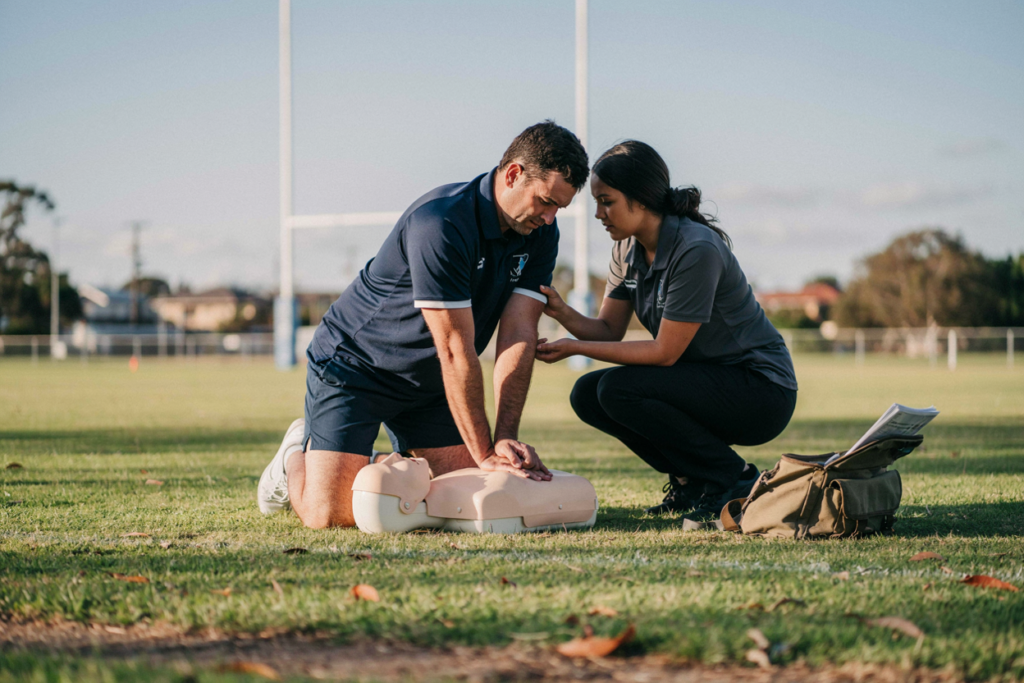
If a CPR course is entirely online with a quiz at the end and no hands-on component, walk away. Actual CPR competency needs actual practice, on a mannequin, with someone watching your technique. A multiple-choice quiz doesn’t teach you how hard to push on someone’s chest.
Check | What to look for | Red flag if missing |
RTO number | Displayed on provider site | No number = not a genuine RTO |
Unit code | HLTAID009 for CPR-only | Vague “CPR certified” language |
Document type | Statement of Attainment | “Certificate of completion” only |
Assessment | Practical, hands-on | Online quiz only |
Check your provider now, run through those four points, or skip the guesswork entirely and book with an RTO that’s already verified.
HLTAID009 Explained: The Unit Code You’re Actually Looking For
If there’s one thing worth getting dead clear on before you book anything, it’s this code. HLTAID009. Write it down, screenshot it, whatever you need to do, because it’s the difference between getting exactly what you need and accidentally paying for something bigger and pricier than you wanted.
HLTAID009 vs. HLTAID011, Which Do You Need?
HLTAID009 is CPR-only. In and out, focused purely on cardiopulmonary resuscitation. HLTAID011 is the full first aid course, CPR included but wrapped inside a much longer session covering wounds, burns, fractures, the whole scope.
If you only need CPR for your gym, your pool, your coaching role, HLTAID009 is what you’re after. Don’t let a provider bundle you into the bigger course “just to be safe” when you only need the narrower one. That’s not being safe, that’s them upselling you into paying more for time you don’t have.
How Long Is HLTAID009 Valid For (12-Month Refresh Note)
Here’s the bit that catches a lot of people out. HLTAID009 is only valid for 12 months, shorter than the 3-year cycle you might be used to for a full first aid certificate. That means you’re renewing this one every single year, not every three, so it’s worth setting a reminder for yourself rather than relying on memory. Renewal reminders are the easiest way to stop this from sneaking up on you.
🚩 Watch for this: Awareness-only courses can look identical to accredited ones online. The RTO number and unit code are what actually separate them.
Red Flags: Spotting a Non-Accredited or “Awareness-Only” CPR Course
Some providers aren’t trying to trick anyone, they’re just running an “awareness” session and calling it certification when it isn’t. Others know exactly what they’re doing. Either way, the damage lands on you when your certificate gets rejected, so it’s worth knowing what to watch for.
Common red flags:
- The whole course is online, with no in-person or practical component
- No RTO number is listed anywhere on the provider's website
- Vague claims such as "certified" or "qualified" without naming HLTAID009
- Overseas-based providers issuing documents for Australian workplaces
- A quiz-only assessment with no trainer watching you perform CPR
“Certificate” vs. “Statement of Attainment”: Why the Wording Matters
This sounds like a small thing, it’s not. A Statement of Attainment ties back to the national training framework. A generic “certificate” doesn’t have to mean anything at all, legally speaking anyone can print one out. If the document you’re handed doesn’t say Statement of Attainment, ask why.
What to Do If You Already Have a Non-Accredited Certificate
If you’ve already been caught out, don’t stress too much, it happens more than you’d think. The fix is straightforward: book a proper HLTAID009 course with a genuine RTO and get it done properly this time. Better to find out now and fix it than to find out when your gym manager’s standing in front of you asking questions.
Who Needs a Nationally Accredited CPR Course in Brisbane?
This isn’t a course for one type of person. A fair few different roles around Brisbane need this exact certificate, for slightly different reasons each time.
Swim Instructors & Aquatics Staff
Pool operators and swim schools need staff with current CPR, often renewing annually right alongside their other pool safety requirements. Aquatics environments carry their own risks, so this one tends to get checked closely.
Allied Health & Beauty Therapists
Massage therapists, beauty therapists, dental assistants, this group often needs CPR specifically because an insurer or professional association mandates it, not necessarily the full first aid course. Knowing the difference saves you both time and money here.
Coaches & School/Club Volunteers
Sports coaches and PE assistants working with clubs or school programs are frequently asked for proof of current CPR before they’re allowed near a team. It’s usually a club or association requirement, and it needs to be current, not just “done at some point.”
Getting Your Nationally Accredited CPR Course in Brisbane, Fast
So here’s where it actually gets practical. If you’ve read this far and you want the shortcut, skip the guesswork altogether and book with a provider that’s already verified.
First Aid Alive is a genuinely registered RTO, RTO 31106, so you can check that against training.gov.au yourself if you want the peace of mind. Training’s run by Bill Hunter, who’s got 20+ years experience in the field, not someone reading off a script for the first time. You get evening and weekend sessions that actually work around shift work, transparent upfront pricing with no fine print, and a same-day digital Statement of Attainment the moment you’re done, so you can forward it straight to your gym manager or association without waiting around.
Getting Certified, Properly, the First Time
So that’s the whole picture. A nationally accredited CPR course isn’t some box-ticking formality, it’s the difference between a certificate that actually works when someone checks it and one that falls apart the moment your gym manager asks a question. HLTAID009, the right RTO, a Statement of Attainment, hands-on assessment, that’s the whole checklist really.
Most people who get caught out aren’t careless, they just didn’t know what to look for. Now you do. An RTO number, the correct unit code, the right kind of document, a practical component, four things, five minutes of checking, and you’ve saved yourself a wasted afternoon or a rejected certificate at the worst possible moment.
If you’re a PT bouncing between gyms, a swim instructor picking up shifts at different pools, an allied health worker whose insurer wants proof, or a coach who needs to show up with current CPR before the season starts, the same rule applies across the board. Check before you book, not after.
And because HLTAID009 only lasts 12 months, this isn’t really a one-and-done thing anyway. It’s something you’ll be doing again next year, and the year after that. Worth finding a provider you trust the first time round so you’re not starting from scratch every renewal.
If you’ve already got a certificate sitting in your inbox that you’re not totally sure about, it’s worth a quick check against the list above. Better to find out now, quietly, than find out standing at reception with a shift about to start.
Get it right once, book with a genuine RTO, walk out with a Statement of Attainment that actually holds up, and you can stop thinking about it until it’s time to renew.
Book Your First Aid Training Now
Fast, affordable, and nationally accredited training delivered by professionals who care
Frequently Asked Questions
Q.Is a CPR-only course the same as a first aid course?
No. A CPR-only course covers HLTAID009, focused purely on cardiopulmonary resuscitation, while a full first aid course (HLTAID011) covers CPR plus a much wider range of injuries and scenarios. If your gym, pool, or coaching role only requires CPR, HLTAID009 is the right one to book.
Q.How do I know if a CPR course is nationally accredited?
Check for an RTO number on the provider's site, the correct unit code (HLTAID009 for CPR-only), a Statement of Attainment rather than a generic certificate, and a practical, hands-on assessment component. If any of those are missing, the course may not be genuinely accredited.
Q.How often do I need to renew HLTAID009?
HLTAID009 is valid for 12 months, which is shorter than the 3-year cycle for a full first aid certificate. Setting a renewal reminder is the easiest way to avoid your certificate lapsing without you noticing.
Q.What's the difference between a certificate and a Statement of Attainment?
A Statement of Attainment is tied to the national vocational training framework and is the document that employers, gyms, and associations actually recognize. A generic "certificate of completion" can mean almost anything and doesn't carry the same weight.
Q.Will my employer accept a certificate from an overseas online provider?
Generally, no. Employers, gyms, associations, and insurers in Australia look for a certificate issued by an RTO registered with ASQA. An overseas or online-only provider without an Australian RTO number is unlikely to be accepted.
Making first aid training more affordable for
every classroom
We believe every student deserves access to life-saving first aid knowledge. That’s why we offer specially reduced pricing for schools and educational groups. Whether you’re booking for a single class, a year group, or your entire school, our flexible packages make training more accessible and cost-effective — without compromising quality.
