
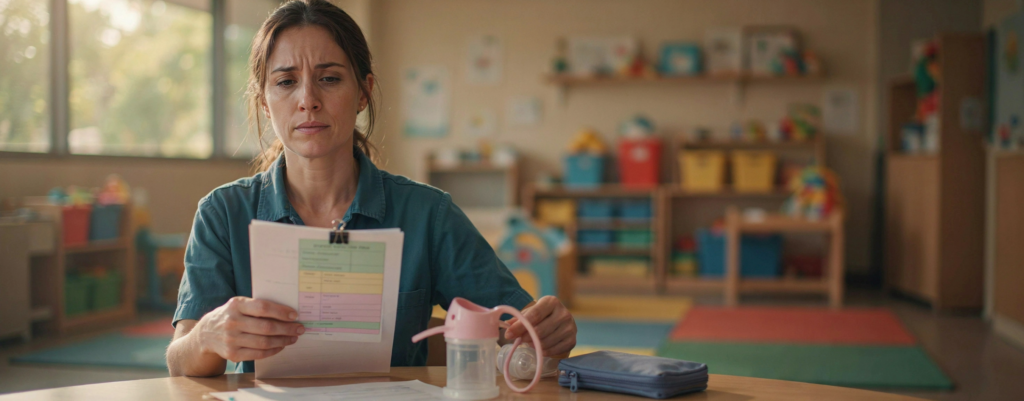
The enrollment form lands on a Thursday arvo. A four-year-old is starting in your room in two weeks, with a peanut allergy, an ASCIA Action Plan and an adrenaline injector tucked in a labelled pouch. Your director wants your training current by Monday. And there’s that little knot in your stomach that just won’t shift.
That’s usually the moment Brisbane educators start hunting for nationally recognised asthma and anaphylaxis training. It’s also when the confusion kicks in. Course codes get replaced, approval dates run out, and two providers can describe the exact same requirement in totally different ways. No wonder so many educators end up second guessing themselves.
This guide clears all that up. You’ll find out what “nationally recognised” actually means, which courses ACECQA currently accepts for the asthma and anaphylaxis requirements, and how to check if your existing certificate still counts. We’ll also walk you through what happens on the day, from practising with EpiPen and Anapen trainers to using a puffer, spacer and mask with a toddler.
By the end you’ll know which course to book, how long it lasts and how to keep it current. So the next action plan that crosses your desk feels manageable. Not frightening.
What Is Nationally Recognised Asthma and Anaphylaxis Training?
Nationally recognised asthma and anaphylaxis training is an accredited course delivered by a registered training organisation (RTO). Pass it, and you get a Statement of Attainment that carries the Nationally Recognised Training logo and is recorded against your Unique Student Identifier (USI).
The training covers:
- Recognising the signs of asthma attacks and anaphylaxis
- Following ASCIA and asthma action plans
- Giving adrenaline with an auto-injector like EpiPen or Anapen
- Giving reliever medication with a puffer and spacer
- Reducing risk and communicating with families and colleagues
If you work in education and care, there’s one more thing to check though. Nationally recognised doesn’t automatically mean ACECQA approved. So confirm the course is on ACECQA’s approved list before you book, because plenty of educators only find out after they’ve paid.
🔍 Good to know: Every accredited course has a code. That code, not the course name, is what you check.
What “Nationally Recognised” Means, and Why It Isn’t the Same as ACECQA Approved
Here’s where a lot of educators get tripped up. The two terms sound like they mean the same thing. They don’t, and the gap between them is where people lose time and money.
How nationally recognised training works
Nationally recognised training follows a pretty simple path:
- Delivered by an RTO registered to issue nationally recognised accredited training
- Assessed against an accredited course or unit, not just the provider's own content
- Statement of Attainment issued on successful completion, featuring the Nationally Recognised Training (NRT) logo
- Training outcome recorded against your USI, keeping it on your official training record
Every accredited course also has a code, and you can look any of them up on training.gov.au. Think of the code as the course’s fingerprint. Two courses can have near identical names and completely different codes.
What ACECQA approval adds
ACECQA (the Australian Children’s Education and Care Quality Authority) sits on top of all that. Under Regulation 136 of the Education and Care Services National Regulations, a service needs at least one educator with current approved anaphylaxis management training and at least one with current approved emergency asthma management training, on the premises and immediately available. One educator can hold both.
The key word is “approved.” Under Regulation 137, approved means the course is on ACECQA’s list. A course can be nationally recognised and still not be on that list.
There’s another catch most people miss. ACECQA’s list gives each course a date awarded window. So it’s not just which course you did, it’s when your certificate was issued that decides whether it counts.
How to check a course quickly
Honestly, this is the bit we’d want every educator to know before they pay for anything.
- Search the course code on training.gov.au.
- Find that code on ACECQA's approved list and check the date awarded column.
- Confirm the provider's RTO number on training.gov.au.
If all three line up, you’re good to go. If one doesn’t, ask questions before you book.
⚠️ Heads up: The date on your certificate matters as much as the code. Check both against ACECQA's list.

Which Asthma and Anaphylaxis Courses Count for Queensland Educators
Knowing the difference is one thing. Knowing which specific course to book is the part that trips most educators up.
If you’re looking for ACECQA approved anaphylaxis training in Brisbane, or approved emergency asthma management training in QLD, these are the codes worth knowing.
Approved anaphylaxis management training
Always check ACECQA’s approved list for the current anaphylaxis course code before you book.
You might still see older codes floating around, so here’s a bit of background. 22578VIC replaced 22300VIC, and ACECQA approves 22578VIC only for certificates awarded before September 2026. If a provider is still selling it today, ask them straight out which code your certificate will show and whether it’ll count.
Approved emergency asthma management training
The same goes for asthma. Check the current approved code on ACECQA’s list first.
Then there’s the history. 22556VIC replaced 22282VIC, and ACECQA approves 22556VIC only for certificates awarded before December 2025. Providers now advertise 22702VIC as the replacement.
Where HLTAID012 fits
This is the question we hear more than almost any other. Whether your HLTAID012 certificate covers the asthma and anaphylaxis requirements comes down to the same test as everything else: what’s on ACECQA’s list and when your certificate was awarded. If you need full first aid as well, HLTAID012 first aid in an education and care setting is worth a look.
What if your certificate shows an older course code?
Don’t panic. An older code doesn’t automatically mean your certificate’s no good. The date awarded on ACECQA’s list is what decides, not the code alone.
Grab your certificate, find the date it was issued, and check it against the window for that code on ACECQA’s list. Still not sure? Ask your director, they deal with this stuff more than anyone in the centre.
🩹 Remember: ASCIA action plans say to give adrenaline if in doubt. You don't need to be certain before you act.
What You Learn in Asthma and Anaphylaxis Training
Once you know which course counts, the next question is usually what actually happens in the room.
Recognising anaphylaxis in babies and toddlers
Your course works off the same wording as the ASCIA Action Plan, so the signs you learn are the signs you’ll see on the plan in your room.
Mild to moderate signs include things like:
- Swelling of the lips, face or eyes
- Hives or welts on the skin
- A tingling mouth
- Tummy pain or vomiting
Severe signs (anaphylaxis) include:
- Difficult or noisy breathing
- Swelling of the tongue, or swelling or tightness in the throat
- Wheeze or a cough that won't stop
- Difficulty talking or a hoarse voice
- Persistent dizziness or collapse
- Pale and floppy, in young children
That last one is the sign people miss. A baby can’t tell you their throat feels tight. They just go quiet and limp, and it’s easy to mistake that for a tired kid after morning tea.
And here’s the part that takes so much weight off. ASCIA action plans say to give adrenaline if in doubt. So you don’t need to be 100% sure it’s anaphylaxis before you act. That one line tackles the fear of hesitating, which is the thing most educators tell us they’re scared of.
EpiPen and Anapen: hands-on practice with both
Plenty of educators have held one device and never seen the other. Then a child arrives with the one they don’t know. That’s why EpiPen training for childcare staff should cover both.
Following ASCIA’s device instructions, the main difference is in how you remove the caps and trigger the injection. With an EpiPen, you pull off the blue safety release, place the orange end against the outer mid-thigh and push down hard until it clicks. With an Anapen, you remove the needle shield and safety cap, place the needle end against the outer mid-thigh and press the red button. Same job, different hands.
Asthma first aid for children: puffer, spacer and mask
Asthma is really common in Brisbane rooms. According to the ABS National Health Survey 2022, asthma affects 10.1% of boys and 6.2% of girls aged 0 to 14.
You’ll practise the Asthma Australia first aid steps for children. For little ones, you’ll use a mask with the spacer, because toddlers can’t seal their lips around the mouthpiece properly. It’s fiddly the first time and easy by the third.
Storm season deserves a special mention here. Brisbane’s humid summer afternoons and big storms can bring on asthma flare-ups, including thunderstorm asthma. Know where every spacer is before the sky turns green.
Action plans, risk minimisation and communication plans
Training isn’t only about the emergency. Under Regulation 90, your service’s medical conditions policy must include a risk minimisation plan and a communication plan. In practice, that means:
- Checking medication expiry dates
- Knowing exactly where each child's medication is kept
- Briefing casual staff before their shift starts
That last one gets forgotten a lot, and casuals are often the ones in the room when it happens.
📅 Tip: Not sure when to renew? Go with the two-year cycle and set a reminder today.

How Long Asthma and Anaphylaxis Training Is Valid, and When to Renew
The skills stay with you, but the certificate doesn’t last forever. And this is where a lot of educators get caught out, because nobody sends a reminder when it quietly runs out.
So how long is anaphylaxis training valid, and how often do childcare workers need anaphylaxis training? Here’s the honest picture.
Three years, or two?
Most providers will tell you three years.
But the 22578VIC course document recommends renewing anaphylaxis training every two years.
Our advice? If you’re unsure, go with the shorter cycle. Two years means the hands-on practice is still fresh in your muscle memory. And when you’re holding an injector against a little one’s thigh, you want your hands to remember what to do without thinking too hard about it.
Never get caught with expired training again
The easiest fix is boring, and it works. Keep a staff register and set reminders.
For educators, that might just be a calendar alert a couple of months before your certificate date. For directors, it’s a register that tracks first aid, asthma and anaphylaxis expiry dates for every staff member, casuals included.
📊 Free director's training register template: Track first aid, asthma and anaphylaxis expiry dates for every staff member in one spreadsheet.
Face-to-Face, Blended or Online: What Counts
How the course is delivered matters too, especially for the practical part. After a long shift, a fully online option sounds pretty tempting. So it’s fair to ask whether online anaphylaxis training is ACECQA approved, and whether a blended asthma and anaphylaxis course is any different.
Why practical assessment matters
Beyond the rules, there’s a simple reason to want hands-on time. Reading about an auto-injector and actually holding one are two very different things. The first time you pull a safety cap off shouldn’t be on a real child.
Practising with trainer devices is what builds confidence. You feel the click, get the grip right, fit a mask to a mannequin’s face and hear the spacer valve move. After a few goes, your hands start to know the steps before your head catches up, and that’s exactly what you want when your heart’s pounding and everyone is looking at you.
Most educators we talk to walk in nervous and walk out a bit taller. It’s not magic. It’s just repetition in a room where getting it wrong is completely fine.
🏫 For directors: On-site training before opening or after close means nobody has to leave the room.
When the Next Action Plan Lands on Your Desk
Think back to that Thursday enrollment form. There was the peanut allergy, the action plan, the injector in its little pouch, and your director wanting it all sorted by Monday. It felt big, and honestly, it is big. But it’s also completely manageable once you know what to look for.
Nationally recognised asthma and anaphylaxis training is only half the picture for educators. The course also needs to be on ACECQA’s approved list, and your certificate needs to fall inside the right date window. Get those two things right and the rest falls into place pretty quickly.
So start by checking your certificate. Pull it out, find the course code and the date it was issued, then compare it against ACECQA’s list. A quick check now saves a whole lot of stress later.
Next, pick a session that fits around your roster. You can book asthma and anaphylaxis training in Brisbane at a time that suits you. If half your team is due for renewal, have a chat with your director about on-site training for your centre so nobody has to leave the room.
On the day, bring your photo ID and your USI, get stuck into the hands-on practice and walk out with your certificate. Then set a reminder so expired training never sneaks up on you again. If anything’s still unclear, give a trainer a call.
The certificate keeps the paperwork happy, but the confidence is what really counts. It’s the difference between freezing and acting, between second guessing and simply doing. When the next action plan arrives, you’ll know exactly what to do.
Book Your First Aid Training Now
Fast, affordable, and nationally accredited training delivered by professionals who care
Frequently Asked Questions
Q.What is nationally recognized asthma and anaphylaxis training?
It's an accredited course from an RTO that gives you a Statement of Attainment with the NRT logo, recorded against your USI. It covers spotting asthma attacks and anaphylaxis, following action plans and using auto-injectors and puffers with spacers.
Q.Does HLTAID012 include asthma and anaphylaxis training?
It comes down to what's on ACECQA's approved list and when your certificate was awarded. Check both before you book a separate course.
Q.Is my course ACECQA approved?
Only if it's on ACECQA's approved list and your certificate falls inside the date awarded window for that code. Look the code up on the list to be sure.
Q.How long is my certificate valid?
Most providers say three years, but the 22578VIC course document recommends renewing anaphylaxis training every two years. If you're unsure, go with two.
Q.Can I do asthma and anaphylaxis training online?
Check ACECQA's approved list and the course details before you book. Either way, hands-on practice with trainer devices is what builds real confidence.
Q.Does the training cover Anapen as well as EpiPen?
It should, so ask any provider before you book. A child might arrive with the device you've never held.
Q.Do nannies, OSHC staff and school support staff need this training?
OSHC services sit under the National Quality Framework, so the same requirement applies. For nannies and school support staff, it depends on your employer, but if a child in your care has an action plan, it's worth having.
Q.How many educators at my centre need to be trained?
Regulation 136 says at least one educator with approved anaphylaxis training and one with approved asthma training must be on the premises and immediately available. One person can hold both, but most centres train enough staff to cover every shift.
Making first aid training more affordable for
every classroom
We believe every student deserves access to life-saving first aid knowledge. That’s why we offer specially reduced pricing for schools and educational groups. Whether you’re booking for a single class, a year group, or your entire school, our flexible packages make training more accessible and cost-effective — without compromising quality.
