

You’ve got five browser tabs open, all promising the same thing. “Nationally recognised.” “Certified instructors.” “Same day certificate.” Every single CPR course provider in Brisbane says it, and after a while the words just start blurring into noise. Sound familiar? If you’re trying to lock in a RTO CPR course before your gym roster locks you out, you don’t have time to read fine print or ring around asking questions nobody wants to answer on a Tuesday.
Here’s the thing though. Not every CPR provider advertising in Brisbane is actually a Registered Training Organisation. Book with the wrong one and you could end up with a certificate your gym, your association, or your insurer simply won’t accept, which means you’re back to square one, down the cash, and down an afternoon you didn’t have to spare. It happens more often than people think, someone books whatever pops up first on a map search, shows up, does the course, and only finds out weeks later when a compliance officer or gym manager asks for the paperwork that it’s not actually going to cut it.
This guide gives you a straightforward way to check if a CPR course is genuinely RTO delivered, what HLTAID009 actually requires, and exactly what to look for before you hand over your card details. No jargon, no regulatory lecture, just the practical version.
What “RTO” Actually Means (It’s Not Just a Logo)
RTO stands for Registered Training Organisation. It’s not a marketing badge someone slaps on a homepage to look official, it’s an actual regulatory status, and it means something specific about who’s allowed to train you and issue you a certificate for it.
RTOs are regulated by ASQA, the Australian Skills Quality Authority. They’re the body that decides who’s allowed to deliver nationally recognised training and who isn’t. If a provider is registered with ASQA, they’ll be listed on training.gov.au, which is the national register anyone can search for free. Think of it like a licence check, the same way you’d check a tradie’s licence number before letting them near your wiring. Nobody expects you to become an expert on vocational education law, you just need to know the register exists and that it’s there for exactly this reason.
Why does this matter for a CPR course? Because anyone, literally anyone, can run a “CPR class” out of a gym or a community hall. That doesn’t make it worthless as a skill, learning compressions from someone experienced is genuinely useful no matter who’s teaching it. But it does mean the certificate at the end might not count for anything official. Only an RTO can issue a certificate that’s actually nationally recognised, the kind your gym, your association, or your insurer will accept without question, without a follow-up email, without you having to explain yourself.
This is the bit that trips people up the most: a course can be excellent, genuinely well taught, hands-on, thorough, and still not be RTO delivered. Quality of instruction and regulatory status are two completely different things, and a slick website with great reviews doesn’t automatically mean the second one is ticked. Keeping this section short on purpose, you don’t need a regulatory essay, just the one fact that matters: RTO status is what makes your certificate real in the eyes of whoever’s asking to see it.
There’s a reason this confusion is so common too. Plenty of genuinely skilled trainers, ex-paramedics, nurses, lifeguards with years of real experience, run CPR sessions without ever registering as an RTO, because the registration process itself is a serious undertaking and not every instructor wants to go through it. That doesn’t make them bad at teaching CPR. It just means whatever they hand you at the end isn’t going to carry the same weight on official paperwork, and you need to know that going in rather than finding out the hard way.
Knowing what RTO means is step one. Here’s the exact code your certificate needs to show.
🔍 Callout: The code to look for is HLTAID009, nothing more, nothing less. If it's not on the certificate, keep asking questions.
HLTAID009: The Code Your RTO CPR Course Must Cover
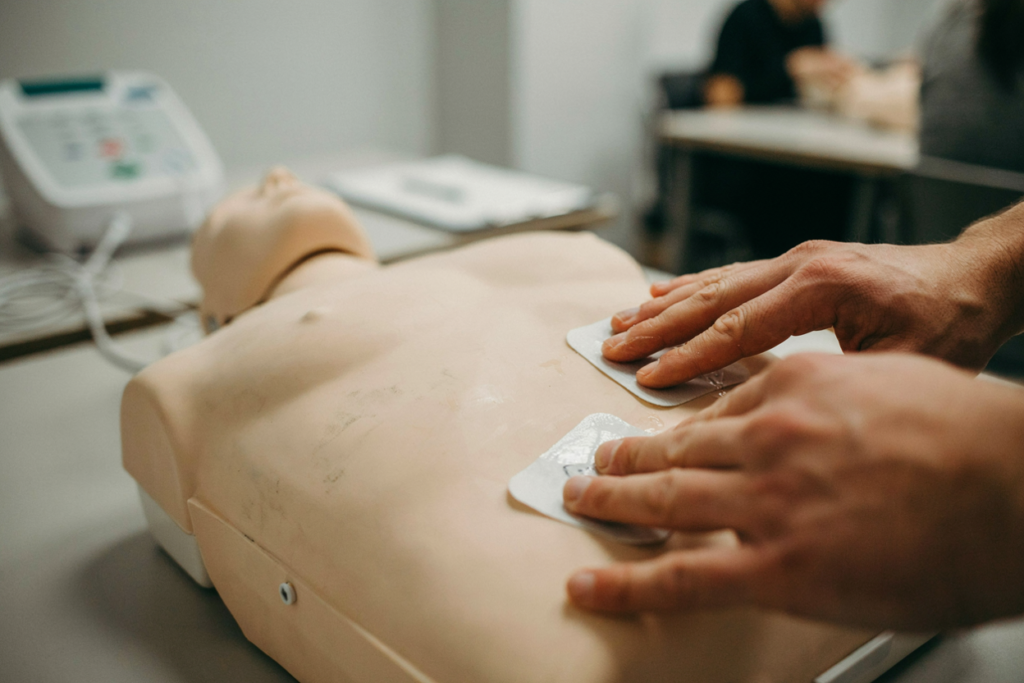
This is the number to look for. HLTAID009 is the national unit code for CPR training, and it’s the one your certificate needs to display if you want it recognised. If you see a certificate with no code on it at all, or a code that doesn’t match, that’s your answer right there.
What HLTAID009 covers:
- Adult, child, and infant CPR
- Use of an AED (automated external defibrillator)
It’s a standalone CPR-only unit, separate from HLTAID011, which is the full first aid course. If you only need CPR, you don’t need to sit through a longer course covering burns, fractures, and everything else, HLTAID009 is built specifically so you don’t have to. This matters more than people realise, because some providers will quietly bundle you into the bigger course because it’s easier for them to run one session type instead of two. You end up paying for scope you didn’t ask for and don’t need.
The course includes hands-on practical assessment. This isn’t something you can knock over entirely on your laptop between shifts, and it shouldn’t be, because compressions and AED use are physical skills that need to be practised on an actual manikin with someone watching your technique. If a provider tells you the whole thing can be done from your phone, that’s not a shortcut, that’s a different, lesser thing wearing the same name.
The certificate needs periodic renewal, which is exactly why this segment of Brisbane workers, personal trainers, swim instructors, gym staff, ends up doing this search again and again. If you’re reading this, there’s a decent chance you’ve done it before and you’ll do it again down the track. That’s not a bad thing, it just means it’s worth finding a provider you trust once so the whole process stops being a fresh research project every single time.
HLTAID009 (CPR Only) | HLTAID011 (Full First Aid) | |
Covers | Adult/child/infant CPR + AED | CPR plus broader first aid scenarios |
Renewal cycle | Shorter, more frequent | Longer between renewals |
Best suited to | Fitness, aquatics, roles needing CPR specifically | Roles needing broader first aid coverage |
If you’re not sure which one your role or association actually requires, it’s worth checking your specific requirements before booking either one, since some roles genuinely need the broader course and CPR alone won’t cut it.
So that’s the code. Now, how do you actually check if a provider is legit before you hand over your card details?
🚩 Callout: Five red flags, one search engine. Run each one through training.gov.au before you commit.
5 Signs a “CPR Course” Isn’t Actually an RTO Course
Most dodgy providers don’t try to hide it, they just don’t think you’ll check. Here’s what to watch for, and why each one actually matters rather than just being a box to tick.
- No RTO number displayed anywhere on the site. Legit providers put this front and centre because it’s a trust signal for them too, they want you to check, it works in their favour. If it’s missing, that’s not an oversight, it’s a gap, and gaps like this are rarely accidental.
- The RTO number doesn’t turn up on training.gov.au, or doesn’t cover HLTAID009 specifically. Some providers have an RTO number for something else entirely, like hospitality or construction, and it doesn’t actually cover them to deliver CPR training. Number existing isn’t the same as the number covering the right course. This is the single most common trap, because the provider isn’t lying exactly, they do have a real RTO number, it just doesn’t apply to what they’re selling you.
- The course is advertised as fully online with no practical component. CPR is a physical skill. You cannot learn compressions and AED use by watching a video and clicking “next.” If there’s no hands-on session mentioned anywhere, walk away, no exceptions, this one’s non-negotiable regardless of how convenient it sounds.
- The certificate is called something other than a “Statement of Attainment.” Watch for wording like “certificate of completion” or “attendance certificate.” Sounds similar, means something completely different. A Statement of Attainment is a specific, formally recognised document type, anything else is a piece of paper with your name on it and not much else.
- No mention of ARC guidelines anywhere in the course description. The Australian Resuscitation Council sets the clinical standard CPR training is meant to follow. If a provider’s page never references it, that’s worth a second look, it’s a small detail but it tends to correlate with everything else on this list.
You can check any RTO number yourself at training.gov.au, it’s free and it’s public, and honestly it’s the single most useful thing on this whole list because it settles the question definitively instead of leaving you guessing based on how a website looks.
Here’s what’s actually at stake if you get this wrong.

What Happens If Your Certificate Isn’t From a Real RTO
If your gym, your association, or your insurer asks for proof of current CPR competency and you hand over a certificate that isn’t from a registered RTO, there’s a real chance it gets rejected outright. Not because anyone’s being difficult, but because it genuinely doesn’t meet the nationally recognised standard they’re required to check for. Whoever’s reviewing it isn’t making a judgement call, they’re just following a requirement that the certificate either meets or doesn’t.
Which means you’re rebooking. Paying again, out of your own pocket, and losing another chunk out of a roster that was already tight to begin with. For someone juggling shifts across two gyms, that’s not a small inconvenience, that’s a wasted afternoon you can’t easily get back, on top of the money you’ve already spent once.
There’s also a quieter cost that doesn’t get talked about enough, the frustration of having done the right thing, shown up, done the training properly, and still ending up in the same position as someone who did nothing at all. That’s a rough outcome for something that was entirely avoidable with a two minute check beforehand.
This isn’t about scaring you into anything, it’s just the practical reality. Get it right the first time and you never have to think about it again until it’s time to renew.
The good news: checking all of this and booking a genuine RTO CPR course is easier than it sounds, and once you’ve done it once with a provider you trust, you’re set for next time too.
✅ Callout: RTO 31106, ASQA registered, Statement of Attainment issued digitally. That's the whole trust check, done.
How to Book a Genuine RTO CPR Course in Brisbane
Here’s the part a lot of people get wrong in their head: choosing a real RTO doesn’t mean the process becomes harder or more complicated. It just means the certificate you walk away with actually works, and that’s really the whole point of doing this in the first place.
First Aid Alive is RTO 31106, registered with ASQA to deliver nationally recognised training across Brisbane and South East Queensland. That’s not a sales pitch, it’s just the fact that makes everything else in this article irrelevant to you once it’s confirmed, because at that point you’ve done the check and you can stop thinking about it.
What you actually get:
- Digital Statement of Attainment, so you can forward it the moment you walk out
- Upfront, transparent booking with no guesswork involved
None of this is complicated or unusual, it’s genuinely just what a properly run RTO course looks like day to day. The reason it’s worth spelling out is that so many providers make the process feel murkier than it needs to be, whether that’s deliberate or just sloppy.
Once you know what to look for, checking a provider is quick. Booking one is quicker still.
Already know what to look for? Check current CPR course dates here, or go verify your top pick on training.gov.au first if you’d rather see for yourself.
Conclusion
So that’s really it. Checking whether a CPR course is genuinely RTO delivered isn’t some big research project, it’s a handful of quick checks you can knock over while you’re still deciding which tab to close. RTO number, training.gov.au search, hands-on component, Statement of Attainment, the logo. A few things, and you know exactly what you’re walking into before you commit to anything.
Jake’s situation is a pretty familiar one if you’re reading this. Packed roster, multiple gyms, no patience for a booking that turns out to be the wrong thing entirely. The whole point of this checklist is to stop that from happening to you, not to make the process feel bigger or scarier than it needs to be. Nobody’s asking you to become a compliance expert, just to spend a couple of minutes confirming what you’re actually signing up for.
Worth saying again, because it’s easy to forget once you’re staring down a price comparison: the cheapest option isn’t actually cheap if the certificate gets knocked back. Rebooking costs you twice, once in dollars and once in time you didn’t have spare in the first place. A genuine RTO certificate protects you from that, and it costs you nothing extra to check for it first, it’s purely a matter of knowing where to look.
None of this needs to feel like homework. You’re not being asked to become an expert in vocational education regulation, you just need to know the signs and where to look them up. Most legitimate providers make this easy on purpose, because they’ve got nothing to hide and every reason to want you to check, it’s free advertising for them every time someone confirms it and books with confidence.
Run the checklist, book with confidence, and get back to the part of your week that actually matters, whether that’s a shift on the gym floor or a swim class full of kids who need you switched on and certified. The check takes barely any time at all. Getting it wrong costs a lot more than that, in dollars, in hassle, and in the one thing everyone on this list is already short on, spare time.
And if you’ve made it this far, you’re already doing more due diligence than most people bother with, which says something. The instinct to double check before handing over your card details is a good one, keep it, use it next time too, and pass it on to whoever else on your team is booking their own renewal. It’s a small habit that saves everyone the same headache down the line.
Book Your First Aid Training Now
Fast, affordable, and nationally accredited training delivered by professionals who care
Frequently Asked Questions
Q.Is HLTAID009 the same as a full first aid certificate?
No, HLTAID009 is a standalone CPR-only unit covering adult, child, and infant CPR plus AED use. HLTAID011 is the full first aid course and covers a much wider range of scenarios. If your role or association only requires CPR, HLTAID009 is the correct code to look for on your certificate.
Q.How do I check if a provider is a genuine RTO?
Search their RTO number on training.gov.au and confirm it's current and specifically covers HLTAID009. A genuine RTO will display this number clearly on their website, and the course will include a hands-on practical assessment rather than being delivered entirely online.
Q.Will my gym or association accept a certificate from any CPR provider?
Not necessarily. Many gyms, associations, and insurers specifically require a certificate issued by a Registered Training Organisation, meaning a Statement of Attainment for HLTAID009. A certificate from a provider that isn't RTO registered may be rejected as proof of current competency.
Q.What's the difference between a Statement of Attainment and a certificate of completion?
A Statement of Attainment is the formally recognized document RTOs issue for a specific unit of competency, in this case HLTAID009. A "certificate of completion" or "attendance certificate" is not the same thing and generally isn't accepted as nationally recognized proof, even if the training itself was genuinely useful.
Q.Does an RTO CPR course cost more than a non-RTO course?
Not necessarily. Choosing a genuine RTO doesn't automatically mean paying more, it simply means the certificate you receive actually meets the nationally recognized standard your gym, association, or insurer requires, which avoids the cost and hassle of having to rebook elsewhere.
Making first aid training more affordable for
every classroom
We believe every student deserves access to life-saving first aid knowledge. That’s why we offer specially reduced pricing for schools and educational groups. Whether you’re booking for a single class, a year group, or your entire school, our flexible packages make training more accessible and cost-effective — without compromising quality.
