

It’s 10am on a Tuesday. A child at your center is having a reaction. The educator on duty completed training – but that was 18 months ago, and it was with a provider your ACECQA auditor later said didn’t meet the requirement.
This scenario plays out in Australian childcare centers more often than most directors want to admit. The certificate looked fine. The course had a professional name. Nobody flagged it until the auditor walked through the door.
This article answers the question clearly: who in Australia is legally or regulatorily required to hold current asthma and anaphylaxis safety training, what course satisfies the requirement, and how often it needs to be renewed. Whether you’re a childcare director managing compliance for a full team, an OSHC coordinator onboarding a new staff member, or a sports club volunteer wondering if you’re covered – this guide gives you the definitive answer.
Let’s start with the short answer then we’ll break it down by sector.
Who Needs Asthma and Anaphylaxis Safety Training in Australia?
In Australia, asthma and anaphylaxis safety training is legally or regulatorily required for anyone who works with or cares for children in a regulated setting. This includes childcare educators, OSHC staff, kindergarten and primary school teachers, and sports coaches working with minors. Some employers and insurers also require training for staff in workplaces where employees have a known severe allergy.
Who specifically needs this training:
- Childcare educators and directors – required under the Education and Care Services National Regulations 2011 (Regulations 136 and 137)
- OSHC (Outside School Hours Care) staff – regulated under the same National Law framework
- Kindergarten, prep, and school educators – state-based requirements apply in Queensland and nationally
- Sports coaches and club volunteers – recommended or mandated by peak bodies for anyone supervising children
- Workplace first aiders – where a staff member has a documented severe allergy or anaphylaxis risk
The Regulatory Framework: What the Law Actually Says
Most directors know this training is required. Fewer know exactly why – or which specific laws are being enforced when an ACECQA auditor asks to see your team’s certificates. Understanding the framework makes compliance feel less like guesswork.
What Regulations 136 and 137 Actually Require
The Education and Care Services National Regulations 2011 is the primary legal instrument governing childcare compliance across Australia. Regulation 136 requires approved providers to have a policy in place for managing medical conditions – including asthma and anaphylaxis. Regulation 137 requires that educators have the training to actually implement those policies. Not just a document on a shelf. Every educator working directly with children needs to be trained and current.
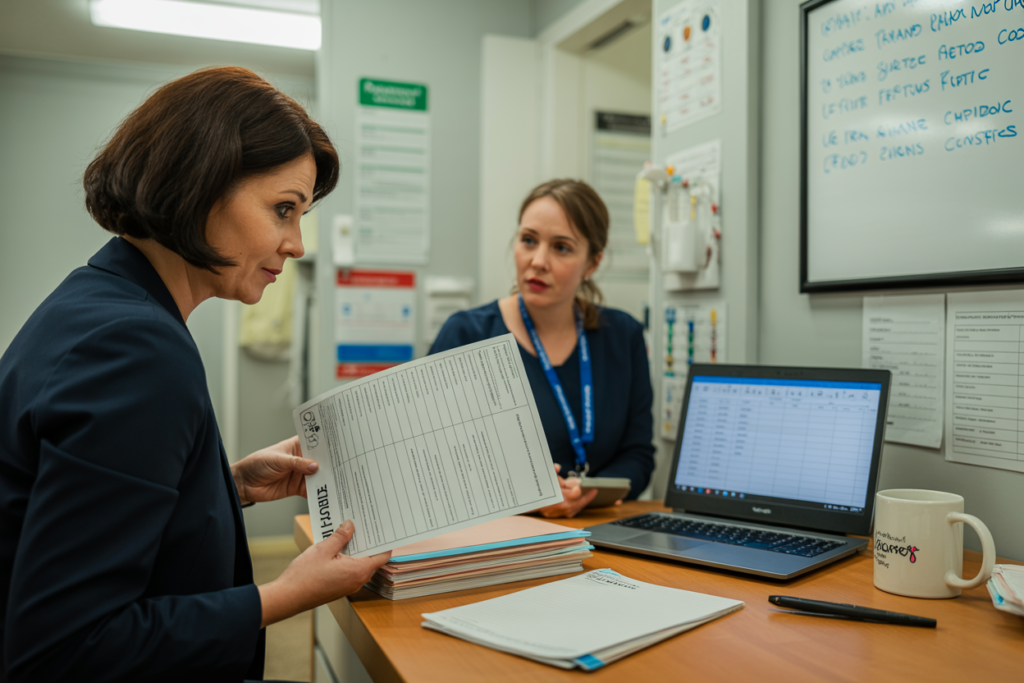
How ACECQA Assesses Training at Audit
ACECQA doesn’t deliver training – that’s worth saying clearly, because it’s a common source of confusion. Their role is to assess whether services are meeting the National Quality Framework (NQF), specifically Quality Area 2: Children’s Health and Safety.
What auditors look for in certificates:
- The course code and full qualification title
- The name of the registered training organisation (RTO) that delivered it
- The date of completion – and whether it’s still current
- The name of the staff member – matching your employment records
If any of those elements are missing or the RTO turns out not to be ASQA-registered, the certificate may not be accepted. That’s how centres end up with a compliance notice even when they genuinely tried to do the right thing.
Queensland-Specific Requirements for School Staff
Queensland follows the national framework – but state school staff have an additional layer. The Queensland Department of Education mandates asthma and anaphylaxis training for teachers and support staff working with students who have documented medical conditions. For Catholic and independent schools, the obligation comes through employer policy and common law duty of care. The practical outcome is the same: staff need current, compliant training.
| Regulatory Body | What They Require |
|---|---|
| ACECQA / NQF | Current asthma and anaphylaxis training for all educators under Regulations 136 and 137 |
| Queensland Dept of Education | Training for state school staff working with students who have documented medical conditions |
| Peak bodies (Swimming Australia, AFL Qld, Football Qld) | Current training required or strongly recommended for coaches and volunteers supervising children |
Who Needs This Training Broken Down by Sector
Here’s exactly who needs asthma and anaphylaxis safety training, with no hedging.
Childcare Centres and Long Day Care
Every educator working directly with children needs current training permanent staff, part-time staff, casual and relief educators, directors, and nominated supervisors. No exemptions for seniority, role type, or hours worked.
The most common compliance gap? Casual and relief staff. A permanent team that’s fully up to date gives directors a false sense of security right up until a relief educator fills a shift and the auditor asks to see their certificate. If a certificate is expired, it doesn’t matter how experienced the educator is. On paper, they’re not compliant.
⚠️ Common Compliance Gap: Relief and casual educators are one of the most frequently cited issues at ACECQA audits. If a casual staff member is on your floor today without current asthma and anaphylaxis training, your centre may be non-compliant - regardless of how many permanent staff hold certificates.
Outside School Hours Care (OSHC)
OSHC services fall under the same National Law framework as long day care – but they’re one of the most overlooked settings when it comes to training compliance. Directors sometimes assume school-based policies cover them. They don’t, not automatically. Every staff member delivering OSHC – including vacation care programs – needs current asthma and anaphylaxis training. Staff brought in specifically for holiday periods need current certificates before they start, not after.
Kindergartens and Prep Programs
Community and state-funded kindergartens carry the same training obligation – governance structure doesn’t change the requirement. Sessional kindy staff sometimes assume they sit outside the regulated framework. They don’t. Prep educators working within a school setting fall under both Queensland Department of Education policy and the NQF framework – two layers of obligation, not one.
Primary and Secondary Schools
For state school staff in Queensland, the Department of Education mandate is clear: training is required for staff working with students who have documented asthma or anaphylaxis conditions. Catholic and independent school staff fall under employer policy and common law duty of care instead. The compliance gap that shows up most often in schools? Relief teachers – school administrations frequently don’t check whether a relief teacher holds current training before they take a class.
Sports Clubs and Community Organisations
There’s no single federal law mandating asthma and anaphylaxis training for sports coaches – but that doesn’t mean it’s optional. Peak bodies including Swimming Australia, AFL Queensland, and Football Queensland require or strongly recommend current training for coaches and volunteers supervising children. Some insurers require it as a condition of public liability cover. If you’re responsible for a group of kids, you should know what to do if one of them has a reaction.
Workplaces with Known Allergy Risk
Outside of child-focused settings, the Work Health and Safety Act 2011 (Qld) creates a duty of care obligation for employers where a staff member has a documented anaphylaxis action plan. If someone on your team carries an adrenaline auto-injector and their colleagues don’t know what to do – that’s a workplace safety gap, not just a training gap. First aiders in these workplaces should hold current anaphylaxis training from a registered provider.
What Course Satisfies the Requirement?
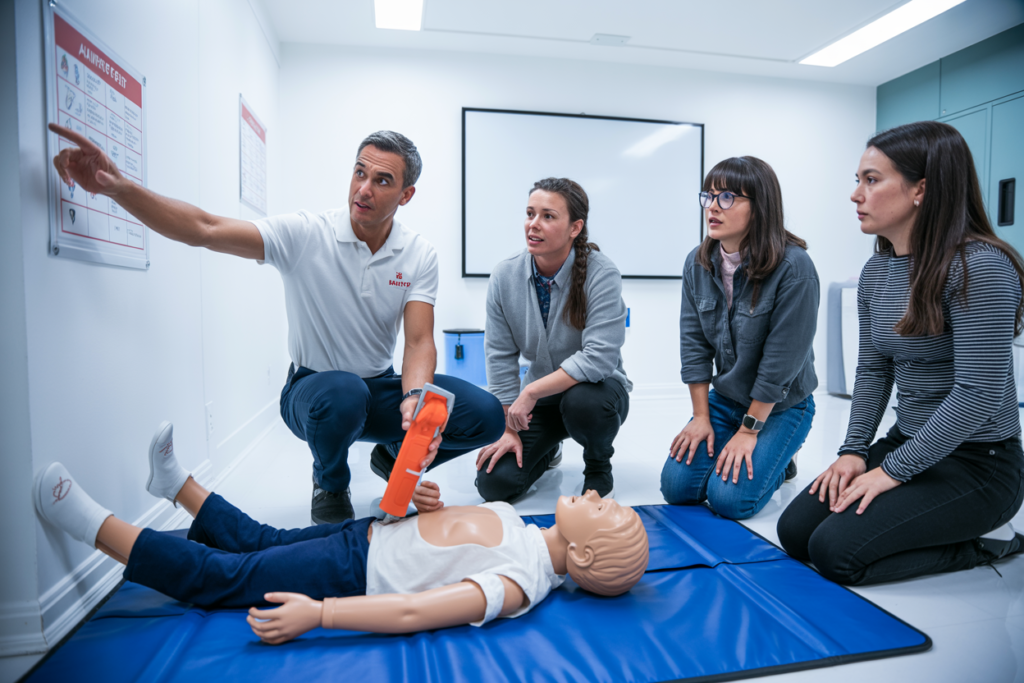
There are courses out there that look legitimate, have professional branding, and issue certificates that appear perfectly valid. Then an auditor looks at the provider details and the centre gets a compliance notice. Here’s what actually satisfies the requirement.
The Three Courses That Count
| Course Code | What It Covers | Who It's For | ACECQA Accepted? |
|---|---|---|---|
| HLTAID012 | First aid in an education and care setting - includes anaphylaxis, asthma, CPR, and emergency response | Childcare educators, OSHC staff, kindy and prep educators | Yes |
| 22300VIC | Management of anaphylaxis in the community - ASCIA-developed | Childcare, schools, sports clubs, workplaces | Yes - widely accepted as standalone |
| 22556VIC | Management of asthma risks and emergencies in the community - ASCIA-developed | Childcare, schools, sports clubs, workplaces | Yes - widely accepted as standalone |
HLTAID012 vs Standalone Asthma and Anaphylaxis Courses – Which Do You Need?
HLTAID012 is the gold standard for childcare compliance. It’s a nationally recognised qualification that covers first aid in an education and care setting specifically – not generic first aid with anaphylaxis bolted on. If you’re running a long day care centre, OSHC program, or kindergarten and you want one qualification that covers your full compliance obligation, HLTAID012 is the one.
The standalone courses – 22300VIC for anaphylaxis and 22556VIC for asthma – are ASCIA-developed and widely accepted by ACECQA for those specific conditions. They’re a practical option when a staff member already holds a current first aid qualification and just needs the asthma and anaphylaxis component, or when managing annual anaphylaxis refreshers between full HLTAID012 renewals.
If you’re onboarding new staff from scratch: HLTAID012. If you’re managing annual refreshers for staff already current on first aid: 22300VIC and 22556VIC.
What Makes a Course ACECQA-Accepted?
Two things – and both matter equally.
RTO registration: the course must be delivered by a training organisation registered with ASQA – the Australian Skills Quality Authority. If the provider isn’t on the national register, the qualification isn’t nationally recognised, regardless of how good the content is.
ASCIA guideline alignment: the Australasian Society of Clinical Immunology and Allergy sets the clinical guidelines for anaphylaxis management in Australia. Training that doesn’t reflect current ASCIA protocols – including correct adrenaline auto-injector technique, the EpiPen vs Anapen distinction, and current observation guidelines – isn’t giving your staff what they need. Ask your provider directly: is this course aligned with current ASCIA guidelines?
How to Check If Your Training Provider Is a Registered RTO
Before you book anything, do this one check. Go to training.gov.au and search for the provider’s name or RTO number. If they’re registered with ASQA, they’ll appear with a current status. If they don’t appear – or their registration is cancelled or withdrawn – do not book.
A provider that’s genuinely registered will have no problem with you checking. A good one will put their RTO number on their website so you don’t have to go looking.
✅ Quick Check: Before booking any course, verify your provider is an ASQA-registered RTO at training.gov.au. This could save you a compliance notice.
How Often Does This Training Need to Be Renewed?
Getting the right course is half the job. The other half is knowing when it expires – and having a system so you’re never scrambling before an audit.
Anaphylaxis Training Renewal – The Annual Requirement Explained
For childcare settings, anaphylaxis training renewal is required annually – that’s the standard ACECQA expects when assessing Quality Area 2 compliance. Guidelines update and auto-injector devices change. Staff who completed training over a year ago may not be across current ASCIA protocols for adrenaline auto-injector technique or the steps for calling QAS after administration.
HLTAID012 has a three-year renewal cycle for the full qualification – but the anaphylaxis component should be refreshed every 12 months. Those are two separate obligations on different clocks, and conflating them is one of the most common compliance mistakes directors make.
| Course | Full Renewal Cycle | Anaphylaxis Component |
|---|---|---|
| HLTAID012 | 3 years | Refresh annually |
| 22300VIC | Annual | Annual |
| 22556VIC | 1-3 years (varies by employer policy) | Check with your provider |
What to Do When a Staff Member’s Certificate Expires
Don’t wait. An expired certificate is a compliance gap from the day it lapses. Book the renewal immediately. Until they’re current, that staff member should not be the sole responsible educator in a room with children who have documented asthma or anaphylaxis conditions.
- Note the expiry date the moment you become aware of it
- Book the renewal – don’t put it in a mental queue
- Keep the expired certificate on file – auditors sometimes want to see the history
- Update your training register the day the new certificate arrives
Building a Forward Training Calendar for Your Centre
The directors who handle compliance smoothly are just tracking expiry dates proactively instead of reactively. A simple spreadsheet works fine – staff name, course code, completion date, expiry date, renewal booked. Set a reminder 90 days before each expiry and you’ll never be scrambling at audit time.
Batch renewals where you can. If several staff are due within the same window, get them into one session. On-site group training is worth considering – a trainer comes to your centre and your whole team gets sorted in one go.
📅 Renewal Rule of Thumb: For most childcare settings, anaphylaxis training should be renewed every 12 months. Don't wait for a certificate to expire before booking - build your renewal dates into your centre's training calendar now.

What Happens If Your Team Isn’t Trained?
Most directors already carry this anxiety. The goal here is to make the consequences concrete enough that acting feels straightforward – because this is entirely preventable.
ACECQA Non-Compliance – What Actually Happens
When an auditor finds a training gap – expired certificates, unregistered provider, missing casual staff records – the center is issued a notice of non-compliance. That triggers a formal improvement process and goes on record.
Quality Area 2 ratings are publicly visible on the ACECQA website. Any parent or prospective family can look up your rating. A non-compliance notice against Children’s Health and Safety doesn’t stay between you and the auditor.
Your Duty of Care Obligations as a Director or Coordinator
Beyond the regulatory framework, there’s a common law duty of care that sits with every person in a supervisory role over children. The Work Health and Safety Act 2011 (Qld) requires employers to take reasonable steps to protect the health and safety of everyone on the premises. Untrained staff in a room with children who have documented anaphylaxis action plans is, on any reasonable reading, a failure to meet that obligation. Training isn’t just a regulatory checkbox. It’s part of what “reasonable care” actually looks like.
And then there’s the human cost. Children have died from anaphylactic reactions in settings where trained adults froze, hesitated, or didn’t reach the adrenaline auto-injector in time. That’s one sentence, and it doesn’t need to be expanded on.
Conclusion
If you’ve made it this far, you already know the answer. The people who need asthma and anaphylaxis safety training in Australia aren’t a small or specialized group – they’re anyone who works with children in a regulated setting, anyone responsible for a team member with a known severe allergy, and anyone whose role puts them in the room when a reaction happens.
The regulatory framework isn’t complicated once you see it clearly. Regulations 136 and 137 set the legal floor. ACECQA assesses compliance against it. The course codes that satisfy the requirement – HLTAID012, 22300VIC, 22556VIC – are specific and well-established. Renewal timeframes are manageable if you plan ahead rather than react to gaps.
What catches centres out isn’t ignorance of the requirement – it’s the small operational details. The casual educator who started three weeks ago. The certificate from a provider that turned out not to be a registered RTO. The HLTAID012 that’s still within its three-year window but hasn’t had an anaphylaxis refresh in over a year. Those gaps all show up at audit, and they’re all preventable with a forward training calendar and a verified provider.
The training exists. The courses are accessible. The compliance path is clear. Whether your team is fully current, partially lapsed, or starting from scratch – getting every educator on your floor trained, certified, and confident is not a big lift. It just needs to be the next thing on the list.
Book Your First Aid Training Now
Fast, affordable, and nationally accredited training delivered by professionals who care
Frequently Asked Questions
Q.Who needs asthma and anaphylaxis safety training in Australia?
Anyone who works with children in a regulated setting is required to hold current asthma and anaphylaxis safety training - this includes childcare educators and directors, OSHC staff, kindergarten and prep educators, and primary and secondary school staff, with requirements governed by the Education and Care Services National Regulations 2011 (Regulations 136 and 137) and state-based education department policies.
Q.Does ACECQA require asthma training or just anaphylaxis training?
ACECQA requires both - the National Quality Framework assesses compliance across asthma and anaphylaxis response under Quality Area 2: Children's Health and Safety, so a course that only covers one condition is not sufficient for childcare centres, OSHC services, or kindergartens operating under the National Law framework.
Q.What is the difference between HLTAID012 and 22300VIC?
HLTAID012 is a full first aid qualification specific to education and care settings, covering anaphylaxis, asthma, CPR, and broader emergency response - it's the gold standard for childcare compliance. 22300VIC is a standalone anaphylaxis management course developed by ASCIA and is widely accepted for annual anaphylaxis refreshers or for staff who already hold a current first aid certificate and need to meet the anaphylaxis training requirement specifically.
Q.How often does anaphylaxis training need to be renewed for childcare workers?
For childcare workers, anaphylaxis training is required to be renewed annually - ACECQA expects current training as part of NQF Quality Area 2 compliance, and while HLTAID012 has a three-year renewal cycle for the full qualification, the anaphylaxis component should be refreshed every 12 months as guidelines and auto-injector protocols are updated regularly.
Q.Do casual and relief educators need asthma and anaphylaxis training?
Yes - casual and relief educators are subject to the same training requirements as permanent staff under Regulations 136 and 137, and missing certificates for casual or relief staff are one of the most frequently cited issues at ACECQA audits, meaning a centre can be found non-compliant even when all permanent educators hold current certificates.
Making first aid training more affordable for
every classroom
We believe every student deserves access to life-saving first aid knowledge. That’s why we offer specially reduced pricing for schools and educational groups. Whether you’re booking for a single class, a year group, or your entire school, our flexible packages make training more accessible and cost-effective — without compromising quality.
