

Every month, Brisbane businesses waste thousands of dollars on workplace CPR training Brisbane that doesn’t meet compliance requirements. Even worse, when an emergency happens, their staff freeze—because the training they received six months ago was rushed, impersonal, or taught by unqualified instructors.
Last year, a Carindale office manager told me she’d booked what seemed like a great deal for her team’s CPR renewal. The trainer came to their office, certificates emailed same day. Sounds perfect, right? Three months later, during a WHS audit, every single certificate got rejected. Turns out the “trainer” wasn’t registered with a proper RTO. Her team had to redo everything, pay double, and she copped a please explain from her boss about why workplace health and safety requirements weren’t being met.
If you’re responsible for organising workplace CPR training in Brisbane, you’re juggling WHS compliance deadlines, budget constraints, and the challenge of coordinating training for busy teams. One wrong decision—booking the cheapest provider, choosing the wrong course type, or missing certification expiry dates—can expose your business to serious liability and leave your employees unprepared for real emergencies.
The scary bit? Most of these mistakes happen because nobody explains the rules properly. You’re expected to just know the difference between HLTAID009 and HLTAID011. You’re supposed to understand RTO accreditation, renewal schedules, and which courses your specific industry actually needs. But who has time to become a training compliance expert when you’ve got a business to run?
In this guide, you’ll discover the seven most common (and costly) mistakes Brisbane employers make when arranging workplace CPR training. More importantly, you’ll learn exactly how to avoid them—ensuring your team receives nationally recognized certification, meets Queensland WHS requirements, and actually knows what to do when someone’s life depends on it.
Mistake #1 – Choosing the Cheapest Provider Without Checking RTO Accreditation
This is the big one. The mistake that catches out more Brisbane businesses than any other when they’re arranging workplace CPR training Brisbane sessions.
You’ve got multiple quotes in front of you. Obviously you go with the cheapest, yeah? That’s just good business sense.
Except when those cheaper certificates turn out to be worthless pieces of paper that won’t stand up to a WHS audit, an insurance claim, or—worst case—a court case after a workplace emergency.
⚠️ WARNING: Invalid CPR certificates can result in WHS fines, rejected insurance claims, and serious legal liability if an emergency occurs. Always verify RTO accreditation before booking.
Why RTO Accreditation Actually Matters
Here’s what a lot of employers don’t realise: literally anyone can print a certificate. I could design one right now in Canva, put your name on it, and call it a CPR certificate. But that doesn’t make it legitimate.
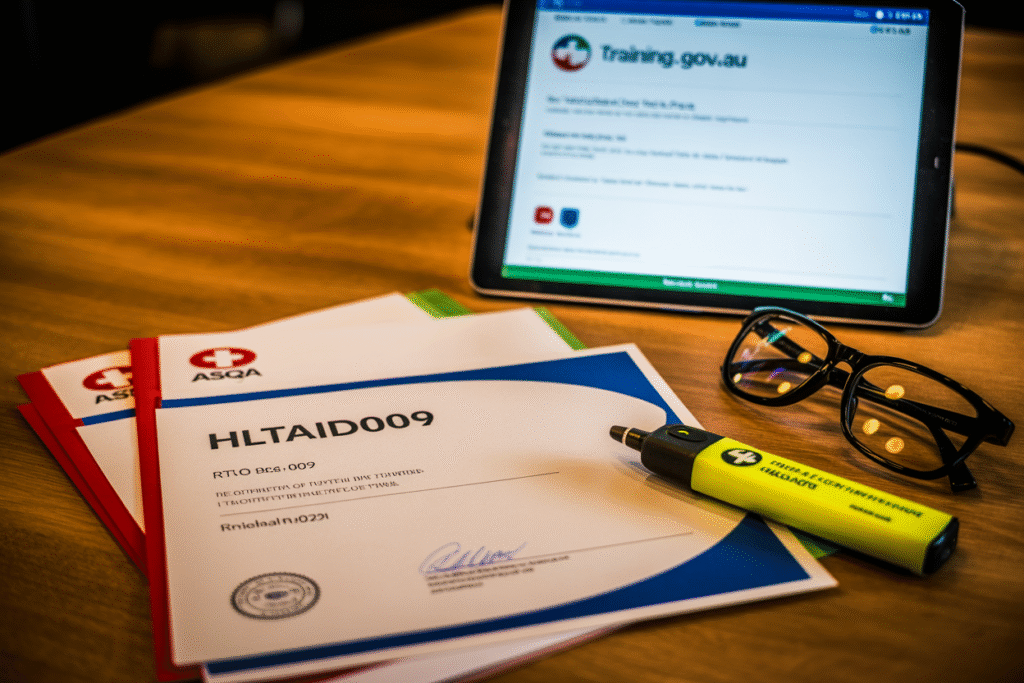
For a CPR certificate to be nationally recognized in Australia, the training must be delivered by a Registered Training Organisation (RTO). These are training providers that have been vetted and approved by the Australian Skills Quality Authority (ASQA). They’ve had to prove they meet strict standards for trainers, equipment, course content, and assessment methods.
When your staff complete workplace CPR training with a proper RTO, they receive a certificate that includes the RTO’s official registration number, the nationally recognized course code (HLTAID009 for CPR), proper issue and expiry dates, and a unique certificate number that can be verified.
According to WorkSafe Queensland data, about 15% of workplace audits across the state identify invalid first aid certificates. That’s roughly one in seven businesses getting caught out.
How to Verify Credentials in Three Minutes
Before you book workplace CPR training Brisbane with any provider, do this quick check:
Step 1: Ask for their RTO number. Every legitimate training provider will have this displayed on their website. If they hesitate or can’t provide it immediately, that’s a red flag.
Step 2: Go to training.gov.au (the official government registry) and search for the RTO number. You’ll see if they’re currently registered and what courses they’re approved to deliver.
Step 3: Check they’re specifically approved to deliver HLTAID009. Some RTOs are registered but not for first aid courses.
Step 4: Look for their ABN and physical business address. Dodgy operators often work without proper business registration or use PO boxes instead of real training venues.
What Happens With Invalid Certificates
The consequences hit you in waves:
Immediate problems:
- Certificates rejected during WHS audits (common in childcare, fitness, aged care industries)
- Insurance claims disputed or denied after workplace incidents
- WorkSafe Queensland can issue improvement or prohibition notices
- Staff can’t legally work in roles requiring valid CPR certification
Financial impact:
- You’ve already paid once for useless training
- Now you pay again for legitimate training
- Potential WHS fines starting at thousands of dollars for small businesses
- Lost productivity while staff attend training twice
A Chermside gym owner learned this the hard way. Booked a mobile trainer advertising on Facebook. When Fitness Australia audited his facility six months later, every certificate got flagged as invalid. The trainer had been operating without RTO registration for two years. He had to shut down group fitness classes for a week while everyone redid their training properly.
Mistake #2 – Booking Standard CPR When Employees Need Full First Aid
This one trips up Brisbane employers constantly. You book CPR training (HLTAID009), certificates arrive, everyone’s happy. Then six months later you fail a WHS audit because your industry actually requires full first aid certification (HLTAID011).
Understanding the Difference
HLTAID009 (CPR only):
- Approximately 2 hours duration
- Covers cardiopulmonary resuscitation only
- Renews every 12 months
HLTAID011 (Provide First Aid):
- 2 hours of self-paced online theory and a 1.5-hour face-to-face practical session
- Includes CPR plus bleeding control, burns, fractures, shock, asthma, anaphylaxis
- CPR component renews yearly, other components every 3 years
Here’s the thing—CPR is included in first aid training, but first aid isn’t included in CPR-only courses. So if your risk assessment or industry regulations require first aid capability, booking just CPR doesn’t cut it.
Which Course Does Your Brisbane Workplace Need?
| Industry | Minimum Requirement | Recommended Course |
|---|---|---|
| Childcare/Early Learning | HLTAID012 | First Aid in Education & Care |
| Fitness Centers/Gyms | HLTAID009 | CPR (minimum) |
| Construction Sites | HLTAID011 | Provide First Aid |
| Low-Risk Offices | Recommended only | CPR or First Aid |
| Aged Care Facilities | HLTAID011 | Provide First Aid |
| Manufacturing | HLTAID011 | Provide First Aid |
A Springfield logistics company learned this the hard way. They’d booked workplace CPR training Brisbane for their warehouse staff. Auditor shows up, checks their risk assessment (forklifts, loading docks, machinery), and says “you need first aid, not just CPR.” They had to book everyone again, this time for the full-day course, plus deal with lost productivity.
How to avoid this mistake:
- Do a proper workplace risk assessment before booking
- Check your industry’s specific requirements
- When in doubt, book first aid—it includes CPR anyway
- Call your WorkCover/insurance provider and ask what they recommend
If you’re genuinely low-risk (standard office, no hazardous activities), CPR alone might be fine. But most Brisbane workplaces benefit from having at least some staff trained in full first aid.
Mistake #3 – Ignoring Renewal Dates and Creating Compliance Gaps
Here’s a stat that should worry every Brisbane employer: 68% of workplace first aid certificates are discovered expired either during an emergency or during an audit. Not before—during.
📊 ALARMING STAT: 68% of expired workplace CPR certificates aren't discovered until an emergency happens or during an audit. Don't be part of this statistic—set up renewal reminders today.
The 12-Month Renewal Trap
CPR certificates expire after 12 months. Not 18 months. Not three years. Twelve months from the date of training.
But here’s what happens in most workplaces: You book workplace CPR training Brisbane in March 2024. Everyone gets certified. You file the certificates away. March 2025 rolls around and… nobody remembers. Suddenly it’s September and someone collapses in the warehouse. Your “trained” staff haven’t had valid certification for six months.
Under Queensland WHS regulations, that’s a serious breach. WorkSafe can issue improvement notices with significant fines. More importantly, if something goes wrong during that emergency, you’ve got expired certificates and inadequate first aid provisions on your record.
Setting Up a System That Works
Don’t rely on memory. Set up your own tracking:
Smart scheduling:
- Don’t train everyone on the same day—stagger renewals across 2-3 months
- This way you’re never without coverage if someone’s certificate lapses
- Easier to coordinate smaller groups without disrupting operations
Calendar reminders:
- 60 days before expiry: “Book renewal training”
- 30 days before: “Confirm training is booked”
- 14 days before: “Final reminder—certificate expires soon”
Proper tracking:
- Keep a spreadsheet with each staff member’s certification date and expiry
- Include course type, RTO provider, certificate number
- Update it immediately when renewals are completed
- Make someone specifically responsible for monitoring this
A Logan manufacturing business nearly lost a major contract because the client requested current first aid certificates during tender review. They couldn’t produce them—half their team’s certs had expired months earlier. They scrambled to get everyone retrained before the deadline and almost missed out on significant work.
Mistake #4 – Training Only One or Two Staff Members
“We’ve got Sarah trained in first aid. We’re covered, right?”
No. You’re not.
Coverage Requirements
The WHS Code of Practice says “adequate provision” based on your risk assessment. Here’s the general guidance:
Low-risk workplaces (offices):
- 1 trained person per 50 employees (minimum 1 per workplace)
High-risk workplaces (construction, manufacturing, warehousing):
- 1 trained person per 25 employees (minimum 2 per workplace)
Very high-risk or remote locations:
- 1 trained person per 10-15 employees
When Your Only Trained Person Isn’t There
You’ve got 40 staff. Your office manager Sarah went through workplace CPR training Brisbane. She’s got her certificate, everyone knows she’s the trained person.
Then Sarah calls in sick. Or she’s on annual leave. Or she’s in a meeting across town. Or—here’s the really awkward one—Sarah’s the person who collapses and needs CPR.
Now what? Your entire workplace has zero emergency response capability.
Mistake #5 – Booking Inconvenient Times That Guarantee Poor Attendance
You schedule workplace CPR training Brisbane for 7am on a Monday. Half your staff don’t show up. Or you book it for Friday afternoon and everyone’s mentally checked out. Or worst of all—you expect people to attend on their day off without compensation.
Why Timing Destroys Effectiveness
Adult learning research is clear: when people are rushed, stressed, or resentful about being there, they retain almost nothing. You’re creating staff who think they’re trained but actually can’t perform the skills under pressure.
Terrible scheduling choices:
- 6am before a full work shift (exhausted participants)
- Lunch breaks (people are hungry and rushed)
- Immediately after night shift (dangerous—they’re sleep-deprived)
- Unpaid weekend attendance (resentment kills engagement)
Off-Site Training Centers Often Work Better
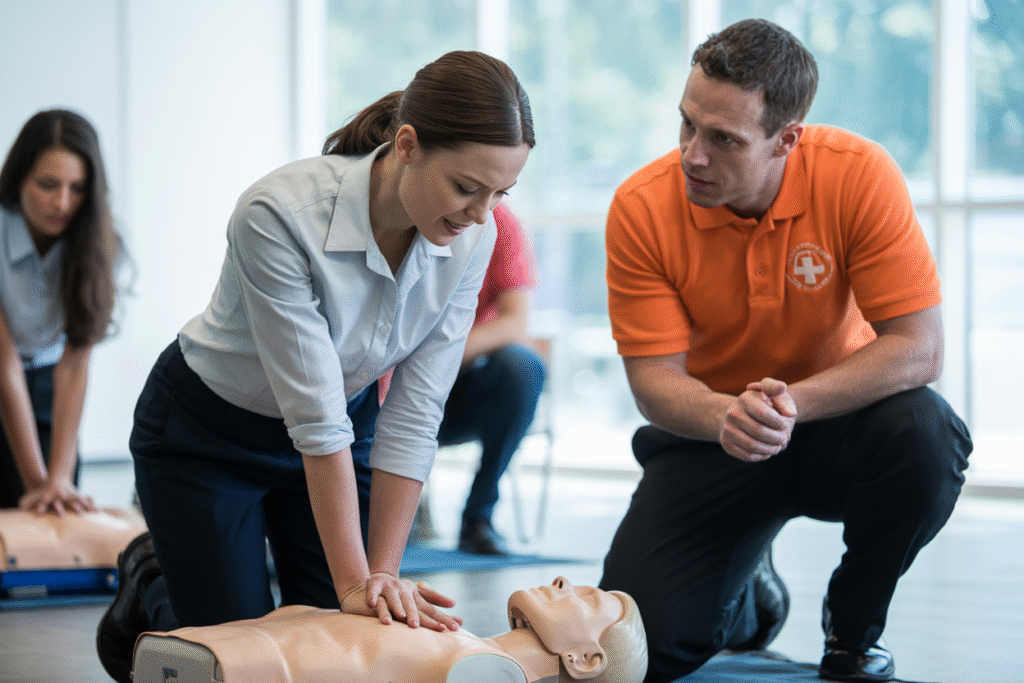
Dedicated training venues have proper flooring and space layout, professional equipment, comfortable environments designed for learning, no workplace distractions, and consistent availability.
A Sunnybank medical center had always done mobile training in their staff room. One year they tried sending staff to a Carindale training center instead. Staff feedback was overwhelmingly positive—better equipment, no patient interruptions, felt more like “real” training.
💡 ENGAGEMENT TIP: Schedule workplace CPR training Brisbane during times when staff are naturally alert—mid-morning or early afternoon. Avoid early mornings, late afternoons, and unpaid personal time. Engaged learners = effective training.
Mistake #6 – Choosing the Wrong Training Location
Mobile training sounds convenient—trainer comes to your workplace, done. But lots of Brisbane employers book this without thinking through whether their workplace is actually suitable for CPR training.
When On-Site Training Backfires
Space requirements:
- Minimum 3 square meters per participant (they need room to kneel around manikins)
- For 10 people: you need at least 30 square meters of clear floor space
- Clean, flat surface (not concrete or rough floors)
- Climate controlled (training involves physical exertion)
- Minimal noise/distractions
I’ve seen businesses book workplace CPR training Brisbane for their lunch room that barely fits 6 people, let alone 12 people kneeling around training equipment. The session becomes cramped and ineffective.
Mistake #7 – Treating It Like a Box-Ticking Exercise
This is the attitude that turns workplace CPR training Brisbane from life-saving preparation into wasted money: “We just need the certificates to keep WorkSafe happy.”
Why Engagement Actually Matters
Here’s what happens with box-ticking training:
- Staff show up physically but mentally check out
- They scrape through the assessment doing minimum compressions
- Certificates get issued (technically they passed)
- Six months later, actual emergency happens
- Nobody can remember what to do
The trainer who delivers your workplace CPR training isn’t just there to hand out certificates. They’re teaching skills that might save your colleague’s life. Treating it like an annoying compliance burden guarantees poor outcomes.
A Logan childcare center runs a 5-minute practice drill every month—staff take turns doing compression refreshers on the training manikin they purchased. When one of their educators had a medical emergency last year, another educator responded immediately and correctly. The director credits their culture of treating first aid as real skill, not just paperwork.
Instructor Quality Matters
Not all trainers are equal, even if they’re all RTO-registered. Good instructors use real scenarios, demonstrate multiple times from different angles, correct technique patiently, and make people practice until it’s actually right.
You can ask for trainer qualifications, read reviews, and request a different instructor if the first one was poor. Legitimate workplace CPR training Brisbane providers want quality outcomes, not just certificate sales.
When you treat training as genuinely important—proper scheduling, engaged participants, good instructor, follow-up practice—your staff actually learn life-saving skills. When you treat it like box-ticking, you get certificates that aren’t worth the paper they’re printed on when an actual emergency happens.

Getting Your Workplace CPR Training Brisbane Right
Organising workplace CPR training doesn’t need to be complicated. But it does need to be done properly.
The seven mistakes we’ve covered:
- Booking dodgy providers who aren’t properly accredited RTOs
- Choosing CPR-only when your industry requires full first aid
- Ignoring renewal dates until certificates have expired
- Training too few staff and leaving gaps in coverage
- Terrible scheduling that guarantees poor attendance
- Wrong location where effective training is impossible
- Box-ticking attitude that produces certificates but not actual skills
Every one of these mistakes is completely avoidable. You just need to know what to look for.
Getting workplace CPR training Brisbane right isn’t about finding the absolute cheapest option or ticking a box as quickly as possible. It’s about making sure your team genuinely knows what to do when someone collapses in your workplace.
Your choice of training provider, course type, and how seriously you treat the whole process makes the difference between staff who can actually save a life and staff who panic and freeze when it matters most.
Book proper workplace CPR training Brisbane with an accredited RTO, train enough people to ensure coverage, schedule renewals before they’re urgent, and treat it like the serious responsibility it is.
Your employees—and their families—will thank you for getting it right.
Ready to Book Workplace CPR Training Brisbane That Actually Meets Compliance?
We’re a fully accredited RTO delivering workplace CPR training across Brisbane—Carindale, Chermside, Sunnybank, Springfield, Logan, and Redcliffe. Our trainers are experienced, our equipment is professional-grade, and our certificates are accepted by every employer and industry body in Australia.
What you get:
- Nationally recognized HLTAID009 or HLTAID011 certification
- Same-day digital certificates
- Small class sizes for proper hands-on practice
- Flexible scheduling including evenings and weekends
- Group discounts for businesses training multiple staff
- Automated renewal reminders
Because when it comes to workplace safety, close enough isn’t good enough.
Book Your First Aid Training Now
Fast, affordable, and nationally accredited training delivered by professionals who care
Frequently Asked Questions About Workplace CPR Training Brisbane
Q.How often do CPR certificates need to be renewed in Queensland?
CPR certificates (HLTAID009) must be renewed every 12 months in Queensland. This is different from some other first aid components which last 3 years. The annual renewal requirement exists because CPR techniques and guidelines can change, and the physical skills need regular practice to maintain competency. Mark your calendar 60 days before expiry to book renewal training and avoid compliance gaps.
Q.What's the difference between HLTAID009 and HLTAID011?
HLTAID009 is CPR-only training that takes about 3 hours and covers cardiopulmonary resuscitation. HLTAID011 is the full "Provide First Aid" course that takes a full day and includes CPR plus treatment for bleeding, burns, fractures, shock, asthma, anaphylaxis, and other emergencies. The CPR component of HLTAID011 still needs annual renewal, while other first aid skills are valid for 3 years. Most Brisbane workplaces benefit from having staff trained in the full first aid course.
Q.How do I verify if a workplace CPR training provider in Brisbane is legitimate?
Check three things: (1) Ask for their RTO (Registered Training Organisation) number and verify it on training.gov.au, (2) Confirm they're specifically approved to deliver HLTAID009 or HLTAID011, (3) Look for their ABN and physical business address. Legitimate providers display their RTO number prominently and won't hesitate when asked for verification. If they're evasive or can't provide these details immediately, find another provider.
Q.What happens if our workplace CPR certificates expire?
Expired certificates mean you're not compliant with WHS requirements. WorkSafe Queensland can issue improvement notices with fines starting at thousands of dollars. More seriously, if an emergency occurs and your trained staff have expired certificates, you may face insurance claim disputes and legal liability issues. The certificates aren't just paperwork—they prove your staff have current, valid training. Set up calendar reminders for 60, 30, and 14 days before expiry to avoid this situation.
Q.Is online CPR training accepted for Brisbane workplaces?
No. HLTAID009 requires face-to-face practical assessment—you can't learn and demonstrate proper CPR technique through a computer screen. Some providers offer online theory components with in-person practical sessions, but fully online CPR certificates aren't valid for workplace compliance in Queensland. Any provider offering "100% online CPR certification" isn't legitimate. Always choose workplace CPR training Brisbane that includes hands-on practice with proper manikins and qualified instructors.
Q.What does a workplace CPR course actually cover?
A proper CPR course (HLTAID009) covers: recognizing cardiac arrest, performing CPR compressions at the correct depth and rate, delivering rescue breaths, using an automated external defibrillator (AED), managing the airway, positioning unconscious casualties, and coordinating emergency response (calling 000, managing bystanders). You'll practice on training manikins until you can perform the technique correctly. The assessment includes both knowledge questions and practical demonstration of CPR skills.
Making first aid training more affordable for
every classroom
We believe every student deserves access to life-saving first aid knowledge. That’s why we offer specially reduced pricing for schools and educational groups. Whether you’re booking for a single class, a year group, or your entire school, our flexible packages make training more accessible and cost-effective — without compromising quality.
