

Here’s something that happens constantly: a Brisbane business owner suddenly realizes their workplace first aid certificates expired months ago. Or they’ve got a WorkSafe inspection coming up and they’re not even sure what they’re supposed to have in place. Or they thought having one person trained in CPR was enough, and now they’re finding out that’s nowhere near what the law actually requires.
If you’re reading this because you’re trying to figure out what your Brisbane business actually needs when it comes to workplace first aid training, you’re not alone. The regulations can feel confusing, the different course codes don’t help, and honestly, most of the information out there assumes you already know what you’re looking for.
This guide covers everything you need to know about workplace first aid training in 2025 – the actual legal requirements for Queensland businesses, how many staff you need trained, which specific courses your team needs, and how to set up a system so you’re not scrambling every three years.
What is HLTAID011 Workplace First Aid?
HLTAID011 Provide First Aid is the standard first aid qualification that most Australian workplaces need. It’s the course that satisfies your legal obligations under Queensland Work Health and Safety legislation.
Here’s what the course actually covers:
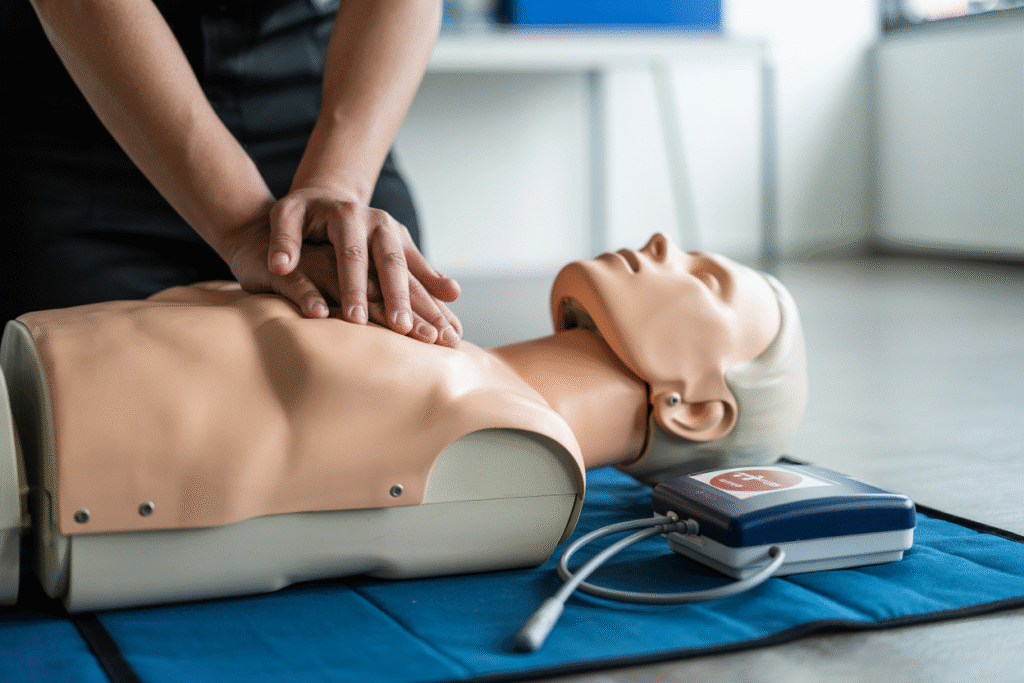
- CPR for adults, children, and infants – compressions, rescue breaths, using an AED
- Managing serious injuries – severe bleeding, fractures, burns, head and spinal injuries
- Medical emergencies – heart attacks, strokes, asthma, anaphylaxis, diabetic emergencies, seizures
- Wound care and bandaging – different techniques for different injury types
- Emergency response procedures – calling 000, handover to paramedics, documentation
The course runs for 6.5 hours, and the certificate is valid for three years. The CPR component needs to be renewed annually, which a lot of businesses miss.
HLTAID011 replaced the old HLTAID003 Apply First Aid course back in 2022, so if you’re seeing that old code anywhere, they’re basically the same thing.
⚠️ Important: HLTAID011 replaced the old HLTAID003 Apply First Aid course back in 2022. If you're seeing that old code anywhere, they're basically the same thing – just updated content and assessment methods.
Legal Requirements for Workplace First Aid in Australia
Queensland workplaces are governed by the Work Health and Safety Act 2011, which says employers have to provide a safe working environment. Part of that safe environment includes having first aid provisions in place.
Here’s what you’re legally required to do as an employer:
Conduct a risk assessment – You need to look at your workplace and figure out what first aid provisions make sense based on your specific situation. Just a reasonable assessment of what could go wrong and what you’d need if it did.
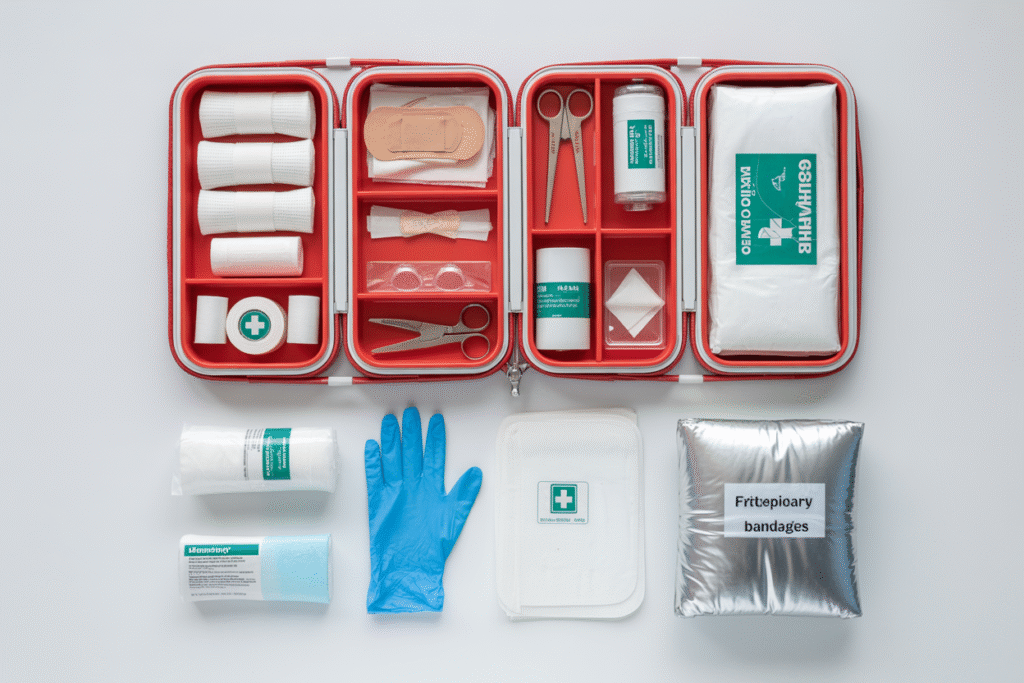
Provide first aid equipment – Properly stocked first aid kits that are accessible and maintained. The number and size of kits depends on your workplace size and risk level.
Ensure trained first aid personnel are available – Someone needs to know what to do if an emergency happens. The exact number depends on your risk assessment.
Establish first aid procedures – Your staff need to know where the kits are, who the trained first aiders are, and what to do in an emergency.
The penalties for non-compliance are no joke. WorkSafe Queensland can fine corporations up to $1.5 million, and individual business owners up to $300,000. But the fines are probably the least of your worries.
If someone gets seriously hurt at your workplace and you can’t demonstrate that you had adequate first aid provisions in place, you’re looking at potential criminal charges, massive civil liability, and reputational damage that can sink a business.
What the Law Actually Requires
First Aid Equipment – You need first aid kits appropriate for your workplace. For most Brisbane businesses, that’s at least one properly stocked kit per 50 employees, with additional kits if you’ve got multiple floors or separate work areas.
Trained First Aid Officers – You need an adequate number of people with current, valid HLTAID011 certificates to ensure there’s always someone available during all operating hours.
First Aid Procedures and Documentation – You need documented procedures covering what to do in an emergency, where equipment is located, who your trained first aiders are, and records of any first aid incidents.
How Many Employees Need First Aid Training?
There’s no magic number. The law uses a risk-based approach, which means what’s adequate for a marketing agency with twenty desk workers is totally different from what’s adequate for a warehouse with the same number of staff.
The Risk Assessment Approach
When you’re figuring out how many trained first aiders you need, consider six key factors:
Workplace size and employee numbers – More people means more statistical chance of an incident.
Nature of work being performed – Desk work versus operating machinery or working with chemicals.
Workplace hazards present – What could actually go wrong? Burns, falls, chemical exposure?
Location and proximity to emergency services – CBD versus rural areas where response times differ significantly.
Work arrangements – Multiple shifts, remote workers, weekend operations.
Employee demographics and needs – Young healthy staff versus older workforce where medical emergencies are more likely.
Industry-Specific Requirements
High-risk industries – like construction, manufacturing, mining, and transport typically need more coverage – often one first aider for every 25-30 workers.
Retail and hospitality – businesses need to think about customer injuries as well as staff. Most train at least two to three staff members regardless of total employee count.
Childcare and education settings – require HLTAID012, not HLTAID011, and Queensland regulations require specific ratios.
Office environments – are typically lower risk and can often work with baseline numbers.
When in doubt, train more people rather than fewer.
Which First Aid Course Does Your Workplace Need?
You’re staring at a list of course codes – HLTAID011, HLTAID009, HLTAID012, HLTAID014 – trying to figure out which one you actually need. This is where a lot of Brisbane businesses make expensive mistakes.
HLTAID011 Provide First Aid (Standard Workplace Requirement)
This is the one. If you’re not in childcare or running a remote mining operation, HLTAID011 is what you need.
Course details:
- Validity: 3 years for the full certificate, CPR component needs annual renewal
- Assessment: Mix of theory and practical demonstrations
For 95% of Brisbane workplaces, this is the course you need. Retail stores, offices, warehouses, gyms, hospitality venues, light manufacturing – HLTAID011 ticks all the boxes.
HLTAID009 Provide CPR (Not Sufficient for Most Workplaces)
HLTAID009 is the CPR-only course. It covers cardiopulmonary resuscitation, using an AED, and managing choking. No injury treatment, no medical emergencies beyond cardiac arrest.
When HLTAID009 is appropriate: You’re renewing CPR for someone who already has current HLTAID011 certification but the CPR component is expiring.
When HLTAID009 is NOT appropriate: Meeting workplace first aid requirements for the first time. The law requires full first aid training, not just CPR.
The mistake we see constantly: someone finds a cheap first aid course, books it, completes HLTAID009, and their employer won’t accept it. Don’t be that person.
HLTAID012 First Aid in Education & Care (Childcare/Schools Only)
HLTAID012 is HLTAID011 plus child-specific content. If you work in childcare, early learning, primary schools, or before/after school care in Queensland, this is what you need.
What’s included beyond HLTAID011:
- Asthma management in children
- Anaphylaxis management and EpiPen administration
- Child-specific first aid techniques
- SIDS awareness
ACECQA requires this specific course for early childhood educators and assistants working in licensed childcare centres.
HLTAID014 Advanced First Aid (Optional Enhancement)
HLTAID014 is a two-day advanced course designed for remote locations, high-risk industries, or situations where you might need to provide extended care before professional medical help arrives.
Most Brisbane metro businesses don’t need this. Your money is better spent training more people in HLTAID011.
Course Comparison Table
| Course Code | Validity | Who Needs It |
|---|---|---|
| HLTAID009 Provide CPR | 12 months | Annual CPR renewal only |
| HLTAID011 Provide First Aid | 3 years (CPR annually) | Standard workplace first aid |
| HLTAID012 First Aid in Education & Care | 3 years (CPR annually) | Childcare educators, primary teachers |
| HLTAID014 Advanced First Aid | 3 years (CPR annually) | Remote operations, FIFO |
Implementing Workplace First Aid Training: Step-by-Step
Here’s exactly how to set this up so it’s not overwhelming.
Step 1: Conduct a First Aid Risk Assessment
Document your risk assessment. This doesn’t have to be complicated – a one or two-page document showing you’ve thought through what first aid provisions your workplace needs.
Answer these: What’s the nature of work happening here? How many staff and what hours? What specific hazards are present? How quickly could emergency services reach us? Any injuries in the past 12 months? How many trained first aiders do we need?
This document proves you did your homework if WorkSafe Queensland ever asks or if there’s an incident.
Step 2: Select and Schedule Training
Look for a Brisbane training provider that’s a Registered Training Organization with experienced instructors, small class sizes (maximum 12 students), quick certificate delivery, and good reviews.
Consider splitting training across different dates – don’t send all your trained first aiders to the same course.
Step 3: Prepare Your Employees
Frame it as a responsibility, not a punishment. Explain the high pass rate, that instructors coach everyone through, and that proper CPR technique is about body positioning, not strength.
Provide practical details about what to bring and how long it takes.
Step 4: Maintain Records and Compliance Documentation
Create a first aid register listing trained first aiders with certificate numbers, issue dates, and expiry dates. Keep digital copies of all certificates. Document monthly kit checks and every first aid incident.
Put photos of your trained first aiders on the staff noticeboard so everyone knows who to grab in an emergency.
Step 5: Create an Ongoing Compliance Calendar
Set calendar reminders for three months before certification expires, three months before CPR renewal, monthly kit checks, quarterly register reviews, and annual risk assessment reviews.
Create recurring reminders right now. Five minutes of setup saves hours of stress later.
Common Workplace First Aid Training Mistakes
Mistake #1: Training Only One Person
You train one reliable employee. Six months later they take leave, get sick, or resign. Your entire first aid coverage just walked out the door.
Train at least two people minimum, ideally three.
Mistake #2: Forgetting CPR Requires Annual Renewal
Someone does HLTAID011, gets a certificate saying “Valid until 2027,” and everyone assumes that’s it for three years. Wrong. The CPR component needs annual renewal.
Set three separate calendar reminders – one for each CPR renewal and one for full recertification.
Mistake #3: Booking HLTAID009 Instead of HLTAID011
Someone sees a cheap course, books it without checking, and completes HLTAID009 when they needed HLTAID011.
Verify you’re booking HLTAID011 Provide First Aid specifically. Check the duration.
Mistake #4: No Coverage During All Operating Hours
You train two people but don’t think about when they actually work. Shift patterns create coverage gaps.
Map out roster patterns before deciding who to train. Train people who work different schedules.
Mistake #5: Poor Record Keeping
WorkSafe shows up and asks to see certificates. You know you trained people, but where are the certificates?
Create a central first aid register immediately. Keep digital copies of all certificates in a business location. Make it someone’s specific responsibility to maintain.
Beyond Compliance: Real Benefits of Workplace First Aid Training
Reduced Workplace Injury Severity
Safe Work Australia data shows workplaces with trained first aiders see a 60% reduction in injury severity and 30-40% faster recovery times. WorkCover Queensland statistics show 35-45% fewer serious injury claims.
Proper immediate first aid treatment can mean the difference between a minor claim and a major one requiring surgery and extended time off.
Improved Employee Confidence and Morale
Training your staff in first aid sends a powerful message: “Your safety matters.” Staff feel valued and invested in. People genuinely like having first aid skills because they’re useful beyond work.
Faster Emergency Response
Queensland Ambulance Service aims for 8-12 minutes response time in metro Brisbane. Brain damage from lack of oxygen starts after 4-6 minutes. Cardiac arrest survival rates drop by roughly 10% for every minute without CPR.
A trained first aider bridges that gap by starting CPR immediately and keeping blood flowing until professional help arrives. Emergency services are excellent, but they can’t teleport.
Legal Protection and Due Diligence
If someone is seriously injured at your workplace, everyone asks: “Did this business do everything reasonably practicable?”
If you can show you conducted a risk assessment, trained appropriate staff, maintained current certificates, and had proper equipment, you’ve demonstrated due diligence.
Enhanced Workplace Safety Culture
After staff get trained in first aid, they start noticing other safety concerns. First aid training creates awareness. Once people understand how injuries happen, they start seeing risks they previously ignored.
You’re not just training people to respond to emergencies – you’re creating a culture where people actively prevent them.
Getting Your Brisbane Workplace First Aid Compliant
Queensland law requires you to provide adequate first aid based on a risk assessment of your workplace. For most Brisbane businesses, that means training multiple people in HLTAID011, maintaining proper first aid kits, documenting everything, and remembering that CPR needs annual renewal.
Here’s your action plan:
Conduct a risk assessment of your workplace. Book HLTAID011 courses for your selected staff with providers offering small class sizes and experienced instructors. Set up your tracking system and calendar reminders. Maintain your first aid register and document any incidents. Review everything annually and update as needed.
This matters beyond just compliance. You’re protecting your staff, reducing potential injury costs, creating a safer workplace culture, and demonstrating legal due diligence that could save your business if something goes wrong.
First aid training isn’t exciting, but it’s one of those foundational things that good businesses just get sorted and maintain properly.
Book Your First Aid Training Now
Fast, affordable, and nationally accredited training delivered by professionals who care
Frequently Asked Questions
Q.Do I really need workplace first aid training if nothing's ever happened at my workplace?
Yes. The law doesn't base requirements on whether you've had incidents – it's based on what could reasonably happen. Think of it like insurance: you hope you never need it, but you're legally required to have it in place before something goes wrong. Plus, WorkSafe Queensland inspections can happen anytime, and you need to show compliance regardless of your incident history.
Q.How do I know if a training provider is legitimate?
Check they're a Registered Training Organization (RTO) or partnered with one. The certificate needs to be nationally recognized. Look for an RTO number on their website, check recent Google reviews, and verify the course they're offering is actually HLTAID011 (not HLTAID009 advertised as "first aid"). If something seems too cheap or they're vague about certification details, that's a red flag.
Q.What's the difference between a first aider and a first aid officer?
In practical terms, they're often used interchangeably in Queensland workplaces. Both refer to someone who's completed HLTAID011 and is designated to provide first aid. Some businesses use "first aid officer" as a formal title, but there's no legal difference in training requirements or responsibilities.
Q.Do I need an AED (defibrillator) as well as trained first aiders?
AEDs aren't legally required for all workplaces, but they're becoming standard practice for medium to large businesses, gyms, shopping centres, and anywhere with significant foot traffic or older employees. If someone goes into cardiac arrest, an AED massively improves survival chances. It's worth discussing with your training provider whether your risk assessment suggests you should have one.
Q.What if someone provides first aid and makes the injury worse?
Good Samaritan legislation in Queensland protects people who provide emergency assistance in good faith. If your trained first aider follows their training and acts reasonably, they're protected legally. This is another reason why proper training matters – it shows they acted based on current best practice, not just guessing.
Making first aid training more affordable for
every classroom
We believe every student deserves access to life-saving first aid knowledge. That’s why we offer specially reduced pricing for schools and educational groups. Whether you’re booking for a single class, a year group, or your entire school, our flexible packages make training more accessible and cost-effective — without compromising quality.
