

You’re on site, tools in hand, ready to get stuck into the job. Then your supervisor pulls you aside and tells you straight: no low voltage rescue ticket, no access to certain scopes of work. Maybe it’s a head contractor’s compliance audit. Maybe the ESO is doing a spot check. Either way, you’re now standing there working out how fast you can get this sorted before it costs you a day’s pay, or worse, the job.
This guide covers everything you need to know about low voltage rescue for electrical workers in Queensland. What the training actually involves, why it’s mandated under Queensland law, how long the course runs for, what it costs, and how fast you can get your certificate in hand so you can get back on the tools.
First up, the question most sparkies are actually asking when they land on a page like this: is this course mandatory, and is it the right one for what you’ve been told you need on site? Let’s sort that out now.
Is Low Voltage Rescue Mandatory for Electricians in Queensland?
Yes. If you’re a licensed electrician or apprentice working on or near low voltage electrical equipment in Queensland, current low voltage rescue certification is mandatory. This isn’t a “nice to have” ticket, it’s a legal requirement under the Electrical Safety Act 2002 (Qld) and the Electrical Safety Regulation 2013 (Qld).
Here’s who actually needs current certification:
- Licensed electricians working on or near live low voltage equipment.
- Electrical apprentices working near live equipment, even under supervision.
- Subcontractors and sole traders, as the obligation sits with you as the individual, not just your employer.
- Site supervisors whose role involves electrical work or oversight of electrical activities.
A couple of things worth knowing before you’re caught out. Principal contractors have the right to deny you site access if your ticket isn’t current, no ticket, no entry, simple as that. And the Electrical Safety Office can request proof of your certification without notice. They don’t have to give you a heads up, so “I’ll sort it next week” isn’t really a strategy that holds up.
🔧 Heads up: Don't confuse the unit codes. One is the rescue course itself, while the other is only a prerequisite. Booking the wrong course wastes both your time and your money.
What Is Low Voltage Rescue Training?
The Unit Codes Explained
This trips a lot of people up, so let’s get it straight. The actual rescue unit is UETDRMP018, “Perform Rescue from a Live Low Voltage Panel.” That’s the one you need if you’re being told you require a low voltage rescue ticket.
UETDRRF018 is a prerequisite unit, not the rescue unit itself. You’ll need it done before or alongside the main course, but it’s not the same thing, and it’s not what satisfies the site requirement on its own. If a provider or a mate tells you these are interchangeable, they’re not, and it’s worth double checking exactly what you’re booking before you hand over any money.
What the Course Actually Covers
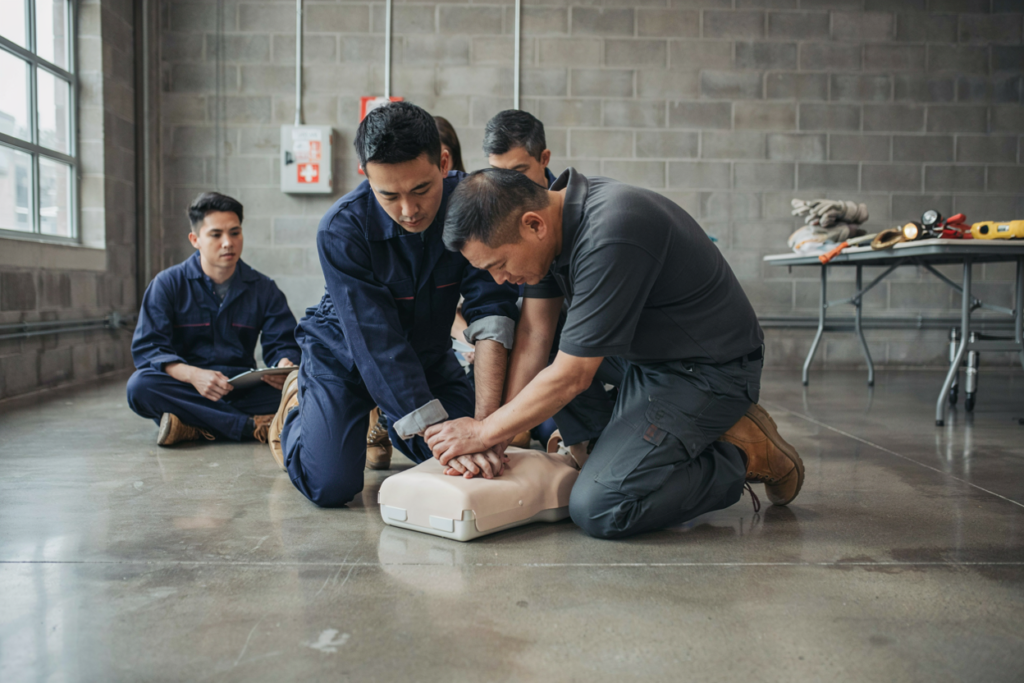
This isn’t a general first aid course with a low voltage label slapped on it. The training covers:
- Rescue techniques specific to live low voltage electrical panels.
- Safe isolation procedures, so you know how to make the area safe before taking action.
- Casualty removal techniques that help you move someone away from danger without becoming the second casualty yourself.
- A CPR component, as rescue and resuscitation go hand in hand during a real electrical emergency.
Worth being clear on this too: if you don’t already hold a current CPR certificate like HLTAID009, that’s usually a separate prerequisite. Check with your provider on exactly what you need stacked together, because turning up without the right prerequisite done is one of the more common reasons sparkies get delayed on the day.

Is Low Voltage Rescue Mandatory in Queensland?
The Legislation
We touched on the yes/no answer already, so here’s the plain-English version of what’s actually behind it. The Electrical Safety Act 2002 (Qld) sets out the legal framework for electrical safety across the state, and the Electrical Safety Regulation 2013 (Qld) fills in the detail on what that looks like in practice on site. Between the two, they place a duty on employers, self-employed sparkies, and anyone working near live low voltage equipment to manage the risk properly, and holding current rescue certification is part of how that duty gets met.
It’s not written as some vague “best practice” suggestion either. It’s baked into how electrical work is legally allowed to happen in this state.
Who Specifically Needs It
Role | Typical Requirement | Notes |
Licensed electricians | Mandatory | Applies whenever working on or near live LV equipment |
Electrical apprentices | Required | Even under supervision, if working near live equipment |
Subcontractors / sole traders | Mandatory | Obligation sits with the individual, not just the head contractor |
Site supervisors (electrical) | Site-dependent | Depends on the role’s involvement in electrical work or oversight |
What Happens If You’re Caught Without It
The short version: it goes badly. Principal contractors can and do deny site access on the spot if your ticket isn’t current, which means you’re not working, and you’re not earning. On top of that, the Electrical Safety Office and WorkSafe Queensland carry out inspections, and if your certification comes up short during one of those, you’re looking at a compliance issue that’s now bigger than just missing a training course.
The safest way to think about it is this: your LVR ticket isn’t paperwork sitting in a drawer, it’s what stands between you and being allowed on site at all.
📋 Good to know: Fast certificate issuance is what gets you back on site. Completing the course without having your Statement of Attainment available usually won't satisfy an induction or compliance check.
What Happens After the Course? Getting Your Certificate
Same-Day / Fast Turnaround Certificate Process
This is the bit that matters most if you’re booking this course under time pressure, which, let’s be honest, a lot of sparkies are. The team issue certificates on a same-day or fast turnaround basis, so you’re not left waiting around wondering whether you’ll have proof in hand before your next shift starts.
That turnaround matters more than it might sound like on paper. A site supervisor doing an induction check the next morning isn’t interested in “I did the course, my certificate’s coming.” They want to see it. Fast issuance is what actually gets you back on the tools without a gap in your availability.
How Long Your Certificate Stays Valid
Your certificate stays current for Lvr Renewal Period. Worth diarising this one yourself rather than relying on a provider to chase you, since letting it lapse without noticing is exactly how sparkies end up in that “turned away on site” situation we covered earlier.
Choosing a Low Voltage Rescue Provider in Brisbane
Why Trainer Background Matters
Not all LVR training is delivered the same way, and the trainer standing in front of you makes a real difference. There’s a big gap between someone who’s actually worked around live low voltage panels in the trade and a generic instructor reading through a slide deck they could just as easily be using for a different course entirely.
You want a trainer who’s been in the industry, who understands what it actually looks like when something goes wrong on a real site, not just someone qualified to deliver a unit of competency on paper. That background is what turns the practical component from a box-ticking exercise into something that actually sticks if you ever need it for real.
Red Flags to Avoid
A few things worth watching for when you’re comparing providers:
- No ASQA registration. If a provider can't clearly show they're a Registered Training Organisation (RTO), that's a serious red flag, not a minor detail.
- No hands-on practical component. If the course is theory only, it isn't delivering the practical competency required and may not satisfy your workplace or site requirements.
- "Quick certificate" marketing with no genuine assessment. Receiving your certificate promptly is one thing, but getting one without a proper competency assessment is something else entirely.
If a provider is cagey about any of these when you ask directly, take that as your answer.
Why You Can Trust This Guide
A quick word on where this information comes from, since low voltage rescue isn’t something you want to get wrong based on a random blog post
- Trainer background: Training is led by instructors with genuine electrical industry experience, not by generic trainers delivering unrelated courses.
- RTO accreditation: The course is delivered by an ASQA-registered Registered Training Organisation (RTO) under a valid RTO number.
- Legislative basis: Training aligns with the Electrical Safety Act 2002 (Qld), the Electrical Safety Regulation 2013 (Qld), the current unit of competency UETDRMP018 listed on training.gov.au, and guidance from the Electrical Safety Office Queensland and WorkSafe Queensland.
- Real feedback: Look for reviews from electricians, tradies, and contractors who have completed the course, rather than relying solely on marketing claims.
That’s the kind of thing worth checking for yourself before you book with any provider, not just this one.
Get Your Ticket, Get Back on the Tools
If you’ve read this far, chances are someone’s already told you that you need this ticket, and you’re working out how fast you can get it sorted. The short version: book a course with real hands-on practical training, a trainer with genuine trade background, and a provider who can get your certificate into your hands same-day or next-business-day.
Booking a crew or multiple electricians at once? Ask about group rates when you enquire, it usually works out cheaper per person and gets your whole team compliant in one hit.
Conclusion
Getting told you need a ticket you didn’t know about, on a day you didn’t plan for, is one of those moments that feels bigger than it actually is. It isn’t. It’s a course, a few hours of your time, and a piece of paper that gets you back on site. The hard part is usually just knowing exactly what you’re booking and why, and hopefully that’s a bit clearer now than it was when you started reading.
Low voltage rescue training isn’t box-ticking dressed up as something more important than it is. It sits inside a genuine piece of Queensland law for a real reason, and the practical side of the course exists because the risk it covers is a real one too. Most sparkies who’ve been in the trade a while know someone, or know of someone, who’s had a close call around live equipment. The ticket is a formality on paper, but what it represents on site isn’t.
The time pressure is real, and there’s no point pretending otherwise. Lost hours off the tools cost money, whether you’re on the books or running your own ABN. That’s exactly why turnaround time and a straightforward booking process matter as much as the training content itself. A course that takes half a day and gets your certificate into your hands the same day beats a longer, cheaper option that leaves you waiting around for paperwork while a site supervisor is asking where it is.
Choosing a provider comes down to a short list, really. A trainer who’s actually worked in the trade, a proper hands-on practical component, and an ASQA-registered RTO behind the whole thing. Skip any one of those and you’re taking a risk, either with your compliance or with whether you’d actually know what to do if you ever needed this for real.
None of this needs to be complicated, and it shouldn’t take you all day to sort out either. Know the right unit code, know who’s asking you for it and why, book with a provider who takes the practical side seriously, and get back to the job you were pulled off in the first place. That’s really all this comes down to.
Book Your First Aid Training Now
Fast, affordable, and nationally accredited training delivered by professionals who care
Frequently Asked Questions
Q.Is low voltage rescue training the same as first aid?
No. It shares a CPR component with general first aid, but the rescue techniques, safe isolation procedures, and casualty removal training are specific to live low voltage panels and are not covered in a standard first aid course.
Q.What's the difference between UETDRMP018 and UETDRRF018?
UETDRMP018 is the actual rescue unit, Perform Rescue from a Live Low Voltage Panel, and it's the unit that satisfies the site requirement. UETDRRF018 is a prerequisite unit that must be completed alongside or before it, but it is not a substitute for UETDRMP018.
Q.Do apprentices need this ticket too?
Yes. If an apprentice is working on or near live low voltage equipment, even under supervision, current certification is generally required in the same way it is for a licensed electrician.
Q.Do I need a separate CPR certificate before booking?
Usually, yes. A current CPR qualification such as HLTAID009 is typically a separate prerequisite, so check with your training provider to confirm exactly which units you need before enrolling.
Q.How fast can I get my certificate after finishing the course?
Many providers issue certificates on the same day or with a fast turnaround, helping you provide proof of competency quickly when a site supervisor or employer requests it.
Q.What should I look for in a provider?
Choose a provider with trainers who have real electrical industry experience, a genuine hands-on practical assessment, and current ASQA registration. If any of these are missing, it's worth looking elsewhere.
Making first aid training more affordable for
every classroom
We believe every student deserves access to life-saving first aid knowledge. That’s why we offer specially reduced pricing for schools and educational groups. Whether you’re booking for a single class, a year group, or your entire school, our flexible packages make training more accessible and cost-effective — without compromising quality.
