

You’ve booked your UETDRRF018 course. Maybe your boss booked it for you and just said “be there Tuesday.” Either way, you’re now sitting there wondering what you actually need to bring. Do you need your own gloves? Is your work boots good enough? Does the training mob supply the gear or are you meant to turn up kitted out like you’re heading onto a live panel yourself?
This confusion is more common than you’d think, and it’s a fair question to have. A lot of sparkies get told they need this ticket with zero explanation of what’s involved on the PPE side, and the course booking pages don’t always spell it out either.
So here’s the deal. This page covers two things, and they’re not the same thing even though people mix them up. First, the actual low voltage rescue PPE requirements, the gear that’s used when someone’s performing a real rescue on a live low voltage panel. Second, what you personally need to bring or wear to attend your UETDRRF018 course on the day. Get both sorted before you rock up and you won’t be the bloke standing around asking questions while everyone else gets started.
🦺 Quick tip: If you only remember one thing from this page, remember this. What's used in a rescue and what you bring to the course are two different lists. Don't turn up empty-handed thinking you need a full kit, and don't turn up thinking your everyday work gloves will cut it either.
What PPE Is Required for Low Voltage Rescue?
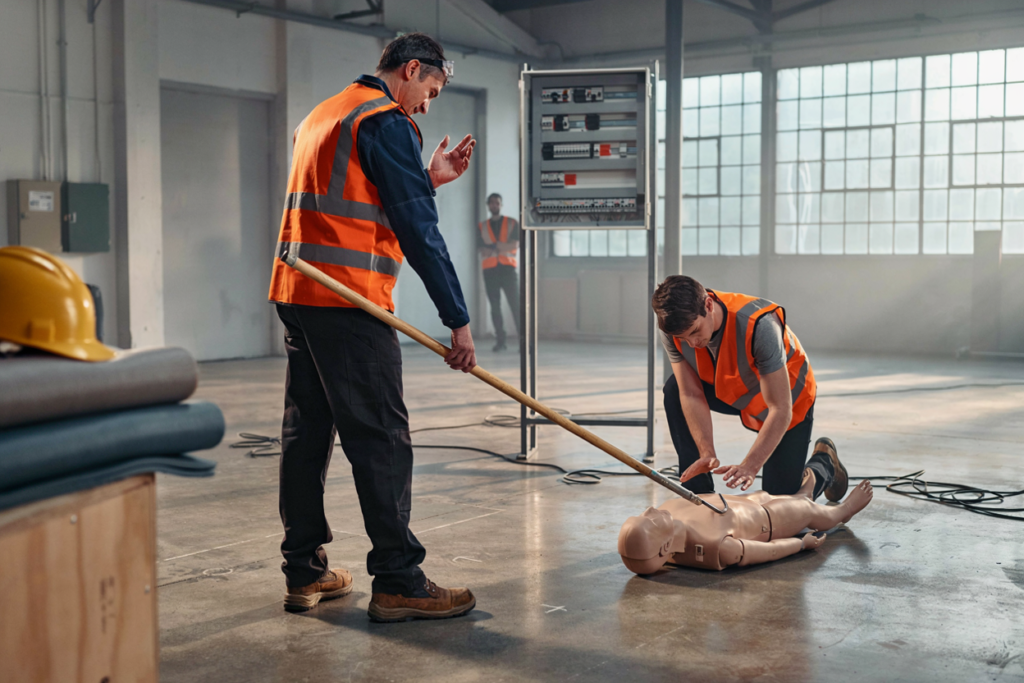
Low voltage rescue PPE requirements come down to five main items, and every one of them earns its place. This isn’t a “nice to have” list, it’s what stands between you and a live low voltage panel if you ever have to pull a mate off it.
Here’s the quick answer:
- Insulated gloves rated to at least 1000V, tested, and still within their inspection date
- Rescue hook or shepherd's crook made from non-conductive material, used to separate the casualty from the electrical source without direct contact
- Insulated matting that creates a protective barrier between you and the ground
- Arc-rated clothing that provides protection against arc flash hazards, not just electric shock
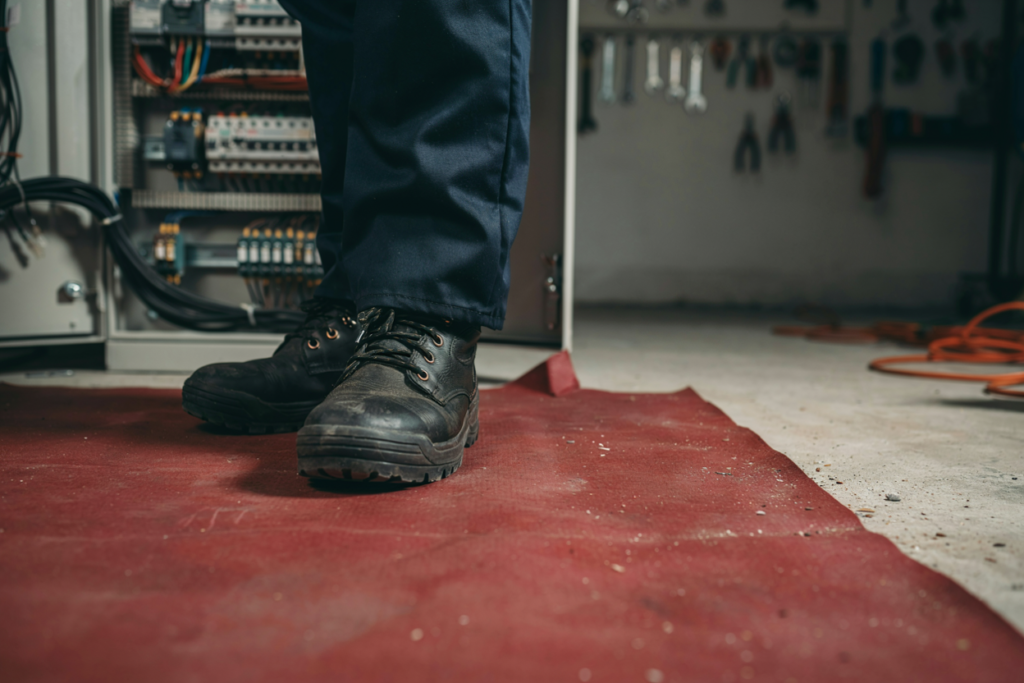
- Insulated safety footwear as the last line of defence if other control measures fail
That’s the list most people are after when they search this. But knowing the five items isn’t the same as knowing how to use them properly, or knowing which ones you actually need to own versus which ones the training provider will have ready for you on the day. That’s where a lot of blokes trip up, and it’s worth getting right before you turn up to your course.
⚡ Quick tip: Don't assume general work gear covers you here. Rescue-rated and everyday-rated PPE are not the same thing, even when the gear looks almost identical on the shelf.
What Counts as PPE for Low Voltage Rescue?
The Difference Between General Electrical PPE and Rescue-Specific PPE
Here’s where a lot of the confusion starts. You’ve probably already got a stack of PPE from your day-to-day work. General work gloves, your steel caps, maybe some arc-rated shirts if your site’s strict about it. Problem is, none of that automatically counts as rescue-rated gear.
General electrical PPE is built for you to do your job safely while working around low voltage systems. Rescue-specific PPE is a different beast entirely. It’s built for the exact moment things have already gone wrong and someone needs to be separated from a live source without a second casualty happening. The rating requirements, the testing regime, and the actual design of the gear are different, even if some items look similar on the shelf.
Take gloves as the obvious example. Your everyday work gloves might protect your hands from cuts and abrasions on site, but they’re not doing anything for you if you grab hold of someone who’s still in contact with a live panel. Insulated gloves used in a rescue context need to meet AS/NZS 60903, which sets out the standard for insulating gloves used for electrical work. That’s a specific rating and testing regime, not just “these gloves look thick enough.”
Arc-rated clothing sits under a similar logic, with AS/NZS 4836 covering safe working practices around electrical equipment, including the PPE side of things. So if you’ve been assuming your current work gear has you covered for a rescue scenario, that’s the exact assumption worth double-checking before you’re relying on it in a real situation.
General Electrical PPE | Rescue-Specific PPE |
Worn while carrying out routine electrical work | Used at the moment a live low voltage rescue is being performed |
Protects the worker doing the job | Protects the rescuer separating a casualty from a live source |
Standard glove or clothing ratings for day-to-day tasks | Specific rating and testing regime under AS/NZS 60903 and AS/NZS 4836 |
May already be part of your everyday work kit | Supplied by the training provider for the UETDRRF018 practical |
🧤 Quick tip: If it hasn't been rated and tested specifically for rescue use, treat it as general PPE only, not rescue-ready.
PPE Required to Perform a Low Voltage Rescue
Right, so now that the difference is clear, let’s get into each piece of the kit and why it’s there. Not just what it is, but what it’s actually doing for you in the moment.
Insulated Gloves, Rating, Testing, and Inspection Before Use
Your gloves are the first thing between your hands and a live source. They need to be rated to at least 1000V for low voltage rescue work, and that rating only means something if the gloves have actually been tested within the required timeframe. Insulated gloves degrade. A tiny puncture or a crack you can’t even see can turn a rated glove into a useless one.
Before every use, you’re meant to give them a proper visual check and an air test, basically rolling them up and checking for leaks. If they’re out of test date, they don’t get used. Simple as that.
Rescue Hooks and Non-Conductive Tools
The rescue hook, sometimes called a shepherd’s crook, is what lets you separate a casualty from a live low voltage source without becoming part of the circuit yourself. It’s made from non-conductive material, and the whole point of it is distance. You’re not grabbing anyone with your hands first. You’re using the hook to pull them clear, then working out what’s needed from there.
This is one of those bits of gear that looks simple but genuinely does the job it’s designed for, provided you’ve actually been trained on how to use it properly rather than just handed one.
Insulated Matting and Footwear
Matting gives you a barrier between your feet and the ground, cutting off one of the paths electricity could take through your body if things go wrong. Insulated footwear does a similar job from a different angle, protecting you from the ground up rather than relying purely on what you’re standing on.
Neither one replaces the other. They work together, along with the gloves, to reduce the number of ways a current has to get through you.
Arc-Rated Clothing
This one’s about protecting you from arc flash, not just direct contact or shock. An arc flash event can happen fast and throw off serious heat, and standard workwear isn’t built to handle that kind of exposure. Arc-rated clothing is designed to reduce the burn risk if that happens while you’re anywhere near the panel during a rescue.
Put all five together and you’ve got a kit that’s covering shock risk, arc flash risk, and grounding risk all at once. Miss one piece and you’ve left a gap.
Kit Item | What It’s Actually Protecting You From |
Insulated gloves | Direct hand contact with a live source |
Rescue hook / shepherd’s crook | Becoming part of the circuit while separating the casualty |
Insulated matting | Current passing through you via the ground |
Insulated safety footwear | Current passing through you from the ground up |
Arc-rated clothing | Burns from an arc flash event |
👢 Quick tip: Each piece covers a different risk. Missing one doesn't just weaken the kit—it leaves an actual gap that electrical current can find.
What PPE Do You Need to Bring to Your UETDRRF018 Course?
Right, this is the bit most people actually want to know when they’re sitting there the night before, wondering what to throw in the ute.
What’s Supplied by the Training Provider vs What You Bring
Good news first. The rescue-specific gear, your insulated gloves, the rescue hook, the matting, is supplied by the training provider for the practical session. You’re not expected to own a full rescue kit before you’ve even done the course, that would be a bit backwards anyway.
What you’re bringing is yourself, dressed appropriately, and ready to get hands-on.
Supplied by the Training Provider | You Bring Yourself |
Insulated gloves | Enclosed, sturdy footwear |
Rescue hook / shepherd’s crook | Long pants |
Insulated matting | Shirt with sleeves |
Arc-rated clothing for the practical | No thongs, sandals, or shorts |
Standard Workwear and Footwear Requirements for the Practical Session
Here’s your literal checklist, the one you can screenshot before you head out the door:
- Enclosed, sturdy footwear (steel-cap boots or your standard work boots are suitable)
- Long pants to provide appropriate leg protection during practical activities
- A long-sleeved shirt, ideally similar to the clothing you would normally wear on site
- No thongs, sandals, or shorts are permitted during training
That’s genuinely it. If you’d turn up to a normal day on site in it, you’re probably sorted for the practical session too. Things will get you knocked back though, no exceptions there, and turning up in shorts isn’t going to fly either.
If you’re wanting the full run-down on what UETDRRF018 actually covers before you commit to a date, that’s worth a read on its own. And once you’re through the course, it’s worth knowing how often to renew low voltage rescue certification so you’re not caught out down the track
✅ Quick tip: If you'd wear it to a normal day on the tools, it's probably fine for the practical. Thongs are the one thing that'll get you turned away every time.
Common PPE Mistakes That Can Get You Turned Away From Training or Site
This is the section worth actually paying attention to, because it’s the one that costs blokes real time and real money if they get it wrong.
Expired or Untested Insulated Gloves
If you’re supplying your own gloves for site work outside the course, an expired test date isn’t a technicality. Insulated gloves have a testing cycle for a reason, the insulation can break down in ways you can’t see with the naked eye. Turning up with gloves that are out of date is treated the same as turning up with no gloves at all by anyone doing a proper compliance check.
Incorrect Footwear on the Day
This is the one that trips people up on training day specifically. Thongs, sandals, anything that leaves your feet exposed, and you’re not getting into the practical session. It sounds like a small thing until you’re the bloke standing at the door being told to go home and come back another day, in front of everyone else who read the requirements properly.
It’s the same story on site. Turning up without the right PPE isn’t just an inconvenience, it’s the kind of thing that gets you sent off site in front of your crew or a new employer, which is about as embarrassing as it gets in this line of work. Worth checking the Electrical Safety Office Queensland‘s PPE guidance if you want the full regulatory picture beyond just what’s needed for this course.
A quick illustrative example. A first-year apprentice turns up to his rescue course in his good sneakers because his boots were still wet from the day before. Gets turned away at the door, has to reschedule, and his employer isn’t thrilled about the lost day. Small oversight, real consequences. Worth sorting your gear the night before, not the morning of.
🚫 Quick tip: Out-of-date gloves get treated the same as no gloves at all. There's no partial credit for "they were fine last year."
Where UETDRRF018 Fits Into Your Broader PPE and Compliance Obligations
How This Connects to Your Site’s WHS/PPE Policy
UETDRRF018 doesn’t exist on its own. It’s one piece sitting inside your site’s broader WHS and PPE policy, alongside everything else you’re already required to have sorted, whether that’s your white card, working at heights, confined space, or any other ticket your work demands.
Getting your low voltage rescue PPE requirements straight isn’t just about passing the course. It’s about being the guy who’s actually compliant across the board, not the one with gaps that show up the moment there’s an audit or an incident. That’s the difference between building a proper compliance stack you can rely on and just collecting cards.
If you’re still working out whether this ticket is even the one you need, it’s worth reading up on who actually needs LVR training before you book anything. And once you’ve got the PPE side sorted, the actual rescue procedure steps are the next thing worth understanding properly, not just for the course, but for what happens if you’re ever the one who needs to use it.
Book Your First Aid Training Now
Fast, affordable, and nationally accredited training delivered by professionals who care
Frequently Asked Questions
Q.What PPE is required for low voltage rescue?
Low voltage rescue PPE requirements cover five items: insulated gloves rated to at least 1000V, a non-conductive rescue hook or shepherd's crook, insulated matting, arc-rated clothing, and insulated safety footwear. Each one covers a different risk, from direct shock to arc flash to current passing through you via the ground, so all five work together as a complete rescue kit rather than as standalone items.
Q.Do I need to bring my own gloves to UETDRRF018?
No. You don't need to bring your own insulated gloves. The training provider supplies the rescue-specific equipment, including insulated gloves, the rescue hook, and insulated matting, for the practical assessment. Your job is simply to arrive wearing suitable work clothing and enclosed footwear.
Q.How often should insulated gloves be tested?
Insulated gloves must be tested within the required testing interval and inspected before every use using both a visual inspection and an air test. If the gloves are outside their test date, they must not be used, even if they appear to be in excellent condition.
Q.Can I wear thongs to the practical session?
No. Thongs, sandals, or any footwear that leaves your feet exposed are not permitted. You must wear enclosed, sturdy footwear such as steel-cap boots or standard work boots to participate in the practical session.
Q.Is general electrical PPE the same as rescue PPE?
No. General electrical PPE is designed for routine electrical work, while rescue PPE is specifically rated and tested for safely separating a casualty from a live electrical source. Equipment that looks similar may have very different performance ratings and testing requirements.
Q.Does the course cover how to actually use the PPE, not just wear it?
Yes. UETDRRF018 teaches the correct inspection and use of each piece of rescue PPE, including checking insulated gloves before use and using the rescue hook correctly. The course focuses on practical rescue skills, not simply providing the equipment.
Making first aid training more affordable for
every classroom
We believe every student deserves access to life-saving first aid knowledge. That’s why we offer specially reduced pricing for schools and educational groups. Whether you’re booking for a single class, a year group, or your entire school, our flexible packages make training more accessible and cost-effective — without compromising quality.
