

You book a course, you rock up on the day, and half the time you don’t actually know what you’re walking into until you’re standing there with a rescue hook in your hand. That’s the problem with a lot of low voltage rescue training out there, the marketing tells you it’s “hands-on” and “practical” but nobody spells out what’s actually in the box.
If you’re searching for UETDRRF018 learning materials before you book, good on you, because that’s exactly the right question to ask. This isn’t a generic safety induction where you sit through a slideshow and sign a form. Low voltage rescue training is built around specific, hands-on skills, and what’s included in your course materials makes a real difference to how confident you walk away.
This guide breaks down what’s covered in a current UETDRRF018 course, the learning manual, the practical rescue gear, the PPE, the assessment structure, and what you’re actually tested on. No vague promises, just the real breakdown of what you’re paying for.
A lot of tradies book this course the same way they book anything else on the tools, quickly, between jobs, without much thought given to what’s actually inside it. That’s fine when you’re booking a ute service. It’s not really fine when the course is the thing standing between you knowing what to do and freezing up if a mate ever goes down on a live panel. Knowing what’s inside the box before you commit means you walk in with the right expectations and walk out actually confident, not just certified.
Whether you’re booking your own renewal or sorting training for a whole crew, you’ll know exactly what’s included, what happens on the day, and how it all ties back to a real on-site rescue.
What Learning Materials Do You Get for Low Voltage Rescue Training?
UETDRRF018 low voltage rescue training includes:
- Student learning manual covers isolation procedures, safe approach distances, and how to actually use the rescue kit
- Practical rescue kit training hands-on time with insulated rescue hooks, shepherd's crooks, and PPE
- PPE briefing insulated gloves, mats, and approach-distance equipment specific to LV panels
- CPR and first aid component burns treatment and looking after a casualty after the rescue
- Practical assessment a supervised, simulated rescue scenario, not just a written test
- Certificate issued once you've passed
Most providers deliver this as a face-to-face course, with the practical component being the part that actually sets the training apart from a written safety module you could do sitting at a desk.
Course Component | What It Covers |
Learning manual | Isolation procedures, hazard assessment, safe approach distances |
Rescue kit training | Hands-on use of hooks, shepherd’s crooks, rescue poles |
PPE briefing | Insulated gloves, mats, approach-distance markers |
CPR and first aid | Burns treatment, casualty management after rescue |
Practical assessment | Supervised, simulated rescue scenario |
Certificate | Issued on successful completion |
What’s Included in Your UETDRRF018 Learning Materials
The Student Learning Manual
Your manual is the backbone of the course, it’s what you work through before and during the day. It covers isolation procedures, meaning how to safely de-energise a panel before anyone goes near it, hazard assessment for LV environments, and the broader safety context you need to actually understand why the rescue steps work the way they do, not just memorise them.
A good manual doesn’t just tell you what to do, it explains why, because the “why” is what sticks with you when you’re standing in front of a real panel and your training needs to kick in without you having to think back through a checklist. Check with your provider whether you’re getting a printed manual to keep in the ute or digital access you can pull up on your phone between jobs. Either way, the content should be specific to low voltage rescue, not a repurposed general electrical safety booklet with a rescue chapter bolted on.
Practical Rescue Kit Training
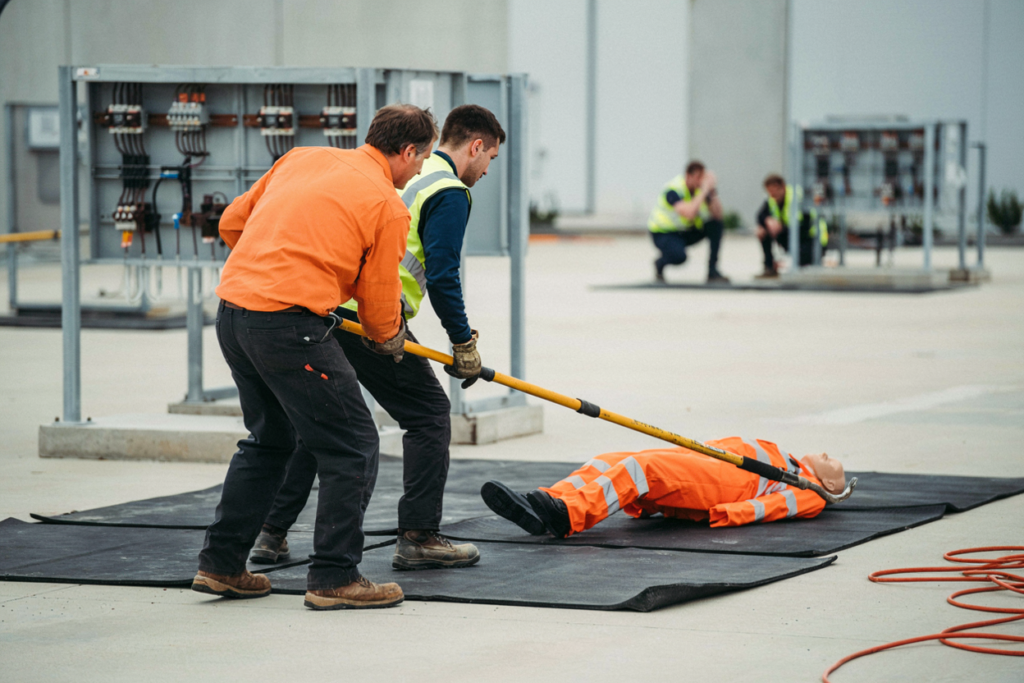
This is the bit that actually matters, and it’s the part most tradies are booking the course for in the first place. You get hands-on time with the real gear:
- Insulated rescue hooks
- Shepherd's crooks
- Rescue poles
- Insulated mats and approach-distance markers
You’re not just watching a demo. You’re picking the gear up, using it, and running through the motions of dragging someone clear of a live panel without becoming a second casualty yourself. That’s the whole point of the practical component, it’s the difference between knowing the theory and actually being able to do it when your hands are shaking and a mate’s on the ground.
There’s a reason this section carries so much weight in a properly run course. Reading about how a shepherd’s crook works and actually feeling its balance in your hands under a bit of pressure are two completely different things. The muscle memory you build here is what you’re actually relying on if this ever plays out for real, not the paragraph in the manual you skimmed the night before.
PPE You’ll Use During Training
Training PPE and real job-site PPE aren’t always the same thing, so it’s worth knowing the difference. During the course you’ll work with insulated gloves, mats, and approach-distance equipment specific to LV panel rescue. This gear is there to teach you the correct technique and keep the training environment safe, it’s not necessarily a like-for-like match with what your site or employer requires you to carry day to day.
Some sites run stricter PPE standards than what’s used in a training environment, and some run looser ones. Neither is wrong, they’re just different contexts, one’s built for teaching a skill safely and the other’s built around a specific site’s risk profile. Worth checking with your compliance officer or site supervisor if you’re unsure what’s mandated on your specific job, because assuming your training PPE matches your site PPE is the kind of assumption that catches people out.
How the Practical Assessment Works
Fair enough if this bit’s been sitting in the back of your mind. Unlike a first aid CPR mannequin scenario, an LV rescue assessment taps into something a bit more real for a lot of tradies, this isn’t roleplay, it’s the exact scenario you could genuinely face on a job. That’s not meant to spook you, it’s just worth being upfront about instead of pretending it’s the same as any other practical test.
What the Simulated Rescue Scenario Actually Involves
Here’s the plain-English version, no drama needed because the real thing is confronting enough on its own. You’ll be assessed on a supervised, simulated rescue, working through the same steps you practiced with the kit: recognising the danger, isolating the panel safely, using the rescue equipment correctly to get the casualty clear, and then moving into the post-rescue first aid response. Your assessor is watching for correct technique and safe decision-making under a bit of pressure, not perfection down to the last detail.
Most people walk into this part more nervous than they need to be, and walk out realizing it’s basically just doing what they already practiced, in the same order, with someone watching. That’s a much smaller gap than most people expect going in, especially once you’ve had genuine hands-on time with the rescue kit beforehand.
Written vs. Practical Weighting
The exact weighting and format varies a little depending on the provider, so confirm this directly with them before you book if it’s something you want locked down beforehand. What matters most for this unit is that it’s not a tick-and-flick written test, the practical component carries real weight because that’s the skill you’re actually being assessed on. A course that leans too heavily on written content and skimps on practical time isn’t really preparing you for the thing the certificate says you can do.
Once you’ve worked through the manual and the rescue kit training, this practical assessment is really just putting it all together, nothing you haven’t already practiced.
🩹 Quick take: The CPR and first aid component isn't generic filler, it's built specifically around what happens straight after contact with a live panel, burns, shock, and cardiac effects.
CPR and First Aid Components Included in the Course
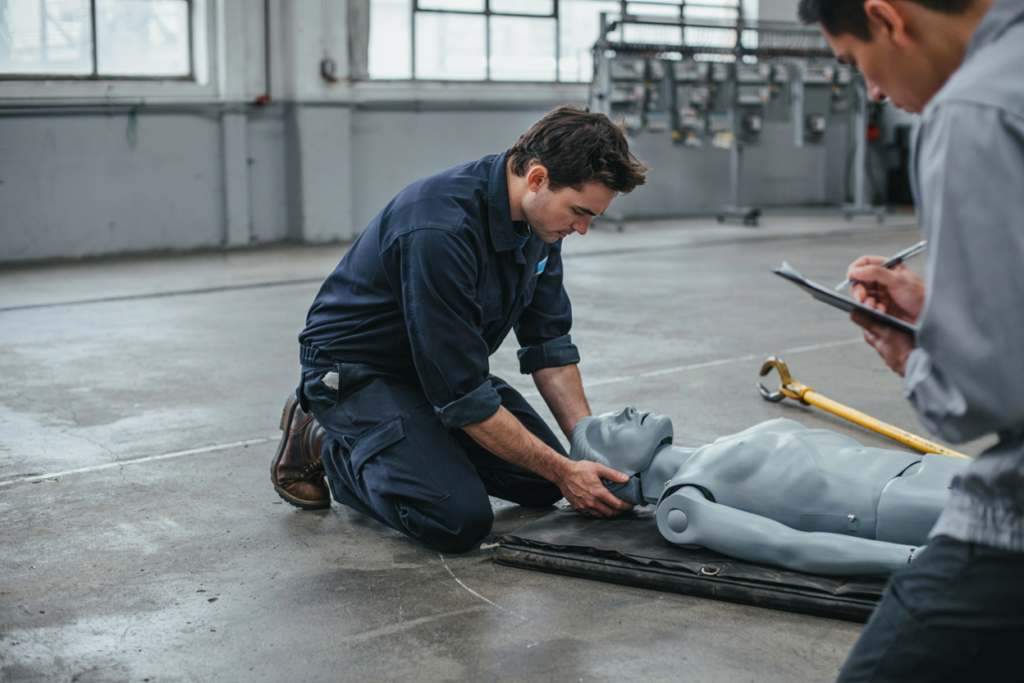
Why LVR Training Includes CPR and Burns Treatment
Makes sense once you think about it, if someone’s had contact with a live panel, the rescue itself is only step one. What happens straight after matters just as much. That’s why UETDRRF018 includes a CPR and first aid component covering burns treatment and casualty management, because getting your mate clear of the panel doesn’t help much if nobody on site knows what to do straight after that.
This isn’t generic first aid content bolted on to pad out the course. It’s there because electrocution incidents come with a specific set of injuries, burns, cardiac effects, shock, and the response needs to match that. A standard first aid course touches on some of this in general terms. This component is built specifically around what happens after contact with a live LV panel, which is a narrower and more relevant scope for anyone working around switchboards and panels regularly.
It’s also worth remembering this component isn’t just about the rescue subject. If you’re the one performing the rescue, adrenaline does strange things to your own body too, and part of good training is knowing how to steady yourself enough to actually deliver first aid properly once the immediate danger’s passed.
Certificate and Learning Materials You Keep After Completion
What You Receive on Completion
Once you’ve passed, you’ll receive your certificate in digital and/or physical form depending on your provider, along with confirmation of your competency in the unit. Some courses also send you home with take-home reference materials, handy for a refresher before you’re back on a live panel job further down the track.
For a lot of tradies, how fast that certificate lands matters more than almost anything else in the whole booking decision. If you’ve got a site start date coming up, you want that paperwork sorted well before you need it, not scrambling at the last minute. It’s worth asking your provider directly how quickly you can expect your certificate once you’ve passed, because this varies between providers and it’s the kind of detail that’s easy to overlook until you actually need it.
How Long Your Learning Materials Stay Accessible
Some providers give you ongoing access to your course materials through a student portal, others hand you a manual and that’s the end of it. Worth asking about directly if you like having something to refer back to later rather than relying on memory alone, particularly if it’s been a while between panel jobs and you want a quick refresher on isolation steps before you’re back on the tools near live equipment.
⚠️ Quick take: A current UETDRRF018 certificate is increasingly a condition of site access, not just a personal qualification. No certificate can mean no start on site.

Why This Matters for Site Access and Compliance
At the end of the day, learning materials aren’t just about ticking a box, they’re what stands between you and getting knocked back at the gate. Under the Electrical Safety Act 2002 (Qld) and the associated Electrical Safety Regulation, anyone working on or near live LV installations needs current competency in low voltage rescue. Principal contractors, WorkSafe Queensland codes of practice, and a lot of insurers now treat a current UETDRRF018 certificate as a condition of engagement, not a nice-to-have.
That’s the real reason the materials matter. A course that skips depth on isolation procedures, rescue kit technique, or the practical assessment isn’t just a weaker learning experience, it’s a certificate that might not hold up to the scrutiny of a principal contractor’s paperwork audit. It’s one thing to have a certificate in hand, it’s another for that certificate to actually reflect real competency if you’re ever asked to prove it under pressure, whether that’s an audit or the real scenario itself.
How Your Certificate Ties to Electrical Safety Act 2002 (Qld) Requirements
Your training is built around what the Electrical Safety Act 2002 (Qld) and WorkSafe Queensland actually require of anyone working near live panels, not a generic safety framework retrofitted to sound relevant. That’s worth knowing if you’re weighing up providers, because the unit itself is designed around real regulatory obligations, not just a certificate for the sake of one.
This regulatory grounding is also why the practical component carries so much weight in a properly delivered course. The Act isn’t concerned with whether you can recite a definition, it’s concerned with whether you can actually keep yourself and a colleague safe around live LV equipment. Learning materials that treat the practical side as an afterthought aren’t really honouring what the unit is meant to achieve, even if they technically tick the compliance box on paper.
Courses should be delivered under nationally recognized RTO status, with trainers who bring genuine industry background to the practical sessions rather than reading from a script they’ve never applied on a real site.
Conclusion
Getting your LV rescue certificate isn’t really about the piece of paper, it’s about knowing what to do if it’s ever your mate on that panel instead of a training dummy. That’s the whole reason the materials matter as much as they do, the manual, the rescue kit time, the PPE, all of it is building toward one moment you hope never happens but need to be ready for anyway.
What trips a lot of tradies up isn’t the skill itself, most of you are already sharp with live electrical work, it’s not knowing what a course actually covers before you’ve committed to booking it in. Now you know the real breakdown, the manual, the hands-on rescue kit training, the PPE briefing, the CPR component, and the supervised practical assessment that ties it all together.
The practical assessment scenario is worth mentioning one more time, because it’s genuinely the bit most people stress about beforehand and genuinely the bit that matters least once you’re in it. If you’ve worked through the manual and had proper hands-on time with the gear, the assessment is just putting together what you already practiced, not some surprise test designed to catch you out.
Site access is the pressure point for most of you reading this, and that’s fair, getting knocked back at the gate over paperwork is a genuinely frustrating way to lose out on a job. A certificate built on solid learning materials, real practical training, and a proper assessment is what holds up when a principal contractor or insurer actually checks your paperwork, not just something that looks fine sitting in a folder.
None of this needs to be complicated. Know what’s included before you book, know what to expect from the practical assessment, and walk away with a certificate and a skill set that actually holds up if you ever need it for real. That’s the whole point of doing this properly instead of just chasing whatever option shows up first in a search.
Book Your First Aid Training Now
Fast, affordable, and nationally accredited training delivered by professionals who care
Frequently Asked Questions
Q.Do I need to redo UETDRRF018 if I did a similar course a while ago?
It depends on your employer's policy and the requirements of the site or principal contractor you're working under, since there isn't one single national renewal period the way there is for some other safety qualifications. The safest approach is to check directly with your site or compliance officer about what counts as current before assuming your existing certificate still holds up.
Q.Is the practical assessment hard to pass?
Not if you've genuinely engaged with the rescue kit training beforehand, since the assessment is really just working through the same steps you've already practiced under supervision. Most people find it far less stressful once they're in it than they expected going in.
Q.What's the difference between training PPE and job-site PPE?
Training PPE is selected to teach correct technique safely in a controlled course environment, while job-site PPE requirements are set by your employer or site based on that site's specific risk profile. They can overlap but aren't guaranteed to match, so it's worth checking with your supervisor if you're unsure what your site actually requires.
Q.Can I book training for my whole crew at once?
Most providers offer a group booking pathway for electrical contracting businesses that need to get several staff members trained together, usually with one point of contact and one consolidated invoice for the business's compliance records. This is worth asking about directly if you're booking on behalf of a team rather than yourself.
Q.What happens if my certificate isn't ready before my next site start date?
Certificate turnaround times vary between providers, so it's worth confirming this detail before you book if you've got a site start date locked in. Asking upfront avoids the situation where you're compliant on paper but still waiting on the paperwork to actually land in time.
Making first aid training more affordable for
every classroom
We believe every student deserves access to life-saving first aid knowledge. That’s why we offer specially reduced pricing for schools and educational groups. Whether you’re booking for a single class, a year group, or your entire school, our flexible packages make training more accessible and cost-effective — without compromising quality.
