
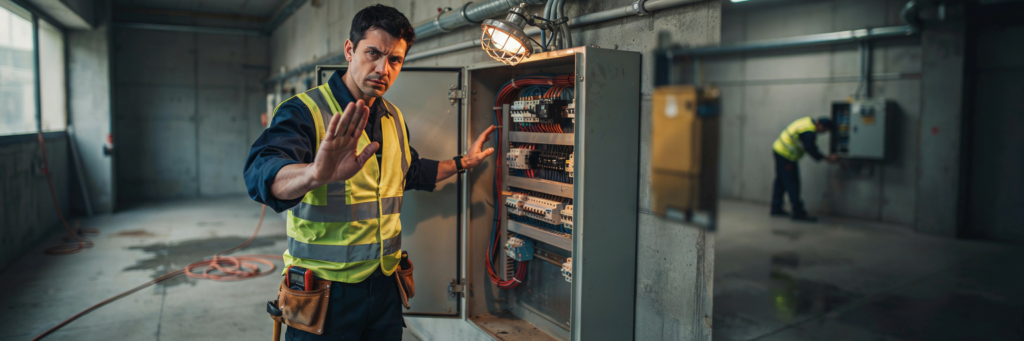
It happens fast. One second a bloke’s testing a circuit, checking isolation, doing everything by the book. Next second his hand’s locked onto a live panel and he can’t let go. No warning bell rings first. No time to think about it. That’s the thing about electricity, it doesn’t wait for you to be ready.
Now imagine the sparky standing next to him. Does he know what to do in that first ten seconds, or does he freeze, or worse, grab his mate and become a second casualty on the same panel. This is exactly why low voltage rescue training isn’t some box you tick to keep a compliance officer happy. It’s the difference between a mate walking off site that afternoon or an ambulance getting called.
Knowing how to isolate power properly, pull someone clear safely, and start CPR straight away changes outcomes. It’s that simple. There’s no clever workaround for it either, no shortcut you can learn from a YouTube video the night before a site induction. It’s a physical skill, built through practice, and it either sits in your hands and your head ready to go, or it doesn’t.
A lot of blokes go through their whole career without ever needing to use this training. That’s the honest truth of it. But the ones who do need it, need it in a hurry, and there’s no second chance to go back and learn it properly once someone’s down on the ground next to a panel. That’s really the whole argument for taking this seriously instead of treating it as another sticker on the hard hat.
In this guide we’ll get into why this stuff actually matters, what happens to the body when someone contacts live low voltage electricity, who is legally required to hold this ticket, and what the training actually covers on the day.
What Actually Happens When Someone Contacts Live Low Voltage Electricity
Why “low voltage” doesn’t mean low risk
Here’s where a lot of blokes get caught out. The word “low” in low voltage does a lot of damage, because it makes people think low voltage means low risk. It doesn’t.
In Australia, low voltage covers anything under 1000V AC or under 1500V DC. That’s still more than enough to stop a heart. A standard power point runs at 230V, and that’s already inside the low voltage band. So next time someone says “nah it’s just low voltage, it’s fine,” that’s the exact thinking that gets people hurt. Low voltage still kills. It just doesn’t get the same respect as high voltage, and that’s the trap.
Part of the problem is language. High voltage sounds dangerous, so people are naturally cautious around it, they slow down, they double check, they treat it with the respect it deserves. Low voltage sounds tame by comparison, almost domestic, the kind of thing you’d find in a household appliance rather than something that could genuinely kill a grown man. That gap between how dangerous something sounds and how dangerous it actually is has caught out plenty of experienced tradies, not just apprentices who don’t know better yet.
The medical reality: cardiac arrest, burns, respiratory failure
When someone makes contact with live low voltage electricity, the current doesn’t just give them a jolt and let go. It can travel straight through the body and mess with the heart’s own electrical rhythm, sending it into a chaotic rhythm that stops it pumping blood properly. Breathing can stop too, either because the chest muscles lock up or because the shock affects the part of the brain that controls breathing. On top of that there’s burns, which can be far worse internally than what you see on the skin.
That last part trips a lot of people up. A burn from electrical contact can look fairly minor on the surface, a small mark where the current entered and another where it left, but underneath that surface the damage can run deep through muscle and tissue along the path the current took. It’s one of the reasons this stuff isn’t something you assess by eye and call it fine. Even when someone seems okay after a shock, walking and talking, there’s still a case for getting them properly checked, because the internal effects don’t always announce themselves straight away.
This is exactly why CPR knowledge matters so much here, and why the training follows the ANZCOR-aligned approach used across Australia (not the American version you might see in movies or US-based content). ANZCOR is the Australian and New Zealand standard, and it’s what your training is measured against here.
Picture the timeline. Contact happens. Within seconds the heart rhythm or breathing can be affected. From there, every minute without oxygen to the brain increases the risk of permanent damage. That’s the survival window we keep coming back to, and it’s why the response in that first couple of minutes counts for so much more than anything that happens after the ambulance arrives.
Why Every Second Counts
The survival window for cardiac arrest
Once someone’s heart stops, the clock starts straight away. The brain can only go a few minutes without oxygen before real damage starts setting in, and every minute that passes after that lowers the chances of a good outcome. This isn’t something you can afford to wait on until someone more qualified shows up.
That’s the whole point of this training. It’s not about knowing electrical theory back to front, it’s about being the person on site who can act in that first minute, not the person standing there waiting for someone else to know what to do. A trained response in that window is what actually changes the outcome, not luck.
Why untrained bystanders often make things worse
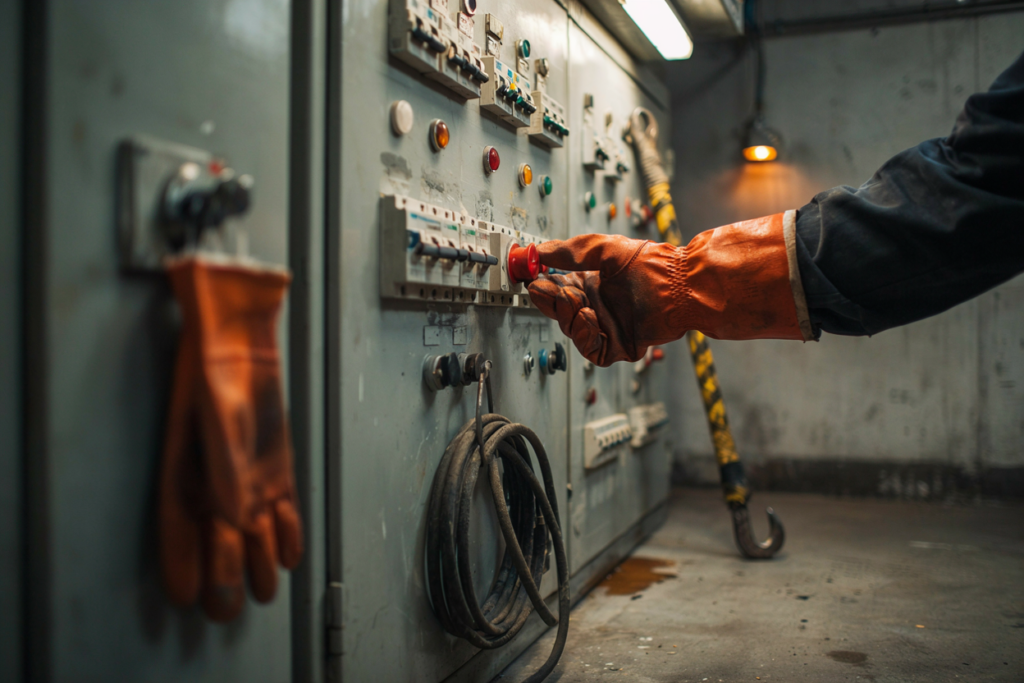
Here’s the bit people don’t think about until it’s too late. The instinct when you see a mate down is to run in and grab him. Fair enough, that’s human nature. But if he’s still in contact with a live source, and you grab him without isolating the power first, you don’t rescue him. You join him. Now there’s two blokes down instead of one, and nobody left standing who knows what to do.
This is what’s known as becoming a “second casualty,” and it happens more than people realise because the instinct to help overrides the training to think first.
It’s worth sitting with why this happens, because it’s not about intelligence or bravado. It’s basic human wiring. When you see someone you work alongside every day go down, your body reacts before your brain finishes processing the situation. That’s not a character flaw, it’s just how people are built. The whole reason this training exists is to give you something to override that instinct with, a trained response that kicks in fast enough to beat the panic, so the first thing you do is check for the source of danger rather than run straight at it.
⚡ The core principle: Isolate before you touch. Every single time. No exceptions, no "it'll be fine," and no shortcuts. Switch the power off, confirm the area is safe, then go to your mate. That order never changes.
Who Is Legally Required to Hold Low Voltage Rescue Training
The legal basis: Electrical Safety Regulation 2013 (Qld)
This isn’t just a “good idea” or something a training provider dreamed up to sell more courses. It’s written into Queensland law. Under the Electrical Safety Regulation 2013 (Qld), a PCBU (person conducting a business or undertaking) has to make sure that workers performing electrical work are competent in rescue and resuscitation. Get it wrong and there’s a maximum penalty of 40 penalty units sitting behind it, so this one carries real weight, not just a slap on the wrist.
The regulation also defines what counts as “near” live equipment, and it’s tighter than most people assume. Working within 3 metres of an exposed energised part brings you into scope. So if you’re working anywhere close to that zone, this isn’t optional, it applies to you.
Who this applies to beyond licensed electricians
A lot of blokes assume this is just for sparkies with a licence in their back pocket. Not the case. This applies just as much to:
- Apprentices at any stage of their electrical training.
- Site supervisors who may not be performing electrical work themselves but are responsible for site safety when an incident occurs.
- Maintenance workers carrying out routine tasks near electrical equipment.
- EWP and crane operators working in proximity to live low voltage panels or exposed electrical parts.
If your work brings you within that 3 metre zone, this ticket is for you, regardless of what’s on your business card.
It’s worth thinking about this through proximity rather than job title. A site supervisor doesn’t need to be the one holding the tools to end up standing near a live panel during a walk-through or an incident. A maintenance worker might only be near electrical equipment for a small part of their day, but that small part is exactly when this matters. The regulation isn’t written around who’s licensed to do electrical work, it’s written around who might reasonably find themselves close enough to a live source that they’d need to respond if something went wrong. Anyone who spends time in and around live panels, switchboards, or exposed wiring as part of their normal duties falls under this, whether that’s their main job or just something that happens on the odd site visit.
What happens if you’re not compliant
Turning up to a site without this ticket current isn’t just embarrassing, it can shut your day down completely. Site supervisors and head contractors are increasingly checking this before anyone’s allowed near live equipment, and if you’re not covered you can be refused site access on the spot. Beyond that there’s improvement notices that can land on the business, and real liability exposure if something goes wrong and the paperwork isn’t there to back you up.
What Low Voltage Rescue Training Actually Covers
So what do you actually walk away with after doing this course? Here’s the skill set, kept plain and simple
- Power isolation and safe approach, including how to identify and isolate the electrical source before going anywhere near the casualty.
- Safe casualty removal techniques that allow you to move someone clear of danger without becoming a second casualty yourself.
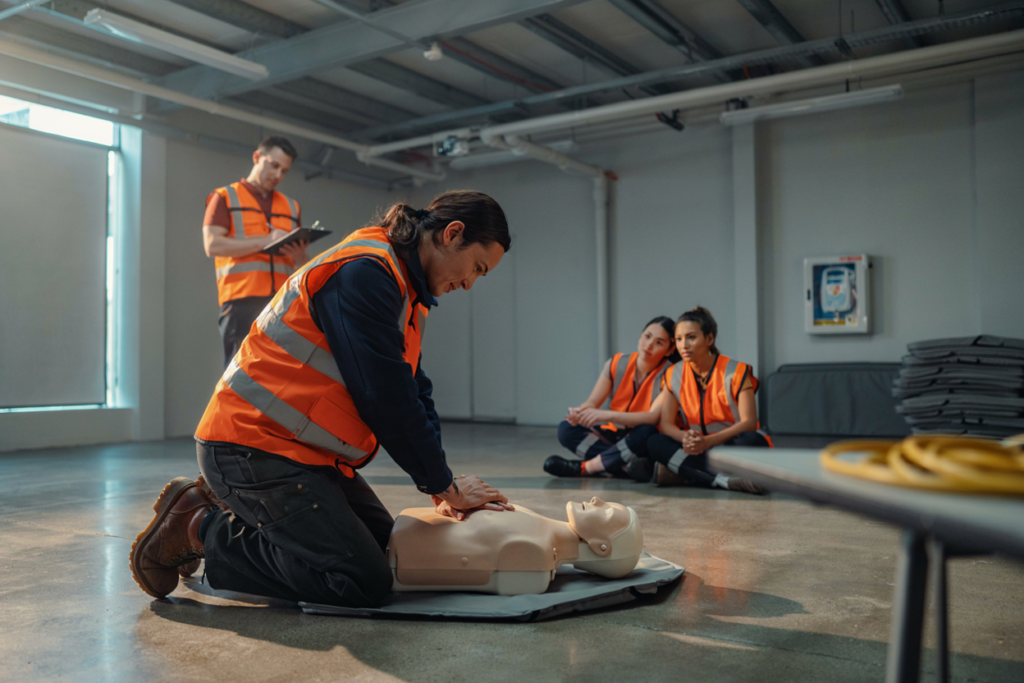
- CPR and post-rescue care, covering what to do once the casualty is clear and how to keep them stable until emergency services arrive.
- Incident reporting and site procedures, including what needs to happen after the rescue, who must be notified, and what documentation is required.
That’s the core of it. This section isn’t meant to walk you through the whole curriculum step by step, that’s what the course itself is for. This is just so you know roughly what you’re signing up for and why each piece matters before you book.
Each of those four pieces builds on the one before it. There’s no point knowing CPR if you never make it to the person safely, and there’s no point getting them clear if you don’t know what to do once they’re on the ground. The training is built as a sequence for a reason, because in the real thing there isn’t time to pause between steps and work out what comes next. It has to be automatic, which is exactly why practising it properly, hands-on, matters more than reading about it ever could.
How to Get Certified Without Losing Work
This is usually the bit Jake actually cares about most. Not the legislation, not the medical detail, just: can I get this sorted without blowing up my current jobs.
Fair question. The course is built to get you in, trained properly, and back out with your ticket in hand without turning into a scheduling headache.
Your certificate is proof of competency you can show a site supervisor or head contractor on the spot. No waiting around for something to arrive in the post while you sit off site not earning.
Booking around your current jobs isn’t hard either. With dates visible upfront and no messing around with enquiry forms promising a callback, you can find a slot that fits around what you’ve already got on, instead of the course dictating your schedule to you.
🔑 Why this section matters: It comes down to one simple question: does the person standing next to your mate know exactly what to do when seconds count?
Conclusion
Electricity doesn’t send a warning before it hurts someone. That’s the reality every sparky on site lives with, whether he thinks about it or not. One second everything’s routine, the next a mate’s locked onto a live panel and the only thing that matters is who’s standing next to him and what they know how to do. That’s not a scare tactic, it’s just how these things actually happen, fast and without notice.
This is why the training isn’t really about a card in your wallet or a box ticked on a compliance sheet somewhere. It’s about being the person who doesn’t freeze. The one who knows to isolate before touching, who can get a mate clear without becoming a second casualty himself, and who can start CPR in that first sixty-second window instead of standing there waiting for someone else to know what to do. Every part of what’s covered on the day exists for that one moment, the moment most blokes hope never comes but some will face anyway.
The legal side of it matters too, and it’s not there to make life harder. Queensland law asks for this competency because the alternative, an untrained workforce standing around a live panel, is a genuinely dangerous position to leave people in. Whether it’s an apprentice a few months into the trade or a supervisor who hasn’t picked up tools in years, if the work brings someone within reach of live equipment, this applies to them. No amount of experience replaces the specific skill of knowing what to do in those first sixty seconds.
None of this needs to turn into a scrambled scheduling headache. Getting certified is meant to be straightforward, ticket in hand, back on site without a gap in earnings or a hole in the roster. The barrier was never meant to be the booking process, it was only ever meant to be whether someone’s actually competent when it counts.
At the end of it, this comes down to something pretty simple. A mate goes down near live equipment, and the person standing next to him either knows what to do or he doesn’t. Everything in this training exists to make sure the answer is yes. That’s the whole point, and it’s worth more than any certificate on the wall.
Book Your First Aid Training Now
Fast, affordable, and nationally accredited training delivered by professionals who care
Frequently Asked Questions
Q.Is low voltage electricity actually dangerous?
Yes. Low voltage covers anything under 1000V AC or under 1500V DC, and that's still more than enough to stop someone's heart or affect their breathing. The name makes it sound harmless, but the physiological risk is very real.
Q.What's the difference between low voltage rescue and general first aid?
General first aid covers a broad range of emergencies, while low voltage rescue training focuses specifically on safely isolating power, removing a casualty from a live source, and then providing CPR or other immediate care. It's a specialised skill set designed for electrical incidents.
Q.Who actually needs this training in Queensland?
It isn't limited to licensed electricians. Apprentices, site supervisors, maintenance workers, and EWP or crane operators working near live equipment may all require the training, depending on their duties and proximity to exposed energised parts.
Q.What happens if I try to help someone without this training?
An untrained rescuer can easily become a second casualty by touching the same live electrical source. Low voltage rescue training teaches an isolate-first approach to prevent that from happening.
Q.Can I still be compliant if I only work near electrical equipment occasionally?
Yes. Proximity to live electrical equipment is what matters, not how frequently you're exposed to it. Even occasional work near energised equipment may require current training.
Q.Does this training cover CPR as well?
Yes. CPR and post-rescue care are core components of the training and are taught alongside power isolation and safe casualty removal so the skills work together during a real emergency.
Q.What happens if a workplace isn't compliant?
Non-compliance can result in site access being refused, improvement notices being issued, and increased legal and financial liability if an incident occurs without appropriately trained workers.
Making first aid training more affordable for
every classroom
We believe every student deserves access to life-saving first aid knowledge. That’s why we offer specially reduced pricing for schools and educational groups. Whether you’re booking for a single class, a year group, or your entire school, our flexible packages make training more accessible and cost-effective — without compromising quality.
